Vascular Screening Market Size, Share & Demand Report By Screening Type (Carotid Artery Screening, Peripheral Artery Disease Screening), By Technology (Ultrasound-Based Screening Systems, Doppler Screening Systems, CT Angiography, MR Angiography), By Application (Cardiovascular Risk Assessment), By End User (Hospitals & Specialty Clinics, Diagnostic Imaging Centers, Ambulatory Care Centers), By Region & Segment Forecasts, 2026–2034
USD 3950
Market Overview
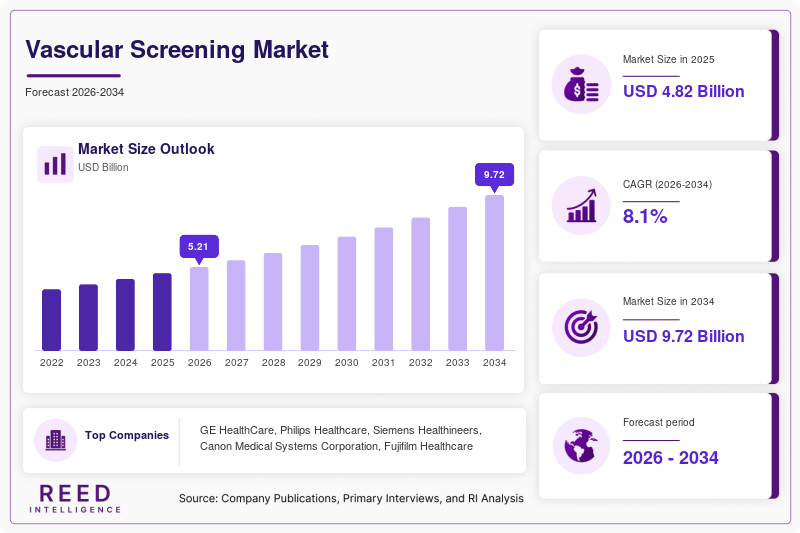
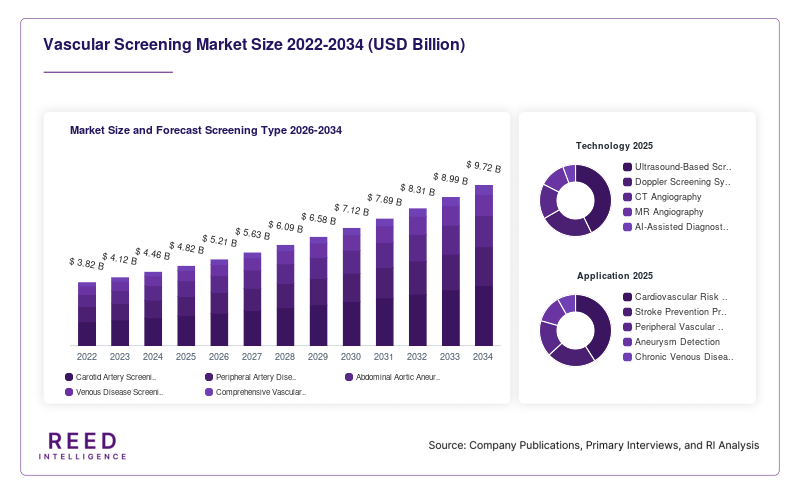
The Vascular Screening Market Size was valued at USD 4.82 billion in 2026 and is projected to reach USD 8.96 billion by 2034, expanding at a CAGR of 8.1% during the forecast period (2026–2034). The market continues to gain momentum due to increasing awareness of cardiovascular health, rising prevalence of vascular diseases, and growing adoption of preventive healthcare strategies across developed and emerging economies. Vascular screening plays a critical role in the early detection of conditions such as peripheral artery disease, carotid artery stenosis, abdominal aortic aneurysm, deep vein thrombosis, and chronic venous disorders, allowing healthcare providers to initiate timely interventions and improve patient outcomes.
A major global factor supporting the growth of the Vascular Screening Market is the worldwide shift toward preventive healthcare and early disease diagnosis. Governments, healthcare organizations, and insurance providers are increasingly emphasizing routine screening programs to reduce long-term treatment costs and minimize complications associated with undiagnosed vascular disorders. This preventive healthcare approach has significantly increased demand for non-invasive vascular screening technologies and services.
Key Highlights
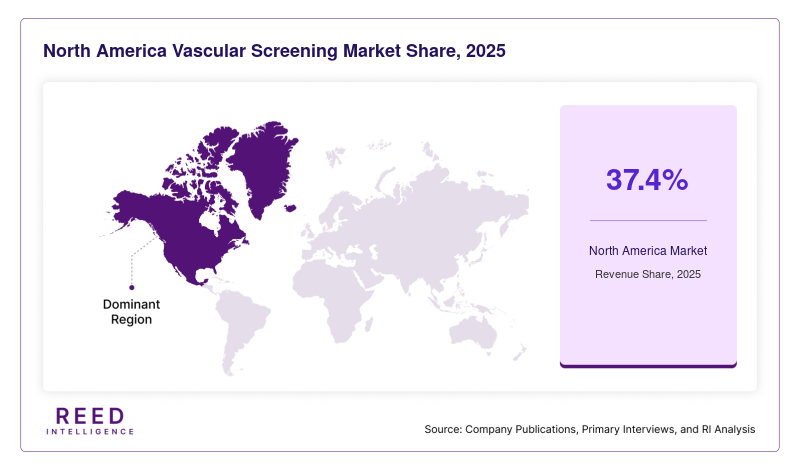
- North America accounted for the largest market share of 37.4% in 2025, while Asia Pacific is projected to register the fastest CAGR of 9.7% during 2026–2034.
- By Screening Type, Carotid Artery Screening held the largest market share of 31.8% in 2025, while Peripheral Artery Disease Screening is expected to grow at a CAGR of 9.5%.
- By Technology, Ultrasound-Based Screening Systems accounted for 54.6% market share in 2025, whereas AI-Assisted Diagnostic Systems are forecast to expand at 10.8% CAGR.
- By End User, Hospitals & Specialty Clinics represented 48.9% of revenue in 2025, while Diagnostic Imaging Centers are anticipated to grow at 9.3% CAGR.
- By Application, Cardiovascular Risk Assessment captured 42.1% share in 2025, while Peripheral Vascular Disease Monitoring is projected to register a CAGR of 9.1%.
- The United States, the dominant country market, recorded values of USD 1.21 billion in 2024 and USD 1.31 billion in 2025.
Market Trends
Integration of Artificial Intelligence in Vascular Diagnostics
Artificial intelligence is increasingly being integrated into vascular screening workflows to improve image interpretation, diagnostic consistency, and workflow efficiency. AI-powered software assists healthcare professionals in identifying vascular abnormalities, measuring vessel dimensions, and detecting plaque accumulation with greater precision. The trend is improving diagnostic confidence while reducing interpretation time across healthcare facilities.
Expansion of Community-Based Screening Programs
Healthcare providers and public health organizations are expanding community vascular screening initiatives aimed at identifying high-risk populations. Mobile screening units, workplace wellness programs, and community healthcare campaigns are making vascular assessments more accessible. This trend is contributing to earlier disease detection and increased screening participation rates.
Market Drivers
Increasing Prevalence of Cardiovascular and Vascular Disorders
The rising burden of cardiovascular diseases remains a primary growth driver for the Vascular Screening Market. Increasing incidence of hypertension, diabetes, obesity, hyperlipidemia, and sedentary lifestyles has elevated the risk of vascular complications worldwide. Healthcare providers are emphasizing routine vascular assessments to identify disease progression before severe complications occur.
Growing Adoption of Preventive Healthcare Programs
Preventive healthcare initiatives are gaining significant traction across healthcare systems. Government-sponsored screening campaigns, employer-sponsored wellness programs, and insurance-supported preventive examinations are encouraging individuals to undergo vascular assessments. These programs support early diagnosis while reducing healthcare costs associated with advanced disease management.
Market Restraint
Limited Screening Participation Among Asymptomatic Populations
Despite growing awareness, many individuals without obvious symptoms remain reluctant to undergo routine vascular screening examinations. Limited awareness regarding vascular disease risks and inconsistent participation in preventive healthcare programs continue to restrict broader market penetration in certain regions.
Market Opportunities
Expansion of Portable and Point-of-Care Screening Technologies
The development of portable vascular diagnostic devices presents substantial growth opportunities. Compact screening systems allow healthcare professionals to conduct vascular assessments in outpatient clinics, community healthcare centers, and remote locations, improving accessibility and diagnostic coverage.
Emergence of Telehealth-Enabled Diagnostic Services
Telemedicine integration is creating new opportunities within the vascular screening ecosystem. Remote image review, cloud-based diagnostic platforms, and virtual specialist consultations enable healthcare providers to deliver vascular screening services beyond traditional hospital environments, expanding patient reach and operational efficiency.
Segmental Analysis
By Screening Type
The Vascular Screening Market is segmented into:
- Carotid Artery Screening
- Peripheral Artery Disease Screening
- Abdominal Aortic Aneurysm Screening
- Venous Disease Screening
- Comprehensive Vascular Screening
Carotid Artery Screening accounted for 31.8% of market revenue in 2025. Its widespread utilization in stroke risk assessment and preventive cardiovascular care contributed to segment dominance.
Peripheral Artery Disease Screening is projected to register the fastest CAGR of 9.5% during the forecast period. Increasing focus on limb preservation programs and early detection of circulation disorders will support future growth.
By Technology
The market includes:
- Ultrasound-Based Screening Systems
- Doppler Screening Systems
- CT Angiography
- MR Angiography
- AI-Assisted Diagnostic Systems
Ultrasound-Based Screening Systems represented 54.6% market share in 2025 due to their non-invasive nature, cost-effectiveness, portability, and broad clinical applicability.
AI-Assisted Diagnostic Systems are anticipated to grow at a CAGR of 10.8% through 2034. Advancements in automated image analysis and decision-support algorithms will accelerate adoption across healthcare facilities.
By Application
The market is categorized into:
- Cardiovascular Risk Assessment
- Stroke Prevention Programs
- Peripheral Vascular Disease Monitoring
- Aneurysm Detection
- Chronic Venous Disease Evaluation
Cardiovascular Risk Assessment accounted for 42.1% market share in 2025 owing to increasing emphasis on preventive healthcare and early identification of vascular risk factors.
Peripheral Vascular Disease Monitoring is expected to expand at a CAGR of 9.1% during the forecast period. Growing long-term management requirements for chronic vascular conditions will contribute to segment growth.
By End User
The market consists of:
- Hospitals & Specialty Clinics
- Diagnostic Imaging Centers
- Ambulatory Care Centers
- Community Screening Programs
- Research Institutions
Hospitals & Specialty Clinics held 48.9% market share in 2025 due to the availability of multidisciplinary cardiovascular care services and advanced diagnostic equipment.
Diagnostic Imaging Centers are projected to witness the fastest growth at a CAGR of 9.3% through 2034. Increasing patient preference for specialized outpatient diagnostic services will support segment expansion.
Regional Analysis
North America
North America accounted for 37.4% of the Vascular Screening Market share in 2025 and is expected to expand at a CAGR of 7.6% during 2026–2034. The region benefits from advanced healthcare infrastructure, widespread adoption of preventive diagnostic services, and strong reimbursement frameworks supporting cardiovascular assessments.
The United States dominated the regional market due to the extensive availability of specialized vascular diagnostic centers and increasing implementation of population-based cardiovascular risk screening initiatives.
Europe
Europe held 28.6% market share in 2025 and is projected to grow at a CAGR of 7.8% through 2034. Growing emphasis on early disease detection and increasing healthcare investments supported regional market development.
Germany emerged as the dominant country market due to its comprehensive healthcare network and strong adoption of advanced vascular imaging technologies within hospitals and specialty cardiovascular centers.
Asia Pacific
Asia Pacific represented 22.5% of the global market in 2025 and is forecast to register the fastest CAGR of 9.7% during 2026–2034. Expanding healthcare infrastructure, rising cardiovascular disease burden, and increasing healthcare awareness are driving regional demand.
China led the regional market owing to growing investments in diagnostic healthcare services and expanding government-supported disease prevention programs targeting cardiovascular risk reduction.
Middle East & Africa
The Middle East & Africa accounted for 5.4% market share in 2025 and is anticipated to grow at a CAGR of 8.5% during the forecast period. Rising healthcare modernization efforts and increasing investment in diagnostic imaging infrastructure continue to support market expansion.
Saudi Arabia remained the dominant market due to significant healthcare transformation initiatives focused on enhancing preventive care capabilities and expanding diagnostic services.
Latin America
Latin America captured 6.1% market share in 2025 and is expected to expand at a CAGR of 8.2% through 2034. Increasing public healthcare investments and expanding cardiovascular disease awareness programs are supporting market growth.
Brazil led the regional market because of its large patient population and ongoing expansion of diagnostic healthcare facilities providing cardiovascular and vascular screening services.
Regional Analysis
North America
North America accounted for 37.4% of the Vascular Screening Market share in 2025 and is expected to expand at a CAGR of 7.6% during 2026–2034. The region benefits from advanced healthcare infrastructure, widespread adoption of preventive diagnostic services, and strong reimbursement frameworks supporting cardiovascular assessments.
The United States dominated the regional market due to the extensive availability of specialized vascular diagnostic centers and increasing implementation of population-based cardiovascular risk screening initiatives.
Europe
Europe held 28.6% market share in 2025 and is projected to grow at a CAGR of 7.8% through 2034. Growing emphasis on early disease detection and increasing healthcare investments supported regional market development.
Germany emerged as the dominant country market due to its comprehensive healthcare network and strong adoption of advanced vascular imaging technologies within hospitals and specialty cardiovascular centers.
Asia Pacific
Asia Pacific represented 22.5% of the global market in 2025 and is forecast to register the fastest CAGR of 9.7% during 2026–2034. Expanding healthcare infrastructure, rising cardiovascular disease burden, and increasing healthcare awareness are driving regional demand.
China led the regional market owing to growing investments in diagnostic healthcare services and expanding government-supported disease prevention programs targeting cardiovascular risk reduction.
Middle East & Africa
The Middle East & Africa accounted for 5.4% market share in 2025 and is anticipated to grow at a CAGR of 8.5% during the forecast period. Rising healthcare modernization efforts and increasing investment in diagnostic imaging infrastructure continue to support market expansion.
Saudi Arabia remained the dominant market due to significant healthcare transformation initiatives focused on enhancing preventive care capabilities and expanding diagnostic services.
Latin America
Latin America captured 6.1% market share in 2025 and is expected to expand at a CAGR of 8.2% through 2034. Increasing public healthcare investments and expanding cardiovascular disease awareness programs are supporting market growth.
Brazil led the regional market because of its large patient population and ongoing expansion of diagnostic healthcare facilities providing cardiovascular and vascular screening services.
Competitive Landscape
The Vascular Screening Market is characterized by the presence of established medical imaging companies, cardiovascular diagnostic solution providers, and healthcare technology innovators. Market participants compete through technological advancements, diagnostic accuracy improvements, product portfolio expansion, and strategic partnerships with healthcare institutions.
GE HealthCare remains a leading participant in the market due to its comprehensive vascular imaging portfolio and strong global healthcare presence. The company recently expanded its ultrasound platform capabilities with enhanced vascular assessment software designed to improve workflow efficiency and diagnostic precision.
Philips Healthcare continues to strengthen its vascular imaging offerings through integrated diagnostic solutions. Siemens Healthineers focuses on advanced imaging technologies supporting vascular disease assessment. Canon Medical Systems Corporation maintains a strong presence through innovative ultrasound systems, while Fujifilm Healthcare continues investing in advanced vascular diagnostic technologies.
Key Players List
- GE HealthCare
- Philips Healthcare
- Siemens Healthineers
- Canon Medical Systems Corporation
- Fujifilm Healthcare
- Hitachi Medical Systems
- Mindray Medical International Limited
- Samsung Medison Co., Ltd.
- Esaote S.p.A.
- Terason Corporation
- Clarius Mobile Health
- Butterfly Network Inc.
- Natus Medical Incorporated
- Zimmer MedizinSysteme GmbH
- Becton, Dickinson and Company
Recent Developments
- In 2025, several healthcare providers expanded community-based vascular screening programs to improve early detection of cardiovascular disorders.
- Medical imaging manufacturers introduced AI-enabled vascular assessment software capable of supporting automated diagnostic workflows.
- Multiple diagnostic centers invested in portable ultrasound technologies to expand screening accessibility in remote and underserved areas.
- Strategic collaborations were announced between healthcare institutions and diagnostic technology providers to enhance preventive cardiovascular care services.
- New vascular imaging platforms featuring advanced plaque analysis and vessel assessment capabilities entered commercial markets across developed healthcare systems.
Vascular Screening Market Segments
Screening Type
- Carotid Artery Screening
- Peripheral Artery Disease Screening
- Abdominal Aortic Aneurysm Screening
- Venous Disease Screening
- Comprehensive Vascular Screening
Technology
- Ultrasound-Based Screening Systems
- Doppler Screening Systems
- CT Angiography
- MR Angiography
- AI-Assisted Diagnostic Systems
Application
- Cardiovascular Risk Assessment
- Stroke Prevention Programs
- Peripheral Vascular Disease Monitoring
- Aneurysm Detection
- Chronic Venous Disease Evaluation
End User
- Hospitals & Specialty Clinics
- Diagnostic Imaging Centers
- Ambulatory Care Centers
- Community Screening Programs
- Research Institutions
By Region
- North America
- Europe
- APAC
- Middle East and Africa
- LATAM