Vasoactive Intestinal Peptide Tumor Market Size, Share Demand Report By Type (Somatostatin Analogs, Peptide Receptor Radionuclide Therapy (PRRT), Targeted Therapy), By Application (Pancreatic Tumors, Extra-Pancreatic Tumors), By End-Use (Hospitals, Specialty Clinics, Research Institutes), By Region & Segment Forecasts, 2025–2034
USD 3950
Market Overview
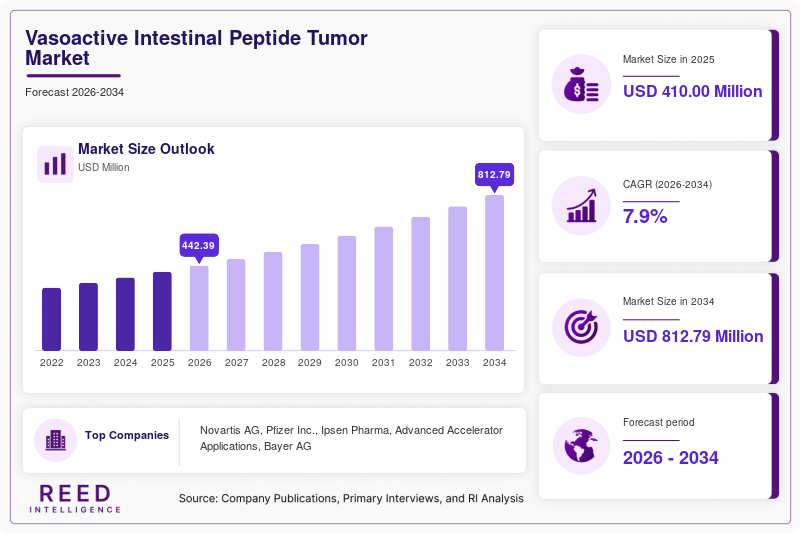
The Vasoactive Intestinal Peptide Tumor Market size is estimated at USD 410 million, with a projected increase to USD 445 million in 2026. The market is expected to reach approximately USD 820 million by 2034, growing at a compound annual growth rate (CAGR) of 7.9% during the forecast period from 2025 to 2034.
Vasoactive intestinal peptide tumors (VIPomas) are rare pancreatic neuroendocrine tumors characterized by excessive secretion of vasoactive intestinal peptide, leading to severe diarrhea and electrolyte imbalances. Although the prevalence remains low, the increasing diagnosis rate due to improved imaging modalities such as PET-CT scans and biomarker testing is driving market growth. Additionally, rising clinical research investments aimed at developing targeted therapies and peptide receptor radionuclide therapy (PRRT) are further supporting industry expansion.
Key Highlights
- Market size is estimated at USD 410 million in 2025, reflecting the growing diagnosis rate of rare neuroendocrine tumors. Increasing healthcare spending and improved access to diagnostic tools are supporting early-stage detection and treatment demand.
- The market is expected to reach USD 820 million by 2034, driven by advancements in treatment options and expanding patient awareness. Continuous innovation in targeted therapies is also contributing to long-term market expansion.
- The market is projected to grow at a CAGR of 7.9% from 2025 to 2034, supported by ongoing research and development activities. Rising clinical trials and improved treatment outcomes are further accelerating this steady growth trajectory.
- Increasing adoption of targeted therapies and peptide receptor radionuclide therapy (PRRT) is transforming treatment approaches. These therapies offer improved precision, reduced side effects, and better patient outcomes compared to conventional methods.
Market Trends
Growing Adoption of Targeted and Precision Therapies
The market is experiencing a shift toward targeted and precision-based therapeutic approaches. Traditional treatment methods are being supplemented or replaced by therapies that specifically target tumor receptors and genetic markers. Peptide receptor radionuclide therapy (PRRT) has gained traction due to its ability to deliver radiation directly to tumor cells while minimizing damage to healthy tissue. Additionally, the use of somatostatin analogs continues to evolve with improved formulations and extended-release options. Pharmaceutical companies are increasingly focusing on biomarker-driven drug development, which enhances treatment efficacy and reduces adverse effects. This trend is expected to improve patient survival rates and expand the treatment landscape.
Advancements in Diagnostic Imaging and Biomarker Testing
Advancements in imaging technologies and biomarker testing are significantly influencing the Vasoactive Intestinal Peptide Tumor Market. High-resolution imaging techniques such as PET-CT scans and MRI have improved tumor localization and staging accuracy. Additionally, the use of biochemical markers, including chromogranin A and VIP levels, is enhancing early detection capabilities. These advancements enable clinicians to diagnose tumors at earlier stages, leading to more effective treatment interventions. The integration of artificial intelligence in diagnostic imaging is also improving interpretation accuracy and workflow efficiency. As a result, early diagnosis rates are increasing, contributing to better patient outcomes and sustained market growth.
Market Drivers
Increasing Prevalence of Neuroendocrine Tumors and Early Diagnosis
The rising prevalence of neuroendocrine tumors, including VIPomas, is a major driver of market growth. Although VIPomas are rare, improved diagnostic awareness among healthcare professionals has led to a higher detection rate. Enhanced screening protocols and the availability of advanced diagnostic tools are enabling early identification of tumors. Early diagnosis significantly improves treatment outcomes and reduces complications, thereby increasing demand for therapeutic interventions. Additionally, educational campaigns and medical training programs are improving clinician awareness, which further supports early detection. This growing diagnostic capability is expected to continue driving the market over the forecast period.
Expanding Research and Development in Targeted Therapies
Research and development activities focused on targeted therapies are playing a crucial role in market expansion. Pharmaceutical companies and research institutions are investing heavily in developing innovative drugs that target specific tumor pathways. Clinical trials for novel therapies, including receptor-targeted agents and immunotherapies, are increasing in number. These advancements are improving treatment efficacy and reducing side effects compared to conventional therapies. Additionally, collaborations between academic institutions and biotech firms are accelerating the development pipeline. The increasing availability of advanced treatment options is expected to drive market growth significantly.
Market Restraint
High Cost of Treatment and Limited Accessibility
One of the primary restraints in the Vasoactive Intestinal Peptide Tumor Market is the high cost associated with diagnosis and treatment. Advanced therapies such as PRRT and targeted drugs are expensive, limiting their accessibility in low- and middle-income countries. Diagnostic procedures involving imaging technologies and biomarker testing also contribute to the overall cost burden. This financial constraint often delays treatment initiation and reduces patient adherence. Additionally, limited availability of specialized healthcare facilities and trained professionals in certain regions further restricts market growth. For instance, patients in rural or underdeveloped areas may face challenges in accessing advanced diagnostic tools, leading to delayed diagnosis and poorer outcomes. These factors collectively hinder the widespread adoption of innovative therapies.
Market Opportunities
Expansion in Emerging Markets
Emerging economies present significant growth opportunities for the Vasoactive Intestinal Peptide Tumor Market. Countries in Asia Pacific, Latin America, and parts of Africa are witnessing improvements in healthcare infrastructure and increased healthcare spending. Governments in these regions are investing in oncology care and rare disease management, which is facilitating market expansion. Additionally, rising awareness among patients and healthcare providers is contributing to increased diagnosis rates. Pharmaceutical companies are also focusing on expanding their presence in these markets through partnerships and distribution agreements. This expansion is expected to drive revenue growth and enhance market penetration.
Development of Novel Therapeutics and Combination Treatments
The development of novel therapeutics and combination treatment approaches offers promising opportunities for market growth. Researchers are exploring new drug classes, including immunotherapies and gene-based treatments, to improve patient outcomes. Combination therapies that integrate targeted drugs with conventional treatments are showing potential in clinical trials. These approaches aim to enhance treatment efficacy and reduce resistance. Additionally, advancements in drug delivery systems are improving patient compliance and therapeutic effectiveness. The increasing focus on innovation and personalized medicine is expected to create new growth avenues in the market.
Segmental Analysis
By Type
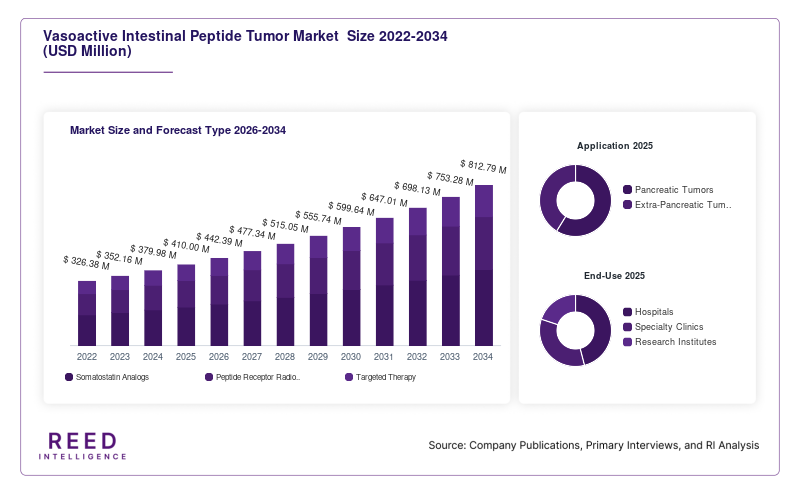
The somatostatin analogs segment dominated the market in 2024, accounting for approximately 52% of the total share. These drugs are widely used as first-line therapy for managing symptoms associated with VIPomas. Their effectiveness in controlling hormone secretion and improving patient quality of life has contributed to their widespread adoption. Additionally, the availability of long-acting formulations has enhanced patient compliance. The increasing use of these drugs in combination with other therapies is further supporting their dominance.
The peptide receptor radionuclide therapy (PRRT) segment is expected to be the fastest-growing, with a CAGR of 9.5% during the forecast period. This growth is driven by its targeted approach, which delivers radiation directly to tumor cells. The increasing number of clinical studies supporting its efficacy and safety is contributing to its adoption. Additionally, advancements in radiopharmaceuticals are enhancing treatment outcomes.
By Application
The pancreatic tumors segment held the largest share in 2024, accounting for around 60% of the market. VIPomas primarily originate in the pancreas, making this segment the dominant application area. The high prevalence of pancreatic neuroendocrine tumors and the availability of advanced diagnostic tools are driving growth in this segment. Additionally, increasing research focused on pancreatic tumors is supporting market expansion.
The extra-pancreatic tumors segment is projected to grow at the fastest CAGR of 8.7% during the forecast period. This growth is attributed to improved diagnostic capabilities that enable the detection of tumors in other parts of the body. Increasing awareness and advancements in imaging technologies are further supporting this segment’s growth.
By End-Use
Hospitals dominated the market in 2024, accounting for approximately 58% of the total share. Hospitals serve as primary treatment centers for VIPomas, offering comprehensive diagnostic and therapeutic services. The availability of advanced medical equipment and specialized healthcare professionals contributes to this dominance. Additionally, hospitals are often the first point of contact for patients, which drives demand in this segment.
Specialty clinics are expected to be the fastest-growing segment, with a CAGR of 8.9% during the forecast period. These clinics focus on specific diseases, providing specialized care and personalized treatment plans. The increasing number of specialty clinics and their focus on patient-centric care are driving growth in this segment.
Regional Analysis
North America
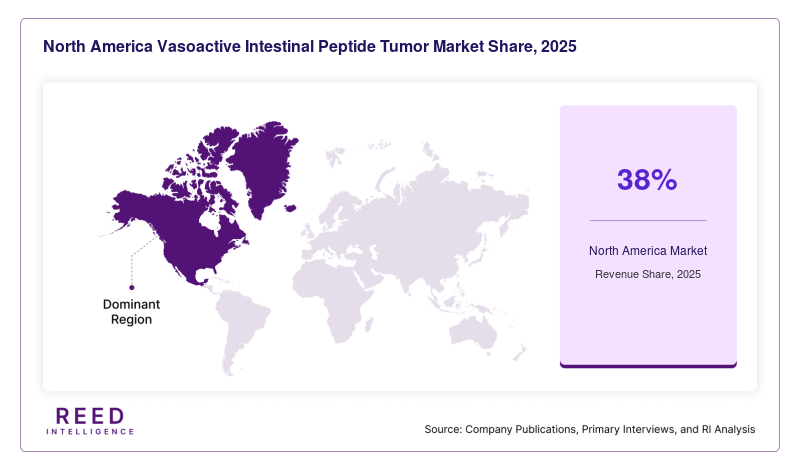
North America accounted for the largest market share of approximately 38% in 2025 and is expected to maintain its dominance throughout the forecast period. The region is projected to grow at a CAGR of 7.5% from 2025 to 2034. The presence of advanced healthcare infrastructure, high awareness levels, and strong research funding contribute to market growth. Additionally, favorable reimbursement policies and the availability of specialized oncology centers support the adoption of advanced therapies.
The United States dominates the regional market due to its well-established healthcare system and strong focus on rare disease research. A key growth factor in the country is the increasing number of clinical trials focused on neuroendocrine tumors. These trials are driving innovation and improving treatment options, which is expected to further boost market growth.
Europe
Europe held a market share of around 27% in 2025 and is anticipated to grow at a CAGR of 7.2% during the forecast period. The region benefits from strong healthcare systems and increasing government support for rare disease research. Countries such as Germany, France, and the United Kingdom are leading contributors to market growth.
Germany is the dominant country in this region, driven by its advanced medical infrastructure and strong focus on oncology research. A unique growth factor is the increasing adoption of precision medicine, which is enhancing treatment outcomes and supporting market expansion.
Asia Pacific
Asia Pacific accounted for approximately 18% of the market share in 2025 and is expected to grow at the fastest CAGR of 9.1% during the forecast period. Rapid urbanization, increasing healthcare investments, and rising awareness are driving market growth in this region.
China leads the market in Asia Pacific due to its large patient population and expanding healthcare infrastructure. A significant growth factor is the increasing government investment in cancer research and treatment facilities, which is improving access to advanced therapies.
Middle East & Africa
The Middle East & Africa region held a market share of around 9% in 2025 and is projected to grow at a CAGR of 6.8% during the forecast period. The market is driven by improving healthcare infrastructure and increasing awareness of rare diseases.
Saudi Arabia dominates the region due to its ongoing healthcare reforms and investments in medical technology. A key growth factor is the expansion of specialized oncology centers, which is enhancing diagnosis and treatment capabilities.
Latin America
Latin America accounted for approximately 8% of the market share in 2025 and is expected to grow at a CAGR of 7.0% during the forecast period. The region is witnessing improvements in healthcare access and increasing investments in medical infrastructure.
Brazil leads the market in this region, supported by its large population and growing healthcare sector. A unique growth factor is the increasing collaboration between public and private healthcare providers, which is improving access to advanced treatments.
Competitive Landscape
The Vasoactive Intestinal Peptide Tumor Market is moderately fragmented, with several global and regional players competing based on product innovation, pricing, and distribution strategies. Leading companies are focusing on expanding their product portfolios and investing in research and development to gain a competitive edge. Strategic collaborations, mergers, and acquisitions are common in this market.
Novartis AG is considered a leading player due to its strong presence in neuroendocrine tumor therapies and continuous investment in research. A recent development includes the expansion of its radioligand therapy portfolio, which is expected to strengthen its market position. Other companies are also focusing on developing innovative therapies and expanding their geographic presence to capture a larger market share.
Key Players
- Novartis AG
- Pfizer Inc.
- Ipsen Pharma
- Advanced Accelerator Applications
- Bayer AG
- Amgen Inc.
- Eli Lilly and Company
- Teva Pharmaceutical Industries Ltd.
- Sun Pharmaceutical Industries Ltd.
- Dr. Reddy’s Laboratories
- Merck & Co., Inc.
- F. Hoffmann-La Roche Ltd.
- Bristol-Myers Squibb
- AstraZeneca plc
- Johnson & Johnson
Recent Developments
- A leading pharmaceutical company launched an advanced PRRT therapy aimed at improving treatment outcomes for neuroendocrine tumors.
- Several biotech firms initiated clinical trials focusing on combination therapies for VIPomas.
- Increased investment in radiopharmaceutical manufacturing facilities to support growing demand for targeted therapies.
Vasoactive Intestinal Peptide Tumor Market Segments
Type
- Somatostatin Analogs
- Peptide Receptor Radionuclide Therapy (PRRT)
- Targeted Therapy
Application
- Pancreatic Tumors
- Extra-Pancreatic Tumors
End-Use
- Hospitals
- Specialty Clinics
- Research Institutes
By Region
- North America
- Europe
- APAC
- Middle East and Africa
- LATAM