Vasovagal Syncope Treatment Market Size, Share, Demand Report By Treatment Type (Pharmacological Therapy, Non-Pharmacological Therapy), By End User (Hospitals, Ambulatory Care Centers, Specialty Clinics), By Diagnostic Method (Tilt Table Testing, ECG Monitoring, Wearable Cardiac Devices, Autonomic Function Tests), By Regional Outlook & Segment Forecasts, 2026–2034
USD 3950
Market Overview
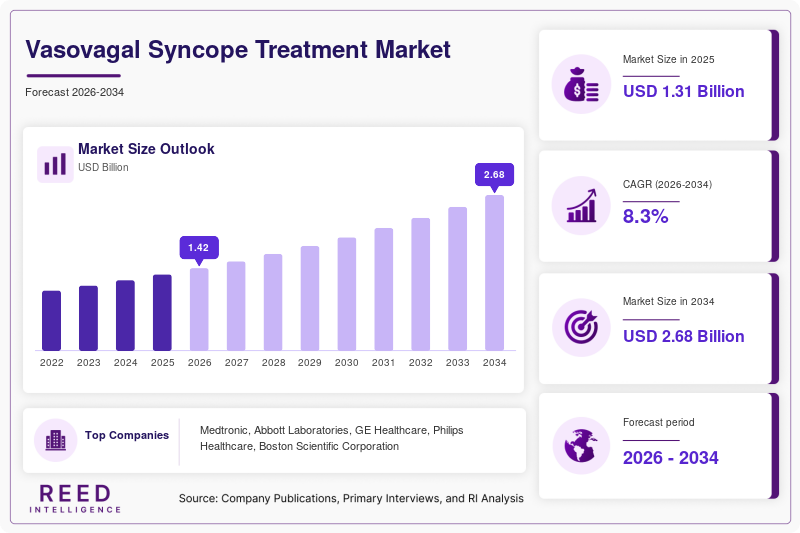
The global Vasovagal Syncope Treatment Market size is estimated to be valued at approximately USD 1.42 billion, and it is projected to reach nearly USD 2.68 billion by 2034, registering a CAGR of 8.3% during the forecast period (2026–2034). Growth is primarily driven by the increasing burden of cardiovascular and neurological disorders, alongside lifestyle-related stress conditions that contribute to syncope episodes across diverse age groups.
A key global factor supporting market expansion is the growing integration of digital health monitoring systems, including wearable biosensors and remote patient monitoring platforms. These technologies enable early detection of abnormal heart rate and blood pressure fluctuations, which are major triggers of vasovagal syncope. Additionally, expanding healthcare infrastructure in emerging economies and rising patient awareness about fainting disorders are improving diagnosis rates, thereby fueling demand for both pharmacological and non-pharmacological treatment approaches.
Key Highlights
- North America dominated the market with a 34.2% share in 2025.
- Asia Pacific is expected to grow at the fastest CAGR of 11.2% during 2026–2034.
- By treatment type, pharmacological therapy accounted for the largest share of 46.8%.
- while non-pharmacological interventions are projected to grow at a CAGR of 10.6%.
- By end-user, hospitals led with a 42.3% share, whereas ambulatory care centers are expected to expand at a CAGR of 9.9%.
- The United States remained the dominant country, with market values of USD 610 million in 2024 and USD 665 million in 2025.
Market Trends
Increasing Adoption of Wearable Diagnostic and Monitoring Devices
The adoption of wearable medical devices is emerging as a significant trend in the Vasovagal Syncope Treatment Market. Devices such as smartwatches, ECG patches, and continuous blood pressure monitors are increasingly being used to detect early warning signs of syncope episodes. These devices help track physiological parameters like heart rate variability and blood pressure drops, enabling timely intervention. Healthcare providers are integrating these devices into long-term patient care plans, particularly for individuals with recurrent syncope episodes. The growing consumer preference for home-based monitoring solutions, combined with advancements in sensor accuracy and AI-based predictive analytics, is strengthening this trend across both developed and emerging healthcare systems.
Expansion of Personalized and Autonomic-Based Treatment Approaches
Another major trend is the shift toward personalized treatment strategies based on autonomic nervous system profiling. Physicians are increasingly focusing on identifying patient-specific triggers, such as dehydration sensitivity, emotional stress response, or cardiovascular reflex abnormalities. This has led to the development of tailored therapeutic regimens involving lifestyle modifications, pharmacological interventions, and tilt-training therapy. Research institutions are also exploring neurocardiogenic pathways to develop more targeted treatment options. This personalized approach is improving patient outcomes, reducing recurrence rates, and enhancing overall quality of life, thereby reshaping treatment protocols within the Vasovagal Syncope Treatment Market.
Market Drivers
Rising Prevalence of Syncope and Cardiovascular Disorders
The increasing prevalence of vasovagal syncope cases globally is a major driver of market growth. Factors such as sedentary lifestyles, rising stress levels, dehydration, and underlying cardiovascular conditions are contributing to higher incidence rates. Elderly populations are particularly vulnerable due to age-related autonomic dysfunction. In addition, improved diagnostic capabilities are leading to higher reported cases, further expanding the patient pool. Hospitals and clinics are witnessing increased patient visits for unexplained fainting episodes, prompting greater demand for diagnostic testing and treatment solutions. This rising disease burden is significantly accelerating the growth of the Vasovagal Syncope Treatment Market.
Advancements in Diagnostic Technologies and Clinical Awareness
Technological advancements in diagnostic tools are playing a crucial role in market expansion. Tilt table testing, continuous ECG monitoring, and autonomic function tests have become more accurate and accessible, allowing early detection of vasovagal syncope. Additionally, growing clinical awareness among healthcare professionals is improving diagnosis rates, reducing misdiagnosis with other neurological conditions. Educational programs and updated clinical guidelines are further strengthening awareness among physicians. As a result, more patients are receiving timely treatment, which is increasing demand for both pharmacological and behavioral therapy solutions, thereby driving market growth globally.
Market Restraint
Limited Awareness and Underdiagnosis in Emerging Regions
One of the key restraints in the Vasovagal Syncope Treatment Market is the lack of awareness and underdiagnosis in low- and middle-income regions. Many patients experiencing fainting episodes often remain undiagnosed or are misdiagnosed with anxiety or epilepsy due to limited access to specialized diagnostic tools. Healthcare infrastructure gaps and shortage of trained cardiologists and neurologists further worsen the situation. As a result, a significant portion of the patient population does not receive appropriate treatment. This restricts market penetration and limits revenue generation potential in developing healthcare systems, slowing overall global market growth despite increasing disease prevalence.
Market Opportunities
Expansion of Telemedicine and Remote Cardiac Care Solutions
The growing adoption of telemedicine platforms presents a significant opportunity for the Vasovagal Syncope Treatment Market. Remote consultations allow patients experiencing recurrent fainting episodes to access specialists without geographical limitations. Integration of wearable monitoring devices with telehealth platforms enables continuous tracking of patient vitals and real-time alerts for abnormal physiological changes. This is particularly beneficial for elderly patients and individuals in rural areas. Healthcare providers are increasingly investing in digital ecosystems that combine remote diagnostics, data analytics, and personalized care plans, creating strong growth opportunities for technology-driven treatment solutions in this market.
Growth in Research for Novel Pharmacological Therapies
Ongoing research in neurocardiology and autonomic nervous system regulation is opening new opportunities for drug development. Pharmaceutical companies are exploring novel agents that can stabilize blood pressure responses and reduce excessive vagal tone activity. Additionally, repurposing existing cardiovascular drugs for syncope management is gaining traction. Clinical trials focusing on serotonin modulators, beta-blockers, and volume expanders are expected to enhance treatment efficacy. Increasing funding from public and private healthcare organizations is further supporting innovation in this field. These advancements are likely to introduce more effective and safer treatment options, expanding the Vasovagal Syncope Treatment Market.
Segmental Analysis
Treatment Type Segment
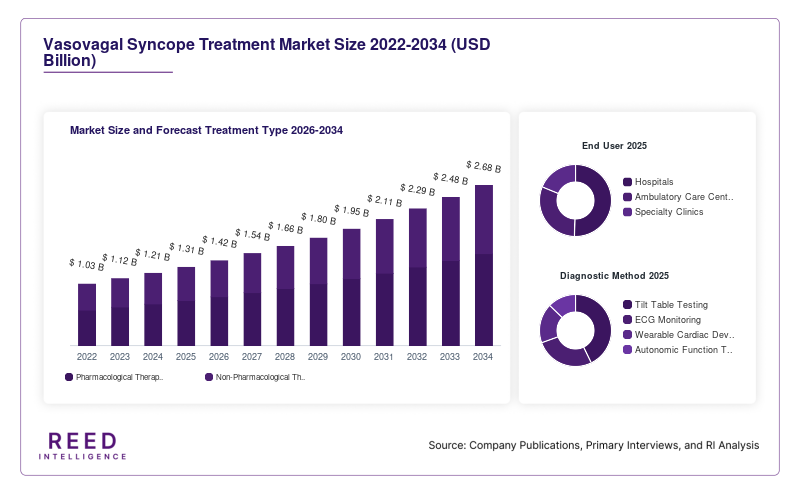
Pharmacological therapy dominated the Vasovagal Syncope Treatment Market with approximately 46.8% share in 2024. This segment includes medications such as beta-blockers, vasoconstrictors, and volume expanders that help regulate blood pressure and prevent syncope episodes. High prescription rates and strong clinical adoption make this segment the most widely used treatment approach across hospitals and specialty clinics. Physicians prefer pharmacological interventions for moderate to severe cases, particularly in patients with frequent syncope episodes or underlying cardiovascular conditions. The accessibility of generic medications also supports strong market penetration globally.
Non-pharmacological interventions are expected to grow at a CAGR of around 10.6% during the forecast period. This segment includes lifestyle modification, tilt-training therapy, hydration management, and biofeedback techniques. Increasing preference for drug-free treatment approaches, especially among younger patients and long-term care cases, is driving growth. The integration of wearable monitoring systems with behavioral therapy programs is further enhancing effectiveness. Additionally, rising awareness about preventive healthcare and self-management strategies is supporting adoption, making this segment one of the fastest-growing areas in the Vasovagal Syncope Treatment Market.
End-User Segment
Hospitals accounted for approximately 42.3% share in 2024, making them the primary end-user segment. Hospitals serve as the first point of diagnosis for most syncope cases due to availability of advanced diagnostic tools such as tilt table testing and ECG monitoring systems. Emergency departments frequently handle fainting cases, contributing to high patient inflow. Strong infrastructure and availability of specialized cardiologists further reinforce hospital dominance in treatment delivery across both developed and developing regions.
Ambulatory care centers are expected to expand at a CAGR of around 9.9% during the forecast period. Increasing preference for outpatient care and cost-effective treatment options is driving segment growth. These centers provide follow-up consultations, monitoring services, and preventive care programs for syncope patients. Rising adoption of telemedicine and portable diagnostic devices is further enhancing their capabilities. The convenience and reduced hospitalization costs associated with ambulatory care are making this segment increasingly attractive for patients and healthcare providers.
Diagnostic Segment
Tilt table testing held the largest share of approximately 39.4% in 2024 within the diagnostic segment. It remains the gold standard for confirming vasovagal syncope by reproducing symptoms under controlled conditions. High diagnostic accuracy and widespread availability in specialized centers contribute to its dominance. Continuous ECG monitoring is also widely used for identifying cardiac rhythm abnormalities associated with syncope.
Wearable diagnostic technologies are expected to grow at a CAGR of 12.1% due to increasing demand for continuous remote monitoring. These devices enable early detection of abnormal physiological changes and improve preventive care outcomes. Integration with mobile health platforms and AI-based analytics is accelerating adoption across patient populations.
Regional Analysis
North America
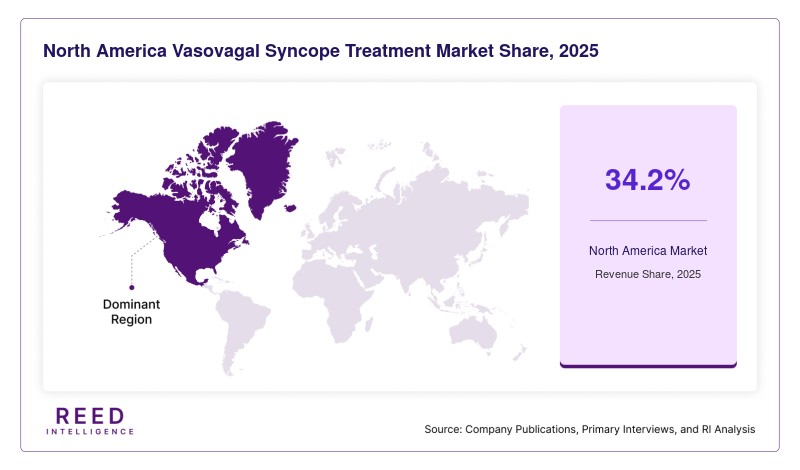
North America accounted for approximately 34.2% share of the Vasovagal Syncope Treatment Market in 2025 and is expected to grow at a CAGR of around 7.9% during the forecast period. Strong healthcare infrastructure, high diagnostic awareness, and early adoption of advanced medical technologies contribute to regional growth. Increasing prevalence of cardiovascular disorders also supports demand for syncope treatments.
The United States is the primary contributor in this region due to advanced hospital networks and strong clinical research activities. Growing use of wearable cardiac monitoring devices and widespread insurance coverage for diagnostic procedures further enhance treatment accessibility. Additionally, ongoing clinical trials and strong presence of pharmaceutical companies support continuous market expansion.
Europe
Europe held nearly 27.5% market share in 2025 and is projected to grow at a CAGR of 7.4% during the forecast period. The region benefits from strong government healthcare systems and increasing awareness of fainting disorders. Rising geriatric population also contributes to higher incidence rates.
Germany leads the European market due to advanced cardiology care infrastructure and strong research institutions. Increased focus on preventive healthcare and integration of digital monitoring systems in hospitals are key growth drivers. Additionally, favorable reimbursement policies support patient access to diagnostic and treatment services.
Asia Pacific
Asia Pacific accounted for 22.1% share in 2025 and is expected to grow at the fastest CAGR of 11.2% during 2026–2034. Rapid urbanization, increasing healthcare investments, and rising awareness about cardiovascular health are fueling market expansion.
China is the dominant country in the region due to large patient population and improving healthcare infrastructure. Growing adoption of wearable devices and expansion of telemedicine services are significantly improving diagnosis rates. India is also witnessing strong growth due to increasing hospital access and rising medical awareness.
Middle East & Africa
The Middle East & Africa region held 8.4% market share in 2025 and is projected to grow at a CAGR of 8.1%. Healthcare modernization initiatives and increasing investment in cardiac care facilities are supporting growth.
Saudi Arabia leads the region due to government healthcare reforms and growing adoption of advanced diagnostic technologies. Rising awareness programs and increasing hospital infrastructure development are improving treatment accessibility across urban areas.
Latin America
Latin America accounted for 7.8% share in 2025 and is expected to grow at a CAGR of 7.6% during the forecast period. Increasing healthcare expenditure and gradual improvement in diagnostic capabilities are supporting regional expansion.
Brazil is the leading country in this region due to expanding private healthcare sector and increasing availability of cardiology services. Awareness campaigns and improved access to specialized clinics are contributing to higher diagnosis and treatment rates.
Competitive Landscape
The Vasovagal Syncope Treatment Market is moderately competitive, with a mix of pharmaceutical companies, medical device manufacturers, and digital health solution providers. Key players are focusing on product innovation, clinical research collaborations, and expansion of diagnostic technologies. Companies such as Medtronic, Abbott Laboratories, Biotronik, GE Healthcare, and Philips Healthcare are actively involved in cardiac monitoring and diagnostic solutions. Medtronic remains a key leader due to its strong portfolio of implantable cardiac devices and monitoring systems. Recent developments include the launch of advanced wearable cardiac monitoring patches designed for continuous syncope detection and improved patient compliance.
Key Players
- Medtronic
- Abbott Laboratories
- GE Healthcare
- Philips Healthcare
- Biotronik
- Boston Scientific Corporation
- Nihon Kohden Corporation
- AliveCor Inc.
- iRhythm Technologies
- Hill-Rom Holdings
- Fukuda Denshi
- Schiller AG
- Spacelabs Healthcare
- Masimo Corporation
- Omron Healthcare
Recent Developments
- A leading cardiac device manufacturer introduced an AI-enabled wearable patch for continuous syncope monitoring, improving early detection accuracy.
- A major pharmaceutical company initiated Phase III clinical trials for a novel autonomic stabilizer targeting recurrent vasovagal syncope episodes.
- A global healthcare technology firm expanded its telecardiology platform to integrate real-time syncope alert systems connected with hospital networks.
Vasovagal Syncope Treatment Market Segments
Treatment Type
- Pharmacological Therapy
- Non-Pharmacological Therapy (Lifestyle Modification, Tilt Training, Biofeedback)
End User
- Hospitals
- Ambulatory Care Centers
- Specialty Clinics
Diagnostic Method
- Tilt Table Testing
- ECG Monitoring
- Wearable Cardiac Devices
- Autonomic Function Tests
By Region
- North America
- Europe
- APAC
- Middle East and Africa
- LATAM