Vegan Cheese Sauce Market Size, Share Demand Report By Product Type (Cashew-Based, Almond-Based, Soy-Based, Oat-Based, Others), By Application (Dips & Spreads, Ready Meals, Snacks, Others), By End-Use (Household, Foodservice, Industrial), By Region & Segment Forecasts, 2026–2034
USD 3950
Market Overview
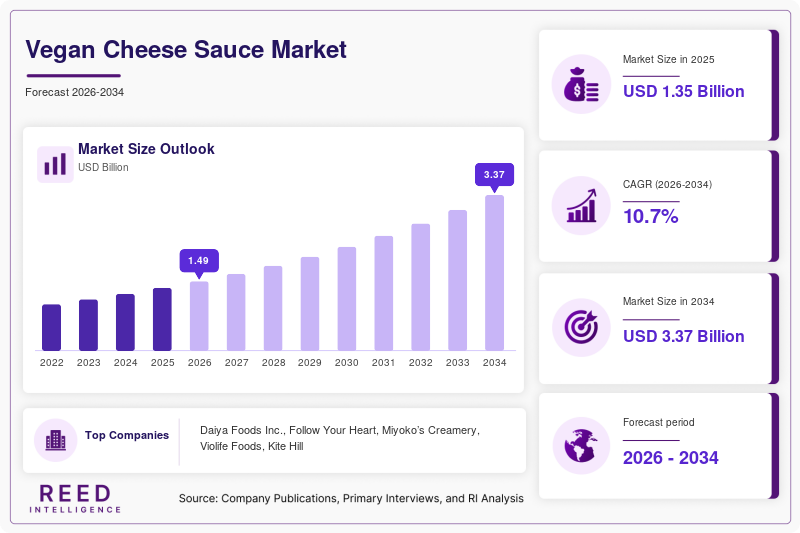
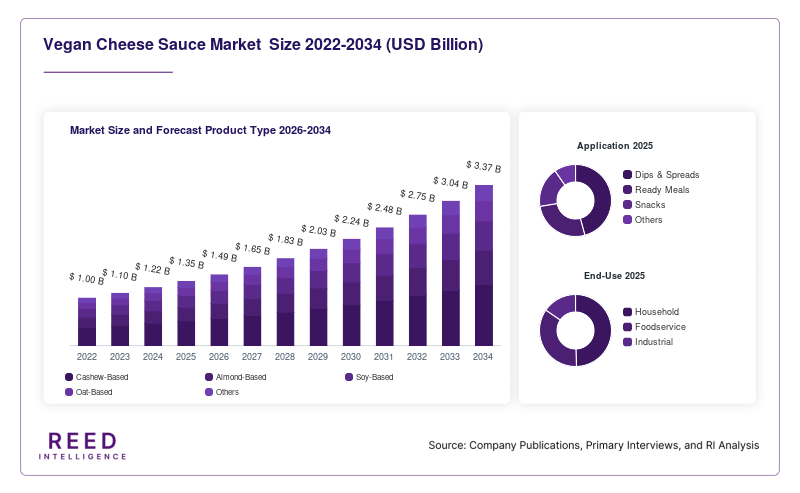
The global Vegan Cheese Sauce Market was valued at approximately USD 1.35 billion in 2026 and is projected to reach USD 3.05 billion by 2034, expanding at a CAGR of 10.7% during the forecast period (2026–2034). The market continues to gain traction as consumer preferences shift toward plant-based and dairy-free alternatives across foodservice and retail sectors. Increasing awareness of lactose intolerance, sustainability concerns, and the ethical implications of dairy production are contributing to rising adoption rates. Food manufacturers are responding with innovative formulations that replicate the texture and flavor of traditional cheese sauces while maintaining clean-label and allergen-free attributes.
A major global factor supporting market growth is the rapid expansion of the plant-based food ecosystem. Retail shelf space for vegan products has increased significantly, supported by strong distribution networks and growing investments in alternative protein and dairy technologies. Additionally, the integration of vegan cheese sauces in ready-to-eat meals, fast-food chains, and meal kits has expanded consumption occasions and improved accessibility.
Key Highlights
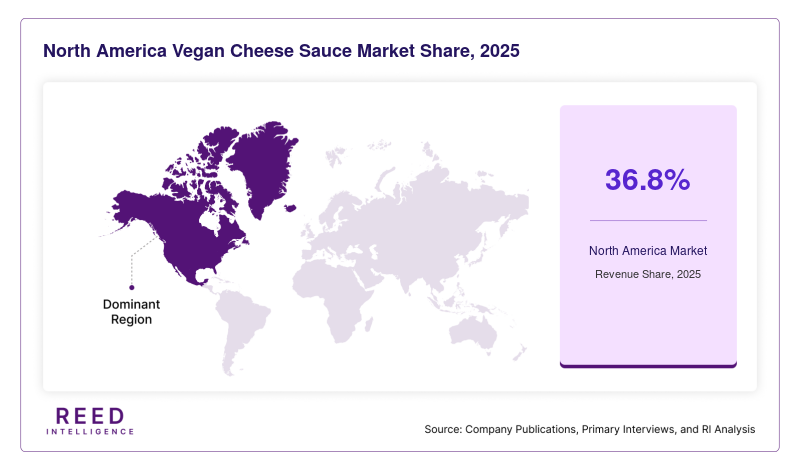
- North America dominated the market with a 36.8% share in 2025.
- Asia Pacific is expected to grow at the fastest CAGR of 12.3% during 2026–2034.
- By product type, cashew-based sauces accounted for the largest share of 39.6%, while oat-based sauces are projected to grow at a CAGR of 13.1%.
- By application, dips & spreads led with a 42.5% share, whereas ready meals are expected to expand at a CAGR of 12.8%.
- The United States remained the dominant country, with market values of USD 410 million in 2024 and USD 455 million in 2025.
Market Trends
Increasing Product Innovation with Functional Ingredients
Manufacturers in the Vegan Cheese Sauce Market are focusing on innovation by incorporating functional and nutrient-rich ingredients such as fortified vitamins, probiotics, and plant proteins. This trend is driven by consumer demand for products that offer both taste and health benefits. Companies are enhancing formulations using ingredients like nutritional yeast, pea protein, and algae-based emulsifiers to improve flavor, texture, and nutritional value. Clean-label positioning is also gaining importance, with brands emphasizing the absence of artificial additives and preservatives. Additionally, allergen-free formulations, including soy-free and nut-free variants, are becoming more prevalent to cater to a broader consumer base. These innovations are strengthening brand differentiation and encouraging repeat purchases across both retail and foodservice channels.
Expansion of Foodservice and Quick-Service Restaurant Integration
The integration of vegan cheese sauces into foodservice menus is accelerating market growth. Quick-service restaurants and casual dining chains are increasingly offering plant-based menu options, including vegan nachos, pasta, burgers, and loaded fries. This trend is driven by the growing popularity of flexitarian diets and consumer curiosity toward plant-based foods. Foodservice operators are partnering with vegan ingredient suppliers to ensure consistent quality and scalability. Additionally, meal kit providers and cloud kitchens are incorporating vegan cheese sauces into their offerings, further expanding reach. This shift not only increases product visibility but also normalizes plant-based consumption, contributing to long-term market expansion.
Market Drivers
Rising Adoption of Plant-Based Diets
The growing global shift toward plant-based diets is a key driver for the Vegan Cheese Sauce Market. Consumers are increasingly adopting vegan and flexitarian lifestyles due to health, environmental, and ethical concerns. Plant-based diets are associated with lower cholesterol levels and reduced risk of chronic diseases, encouraging individuals to replace dairy products with alternatives. Vegan cheese sauces offer a convenient substitute for traditional cheese, making them popular among health-conscious consumers. Additionally, social media influence and celebrity endorsements are amplifying awareness and acceptance of vegan foods. As a result, demand for plant-based sauces is rising across households, restaurants, and institutional buyers.
Increasing Prevalence of Lactose Intolerance and Dairy Allergies
The rising prevalence of lactose intolerance and dairy allergies is significantly contributing to market growth. A large portion of the global population experiences difficulty digesting lactose, leading to discomfort and digestive issues. Vegan cheese sauces provide a viable alternative without compromising taste and culinary applications. Food manufacturers are leveraging this opportunity by developing lactose-free products that cater to sensitive consumers. Additionally, regulatory bodies and health organizations are promoting allergen labeling, encouraging transparency and boosting consumer trust. This driver is particularly strong in regions such as Asia Pacific and Latin America, where lactose intolerance rates are relatively high.
Market Restraint
High Production Costs and Price Sensitivity
One of the primary restraints in the Vegan Cheese Sauce Market is the relatively high production cost compared to conventional cheese sauces. The use of premium plant-based ingredients such as cashews, almonds, and specialty starches increases manufacturing expenses. Additionally, the need for advanced processing technologies to achieve desired texture and flavor further adds to production costs. These factors result in higher retail prices, which can limit adoption among price-sensitive consumers, particularly in emerging markets.
The industry impact of this restraint is evident in slower penetration rates in developing regions where affordability remains a key purchasing factor. For example, while urban consumers may be willing to pay a premium for vegan products, rural and lower-income groups often prioritize cost over dietary preferences. Furthermore, fluctuations in raw material prices, especially nuts and plant proteins, can affect profit margins and pricing strategies. Companies are attempting to mitigate this challenge by exploring alternative ingredients such as oats and potatoes, which are more cost-effective. However, maintaining product quality while reducing costs remains a critical challenge for market players.
Market Opportunities
Growth in Emerging Markets
Emerging economies present significant growth opportunities for the Vegan Cheese Sauce Market. Rapid urbanization, increasing disposable income, and changing dietary habits are driving demand for plant-based products in regions such as Asia Pacific, Latin America, and the Middle East. Consumers in these markets are becoming more aware of health and sustainability issues, leading to increased interest in vegan alternatives. Additionally, the expansion of modern retail formats and e-commerce platforms is improving product accessibility. Local manufacturers are also entering the market with region-specific flavors and formulations, enhancing adoption rates. This opportunity is expected to drive substantial revenue growth over the forecast period.
Product Diversification and Flavor Innovation
The introduction of diverse flavors and product formats is creating new growth avenues in the Vegan Cheese Sauce Market. Companies are experimenting with flavors such as spicy jalapeño, smoky barbecue, and truffle to cater to evolving consumer preferences. Additionally, innovations in packaging, including single-serve pouches and ready-to-use containers, are enhancing convenience. Product diversification also includes fortified sauces with added nutrients such as calcium and vitamin B12, targeting health-conscious consumers. These innovations are expanding the application scope of vegan cheese sauces across various cuisines and meal types, driving market expansion.
Segmental Analysis
By Product Type
Cashew-based vegan cheese sauces dominated the market with a 39.6% share in 2024, owing to their creamy texture and rich flavor profile. These products closely mimic traditional cheese sauces, making them highly popular among consumers transitioning to plant-based diets. Cashews provide a natural fat content that enhances mouthfeel and consistency, reducing the need for artificial additives. Additionally, cashew-based sauces are widely used in dips, pasta, and baked dishes, contributing to their high demand. Manufacturers are also focusing on organic and non-GMO cashew sourcing to appeal to health-conscious consumers, further strengthening this segment’s market position.
Oat-based vegan cheese sauces are expected to grow at the fastest CAGR of 13.1% during the forecast period. This growth is driven by the increasing demand for allergen-free and cost-effective alternatives. Oats are widely available and relatively inexpensive compared to nuts, making them an attractive option for manufacturers. Additionally, oat-based sauces offer a neutral flavor that can be easily customized with different seasonings and ingredients. The rising popularity of oat-based dairy alternatives, such as oat milk, is also supporting the growth of this segment.
By Application
Dips & spreads accounted for the largest share of 42.5% in 2024, driven by their widespread use in snacks and appetizers. Vegan cheese sauces are commonly used as dips for nachos, chips, and vegetables, making them a popular choice among consumers. The convenience and versatility of these products are key factors contributing to their dominance. Additionally, the growing trend of home cooking and entertaining is increasing demand for ready-to-use dips and spreads. Manufacturers are introducing innovative flavors and packaging formats to cater to evolving consumer preferences.
Ready meals are projected to grow at the fastest CAGR of 12.8% during the forecast period. This growth is driven by increasing demand for convenient and time-saving food options. Vegan cheese sauces are being incorporated into a variety of ready meals, including pasta, casseroles, and frozen dishes. The expansion of meal kit services and online grocery platforms is further supporting this segment’s growth. Additionally, the rising popularity of plant-based diets among busy consumers is driving demand for ready-to-eat vegan products.
By End-Use
The household segment dominated the market with a significant share in 2024, driven by increasing adoption of vegan diets among consumers. Households are increasingly incorporating vegan cheese sauces into daily meals, supported by the availability of a wide range of products in retail stores. The convenience of ready-to-use sauces and the growing trend of home cooking are key factors contributing to this segment’s dominance. Additionally, the availability of recipe content and cooking tutorials online is encouraging consumers to experiment with vegan ingredients.
The foodservice segment is expected to grow at the fastest CAGR of 12.5% during the forecast period. This growth is driven by the increasing adoption of vegan menu options in restaurants, cafes, and quick-service chains. Foodservice operators are leveraging vegan cheese sauces to enhance menu diversity and attract health-conscious consumers. Additionally, the growing popularity of plant-based dining experiences and the expansion of vegan restaurants are supporting this segment’s growth.
Regional Analysis
North America
North America held a dominant share of 36.8% in the Vegan Cheese Sauce Market in 2025 and is projected to grow at a CAGR of 9.8% during the forecast period. The region benefits from high consumer awareness, well-established distribution channels, and strong presence of plant-based food companies. Retail chains and foodservice operators are actively expanding their vegan product offerings, contributing to market growth. Additionally, favorable regulatory frameworks and labeling standards support product transparency and consumer trust.
The United States is the leading country in this region, driven by a strong vegan consumer base and continuous product innovation. One unique growth factor is the widespread adoption of plant-based options in fast-food chains, which has significantly increased product visibility. The presence of large-scale manufacturers and investments in food technology further strengthen market growth.
Europe
Europe accounted for a significant share of the Vegan Cheese Sauce Market in 2025 and is expected to grow at a CAGR of 10.2%. The region’s growth is driven by stringent environmental regulations and increasing consumer focus on sustainability. Countries such as Germany, the UK, and France are witnessing rising demand for dairy alternatives. The availability of diverse vegan products in supermarkets and specialty stores is also contributing to market expansion.
Germany stands out as the dominant country in Europe, supported by a strong vegan culture and government initiatives promoting plant-based diets. A unique growth factor is the increasing number of vegan festivals and events, which are boosting consumer awareness and product adoption.
Asia Pacific
Asia Pacific is expected to grow at the fastest CAGR of 12.3% during the forecast period, supported by a rapidly expanding middle-class population and changing dietary preferences. The region is witnessing increased demand for plant-based products due to rising health consciousness and lactose intolerance prevalence. Additionally, the growth of e-commerce platforms is enhancing product accessibility.
China is the dominant country in this region, driven by its large population and growing interest in alternative food products. A unique growth factor is the integration of plant-based ingredients into traditional cuisines, which is increasing consumer acceptance and market penetration.
Middle East & Africa
The Middle East & Africa region is experiencing steady growth in the Vegan Cheese Sauce Market, with a CAGR of 9.1%. Increasing urbanization and rising disposable income are key factors driving demand. The region is also witnessing a gradual shift toward healthier dietary choices, supported by government initiatives promoting nutrition awareness.
The United Arab Emirates is the leading country in this region, driven by a high concentration of expatriates and growing demand for international cuisines. A unique growth factor is the expansion of premium retail outlets and specialty vegan stores, which are enhancing product availability.
Latin America
Latin America is projected to grow at a CAGR of 10.5% during the forecast period, supported by increasing consumer awareness and expanding retail infrastructure. The region is witnessing rising demand for plant-based alternatives due to health and environmental concerns. Additionally, the growth of the foodservice sector is contributing to market expansion.
Brazil is the dominant country in Latin America, driven by its large population and increasing adoption of plant-based diets. A unique growth factor is the growing influence of social media and digital marketing, which is raising awareness about vegan products and encouraging consumption.
Competitive Landscape
The Vegan Cheese Sauce Market is characterized by the presence of both established food manufacturers and emerging plant-based startups. Leading companies are focusing on product innovation, strategic partnerships, and geographic expansion to strengthen their market position. The market leader, Daiya Foods Inc., holds a significant share due to its extensive product portfolio and strong distribution network. The company has recently introduced new flavor variants and improved formulations to enhance taste and texture.
Other key players are investing in research and development to create differentiated products that cater to diverse consumer preferences. Companies are also leveraging digital marketing and e-commerce platforms to increase brand visibility and reach a wider audience. Additionally, collaborations with foodservice operators are helping manufacturers expand their market presence. The competitive landscape is expected to remain dynamic, with continuous innovation and new product launches shaping market growth.
Key Players
- Daiya Foods Inc.
- Follow Your Heart
- Miyoko’s Creamery
- Violife Foods
- Kite Hill
- Good Planet Foods
- Wayfare Foods
- Parmela Creamery
- Treeline Cheese
- Bute Island Foods
- Tofutti Brands Inc.
- Vevan Foods
- Nuts For Cheese
- Green Vie Foods
- Dr-Cow Tree Nut Cheese
Recent Developments
- In 2025, Daiya Foods Inc. launched a new line of oat-based vegan cheese sauces targeting allergen-sensitive consumers.
- In 2024, Violife Foods expanded its production capacity in Europe to meet rising demand for plant-based products.
- In 2025, Follow Your Heart introduced a range of flavored vegan cheese sauces designed for foodservice applications.
Vegan Cheese Sauce Market Segments
Product Type
- Cashew-Based
- Almond-Based
- Soy-Based
- Oat-Based
- Others
Application
- Dips & Spreads
- Ready Meals
- Snacks
- Others
End-Use
- Household
- Foodservice
- Industrial
By Region
- North America
- Europe
- APAC
- Middle East and Africa
- LATAM