Vegan Flour Market Size, Share & Demand Report By Product Type (Almond Flour, Coconut Flour, Chickpea Flour, Oat Flour, Other Plant-Based Flours), By Application (Bakery & Confectionery, Snacks, Ready-to-Eat Products, Processed Foods), By End-Use (Household Consumption, Food Service Industry, Industrial Food Processing) By Region & Segment Forecasts, 2025–2034
USD 3950
Market Overview
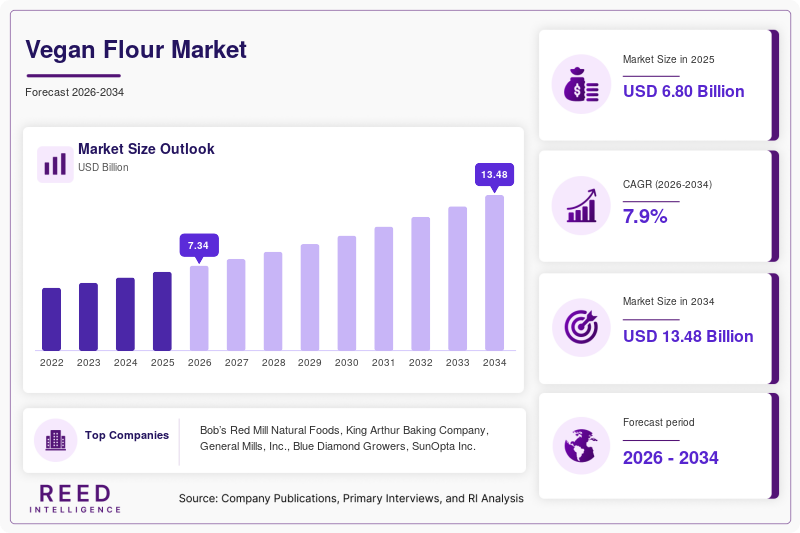
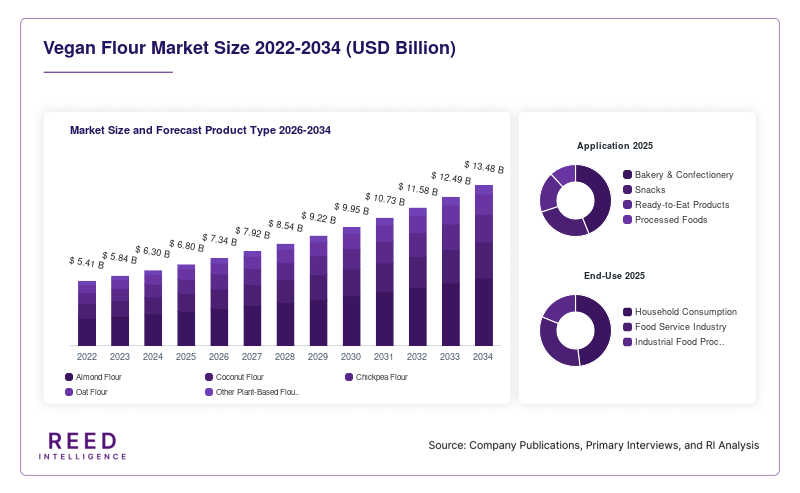
The global Vegan Flour Market size has witnessed steady expansion in recent years, driven by the growing demand for plant-based and allergen-free food ingredients. In 2025, the market size is estimated at USD 6.8 billion and is projected to reach approximately USD 7.4 billion in 2026. Over the forecast period from 2025 to 2034, the market is expected to grow at a CAGR of 7.9%, reaching nearly USD 14.2 billion by 2034. This growth reflects a shift in consumer preferences toward clean-label, gluten-free, and sustainable food products.
One of the primary growth factors is the rising adoption of vegan and flexitarian diets across developed and emerging economies. Consumers are increasingly aware of the environmental and health impacts of traditional wheat-based flours, which has encouraged the use of alternatives such as almond, coconut, chickpea, and oat flour. Another factor contributing to market growth is the expanding application of vegan flour in bakery and confectionery products, including bread, cakes, cookies, and snacks. Manufacturers are innovating to improve texture and nutritional profiles, which supports broader acceptance among consumers.
Key Highlights
- Market size projected to reach USD 14.2 billion by 2034
- CAGR of 7.9% from 2025 to 2034
- Rising demand for gluten-free and plant-based products
- Strong growth in bakery and processed food applications
- Increased innovation in functional and fortified flours
Market Trends
Increasing Demand for Gluten-Free and Functional Flours
The Vegan Flour Market is witnessing a strong shift toward gluten-free and functional flour varieties. Consumers are actively seeking alternatives that provide nutritional benefits such as high protein, fiber, and micronutrients. Flours made from chickpeas, lentils, quinoa, and oats are gaining popularity due to their functional properties and compatibility with specialized diets. This trend is further supported by the rise in digestive health awareness and demand for foods that support gut health. Manufacturers are responding by developing blends that enhance texture and taste, which historically limited adoption. As a result, functional vegan flours are increasingly being used in everyday food products beyond niche health categories.
Expansion of Plant-Based Processed Food Industry
The rapid growth of the plant-based processed food sector is significantly influencing the Vegan Flour Market. Vegan flour is becoming a key ingredient in ready-to-eat meals, snacks, and bakery products that cater to vegan and flexitarian consumers. Food manufacturers are incorporating these flours to replace traditional wheat-based ingredients while maintaining product quality. The trend is also supported by increased investment in plant-based innovation, leading to new product launches across global markets. Retailers are expanding shelf space for plant-based products, further driving visibility and accessibility. This shift is expected to continue as consumers prioritize sustainability and ethical consumption.
Market Drivers
Rising Adoption of Plant-Based Diets
The increasing adoption of plant-based diets is a major driver of the Vegan Flour Market. Consumers are shifting toward vegan and vegetarian lifestyles due to health, ethical, and environmental concerns. This shift has led to a surge in demand for plant-based ingredients, including vegan flour. Food manufacturers are reformulating products to cater to this demand, which is driving large-scale adoption across bakery, snacks, and packaged foods. The growing influence of social media and health awareness campaigns has also contributed to this trend. As more consumers seek alternatives to animal-based and refined ingredients, vegan flour continues to gain traction.
Growth in Food Allergy and Intolerance Awareness
Another key driver is the increasing prevalence of food allergies and intolerances, particularly gluten intolerance. Consumers with celiac disease or gluten sensitivity require alternative flour options, which has led to a surge in demand for vegan flour varieties. Additionally, the perception of vegan flour as a healthier option has expanded its appeal beyond those with medical conditions. Manufacturers are emphasizing allergen-free labeling and transparency, which enhances consumer trust. This driver is particularly strong in urban markets where health awareness is higher, and it continues to influence purchasing decisions globally.
Market Restraint
High Production Costs and Limited Standardization
One of the major restraints in the Vegan Flour Market is the relatively high production cost associated with alternative flours compared to conventional wheat flour. Ingredients such as almonds, quinoa, and coconut often have higher raw material costs, which translates to higher retail prices. This can limit adoption, especially in price-sensitive markets. Additionally, the lack of standardization in quality and performance across different vegan flours presents challenges for manufacturers. Variability in texture, taste, and baking properties can affect product consistency. For example, replacing wheat flour in bread production often requires multiple adjustments, increasing production complexity. These challenges may hinder large-scale adoption unless technological advancements reduce costs and improve product uniformity.
Market Opportunities
Innovation in Blended and Fortified Flours
The development of blended and fortified vegan flours presents a significant growth opportunity. Manufacturers are combining multiple plant-based ingredients to create flours with enhanced nutritional profiles and improved functionality. These blends can address common challenges such as poor texture or lack of elasticity in baking applications. Additionally, fortification with vitamins, minerals, and proteins can further increase product value. This innovation is particularly attractive to health-conscious consumers and those seeking functional foods. As research and development efforts continue, blended vegan flours are expected to gain wider acceptance across both retail and industrial segments.
Expansion in Emerging Markets
Emerging markets offer strong growth potential for the Vegan Flour Market due to increasing urbanization, rising disposable incomes, and changing dietary preferences. Consumers in these regions are becoming more aware of plant-based diets and health benefits associated with vegan ingredients. Local manufacturers are also entering the market with cost-effective products tailored to regional tastes. The expansion of modern retail channels and e-commerce platforms is improving accessibility. Governments promoting sustainable agriculture and food diversification further support market growth. This opportunity is expected to drive significant demand over the forecast period.
Segmental Analysis
By Type
The almond flour segment dominated the Vegan Flour Market in 2024, accounting for approximately 28% of the total market share. Almond flour is widely used due to its high protein content, low carbohydrate profile, and versatility in baking applications. It is particularly popular among consumers following low-carb and gluten-free diets. The segment benefits from strong demand in North America and Europe, where health-conscious consumers prefer premium ingredients. Additionally, almond flour is commonly used in bakery products such as cakes, cookies, and pastries, which further supports its dominance in the market.
The chickpea flour segment is expected to be the fastest-growing, with a projected CAGR of 9.4% during the forecast period. Chickpea flour is gaining popularity due to its affordability and high nutritional value, including protein and fiber content. It is widely used in both traditional and modern cuisines, making it accessible to a broad consumer base. The growth of this segment is supported by increasing demand for plant-based protein sources and the expansion of processed food applications. Manufacturers are also promoting chickpea flour as a sustainable and cost-effective alternative, which enhances its market potential.
By Application
The bakery and confectionery segment held the largest share of the Vegan Flour Market in 2024, accounting for around 40%. This dominance is driven by the widespread use of vegan flour in bread, cakes, cookies, and pastries. Consumers are increasingly seeking healthier alternatives to traditional baked goods, which has encouraged manufacturers to adopt vegan flour in product formulations. The segment also benefits from continuous innovation in baking techniques that improve the texture and taste of vegan products. Retail and online channels further support the availability of these products, contributing to segment growth.
The snacks segment is expected to grow at the fastest rate, with a CAGR of 8.8% over the forecast period. The increasing demand for healthy and convenient snack options is driving this growth. Vegan flour is being used to develop a variety of snack products, including chips, crackers, and protein bars. The segment benefits from changing consumer lifestyles and the growing preference for on-the-go food options. Manufacturers are focusing on product innovation and marketing strategies to attract health-conscious consumers, which supports the expansion of this segment.
By End-Use
The household segment dominated the Vegan Flour Market in 2024, accounting for approximately 55% of the market share. This dominance is attributed to the growing trend of home baking and cooking, particularly during and after the pandemic period. Consumers are increasingly experimenting with plant-based recipes, which has boosted the demand for vegan flour. The availability of a wide range of products through retail and e-commerce channels further supports this segment. Additionally, rising health awareness encourages consumers to choose vegan flour for daily use.
The food service segment is projected to be the fastest-growing, with a CAGR of 8.5% during the forecast period. Restaurants, cafes, and bakeries are increasingly incorporating vegan flour into their menus to cater to changing consumer preferences. The segment benefits from the growing popularity of vegan and plant-based dining options. Food service providers are focusing on menu diversification and innovation to attract a wider customer base. This trend is expected to drive significant growth in the segment over the coming years.
Regional Analysis
North America
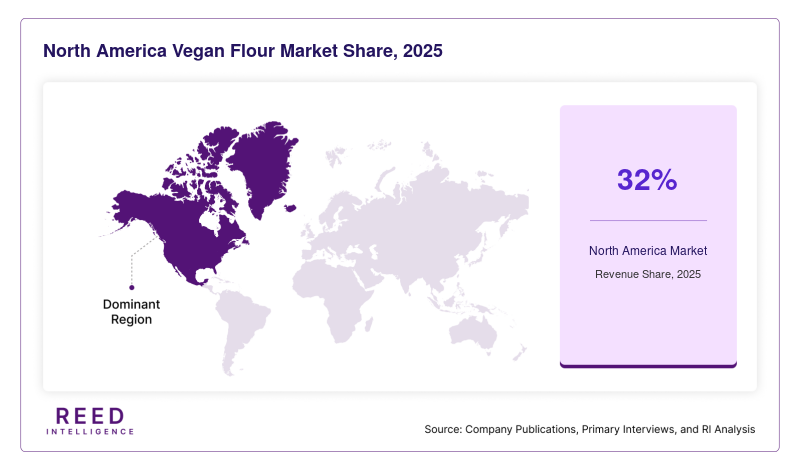
North America held a significant share of the Vegan Flour Market in 2025, accounting for approximately 32% of the global market. The region is projected to grow at a CAGR of 7.2% during the forecast period. High consumer awareness regarding plant-based diets and the presence of established food manufacturers contribute to this dominance. The market is supported by strong demand for gluten-free products and functional foods.
The United States dominates the regional market due to its large vegan population and advanced food processing industry. A unique growth factor is the strong presence of innovation-driven startups focusing on plant-based ingredients. These companies are continuously introducing new vegan flour products, which enhances competition and drives market expansion.
Europe
Europe accounted for around 27% of the Vegan Flour Market share in 2025 and is expected to grow at a CAGR of 7.5% through 2034. The region benefits from strict food labeling regulations and a strong emphasis on sustainable consumption. Consumers are increasingly opting for plant-based alternatives, which supports market growth.
Germany leads the European market, driven by high demand for organic and clean-label products. A unique growth factor is the increasing adoption of vegan diets supported by government initiatives promoting sustainability. This has encouraged both consumers and manufacturers to invest in plant-based food solutions.
Asia Pacific
Asia Pacific is the fastest-growing region, with a market share of 22% in 2025 and a projected CAGR of 9.1%. Rapid urbanization and changing dietary patterns are key factors driving growth. The region is witnessing increased demand for alternative flours in both traditional and modern food applications.
China dominates the regional market due to its large population and expanding food industry. A unique growth factor is the integration of vegan flour into traditional cuisine, which increases acceptance among local consumers. This adaptation supports sustained growth across the region.
Middle East & Africa
The Middle East & Africa region held a smaller share of approximately 10% in 2025 but is expected to grow at a CAGR of 6.8%. The market is gradually expanding due to increasing awareness of plant-based diets and health benefits associated with vegan products.
The United Arab Emirates leads the market, supported by a growing expatriate population and demand for premium food products. A unique growth factor is the rising popularity of specialty health stores and online platforms that offer a wide range of vegan flour products.
Latin America
Latin America accounted for around 9% of the global market in 2025 and is projected to grow at a CAGR of 7.0%. The region is experiencing gradual growth due to increasing health awareness and demand for alternative food ingredients.
Brazil dominates the regional market due to its large agricultural base and growing food processing industry. A unique growth factor is the availability of locally sourced raw materials such as cassava, which supports the production of cost-effective vegan flour alternatives.
Competitive Landscape
The Vegan Flour Market is moderately fragmented, with several global and regional players competing on product innovation, pricing, and distribution strategies. Key companies are focusing on expanding their product portfolios and strengthening their presence in emerging markets. Strategic partnerships, mergers, and acquisitions are common as companies aim to enhance their market position.
One of the leading players in the market is Bob’s Red Mill Natural Foods, which has a strong portfolio of vegan and gluten-free flour products. The company recently introduced a new line of organic blended flours designed for improved baking performance. Other major players are investing in research and development to create innovative products that cater to evolving consumer preferences. The competitive landscape is expected to remain dynamic, with continuous innovation shaping market trends.
Key Players List
- Bob’s Red Mill Natural Foods
- King Arthur Baking Company
- Arrowhead Mills
- Anthony’s Goods
- Nature’s Path Foods
- The Hain Celestial Group
- General Mills
- Blue Diamond Growers
- SunOpta Inc.
- Nutiva Inc.
- Bobs Red Mill Gluten Free Division
- Hodgson Mill
- To Your Health Sprouted Flour Co.
- Jovial Foods
- Shipton Mill
Recent Developments
- In 2024, a leading manufacturer launched a fortified vegan flour blend enriched with plant-based protein and vitamins to target health-conscious consumers.
- In 2025, a major food company expanded its vegan flour product line to include gluten-free baking mixes for retail distribution.
- In 2025, a regional player entered the Asia Pacific market with cost-effective chickpea flour products to capture emerging demand.
Vegan Flour Market Segments
Product Type
- Almond Flour
- Coconut Flour
- Chickpea Flour
- Oat Flour
- Other Plant-Based Flours
Application
- Bakery & Confectionery
- Snacks
- Ready-to-Eat Products
- Processed Foods
End-Use
- Household Consumption
- Food Service Industry
- Industrial Food Processing
By Region
- North America
- Europe
- APAC
- Middle East and Africa
- LATAM