Vegan Pasta Sauce Market Size, Share, Demand Report By Type (Tomato-Based Vegan Sauces, Cream-Based Vegan Sauces, Herb-Infused Vegan Sauces), By Distribution Channel (Supermarkets & Hypermarkets, Convenience Stores), By End Use (Household Consumption, Foodservice Industry), By Packaging Type (Glass Jars, Cans, Pouches, Bottles), By Region & Segment Forecasts, 2026–2034
USD 3950
Market Overview
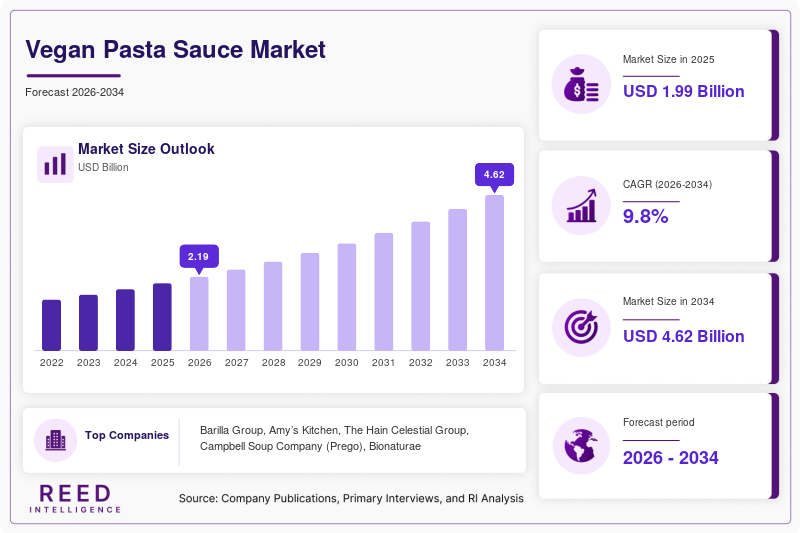
The global Vegan Pasta Sauce Market size is estimated at USD 2.18 billion, and it is projected to reach USD 4.62 billion by 2034, registering a CAGR of 9.8% (2026–2034). This growth reflects a structural shift in consumer food preferences, where vegan and flexitarian diets are no longer niche but increasingly integrated into everyday consumption habits.One of the primary global factors supporting Vegan Pasta Sauce Market growth is the rising awareness of health and wellness, particularly the demand for low-cholesterol, dairy-free, and clean-label food products. Consumers are increasingly scrutinizing ingredient labels and avoiding artificial additives, preservatives, and animal-derived ingredients.
This behavioral change is further reinforced by environmental concerns, as plant-based food production is perceived to have a lower carbon footprint compared to traditional food systems.Additionally, the expansion of organized retail and e-commerce grocery platforms has significantly improved the availability and visibility of vegan pasta sauces. Supermarkets are dedicating shelf space to plant-based food categories, while online platforms are enabling smaller vegan brands to reach global consumers without heavy distribution costs. Foodservice chains are also incorporating vegan pasta options into their menus, further normalizing product consumption.
Key Highlights
- Dominant region share (2025): Europe – 34.6%
- Fastest-growing region CAGR (2026–2034): Asia Pacific – 11.2%
- Type segment leader (2025): Tomato-based vegan sauces – 42.3% share
- Fastest-growing type segment: Organic vegan sauces – 10.7% CAGR
- Distribution leader (2025): Supermarkets & hypermarkets – 48.5% share
- Fastest-growing distribution channel: Online retail – 12.4% CAGR
- Dominant country (2024 market value): United States – USD 520 million
- Dominant country (2025 market value): United States – USD 565 million
Market Trends
Clean Label and Minimal Ingredient Reformulation
The Vegan Pasta Sauce Market is witnessing a strong shift toward clean-label formulations. Consumers are increasingly demanding sauces free from artificial preservatives, refined sugar, and synthetic additives. Manufacturers are reformulating traditional pasta sauces into vegan-friendly, organic-certified variants using olive oil, fresh herbs, and plant-based protein enhancers. This trend is significantly shaping product innovation strategies across Europe and North America.
Premiumization of Plant-Based Culinary Sauces
Another notable trend in the Vegan Pasta Sauce Market is premiumization. Consumers are willing to pay higher prices for gourmet-style vegan sauces inspired by Italian, Mediterranean, and fusion cuisines. Brands are introducing roasted garlic blends, truffle-infused sauces, and high-protein lentil-based pasta sauces. This trend is strengthening the market’s presence in specialty retail stores and premium online platforms.
Market Drivers
Rising Vegan and Flexitarian Population
The global rise in vegan and flexitarian consumers is a primary driver of the Vegan Pasta Sauce Market. Increasing awareness about animal welfare, coupled with dietary preferences for plant-based nutrition, is accelerating demand. Flexitarian consumers, who reduce but do not eliminate meat intake, are significantly contributing to repeat purchases of vegan pasta sauces in mainstream grocery channels.
Expansion of Plant-Based Food Industry
The broader expansion of the plant-based food industry is also fueling the Vegan Pasta Sauce Market. Food manufacturers are integrating vegan sauces into ready meals, frozen foods, and restaurant menus. This integration has increased product visibility and accessibility, particularly in urban retail ecosystems and quick-service restaurants offering vegan pasta dishes.
Market Restraints
Price Sensitivity and Higher Production Costs
One major restraint affecting the Vegan Pasta Sauce Market is the relatively higher cost of plant-based ingredients compared to conventional sauces. Organic vegetables, specialty oils, and clean-label preservatives increase production costs, leading to higher retail pricing. In price-sensitive markets, particularly in developing economies, this limits mass adoption and restricts volume growth.
Market Opportunities
Growth in E-Commerce Grocery Platforms
The expansion of online grocery platforms presents a significant opportunity for the Vegan Pasta Sauce Market. Digital retail channels allow niche vegan brands to reach wider audiences without relying heavily on physical retail distribution. Subscription-based grocery delivery services and direct-to-consumer models are also supporting brand loyalty and recurring sales.
Product Innovation in Functional Vegan Sauces
Functional food innovation is creating new opportunities within the Vegan Pasta Sauce Market. Manufacturers are developing sauces enriched with protein, fiber, and probiotics to appeal to health-focused consumers. These functional vegan sauces are gaining traction among fitness-conscious individuals and urban millennials seeking convenient nutrition solutions.
Segmental Analysis
By Type
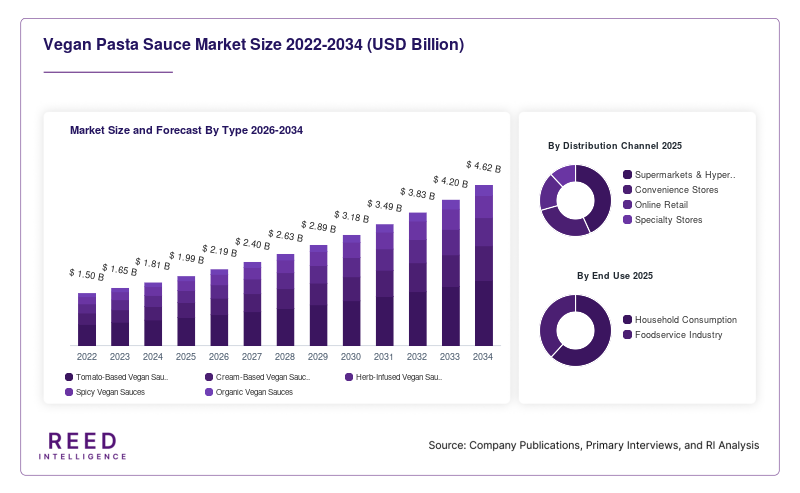
The tomato-based segment dominated the Vegan Pasta Sauce Market in 2025, accounting for 42.3% share, due to its widespread culinary use, affordability, and compatibility with global cuisines. Tomato-based vegan sauces remain the most accessible entry point for consumers transitioning to plant-based diets.
The organic vegan sauce segment is expected to grow at a CAGR of 10.7% (2026–2034), driven by rising demand for pesticide-free, non-GMO ingredients. Increasing consumer preference for sustainability and clean-label certification is supporting this growth.
By Distribution Channel
Supermarkets and hypermarkets held the leading position in the Vegan Pasta Sauce Market with 48.5% share in 2025, as consumers prefer physical verification of food quality and brand variety under one roof.
Online retail is projected to grow at the fastest CAGR of 12.4% (2026–2034), supported by digital grocery expansion, mobile shopping convenience, and aggressive discounting strategies by e-commerce platforms.
By End Use
The household segment dominated the Vegan Pasta Sauce Market with 61.8% share in 2025, driven by rising home cooking trends and increasing demand for convenient meal preparation solutions.
The foodservice segment is expected to grow at a CAGR of 10.1% (2026–2034), fueled by vegan menu expansion in restaurants, cafes, and fast-casual dining outlets.
By Packaging Type
Glass jars accounted for 39.2% share in 2025, due to premium perception and recyclability benefits. However, pouch packaging is projected to expand at a CAGR of 11.5%, driven by portability, cost efficiency, and reduced environmental footprint.
Regional Analysis
North America
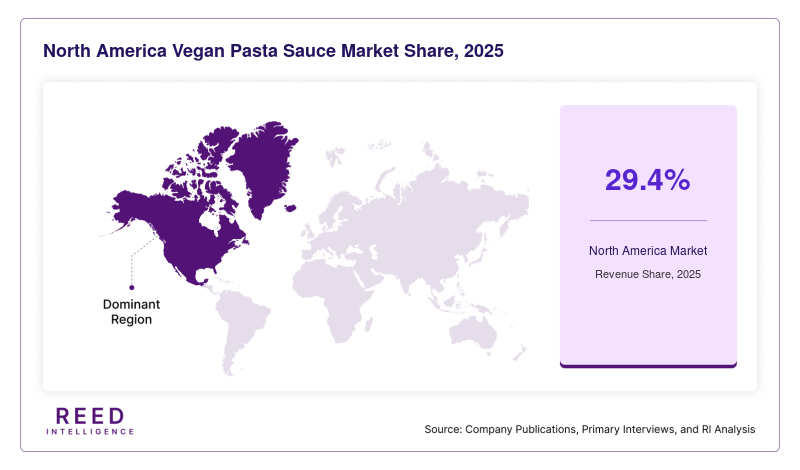
North America accounted for 29.4% share of the Vegan Pasta Sauce Market in 2025, driven by strong vegan adoption in the United States and Canada. The region is expected to grow at a CAGR of 9.2% (2026–2034). The United States dominates due to high demand for plant-based convenience foods and widespread availability of vegan-certified grocery products. Rising restaurant menu diversification is further strengthening regional growth.
Europe
Europe held the largest 34.6% market share in 2025 of the Vegan Pasta Sauce Market, supported by strong vegetarian traditions in countries like Germany, the UK, and Italy. The region is projected to expand at a CAGR of 8.7% (2026–2034). Germany leads due to robust organic food consumption trends and government support for sustainable agriculture and food labeling standards.
Asia Pacific
Asia Pacific is the fastest-growing region in the Vegan Pasta Sauce Market, holding 22.1% share in 2025 and expected to register a CAGR of 11.2% (2026–2034). Growth is driven by rising urbanization, increasing disposable income, and expanding Western food influence in countries such as China, India, and Japan. India shows strong potential due to a large vegetarian population base and expanding retail modernization.
Middle East & Africa
The Middle East & Africa accounted for 7.3% share in 2025 of the Vegan Pasta Sauce Market, with a projected CAGR of 8.9% (2026–2034). The UAE and South Africa are key contributors, driven by growing expatriate populations and increasing adoption of health-focused diets in urban areas.
Latin America
Latin America held 6.6% market share in 2025 of the Vegan Pasta Sauce Market, and is expected to grow at a CAGR of 8.5% (2026–2034). Brazil dominates the region due to expanding supermarket penetration and rising awareness of plant-based diets among younger consumers.
Competitive Landscape
The Vegan Pasta Sauce Market is moderately fragmented with the presence of global food corporations and specialized plant-based brands. Key players include Barilla Group, Amy’s Kitchen, The Hain Celestial Group, Bionaturae, and Prego (Campbell Soup Company). These companies focus on expanding vegan-certified product lines, improving clean-label formulations, and strengthening distribution networks across retail and online channels.
Barilla Group remains a leading competitor in the Vegan Pasta Sauce Market, supported by its strong Italian heritage and extensive global distribution. The company has recently expanded its plant-based sauce portfolio with organic tomato basil and roasted garlic variants targeting health-conscious consumers. Amy’s Kitchen continues to focus on organic and gluten-free vegan sauces, while The Hain Celestial Group emphasizes sustainable sourcing. Competitive strategies are centered around product innovation, pricing adjustments, and private-label partnerships with retail chains.
Key Players List
- Barilla Group
- Amy’s Kitchen
- The Hain Celestial Group
- Campbell Soup Company (Prego)
- Bionaturae
- Newman’s Own
- Dolmio (Mars Food)
- Organico Bello
- Rao’s Homemade
- Cucina Antica
- Victoria Fine Foods
- Muir Glen
- Primal Kitchen
- Seeds of Change
- Cucina & Amore
Recent Developments
- In 2025, leading manufacturers expanded organic certification lines in the Vegan Pasta Sauce Market to meet EU clean-label compliance standards.
- Several North American brands introduced high-protein lentil-based vegan pasta sauces targeting fitness-focused consumers.
- E-commerce partnerships increased, with major brands collaborating with online grocery platforms to improve delivery efficiency.
- Packaging innovation in the Vegan Pasta Sauce Market shifted toward recyclable pouch formats to reduce carbon footprint.
- Private-label vegan sauce launches increased in European supermarket chains, enhancing price competition and accessibility.
Vegan Pasta Sauce Market Segments
By Type
- Tomato-Based Vegan Sauces
- Cream-Based Vegan Sauces
- Herb-Infused Vegan Sauces
- Spicy Vegan Sauces
- Organic Vegan Sauces
By Distribution Channel
- Supermarkets & Hypermarkets
- Convenience Stores
- Online Retail
- Specialty Stores
By End Use
- Household Consumption
- Foodservice Industry
By Packaging Type
- Glass Jars
- Cans
- Pouches
- Bottles
By Region
- North America
- Europe
- APAC
- Middle East and Africa
- LATAM