Venous Thromboembolism Market Size, Share & Demand Report By Drug Class (Direct Oral Anticoagulants (DOACs), Vitamin K Antagonists, Heparins, Thrombolytics), By Indication (Deep Vein Thrombosis (DVT), Pulmonary Embolism (PE)), By Route of Administration (Oral, Injectable), By End-Use (Hospitals, Ambulatory Surgical Centers, Specialty Clinics), By Distribution Channel (Hospital Pharmacies, Retail Pharmacies, Online Pharmacies) By Region & Segment Forecasts, 2025–2034
USD 3950
Market Overview
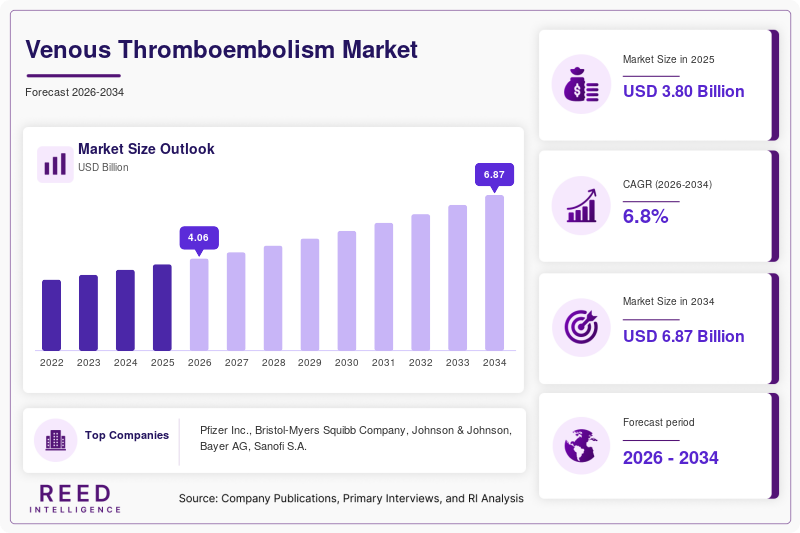
The Venous Thromboembolism Market size was valued at approximately USD 3.8 billion in 2025 and is projected to reach USD 6.9 billion by 2034, expanding at a CAGR of 6.8% during the forecast period (2025–2034). The market growth reflects increasing clinical awareness, advancements in anticoagulant therapies, and the rising global burden of thrombotic disorders, including deep vein thrombosis (DVT) and pulmonary embolism (PE).
A major global factor supporting the expansion of the Venous Thromboembolism Market is the growing prevalence of chronic diseases and aging populations. Elderly individuals are more susceptible to blood clot formation due to reduced mobility, comorbid conditions, and prolonged hospitalizations. Additionally, increasing surgical procedures worldwide have elevated the demand for thromboprophylaxis and early diagnosis, thereby strengthening market growth.
Key Highlights
- North America dominated the market with a 38.5% share, while Asia Pacific is expected to register the fastest CAGR of 8.1%.
- By drug class, Direct Oral Anticoagulants (DOACs) led with a 52% share, while thrombolytics are projected to grow at a CAGR of 7.6%.
- By indication, Deep Vein Thrombosis (DVT) dominated with 61% share, whereas pulmonary embolism is expected to grow at 7.2% CAGR.
- The United States market was valued at USD 1.2 billion in 2025 and is projected to reach USD 1.3 billion in 2026.
Market Trends
Increasing Adoption of Direct Oral Anticoagulants (DOACs)
The shift from traditional anticoagulants such as warfarin to DOACs has emerged as a defining trend in the Venous Thromboembolism Market. DOACs offer predictable pharmacokinetics, reduced drug interactions, and minimal monitoring requirements. These advantages have improved patient adherence and simplified treatment protocols, particularly in outpatient settings. Healthcare providers are increasingly prescribing DOACs for both acute treatment and long-term prevention of thromboembolic events.
Integration of Digital Health and AI in Diagnosis
The integration of artificial intelligence and digital health tools in diagnostic workflows is transforming VTE management. AI-based imaging analysis and predictive risk assessment models are enabling earlier detection and stratification of patients at high risk. Hospitals are adopting clinical decision support systems to optimize anticoagulation therapy and reduce complications. This trend is enhancing clinical outcomes while reducing healthcare costs, thereby positively influencing the overall Venous Thromboembolism Market outlook.
Market Drivers
Rising Incidence of Lifestyle-Related Disorders
The increasing prevalence of obesity, cardiovascular diseases, and cancer has contributed to a higher risk of venous thromboembolism. Sedentary lifestyles and unhealthy dietary habits are further exacerbating this trend. These conditions often require prolonged hospitalization or immobility, increasing the likelihood of clot formation. As a result, the demand for preventive and therapeutic interventions has risen significantly, driving the growth of the Venous Thromboembolism Market.
Expanding Surgical and Hospitalization Rates
A steady increase in surgical procedures globally has driven the need for thromboprophylaxis. Orthopedic surgeries, cancer treatments, and critical care admissions are closely associated with VTE risks. Healthcare providers are implementing standardized protocols for prevention and treatment, leading to higher utilization of anticoagulant drugs and diagnostic solutions. This factor continues to support sustained market expansion across developed and emerging economies.
Market Restraint
Risk of Bleeding Complications Associated with Anticoagulants
Despite the effectiveness of anticoagulant therapies, the risk of bleeding complications remains a major concern in the Venous Thromboembolism Market. Patients undergoing anticoagulation treatment may experience adverse events such as gastrointestinal bleeding or intracranial hemorrhage, which can limit the widespread adoption of these therapies. Physicians often face challenges in balancing the benefits of clot prevention with the risks of bleeding, particularly in elderly patients or those with comorbidities.
Additionally, certain anticoagulants require careful dose adjustments and monitoring, which can increase the burden on healthcare systems. Although newer therapies have improved safety profiles, the perception of risk continues to hinder adoption in some patient populations. This restraint is expected to moderately impact market growth, especially in regions with limited healthcare infrastructure and monitoring capabilities.
Market Opportunities
Emerging Markets with Improving Healthcare Infrastructure
Developing regions are witnessing significant improvements in healthcare infrastructure, creating new growth avenues for the Venous Thromboembolism Market. Increased healthcare spending, expanding hospital networks, and growing awareness about thrombotic disorders are supporting market penetration. Governments are also focusing on preventive healthcare programs, which include screening and early diagnosis of VTE.
Development of Novel Anticoagulant Therapies
Ongoing research and development efforts aimed at creating safer and more effective anticoagulants present a major opportunity. Innovations targeting reduced bleeding risks and improved patient compliance are gaining attention. Biotech companies are exploring new mechanisms of action and personalized medicine approaches to enhance treatment outcomes. These advancements are expected to create new revenue streams and reshape the competitive landscape of the Venous Thromboembolism Market.
Segmental Analysis
By Drug Class
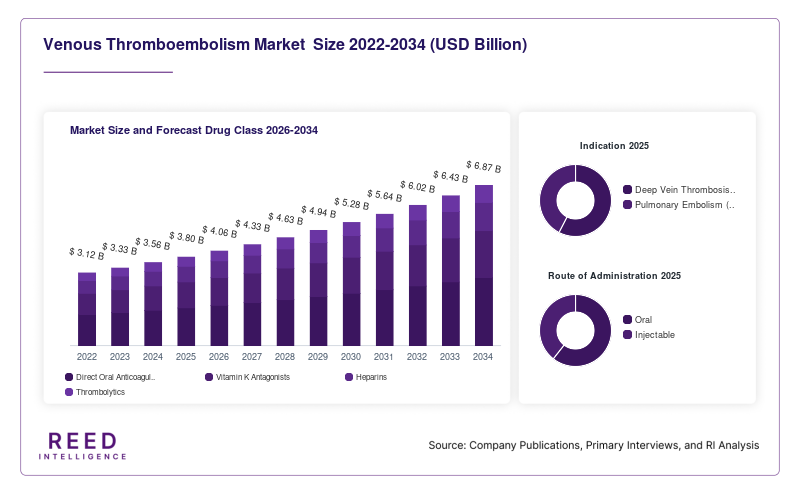
Direct Oral Anticoagulants (DOACs) dominated the Venous Thromboembolism Market with a 52% share in 2025. Their ease of use, reduced monitoring requirements, and improved safety profile have made them the preferred choice among healthcare providers.
Thrombolytics are expected to register the fastest growth at a CAGR of 7.6%. Their ability to rapidly dissolve clots in emergency situations will drive their adoption, particularly in acute care settings.
By Indication
Deep Vein Thrombosis (DVT) accounted for the largest share of 61% in 2025. The high incidence of DVT and its role as a precursor to pulmonary embolism have driven demand for early diagnosis and treatment.
Pulmonary embolism is expected to grow at a CAGR of 7.2%, supported by improved diagnostic techniques and increased awareness of life-threatening complications.
By Route of Administration
Oral administration dominated with a 58% share in 2025, owing to patient convenience and widespread availability of oral anticoagulants.
Injectable therapies are projected to grow at a CAGR of 6.9%, driven by their use in hospital settings and critical care scenarios.
By End-Use
Hospitals accounted for the largest share of 49% in 2025, as they serve as primary centers for diagnosis and treatment of VTE.
Ambulatory surgical centers are expected to grow at a CAGR of 7.4%, supported by the increasing number of outpatient procedures and demand for preventive care.
Regional Analysis
North America
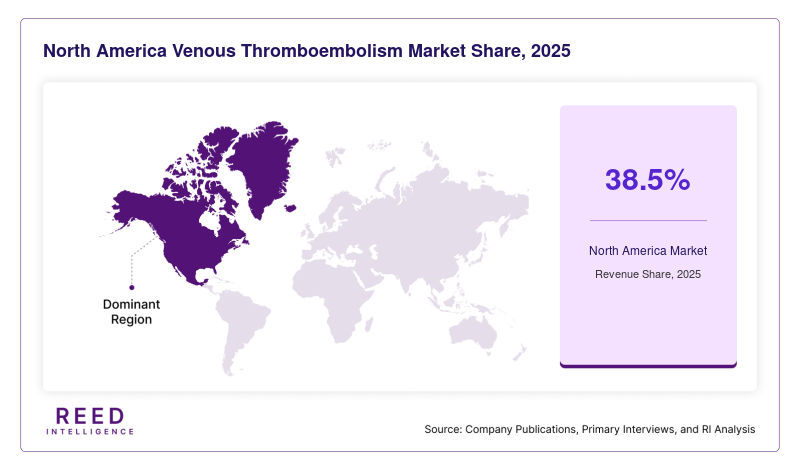
North America accounted for 38.5% of the Venous Thromboembolism Market share in 2025 and is expected to grow at a CAGR of 6.5% during the forecast period.
The United States dominated the region due to the presence of advanced healthcare infrastructure and high awareness levels. A key growth factor has been the widespread adoption of standardized clinical guidelines for thromboprophylaxis, which has led to consistent use of anticoagulants in hospitals and outpatient settings.
Europe
Europe held approximately 27.2% market share in 2025 and is projected to grow at a CAGR of 6.3%.
Germany emerged as the leading country, supported by strong healthcare systems and increasing geriatric population. The country’s emphasis on early diagnosis and preventive care has contributed to steady demand for VTE treatment solutions.
Asia Pacific
Asia Pacific captured around 20.8% share in 2025 and is expected to register the fastest CAGR of 8.1%.
China led the region, driven by rapid urbanization and rising healthcare investments. Increasing awareness campaigns and expanding access to diagnostic facilities have significantly boosted market growth.
Middle East & Africa
The Middle East & Africa region accounted for 7.1% of the market in 2025 and is projected to grow at a CAGR of 6.9%.
Saudi Arabia dominated due to improving healthcare infrastructure and government initiatives aimed at enhancing disease management. The adoption of modern treatment protocols has contributed to market expansion.
Latin America
Latin America held a 6.4% share in 2025 and is expected to grow at a CAGR of 6.7%.
Brazil emerged as the leading country, supported by increasing healthcare expenditure and growing awareness of thrombotic disorders. Efforts to improve access to advanced therapies have further supported regional growth.
Competitive Landscape
The Venous Thromboembolism Market is moderately consolidated, with key players focusing on product innovation and strategic collaborations. Leading companies are investing in research and development to introduce safer anticoagulants and expand their global footprint.
One prominent market leader is Pfizer Inc., which continues to strengthen its position through advancements in anticoagulant therapies and partnerships with healthcare providers. The company has recently focused on expanding clinical applications of its existing portfolio to address unmet medical needs.
Other major players are actively engaged in mergers, acquisitions, and product launches to enhance their market presence. Competitive strategies also include geographic expansion and the development of cost-effective treatment options to cater to emerging markets.
Key Players List
- Pfizer Inc.
- Bristol-Myers Squibb Company
- Johnson & Johnson
- Bayer AG
- Sanofi S.A.
- Boehringer Ingelheim International GmbH
- Daiichi Sankyo Company, Limited
- Aspen Pharmacare Holdings Limited
- GlaxoSmithKline plc
- Novartis AG
- Merck & Co., Inc.
- Abbott Laboratories
- F. Hoffmann-La Roche Ltd
- Teva Pharmaceutical Industries Ltd.
- Amgen Inc.
Recent Developments
- In 2024, several companies expanded their anticoagulant portfolios with next-generation DOAC formulations aimed at improving patient safety.
- Strategic collaborations between pharmaceutical firms and healthcare providers increased to enhance clinical trial capabilities.
- Regulatory approvals for novel therapies accelerated, particularly in North America and Europe.
- Companies intensified efforts to expand presence in emerging markets through partnerships and distribution agreements.
Venous Thromboembolism Market Segments
Drug Class
- Direct Oral Anticoagulants (DOACs)
- Vitamin K Antagonists
- Heparins
- Thrombolytics
Indication
- Deep Vein Thrombosis (DVT)
- Pulmonary Embolism (PE)
Route of Administration
- Oral
- Injectable
End-Use
- Hospitals
- Ambulatory Surgical Centers
- Specialty Clinics
Distribution Channel
- Hospital Pharmacies
- Retail Pharmacies
- Online Pharmacies
By Region
- North America
- Europe
- APAC
- Middle East and Africa
- LATAM