Vestibular Neuronitis Treatment Market Size, Share Demand Report By Treatment Type (Corticosteroid Therapy, Antiviral Medications, Vestibular Suppressant Drugs), By Route of Administration (Oral, Injectable), By End User (Hospitals, Specialty ENT Clinics, Ambulatory Surgical Centers), By Distribution Channel (Hospital Pharmacies, Retail Pharmacies, Online Pharmacies) By Region & Segment Forecasts, 2026–2034
USD 3950
Market Overview
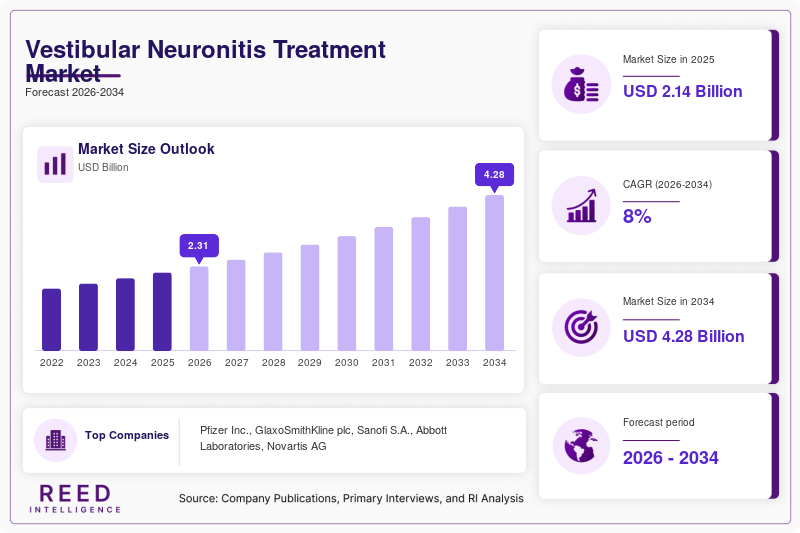
The global Vestibular Neuronitis Treatment Market Size was valued at approximately USD 2.14 billion in 2026 and is projected to reach nearly USD 3.96 billion by 2034, expanding at a CAGR of 8.0% during the forecast period from 2026 to 2034. The market is witnessing stable growth due to the increasing prevalence of vestibular disorders, rising awareness regarding balance-related neurological conditions, and expanding adoption of rehabilitation-based treatment approaches. Vestibular neuronitis treatment includes corticosteroid therapy, antivertigo medications, antiemetic drugs, vestibular rehabilitation therapy, and supportive neurological care aimed at improving balance function and reducing dizziness symptoms. Growing healthcare investments in neurological rehabilitation and outpatient specialty care services are contributing significantly to the expansion of the market.
A major global factor supporting the growth of the Vestibular Neuronitis Treatment Market is the increasing burden of age-related neurological and balance disorders worldwide. Healthcare providers are increasingly emphasizing early diagnosis and integrated treatment strategies to reduce long-term disability and improve patient recovery outcomes. In addition, advancements in vestibular rehabilitation technologies, growing telehealth adoption, and increasing patient preference for minimally invasive therapy solutions are positively influencing market development. Rising healthcare awareness and the expansion of specialized ENT and neurology clinics are also encouraging broader adoption of vestibular neuronitis treatment solutions across developed and emerging healthcare markets.
Key Highlights
- North America dominated the market with 38.7% share in 2025, while Asia Pacific is projected to witness the fastest growth at a 9.4% CAGR during 2026–2034.
- By treatment type, corticosteroid therapy accounted for the largest market share of 34.9% in 2025, while vestibular rehabilitation therapy is expected to grow at a CAGR of 9.8% during the forecast period.
- By end user, hospitals remained the dominant segment with 46.2% market share in 2025, whereas specialty clinics are projected to expand at a CAGR of 9.2% through 2034.
- The United States remained the leading country market and was valued at approximately USD 612 million in 2024 and USD 658 million in 2025.
Market Trends
Increasing Adoption of Digital Vestibular Rehabilitation Solutions
One of the major trends shaping the Vestibular Neuronitis Treatment Market is the increasing adoption of digital vestibular rehabilitation solutions across healthcare systems. Hospitals and rehabilitation centers are integrating telehealth-enabled rehabilitation programs and virtual balance therapy platforms to improve patient recovery and reduce hospital visits. Digital rehabilitation tools are helping patients perform guided balance exercises remotely while allowing healthcare providers to monitor therapy progress more effectively.
The growing use of wearable balance monitoring devices and AI-supported rehabilitation analytics is further strengthening this trend. Healthcare providers are increasingly adopting technology-driven rehabilitation programs to improve treatment personalization and patient compliance. This trend is expected to support long-term market growth, particularly in regions with expanding telemedicine infrastructure.
Rising Preference for Combination Therapy Approaches
Another important trend in the Vestibular Neuronitis Treatment Market is the growing preference for combination therapy approaches involving medications and vestibular rehabilitation exercises. Physicians are increasingly using integrated treatment protocols that combine corticosteroids, antivertigo drugs, and balance therapy programs to improve recovery outcomes and minimize symptom recurrence.
Combination therapies are helping patients achieve faster symptom relief while improving long-term vestibular function. Hospitals and specialty clinics are also establishing multidisciplinary vestibular care units that include neurologists, ENT specialists, and physiotherapists. The increasing emphasis on comprehensive patient care is expected to support the expansion of the market during the forecast period.
Market Drivers
Rising Prevalence of Vestibular and Balance Disorders
The growing prevalence of vestibular dysfunction and balance-related neurological disorders is a major driver supporting the growth of the Vestibular Neuronitis Treatment Market. Aging populations are increasingly vulnerable to dizziness, balance instability, and vestibular nerve disorders, which is contributing to higher demand for specialized treatment services. Healthcare providers are increasingly recommending vestibular rehabilitation programs and pharmacological therapies to improve patient mobility and reduce fall-related risks.
The rising incidence of viral infections associated with vestibular nerve inflammation is also supporting market demand. Healthcare institutions are focusing on early diagnosis and symptom management to improve patient outcomes and reduce hospitalization rates. Increasing awareness regarding vestibular disorders among healthcare professionals and patients is expected to further strengthen market expansion.
Expansion of Specialized Rehabilitation Infrastructure
Another important driver for the Vestibular Neuronitis Treatment Market is the rapid expansion of specialized neurological rehabilitation infrastructure. Hospitals and rehabilitation centers are increasingly investing in advanced vestibular therapy equipment, balance assessment systems, and digital rehabilitation technologies. The availability of trained rehabilitation professionals and specialized balance therapy programs is improving patient access to treatment services.
Healthcare systems are also emphasizing outpatient rehabilitation services to reduce healthcare costs and improve treatment accessibility. The increasing integration of rehabilitation therapy into neurological care programs is expected to support long-term market development.
Market Restraint
Limited Awareness and Delayed Diagnosis
One of the major restraints affecting the Vestibular Neuronitis Treatment Market is the limited awareness regarding vestibular neuronitis symptoms and treatment options in several developing healthcare markets. Many patients fail to recognize dizziness and balance instability as neurological conditions requiring specialized medical attention, resulting in delayed diagnosis and treatment. Limited access to ENT specialists and rehabilitation facilities may also restrict market growth in underserved regions.
Market Opportunities
Expansion of Telehealth-Based Vestibular Care
The increasing adoption of telehealth services presents significant opportunities for the Vestibular Neuronitis Treatment Market. Remote consultations and virtual rehabilitation programs are improving patient access to vestibular care services, particularly in rural and underserved areas. Telehealth platforms are also supporting continuous therapy monitoring and follow-up consultations.
Healthcare providers are increasingly integrating remote balance assessment tools and digital rehabilitation applications into patient care programs. These developments are expected to create strong growth opportunities for technology-enabled vestibular treatment solutions.
Growing Demand for Personalized Rehabilitation Programs
The rising focus on personalized healthcare and customized rehabilitation therapies is creating additional opportunities in the market. Patients with varying degrees of vestibular dysfunction require individualized treatment protocols to achieve optimal recovery outcomes. Rehabilitation centers are increasingly adopting AI-supported therapy planning systems and wearable motion tracking technologies to improve treatment precision.
The integration of predictive analytics and patient-specific exercise programs is expected to enhance therapy effectiveness and improve patient adherence. This trend is likely to create new growth opportunities for rehabilitation technology providers and healthcare service companies.
Segmental Analysis
By Treatment Type
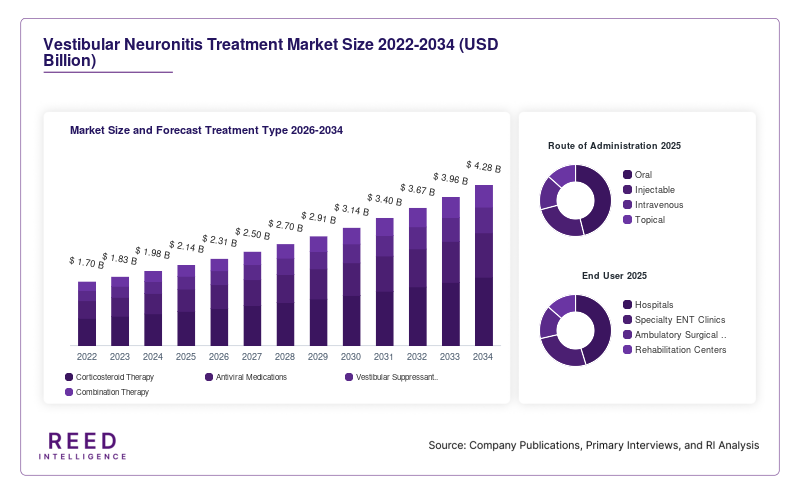
Based on treatment type, the Vestibular Neuronitis Treatment Market is segmented into corticosteroid therapy, antivertigo medications, antiemetic drugs, vestibular rehabilitation therapy, and others. Corticosteroid therapy dominated the market with approximately 34.9% share in 2025 due to its effectiveness in reducing vestibular nerve inflammation and improving acute symptom recovery. Vestibular rehabilitation therapy is expected to witness the fastest growth at a CAGR of 9.8% during the forecast period because healthcare providers are increasingly emphasizing non-pharmacological recovery approaches and personalized balance therapy programs.
By Route of Administration
By route of administration, the market is segmented into oral therapies, injectable therapies, and others. Oral therapies accounted for the largest market share of 57.6% in 2025 because of their convenience, affordability, and widespread clinical adoption for dizziness and nausea management. Injectable therapies are expected to grow at a CAGR of 8.9% through 2034 due to increasing use of injectable corticosteroids for severe vestibular inflammation cases and hospital-based neurological treatment procedures.
By End User
Based on end user, the market includes hospitals, specialty clinics, rehabilitation centers, and homecare settings. Hospitals held the dominant share of approximately 46.2% in 2025 due to increasing patient admissions for neurological assessment and access to multidisciplinary care teams. Specialty clinics are projected to grow at a CAGR of 9.2% during the forecast period because patients are increasingly seeking specialized vestibular care and faster treatment services outside traditional hospital settings.
By Distribution Channel
The market is segmented into hospital pharmacies, retail pharmacies, online pharmacies, and rehabilitation supply providers. Hospital pharmacies accounted for approximately 41.4% share in 2025 due to strong prescription volumes generated through inpatient and outpatient neurological treatment programs. Online pharmacies are expected to witness a CAGR of 10.1% during the forecast period owing to rising digital healthcare adoption, growing home delivery preferences, and increasing accessibility of neurological medications through e-commerce healthcare platforms.
Regional Analysis
North America
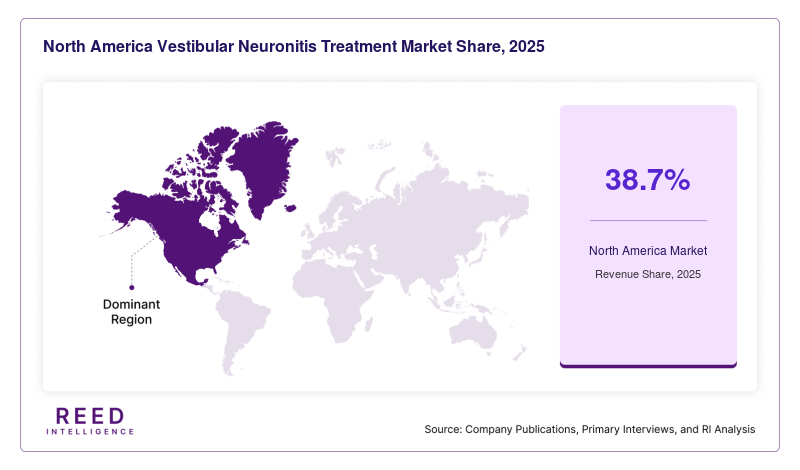
North America accounted for approximately 38.7% share of the Vestibular Neuronitis Treatment Market in 2025 and is projected to grow at a CAGR of 7.8% during the forecast period. The region benefits from advanced neurological healthcare infrastructure, rising healthcare expenditure, and strong adoption of vestibular rehabilitation programs. The United States remained the dominant regional market due to increasing awareness regarding balance disorders and expanding telehealth rehabilitation services.
Europe
Europe held around 27.9% share in 2025 and is expected to expand at a CAGR of 7.5% through 2034. Rising demand for neurological rehabilitation services and increasing healthcare support for aging populations are contributing to regional market growth. Germany dominated the European market due to advanced rehabilitation infrastructure and strong adoption of balance therapy technologies.
Asia Pacific
Asia Pacific represented nearly 21.8% market share in 2025 and is projected to witness the fastest growth at a CAGR of 9.4% during the forecast period. Increasing healthcare investments, expanding rehabilitation centers, and growing awareness regarding vestibular disorders are supporting market expansion. China remained the leading regional contributor due to improving healthcare accessibility and rising adoption of specialized neurological treatment services.
Middle East & Africa
The Middle East & Africa accounted for approximately 6.1% share in 2025 and is expected to grow at a CAGR of 6.8% during the forecast period. Expanding private healthcare infrastructure and increasing awareness regarding neurological rehabilitation are supporting regional demand. Saudi Arabia dominated the region because of healthcare modernization initiatives and increasing investments in specialty medical care facilities.
Latin America
Latin America held around 5.5% market share in 2025 and is projected to expand at a CAGR of 6.9% through 2034. Brazil remained the dominant country market due to expanding rehabilitation healthcare services and increasing patient awareness regarding vestibular disorder treatments. Improving access to neurological care programs is also contributing to regional market growth.
Competitive Landscape
The Vestibular Neuronitis Treatment Market is moderately competitive with the presence of several pharmaceutical companies, rehabilitation service providers, and digital healthcare firms focusing on treatment innovation and rehabilitation technology integration. Market participants are investing in telehealth solutions, advanced rehabilitation programs, and neurological therapy research to strengthen their market presence.
Pfizer Inc. remained one of the leading participants in the market due to its broad neurological treatment portfolio and strong global healthcare distribution network. The company recently expanded research activities related to anti-inflammatory therapies targeting vestibular disorders and balance-related neurological conditions.
GlaxoSmithKline plc continues to strengthen its market position through vestibular symptom management therapies and rehabilitation support initiatives. Novartis AG is focusing on expanding collaborations with rehabilitation centers and specialty clinics, while Abbott Laboratories and Sanofi S.A. are increasing investments in neurological diagnostic and digital rehabilitation technologies.
Key Players List
- Pfizer Inc.
- GlaxoSmithKline plc
- Novartis AG
- Abbott Laboratories
- Sanofi S.A.
- Merck & Co., Inc.
- Teva Pharmaceutical Industries Ltd.
- Bayer AG
- AstraZeneca plc
- Johnson & Johnson
- Cipla Limited
- Sun Pharmaceutical Industries Ltd.
- Hikma Pharmaceuticals PLC
- Dr. Reddy’s Laboratories Ltd.
- Bausch Health Companies Inc.
Recent Developments
- In 2024, Pfizer Inc. expanded its neurological therapy research program focusing on anti-inflammatory treatments for vestibular disorders.
- In 2024, GlaxoSmithKline plc introduced updated vestibular symptom management solutions for outpatient neurological care applications.
- In 2025, Novartis AG partnered with rehabilitation centers to strengthen digital vestibular therapy and remote patient monitoring services.
- In 2025, Abbott Laboratories launched advanced balance assessment technologies designed for vestibular rehabilitation programs.
- In 2025, Sanofi S.A. expanded its telehealth rehabilitation support initiatives targeting patients with chronic vestibular dysfunction.
Vestibular Neuronitis Treatment Market Segments
Treatment Type
- Corticosteroid Therapy
- Antiviral Medications
- Vestibular Suppressant Drugs
- Combination Therapy
Route of Administration
- Oral
- Injectable
- Intravenous
- Topical
End User
- Hospitals
- Specialty ENT Clinics
- Ambulatory Surgical Centers
- Rehabilitation Centers
Distribution Channel
- Hospital Pharmacies
- Retail Pharmacies
- Online Pharmacies
- Specialty Drug Stores
By Region
- North America
- Europe
- APAC
- Middle East and Africa
- LATAM