Veterinary In Vitro Fertilization Market Size, Share & Demand Report By Animal Type (Livestock, Companion Animals, Wildlife & Conservation Animals), By Technology (Conventional In Vitro Fertilization (IVF), Intracytoplasmic Sperm Injection (ICSI), Embryo Culture & Cryopreservation), By Application (Livestock Breeding, Genetic Preservation, Veterinary Research), By End-Use (Veterinary Hospitals & Fertility Clinics, Biotechnology Laboratories, Research Institutes), By Region & Segment Forecasts, 2
USD 3950
Market Overview
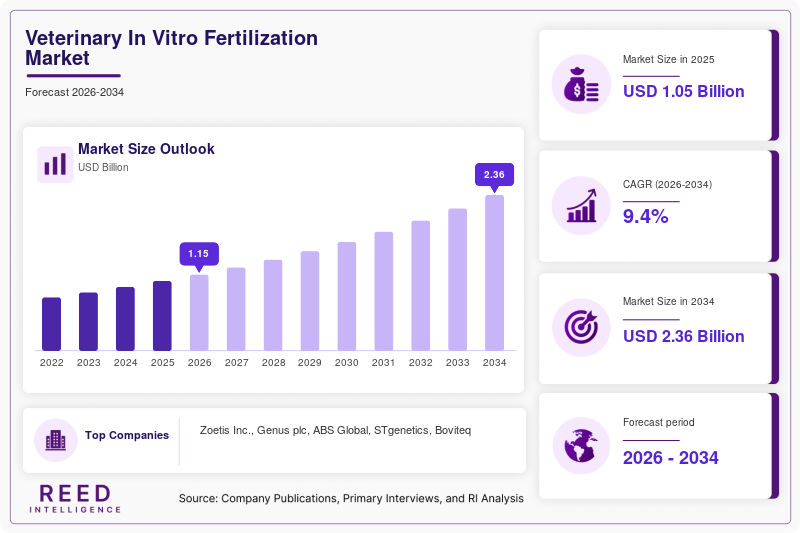
The Veterinary In Vitro Fertilization Market size was valued at USD 1.05 billion in 2025 and is projected to reach USD 2.36 billion by 2034, expanding at a CAGR of 9.4% from 2025 to 2034. The market has gained increasing attention across livestock breeding, companion animal genetics, and conservation initiatives due to advancements in reproductive biotechnology. Veterinary in vitro fertilization (IVF) techniques are widely used for genetic improvement, disease resistance breeding, and improved reproductive efficiency in animals.
One of the major global factors supporting the growth of the Veterinary In Vitro Fertilization Market is the growing demand for genetically superior livestock to enhance global food security. Livestock producers and breeding organizations increasingly rely on assisted reproductive technologies such as IVF, embryo transfer, and genomic selection to increase herd productivity. These technologies enable rapid multiplication of high-value genetic lines and improve herd performance, especially in dairy cattle, equine breeding, and elite livestock populations.
Key Highlights
- North America dominated the market with 38% share in 2025, while Asia Pacific is projected to register the fastest CAGR of 11.3% during the forecast period.
- Livestock application accounted for the largest share (62%), while companion animal application is expected to grow fastest at a CAGR of 10.8%.
- Veterinary hospitals and specialized fertility clinics represented the dominant end-use segment with 47% share, whereas biotechnology laboratories are expected to grow at a CAGR of 10.5%.
- The United States led the market with USD 310 million in 2025 and is expected to reach USD 335 million in 2026.
Market Trends
Expansion of Advanced Embryo Technologies
The Veterinary In Vitro Fertilization Market is witnessing a growing adoption of advanced embryo technologies, including intracytoplasmic sperm injection (ICSI), embryo cryopreservation, and genomic embryo screening. These technologies improve fertilization success rates and allow breeders to select embryos with superior genetic characteristics before implantation. As genetic evaluation tools become more accessible, breeding programs are incorporating IVF with genomic selection to accelerate genetic gain in livestock populations.
Research institutions and biotechnology firms are investing in the development of optimized culture media and automated embryo incubation systems that improve embryo viability. These innovations are improving IVF success rates and expanding its applications beyond traditional livestock breeding.
Rising Use of IVF in Companion Animal Breeding
Another emerging trend in the Veterinary In Vitro Fertilization Market is the increasing use of IVF in companion animal breeding, particularly in canine and equine populations. Pet owners and breeders are seeking reproductive solutions that allow preservation of valuable genetic lines and support assisted reproduction for animals with fertility challenges.
Veterinary reproductive specialists are expanding IVF services for pedigree breeding, fertility preservation, and genetic management programs. The growing humanization of pets and the rising economic value of pedigree animals have created new opportunities for IVF-based veterinary reproductive services.
Market Drivers
Increasing Demand for High-Performance Livestock Genetics
The need for improved livestock productivity continues to drive the Veterinary In Vitro Fertilization Market. Dairy, beef, and swine producers are increasingly adopting IVF technologies to enhance milk yield, growth performance, and disease resistance. IVF allows breeders to produce multiple embryos from elite females within a single reproductive cycle, significantly accelerating genetic improvement.
Governments and agricultural organizations are also promoting reproductive technologies as part of livestock development programs aimed at improving food production efficiency.
Expansion of Veterinary Reproductive Biotechnology Infrastructure
The expansion of veterinary fertility laboratories and specialized reproductive biotechnology centers is contributing to market growth. These facilities provide services such as embryo transfer, sperm cryopreservation, and IVF-based breeding programs.
Technological advancements in laboratory equipment, reproductive hormone therapies, and embryo handling techniques are improving procedure success rates and reducing costs. The increasing availability of trained veterinary reproductive specialists has further strengthened the adoption of IVF services across both livestock and companion animal sectors.
Market Restraint
High Cost and Technical Complexity of IVF Procedures
Despite growing adoption, the Veterinary In Vitro Fertilization Market faces limitations due to the high cost and technical complexity associated with IVF procedures. Establishing and maintaining specialized fertility laboratories requires advanced equipment, trained embryologists, and strict laboratory protocols.
For small-scale livestock producers and veterinary clinics in developing regions, the cost of IVF procedures can be prohibitive. In addition, variations in success rates depending on species, breed, and reproductive health conditions can create uncertainty for breeders considering IVF services. These factors may limit widespread adoption in cost-sensitive markets.
Market Opportunities
Growth of Genetic Preservation Programs
Genetic preservation initiatives for endangered animal species and rare livestock breeds present a significant opportunity in the Veterinary In Vitro Fertilization Market. IVF technologies enable long-term preservation of valuable genetic material through embryo cryopreservation and genetic resource banking.
Conservation organizations, zoos, and research institutions are increasingly incorporating assisted reproductive technologies into species conservation strategies. These initiatives are expected to expand the role of IVF in biodiversity preservation and wildlife management.
Integration of Genomic Selection with IVF
The integration of genomic selection technologies with IVF procedures is expected to create new growth opportunities. Genomic testing allows breeders to identify embryos with desirable traits before implantation, improving breeding efficiency and reducing the time required to achieve genetic improvements.
Biotechnology companies are developing integrated platforms that combine genomic data analysis with embryo production technologies. This approach is expected to transform livestock breeding programs and enhance the value proposition of veterinary IVF services.
Segmental Analysis
By Animal Type
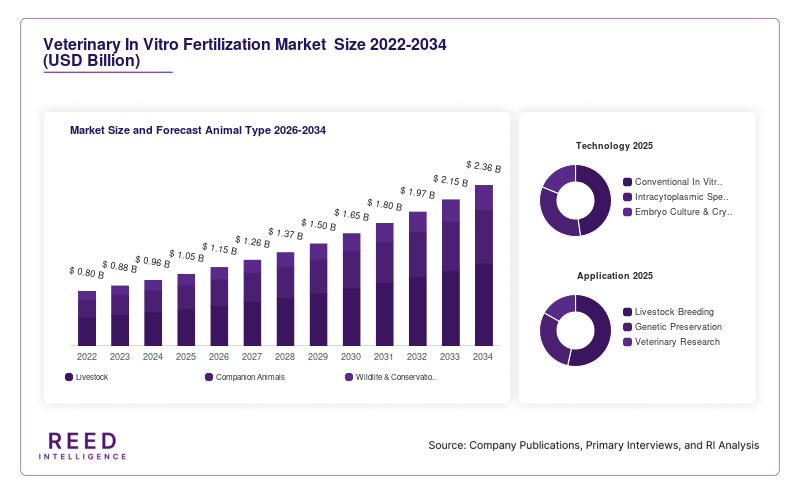
The livestock segment accounted for the dominant share of 64% in 2025 within the Veterinary In Vitro Fertilization Market. Cattle, swine, and sheep breeding programs have widely adopted IVF technologies to enhance genetic improvement and increase productivity. Livestock breeders utilize IVF to produce multiple embryos from elite females, allowing faster propagation of desirable genetic traits.
The companion animal segment is projected to grow at a CAGR of 10.8% during the forecast period. The rising economic value of pedigree pets and the growing demand for fertility treatments for dogs and horses will contribute to this expansion. Veterinary reproductive specialists are expected to introduce specialized IVF services tailored to companion animals, supporting genetic preservation and breeding management.
By Technology
The conventional IVF technology segment held the largest market share of 55% in 2025. Conventional IVF methods remain widely used due to their established protocols, lower costs compared to advanced technologies, and high success rates in livestock breeding programs.
The intracytoplasmic sperm injection (ICSI) segment will expand at a CAGR of 10.6% during the forecast period. ICSI allows direct injection of sperm into the egg, improving fertilization success in cases of male infertility or limited sperm availability. Veterinary fertility laboratories are expected to adopt ICSI techniques to enhance embryo production efficiency, particularly in equine and companion animal breeding programs.
By End-Use
The veterinary hospitals and fertility clinics segment represented the largest share of 47% in 2025. These facilities provide specialized reproductive services including IVF procedures, embryo transfer, and fertility diagnostics. Increasing demand for professional reproductive services has supported the expansion of veterinary fertility clinics worldwide.
The biotechnology laboratories segment will grow at a CAGR of 10.5% through 2034. Research organizations and biotechnology firms are investing in advanced embryo production technologies and genetic screening solutions. These laboratories play a critical role in developing innovative reproductive technologies that improve IVF success rates and expand their applications across animal species.
By Application
The livestock breeding application segment dominated the Veterinary In Vitro Fertilization Market with 62% share in 2025. IVF is widely used in dairy and beef cattle breeding programs to improve milk production, growth rates, and disease resistance. Breeding companies and agricultural cooperatives rely on IVF to accelerate genetic progress.
The genetic preservation application segment is projected to grow at a CAGR of 10.7% during the forecast period. Increasing focus on preserving rare livestock breeds and endangered animal species is expected to drive demand for IVF-based genetic conservation programs.
Regional Analysis
North America
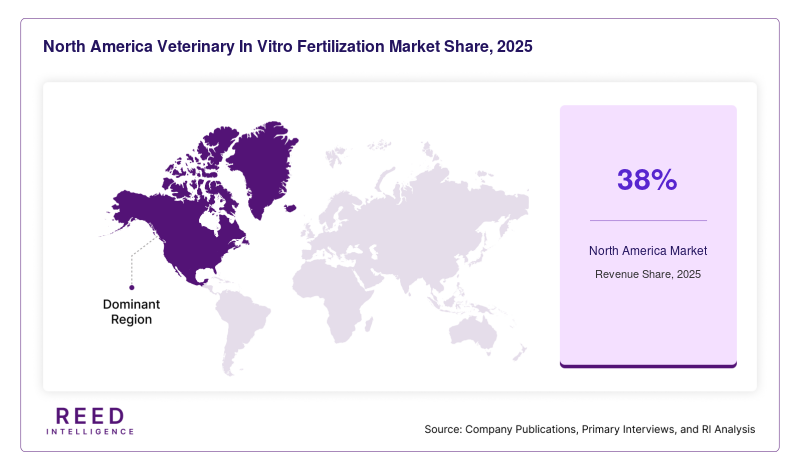
North America accounted for 38% of the Veterinary In Vitro Fertilization Market share in 2025 and maintained a strong presence due to the widespread adoption of advanced reproductive technologies in livestock breeding. The region benefits from well-established veterinary biotechnology infrastructure, specialized fertility laboratories, and high investment in animal genetics research. The market in North America is projected to grow at a CAGR of 8.6% between 2025 and 2034.
The United States remained the dominant country in the region due to the presence of large-scale dairy and beef industries that utilize IVF technologies to enhance herd productivity. Commercial breeding programs increasingly rely on embryo production and transfer to accelerate genetic progress. In addition, veterinary reproductive services for equine and canine breeding have expanded, supported by specialized veterinary fertility clinics and research centers.
Europe
Europe held 26% of the global Veterinary In Vitro Fertilization Market share in 2025. The region has developed strong capabilities in animal genetics and biotechnology research, supported by collaborative initiatives between veterinary institutions and agricultural organizations. The European market will grow at a CAGR of 8.9% through 2034.
Germany represented the dominant country within the region due to its well-established livestock breeding programs and advanced veterinary research infrastructure. The country has invested in improving dairy cattle genetics and productivity through assisted reproductive technologies. Veterinary IVF laboratories and embryo transfer centers continue to expand in Germany, supporting breeding programs for cattle, horses, and companion animals.
Asia Pacific
Asia Pacific represented 21% of the Veterinary In Vitro Fertilization Market share in 2025 and is expected to become the fastest-growing region with a CAGR of 11.3% during the forecast period. The region is experiencing increasing demand for high-yield livestock breeds to support growing populations and rising demand for animal-derived food products.
China emerged as the dominant country in the Asia Pacific market due to large-scale livestock farming operations and government-supported agricultural modernization initiatives. Breeding organizations and agricultural biotechnology companies are expanding IVF services to improve herd genetics and productivity. The adoption of reproductive technologies in dairy cattle and swine breeding programs has accelerated market growth.
Middle East & Africa
The Middle East & Africa accounted for 8% of the Veterinary In Vitro Fertilization Market share in 2025 and will expand at a CAGR of 7.8% during the forecast period. The region is gradually adopting assisted reproductive technologies in livestock breeding and equine reproduction.
United Arab Emirates remained a prominent country in the regional market due to significant investments in equine breeding programs and veterinary biotechnology. High-value racehorses and pedigree animals have encouraged the use of IVF technologies for genetic preservation and controlled breeding programs.
Latin America
Latin America captured 7% of the Veterinary In Vitro Fertilization Market share in 2025 and will grow at a CAGR of 9.1% through 2034. Livestock production plays a central role in the region’s agricultural economy, encouraging the adoption of reproductive technologies to improve herd genetics.
Brazil dominated the regional market due to its extensive cattle breeding industry and advanced embryo transfer programs. Breeding organizations in Brazil have integrated IVF technologies with genetic evaluation programs to enhance beef cattle productivity. The country’s strong livestock export sector continues to support demand for advanced reproductive biotechnology.
Competitive Landscape
The Veterinary In Vitro Fertilization Market features a combination of veterinary biotechnology firms, animal genetics companies, and specialized fertility service providers. Market participants focus on expanding reproductive technology services, improving embryo production efficiency, and developing advanced genetic testing solutions.
Zoetis Inc. is considered a leading player due to its extensive portfolio of veterinary reproductive solutions and biotechnology research capabilities. The company has expanded its reproductive technologies portfolio through partnerships with veterinary fertility laboratories.
Other companies are focusing on strategic collaborations with agricultural organizations, livestock breeders, and research institutions to enhance their IVF service capabilities. The competitive environment is characterized by technological innovation, laboratory expansion, and growing investments in animal reproductive biotechnology.
Key Players
- Zoetis Inc.
- Genus plc
- ABS Global
- STgenetics
- Vitrogen
- Boviteq
- Trans Ova Genetics
- Select Sires Inc.
- Vytelle
- Semex Alliance
- Cogent Breeding Ltd.
- ReproTech LLC
- Embryo Plus
- Alta Genetics
- IMV Technologies
Recent Developments
- In 2024, a leading veterinary biotechnology company expanded its bovine IVF laboratory network to support growing demand from dairy breeding programs.
- In 2024, a livestock genetics firm launched an advanced genomic embryo screening service integrated with IVF technology.
- In 2023, a veterinary reproductive research institute introduced automated embryo incubation systems designed to improve embryo viability rates.
- In 2023, a biotechnology company partnered with livestock breeders to establish a large-scale embryo production facility for cattle genetics programs.
Veterinary In Vitro Fertilization Market Segments
Animal Type
- Livestock
- Companion Animals
- Wildlife & Conservation Animals
Technology
- Conventional In Vitro Fertilization (IVF)
- Intracytoplasmic Sperm Injection (ICSI)
- Embryo Culture & Cryopreservation
Application
- Livestock Breeding
- Genetic Preservation
- Veterinary Research
End-Use
- Veterinary Hospitals & Fertility Clinics
- Biotechnology Laboratories
- Research Institutes
By Region
- North America
- Europe
- APAC
- Middle East and Africa
- LATAM