Veterinary Intravenous Solution Market Size, Share & Demand Report By Product Type (Isotonic Crystalloid Solutions, Hypertonic Solutions, Colloid Solutions, Parenteral Nutrition Solutions, Blood and Plasma Products), By Animal Type (Companion Animals, Livestock Animals, Equine Animals, Exotic Animals), By End Use (Veterinary Hospitals, Veterinary Clinics, Homecare and Mobile Veterinary Services, Research and Academic Institutes), By Region & Segment Forecasts, 2026–2034
USD 3950
Market Overview
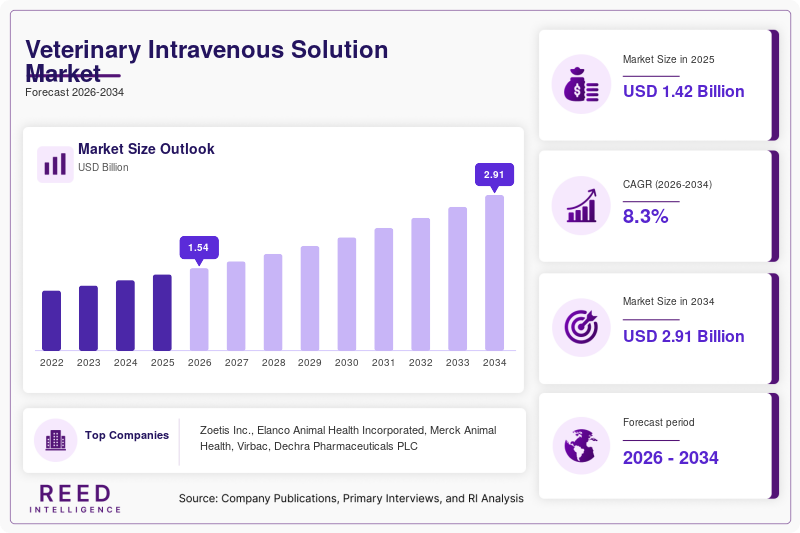
The global Veterinary Intravenous Solution Market size was valued at USD 1.42 billion in 2026 and is projected to reach USD 2.68 billion by 2034, expanding at a CAGR of 8.3% during the forecast period from 2026 to 2034. The market is experiencing stable expansion due to the increasing demand for advanced veterinary healthcare services across companion and livestock animal segments. Intravenous solutions are widely used for hydration therapy, electrolyte balance, nutritional support, anesthesia administration, and emergency critical care in veterinary hospitals and clinics. Rising awareness regarding preventive animal healthcare and improved access to veterinary treatment infrastructure continue to support long-term market growth.
One major global factor contributing to industry expansion is the growing pet ownership rate combined with increasing expenditure on companion animal healthcare. Urban households are allocating larger budgets toward animal wellness, including surgical procedures, hospitalization, and chronic disease management. This trend has encouraged veterinary facilities to adopt advanced intravenous therapy products with improved safety profiles and customized electrolyte compositions. In addition, livestock producers are increasingly utilizing veterinary intravenous solutions to reduce mortality rates and improve productivity in cattle, poultry, and swine operations. Technological advancements in sterile packaging, ready-to-use infusion systems, and balanced fluid formulations are also supporting product adoption across developed and emerging economies.
Key Highlights
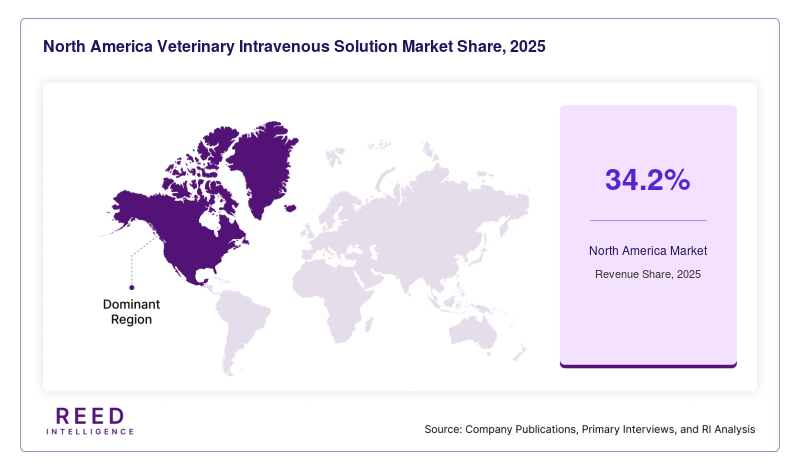
- North America dominated the Veterinary Intravenous Solution Market with a 34.2% share in 2025.
- Asia Pacific is expected to grow at the fastest CAGR of 10.9% during 2026–2034.
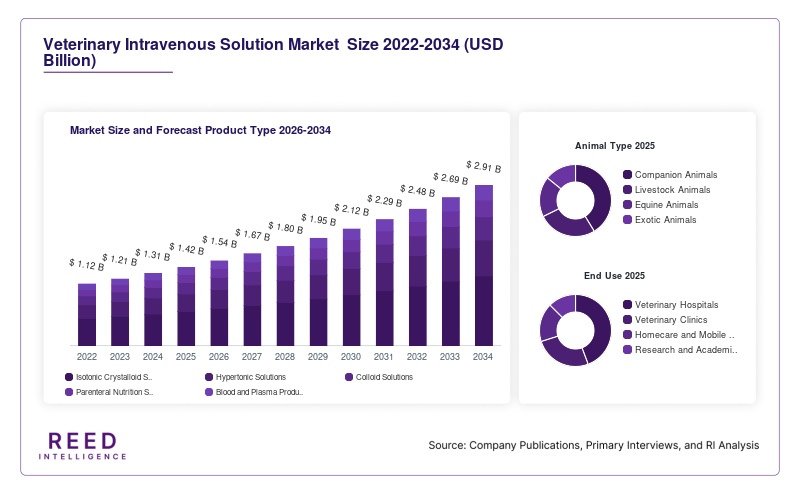
- By product type, isotonic crystalloid solutions accounted for the largest share of 39.4%, while parenteral nutrition solutions are projected to grow at a CAGR of 11.7%.
- By animal type, companion animals led with a 57.8% share, whereas livestock animals are expected to expand at a CAGR of 9.6%.
- By end use, veterinary hospitals held a 46.1% share, while homecare and mobile veterinary services are projected to grow at a CAGR of 12.1%.
- The United States remained the dominant country, with market values of USD 420 million in 2024 and USD 456 million in 2025.
Market Trends
Expansion of Customized Intravenous Formulations for Companion Animals
Veterinary healthcare providers are increasingly adopting customized intravenous formulations designed specifically for companion animals such as dogs and cats. Traditional generalized fluid therapies are gradually being replaced with species-specific electrolyte and nutrient combinations that improve treatment outcomes and reduce complications. Veterinary hospitals are focusing on advanced hydration management solutions for kidney disorders, gastrointestinal diseases, and post-surgical recovery. The increasing prevalence of chronic diseases among aging pets has accelerated demand for specialized intravenous solutions with balanced sodium, potassium, glucose, and amino acid concentrations. Manufacturers are also introducing ready-to-administer sterile packaging formats that simplify administration procedures and reduce contamination risks during emergency treatment.
Growing consumer spending on premium veterinary services is encouraging clinics to invest in advanced infusion therapy systems and monitoring equipment. The trend is particularly visible in urban veterinary hospitals where pet owners seek higher treatment standards similar to human healthcare services. This transition toward personalized veterinary medicine is expected to continue influencing procurement strategies and product innovation throughout the forecast period.
Rising Adoption of Mobile and Emergency Veterinary Care Services
The veterinary industry is witnessing a growing shift toward mobile healthcare services and emergency treatment units equipped with portable intravenous therapy systems. Animal owners increasingly prefer rapid-response veterinary care, especially in cases involving trauma, dehydration, poisoning, and infectious disease outbreaks. Mobile veterinary clinics are expanding across rural and semi-urban areas where access to traditional hospitals remains limited. This trend is supporting demand for compact intravenous solution packaging and easy-to-transport infusion products suitable for field applications.
Emergency veterinary medicine has also gained importance due to rising awareness regarding early intervention and critical care management. Livestock farms are adopting on-site emergency treatment protocols to reduce mortality losses and improve operational efficiency. Portable infusion pumps and ready-to-use electrolyte solutions are becoming essential components of veterinary emergency kits. Market participants are responding by introducing durable packaging technologies and extended shelf-life products that maintain stability in variable environmental conditions. The increasing integration of telemedicine and remote veterinary consultations is further supporting the use of mobile intravenous treatment solutions across multiple animal care settings.
Market Drivers
Growth in Companion Animal Ownership and Healthcare Spending
The rapid increase in companion animal ownership worldwide is one of the major factors driving the Veterinary Intravenous Solution Market. Urbanization, changing lifestyles, and rising emotional attachment toward pets have significantly increased demand for veterinary healthcare services. Pet owners are increasingly willing to spend on preventive treatments, surgeries, and hospitalization, all of which require intravenous fluid administration. Conditions such as dehydration, renal disease, infections, and gastrointestinal disorders frequently require intravenous therapy for stabilization and recovery. This growing patient pool has encouraged veterinary hospitals to expand treatment capacities and maintain larger inventories of intravenous solutions.
The trend is particularly strong in developed economies where pet insurance coverage and advanced veterinary infrastructure support higher treatment volumes. Veterinary clinics are also adopting advanced infusion systems to improve patient monitoring and treatment precision. Increasing awareness regarding animal wellness and preventive healthcare continues to encourage routine veterinary visits, thereby supporting continuous demand for intravenous products across companion animal care settings.
Increasing Livestock Disease Management and Productivity Initiatives
The livestock industry is increasingly utilizing veterinary intravenous solutions to manage infectious diseases, nutritional deficiencies, and dehydration-related conditions. Large-scale livestock farming operations are prioritizing animal health management to improve productivity and reduce economic losses associated with disease outbreaks. Intravenous therapy is widely used in cattle, poultry, and swine production systems for rapid fluid replacement, electrolyte stabilization, and supportive care during severe infections.
Governments and agricultural organizations are implementing disease prevention programs aimed at improving livestock survival rates and food production efficiency. These initiatives are encouraging the adoption of veterinary medical products, including intravenous solutions. In emerging economies, rising meat and dairy consumption has intensified focus on livestock productivity, resulting in greater investment in veterinary healthcare infrastructure. Pharmaceutical manufacturers are introducing cost-effective bulk packaging solutions specifically designed for commercial livestock applications. This growing integration of veterinary healthcare within agricultural management systems is expected to sustain strong market demand throughout the forecast period.
Market Restraint
High Treatment Costs and Limited Veterinary Infrastructure in Developing Regions
The Veterinary Intravenous Solution Market faces challenges associated with high treatment costs and limited veterinary healthcare infrastructure in several developing countries. Intravenous therapy often requires specialized equipment, trained personnel, and controlled clinical environments, which increases overall treatment expenses for animal owners. In low-income rural regions, livestock owners frequently rely on basic veterinary practices and may avoid advanced intravenous treatments due to affordability concerns. Limited access to veterinary hospitals and emergency care facilities further restricts product adoption in underserved markets.
Supply chain inefficiencies and inadequate cold storage infrastructure also create operational barriers for manufacturers and distributors. Smaller veterinary clinics in remote areas may struggle to maintain consistent inventories of sterile intravenous solutions due to transportation and storage limitations. In addition, the shortage of skilled veterinary professionals capable of administering advanced infusion therapies continues to affect market penetration. These factors collectively reduce adoption rates in emerging regions despite growing awareness regarding animal healthcare. Companies operating in the market must therefore focus on affordable product development, veterinary training initiatives, and expanded distribution networks to overcome these structural limitations and improve long-term market accessibility.
Market Opportunities
Expansion of Veterinary Telehealth and Homecare Services
The growing adoption of veterinary telehealth platforms and homecare services presents substantial growth opportunities for the Veterinary Intravenous Solution Market. Pet owners increasingly seek convenient treatment options that reduce hospital visits and improve animal comfort during recovery periods. Home-based veterinary services are becoming more common for post-surgical care, chronic disease management, and hydration therapy. This shift is encouraging demand for user-friendly intravenous administration systems and compact solution packaging designed for non-clinical environments.
Veterinary service providers are investing in portable infusion technologies and remote patient monitoring systems that allow treatment supervision outside traditional hospitals. The trend is particularly beneficial for elderly pet owners and households managing animals with mobility limitations. Pharmaceutical manufacturers have opportunities to develop simplified intravenous products with enhanced safety mechanisms suitable for homecare applications. As telemedicine integration improves communication between veterinarians and animal owners, the demand for accessible and convenient intravenous treatment solutions is expected to expand steadily across developed and emerging markets.
Increasing Investment in Specialized Livestock Healthcare Programs
Governments and agricultural enterprises are increasing investments in specialized livestock healthcare programs aimed at improving productivity and reducing disease-related economic losses. This trend creates opportunities for manufacturers of veterinary intravenous solutions, particularly in emerging agricultural economies. Intensive farming systems require efficient disease management protocols and rapid treatment interventions, making intravenous therapy an essential component of modern livestock healthcare strategies.
Large dairy and meat production facilities are adopting preventive healthcare programs that include hydration management, nutritional supplementation, and infection control measures. Intravenous solutions are increasingly utilized during transportation stress, post-surgical recovery, and disease outbreaks among commercial livestock populations. Market participants can capitalize on this opportunity by introducing affordable high-volume packaging formats and species-specific formulations tailored to agricultural applications. Partnerships with veterinary associations, livestock cooperatives, and agricultural ministries may further strengthen market presence. Rising demand for safe animal-derived food products is also expected to encourage greater investment in veterinary healthcare technologies, thereby supporting long-term growth opportunities for intravenous solution providers.
Segmental Analysis
By Product Type
Isotonic crystalloid solutions accounted for the largest share of the Veterinary Intravenous Solution Market in 2024, representing approximately 39.4% of total revenue. These solutions are widely utilized for fluid replacement, hydration therapy, and electrolyte balance management across companion and livestock animal applications. Veterinary hospitals frequently prefer isotonic crystalloids due to their compatibility with multiple treatment protocols and broad clinical utility. Products such as lactated Ringer’s solution and normal saline are commonly administered during surgeries, trauma management, and emergency stabilization procedures. The high adoption rate of these formulations is supported by their affordability, ease of storage, and effectiveness in treating dehydration-related conditions among various animal species. Increasing emergency veterinary admissions and surgical interventions continue to sustain strong demand for isotonic crystalloid products globally.
Parenteral nutrition solutions are projected to register the fastest CAGR of 11.7% during the forecast period due to rising demand for advanced nutritional support therapies in veterinary medicine. These formulations are increasingly used for critically ill animals experiencing gastrointestinal disorders, severe infections, or prolonged recovery periods. Veterinary specialists are recognizing the importance of targeted nutritional management in improving survival rates and accelerating recovery outcomes. Companion animals undergoing cancer treatment or complex surgical procedures often require intravenous nutritional supplementation to maintain metabolic stability. Manufacturers are introducing advanced amino acid and lipid-based formulations designed specifically for veterinary applications. The growing prevalence of chronic diseases among aging pets and increased adoption of intensive care treatment protocols are expected to significantly accelerate demand for parenteral nutrition solutions over the coming years.
By Animal Type
Companion animals dominated the Veterinary Intravenous Solution Market in 2024 with a share of 57.8%, driven by increasing pet ownership and rising expenditure on veterinary healthcare services. Dogs and cats represent the primary consumers of intravenous therapy products due to higher treatment rates for chronic diseases, surgical procedures, and emergency medical conditions. Veterinary hospitals are expanding specialized treatment services for companion animals, including oncology, nephrology, and critical care management. Intravenous solutions play a central role in maintaining hydration, electrolyte balance, and nutritional support during hospitalization and post-operative recovery. Growing emotional attachment between pet owners and animals has also contributed to greater acceptance of advanced veterinary treatment options. The expansion of pet insurance coverage and improved access to veterinary specialists continue to strengthen demand for intravenous products within the companion animal segment.
Livestock animals are expected to witness the fastest CAGR of 9.6% during the forecast period due to increasing investments in commercial farming efficiency and animal disease management. Cattle, poultry, and swine producers are adopting intravenous therapies to reduce mortality rates and improve overall productivity. Severe dehydration, infectious diseases, and transportation stress are common conditions requiring rapid fluid administration in livestock operations. Governments and agricultural organizations are implementing disease prevention initiatives that encourage wider adoption of veterinary healthcare products. Pharmaceutical companies are also developing cost-effective intravenous solutions tailored for large-scale agricultural applications. The expansion of industrialized livestock farming and rising global demand for animal-derived food products are expected to create substantial growth opportunities for intravenous solution providers serving commercial animal healthcare markets.
By End Use
Veterinary hospitals accounted for the largest share of the Veterinary Intravenous Solution Market in 2024, representing 46.1% of total revenue. These facilities handle a high volume of emergency procedures, surgeries, and intensive care treatments that require continuous intravenous fluid administration. Veterinary hospitals are increasingly equipped with advanced infusion systems, patient monitoring technologies, and specialized critical care units capable of supporting complex treatment protocols. The availability of trained veterinary professionals and round-the-clock emergency services contributes to strong product utilization within this segment. Large hospitals also maintain extensive inventories of intravenous solutions to support diverse treatment needs across companion and livestock animal categories. Growing investments in veterinary infrastructure modernization and specialty healthcare services continue to reinforce the dominant position of veterinary hospitals in the global market.
Homecare and mobile veterinary services are anticipated to register the fastest CAGR of 12.1% during the forecast period due to changing consumer preferences and expanding telehealth integration. Pet owners increasingly seek convenient treatment options that minimize hospital visits and reduce stress for animals during recovery. Mobile veterinary providers are adopting portable infusion systems and compact intravenous solution packaging suitable for field applications and residential care environments. This trend is particularly significant for elderly pets, chronic disease management, and post-surgical rehabilitation. Advances in remote patient monitoring technologies also enable veterinarians to supervise intravenous treatments more effectively outside clinical settings. As veterinary telemedicine platforms continue to expand, demand for user-friendly intravenous products tailored to homecare environments is expected to increase steadily across both developed and emerging markets.
Regional Analysis
North America
North America accounted for 34.2% of the global Veterinary Intravenous Solution Market in 2025 and is expected to maintain a steady CAGR of 7.8% during the forecast period. The region benefits from advanced veterinary healthcare infrastructure, high pet ownership rates, and strong spending on companion animal wellness. Veterinary hospitals across the United States and Canada continue to adopt advanced infusion therapy systems and customized intravenous formulations. The presence of major pharmaceutical companies and established distribution networks further supports regional market expansion. Increasing awareness regarding preventive veterinary care also contributes to rising treatment volumes involving intravenous fluid administration.
The United States remains the dominant country in North America due to its large companion animal population and highly developed veterinary industry. The country recorded significant growth in demand for emergency animal care and chronic disease management services. One unique growth factor is the widespread adoption of pet insurance plans, which improves affordability for advanced treatments involving intravenous therapy. Veterinary clinics are also increasingly investing in digital monitoring systems and automated infusion equipment, enhancing treatment precision and supporting higher utilization of specialized intravenous solutions.
Europe
Europe represented a considerable share of the Veterinary Intravenous Solution Market in 2025 and is projected to grow at a CAGR of 7.4% through 2034. The region has a well-established veterinary pharmaceutical sector supported by stringent animal welfare regulations and high standards of clinical care. Countries across Western Europe continue to invest in companion animal healthcare infrastructure and livestock disease prevention programs. The increasing prevalence of chronic illnesses among aging pets has accelerated the use of intravenous therapies for hydration support, post-operative recovery, and nutritional management.
Germany remains the leading country within the European market due to its advanced veterinary research ecosystem and strong livestock healthcare practices. The country has experienced rising demand for specialized infusion therapies in both small animal clinics and agricultural veterinary services. A unique growth factor in Germany is the integration of precision livestock farming technologies with veterinary treatment systems. Farmers are increasingly utilizing digital animal monitoring tools that enable early disease detection and timely intravenous intervention, supporting consistent product demand across commercial farming operations.
Asia Pacific
Asia Pacific is expected to register the fastest CAGR of 10.9% during the forecast period due to expanding veterinary infrastructure and rising awareness regarding animal healthcare. Rapid urbanization, growing disposable income levels, and increasing pet adoption rates are driving demand for veterinary medical services across countries such as China, India, Japan, and South Korea. The livestock sector also plays a critical role in regional growth, as governments prioritize disease control measures and productivity enhancement programs. Increasing investments in veterinary education and pharmaceutical manufacturing further strengthen regional market development.
China dominates the Asia Pacific market owing to its large livestock population and expanding companion animal healthcare industry. The country continues to witness strong investment in veterinary hospitals, animal diagnostic facilities, and pharmaceutical production capabilities. One unique growth factor is the rapid modernization of commercial farming systems, particularly in poultry and swine production. Large-scale agricultural enterprises are adopting advanced veterinary treatment protocols, including intravenous hydration and nutritional support therapies, to improve operational efficiency and reduce disease-related losses.
Middle East & Africa
The Middle East & Africa region is projected to experience moderate growth in the Veterinary Intravenous Solution Market, supported by increasing investments in livestock healthcare and veterinary infrastructure development. The region accounted for a smaller share in 2025 but is expected to expand at a CAGR of 6.8% through 2034. Rising concerns regarding food security and zoonotic disease prevention are encouraging governments to strengthen veterinary healthcare systems. Demand for intravenous solutions is increasing in commercial livestock operations, particularly within dairy and poultry farming sectors.
Saudi Arabia remains a key contributor to market growth in the Middle East due to substantial investments in agricultural modernization and animal disease management programs. The country is focusing on improving domestic food production capacity through advanced livestock healthcare practices. A unique growth factor is the expansion of climate-controlled farming systems designed to reduce animal stress and improve productivity in harsh environmental conditions. These systems often require specialized veterinary support services, including intravenous therapy for dehydration management and recovery treatment among livestock populations.
Latin America
Latin America continues to present growth opportunities for the Veterinary Intravenous Solution Market due to rising livestock production and improving veterinary healthcare awareness. The region is expected to grow at a CAGR of 7.1% during the forecast period. Increasing exports of meat and dairy products are encouraging livestock producers to invest in disease prevention and animal wellness initiatives. Veterinary clinics in urban centers are also witnessing greater demand for companion animal treatment services, including surgical procedures and critical care therapies that require intravenous fluid administration.
Brazil remains the dominant country in the Latin American market because of its extensive cattle industry and growing companion animal population. The country has experienced increasing adoption of advanced veterinary pharmaceuticals and infusion products across both commercial farming and urban veterinary settings. One unique growth factor is the expansion of export-oriented livestock operations that prioritize animal health compliance standards. Producers are implementing improved veterinary treatment protocols to maintain productivity and meet international trade requirements, thereby supporting higher utilization of intravenous solutions.
Competitive Landscape
The Veterinary Intravenous Solution Market is characterized by the presence of established veterinary pharmaceutical manufacturers and regional healthcare suppliers competing through product innovation, distribution expansion, and strategic partnerships. Companies are focusing on developing species-specific formulations, advanced sterile packaging technologies, and ready-to-use infusion products to strengthen market positioning. Market participants are also investing in veterinary education programs and technical support services to improve product adoption across hospitals, clinics, and livestock operations.
Zoetis Inc. remains one of the leading companies in the market due to its broad veterinary healthcare portfolio and strong global distribution capabilities. The company recently expanded its companion animal critical care product line through the introduction of advanced electrolyte infusion solutions designed for emergency treatment applications. Other major players are emphasizing mergers, acquisitions, and regional manufacturing expansion to improve supply chain efficiency and increase market penetration in emerging economies.
Key Players
- Zoetis Inc.
- Elanco Animal Health Incorporated
- Merck Animal Health
- Virbac
- Dechra Pharmaceuticals PLC
- B. Braun SE
- Ceva Santé Animale
- Vetoquinol
- Neogen Corporation
- Heska Corporation
- Animalcare Group PLC
- Baxter International Inc.
- Fresenius Kabi AG
- Boehringer Ingelheim Animal Health
- Indian Immunologicals Limited
Recent Developments
- In February 2026, Zoetis Inc. expanded its veterinary infusion therapy portfolio with a new balanced electrolyte solution designed for companion animal emergency care applications.
- In August 2025, Baxter International Inc. announced investments in sterile manufacturing expansion to improve production capacity for veterinary intravenous products across North America.
- In November 2025, Virbac introduced portable intravenous administration kits aimed at supporting mobile veterinary care services in rural markets.
- In April 2026, Dechra Pharmaceuticals PLC partnered with veterinary hospital networks to develop specialized nutritional infusion therapies for chronic disease management in companion animals.
Veterinary Intravenous Solution Market Segments
Product Type
- Isotonic Crystalloid Solutions
- Hypertonic Solutions
- Colloid Solutions
- Parenteral Nutrition Solutions
- Blood and Plasma Products
Animal Type
- Companion Animals
- Livestock Animals
- Equine Animals
- Exotic Animals
End Use
- Veterinary Hospitals
- Veterinary Clinics
- Homecare and Mobile Veterinary Services
- Research and Academic Institutes
By Region
- North America
- Europe
- APAC
- Middle East and Africa
- LATAM