Veterinary Ketamine Hydrochloride Market Size, Share & Demand Report By Application (Surgical Anesthesia, Diagnostic Procedures, Emergency Care), By Animal Type (Companion Animals, Livestock Animals), By End-Use (Veterinary Clinics, Veterinary Hospitals, Research Institutes), By Distribution Channel (Direct Sales, Veterinary Pharmacies, Online Pharmacies), By Region & Segment Forecasts, 2025–2034
USD 3950
Market Overview
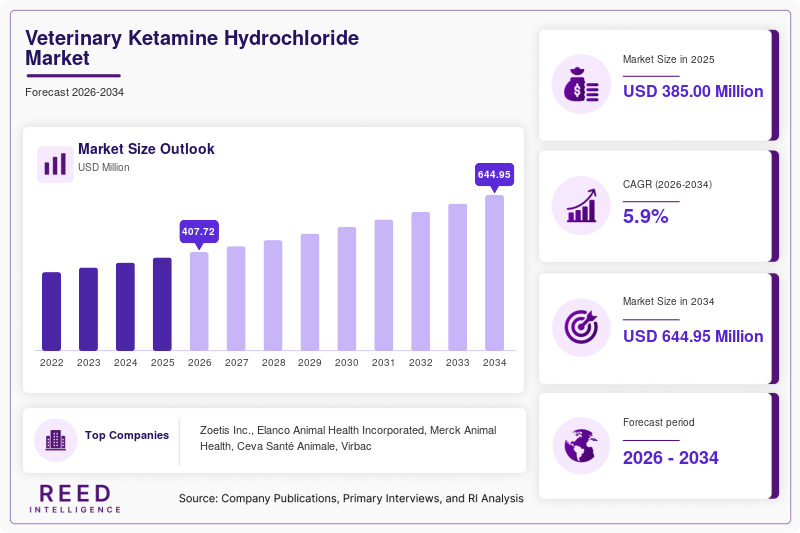
The Veterinary Ketamine Hydrochloride Market size was valued at approximately USD 385 million in 2025 and is projected to reach USD 645 million by 2034, expanding at a CAGR of 5.9% during 2025–2034. The market growth is primarily supported by the increasing global demand for effective anesthetic and analgesic agents in veterinary medicine, particularly in surgical and emergency procedures for companion and livestock animals.
A significant global factor contributing to the expansion of the Veterinary Ketamine Hydrochloride Market is the rising awareness of animal health and welfare standards. Governments and veterinary organizations across developed and emerging economies are emphasizing proper pain management protocols, which has increased the adoption of ketamine hydrochloride due to its rapid onset and safety profile when used appropriately.
Key Highlights
- North America dominated the market with a 38.2% share in 2025, while Asia Pacific is expected to register the fastest growth at a CAGR of 7.1%.
- By application, surgical anesthesia was the leading subsegment with a 45.6% share, while emergency care applications are projected to grow at a CAGR of 6.8%.
- The United States remained the dominant country, with a market value of USD 142 million in 2025 and projected to reach USD 150 million in 2026.
Market Trends
Increasing Adoption of Multimodal Anesthesia Protocols
The Veterinary Ketamine Hydrochloride Market is witnessing a shift toward multimodal anesthesia, where ketamine is combined with other sedatives or analgesics to enhance efficacy and reduce dosage-related side effects. This trend is gaining traction in both companion animal and livestock care, as it enables veterinarians to achieve balanced anesthesia with improved patient outcomes. The flexibility of ketamine in combination therapies makes it a preferred choice in modern veterinary practices.
Expansion of Companion Animal Healthcare Services
The rapid growth in companion animal ownership globally is influencing the Veterinary Ketamine Hydrochloride Market trends. Pet owners are increasingly willing to spend on advanced medical treatments, including surgeries and diagnostic procedures requiring anesthesia. This has led to higher demand for reliable anesthetic agents such as ketamine hydrochloride. Additionally, urbanization and rising disposable incomes are supporting the expansion of veterinary clinics and specialty hospitals, further strengthening market growth.
Market Drivers
Rising Veterinary Surgical Procedures
The growing volume of veterinary surgeries, including orthopedic, dental, and soft tissue procedures, is a key driver of the Veterinary Ketamine Hydrochloride Market. Ketamine is widely used due to its rapid onset, short duration of action, and effectiveness in inducing anesthesia. As veterinary care becomes more advanced, the need for reliable anesthetic solutions continues to rise, directly contributing to market growth.
Increasing Livestock Healthcare Investments
The expansion of the livestock industry and the focus on animal productivity are driving investments in veterinary healthcare. Ketamine hydrochloride is commonly used in livestock procedures such as castration, wound management, and emergency interventions. Governments and agricultural organizations are promoting animal health management practices, thereby increasing the demand for veterinary pharmaceuticals and supporting the Veterinary Ketamine Hydrochloride Market growth.
Market Restraint
Regulatory Restrictions and Controlled Substance Classification
A major restraint in the Veterinary Ketamine Hydrochloride Market is the strict regulatory control associated with ketamine due to its classification as a controlled substance in many countries. Regulatory authorities impose stringent guidelines on manufacturing, distribution, storage, and usage to prevent misuse. These regulations can limit market accessibility, particularly in developing regions where compliance infrastructure may be inadequate.
Furthermore, veterinary practitioners must adhere to detailed documentation and prescription protocols, which can create operational challenges and increase administrative burden. The restricted availability of ketamine in certain regions may also lead to supply inconsistencies, affecting veterinary services.
Additionally, concerns related to potential side effects and the availability of alternative anesthetic agents may further limit market growth. These regulatory and operational constraints collectively pose challenges to the expansion of the Veterinary Ketamine Hydrochloride Market.
Market Opportunities
Growth in Emerging Veterinary Markets
Emerging economies present significant growth opportunities for the Veterinary Ketamine Hydrochloride Market. Increasing awareness of animal health, rising livestock populations, and improving veterinary infrastructure are driving demand for anesthetic drugs. Countries in Asia Pacific and Latin America are investing in veterinary education and healthcare systems, creating a favorable environment for market expansion.
Development of Advanced Drug Formulations
The development of improved ketamine formulations, including combination drugs and controlled-release variants, offers new opportunities in the Veterinary Ketamine Hydrochloride Market. Pharmaceutical companies are focusing on enhancing drug safety, reducing side effects, and improving dosing convenience. These innovations can expand the application scope of ketamine and increase its adoption across different veterinary settings.
Segmental Analysis
By Application
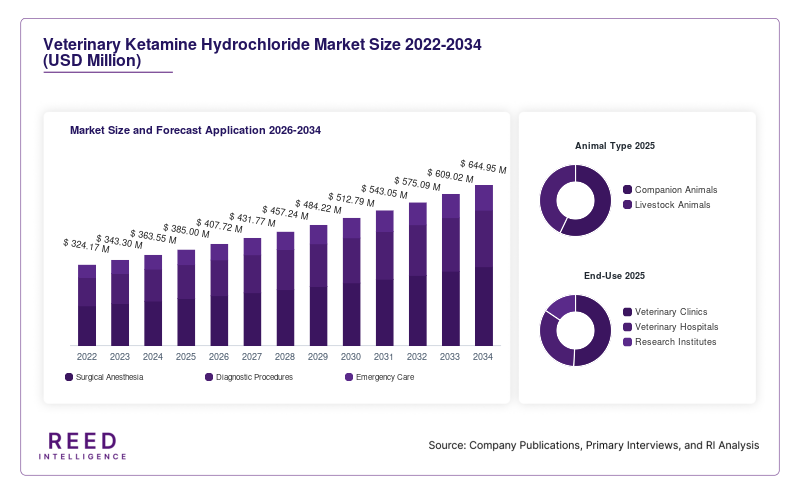
The surgical anesthesia segment dominated the Veterinary Ketamine Hydrochloride Market with a 45.6% share in 2025. This dominance was attributed to the widespread use of ketamine in various surgical procedures, including orthopedic and dental surgeries. Its rapid onset and effectiveness made it a preferred anesthetic agent among veterinarians.
The emergency care segment is expected to grow at the fastest CAGR of 6.8%. The increasing incidence of animal injuries and the need for immediate medical intervention are driving this growth. Ketamine’s quick action and reliability make it suitable for emergency situations, supporting its rising adoption.
By Animal Type
The companion animals segment held the largest share of 52.3% in 2025. The growing number of pet owners and increased spending on pet healthcare contributed to this dominance. Veterinary clinics frequently use ketamine for procedures involving dogs, cats, and other pets.
The livestock animals segment is projected to grow at a CAGR of 6.3%. The rising focus on animal productivity and health management in the agricultural sector is driving demand. Ketamine is widely used in livestock procedures, supporting segment growth.
By End-Use
The veterinary clinics segment accounted for 48.7% of the market share in 2025. The accessibility and availability of veterinary services in clinics contributed to their dominance. Clinics handle a significant volume of routine and minor surgical procedures requiring anesthesia.
The veterinary hospitals segment is expected to grow at a CAGR of 6.5%. The increasing number of advanced surgical procedures and the availability of specialized equipment in hospitals are driving growth.
By Distribution Channel
The direct sales segment dominated with a 41.2% share in 2025. Pharmaceutical companies often supply directly to large veterinary hospitals and clinics, ensuring consistent availability.
The online pharmacies segment is projected to grow at a CAGR of 7.0%. The increasing adoption of digital platforms and the convenience of online purchasing are driving this segment’s growth.
Regional Analysis
North America
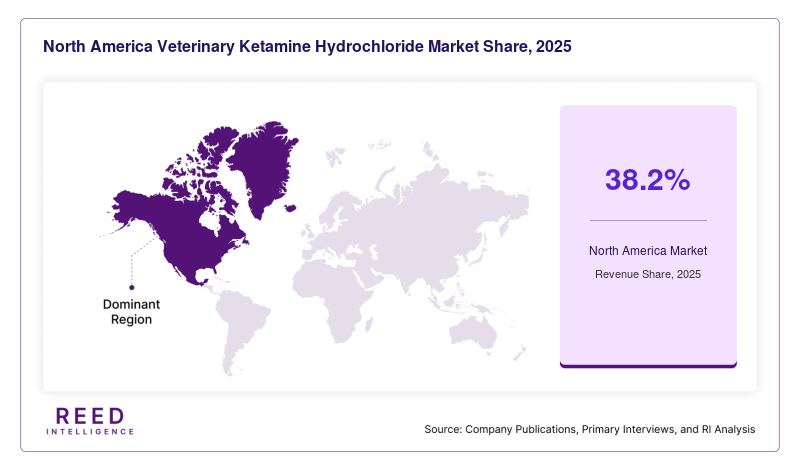
North America accounted for 38.2% of the Veterinary Ketamine Hydrochloride Market share in 2025 and is expected to grow at a CAGR of 5.4% during the forecast period. The region’s established veterinary healthcare infrastructure and widespread adoption of advanced medical practices contributed to its dominant position. The high number of companion animal surgeries and well-regulated pharmaceutical distribution systems supported consistent demand for ketamine hydrochloride.
The United States dominated the regional market due to its advanced veterinary services and strong emphasis on animal welfare. The presence of specialized veterinary hospitals and a high rate of pet ownership drove the demand for anesthetic drugs. Additionally, the integration of advanced surgical techniques increased the need for effective anesthesia solutions, further supporting market growth.
Europe
Europe held a 27.6% share of the Veterinary Ketamine Hydrochloride Market in 2025 and is projected to expand at a CAGR of 5.1%. The region benefited from strong regulatory frameworks and high standards of animal care. Increasing adoption of veterinary procedures and rising awareness regarding pain management contributed to market growth.
Germany emerged as the dominant country due to its well-developed veterinary sector and focus on livestock health management. The country’s emphasis on maintaining animal productivity and health standards supported the demand for veterinary anesthetics, including ketamine hydrochloride.
Asia Pacific
Asia Pacific represented 19.8% of the market share in 2025 and is anticipated to grow at the fastest CAGR of 7.1%. Rapid urbanization, increasing disposable incomes, and growing awareness of animal healthcare contributed to the region’s growth.
China led the regional market, driven by its large livestock population and expanding veterinary infrastructure. Government initiatives to improve animal health and productivity supported the adoption of veterinary pharmaceuticals, including ketamine hydrochloride.
Middle East & Africa
The Middle East & Africa accounted for 7.3% of the Veterinary Ketamine Hydrochloride Market in 2025 and is expected to grow at a CAGR of 5.7%. The region’s growth was supported by increasing investments in veterinary services and livestock management.
South Africa dominated the region due to its relatively advanced veterinary infrastructure and growing awareness of animal health. The country’s focus on improving livestock productivity contributed to the demand for anesthetic drugs.
Latin America
Latin America held a 7.1% share in 2025 and is projected to grow at a CAGR of 6.2%. The region’s expanding livestock industry and increasing veterinary care services supported market growth.
Brazil was the leading country, driven by its large agricultural sector and focus on animal health management. The growing demand for veterinary procedures in livestock and companion animals contributed to the increased use of ketamine hydrochloride.
Competitive Landscape
The Veterinary Ketamine Hydrochloride Market is moderately consolidated, with key players focusing on product innovation, regulatory compliance, and geographic expansion. Leading companies are investing in research and development to enhance drug formulations and expand their product portfolios.
The market leader, Zoetis Inc., maintains a strong position due to its extensive distribution network and diversified veterinary pharmaceutical offerings. The company recently introduced improved anesthetic formulations aimed at enhancing safety and efficacy in veterinary procedures.
Other prominent players are focusing on strategic collaborations, acquisitions, and regional expansions to strengthen their market presence. Competitive dynamics are influenced by regulatory requirements and the need for consistent product quality.
Key Players List
- Zoetis Inc.
- Elanco Animal Health Incorporated
- Merck Animal Health
- Ceva Santé Animale
- Virbac
- Vetoquinol S.A.
- Boehringer Ingelheim Animal Health
- Dechra Pharmaceuticals PLC
- Norbrook Laboratories Ltd.
- Hikma Pharmaceuticals PLC
- Akorn Incorporated
- Troy Laboratories Pty Ltd
- Indian Immunologicals Limited
- Zydus Animal Health
- Intas Pharmaceuticals Ltd.
Recent Developments
- Zoetis Inc. launched an enhanced ketamine-based anesthetic formulation for improved safety in veterinary use.
- Elanco Animal Health expanded its distribution network in Asia Pacific to strengthen market presence.
- Merck Animal Health invested in research for combination anesthetic therapies.
- Ceva Santé Animale introduced new veterinary training programs focusing on anesthesia protocols.
- Virbac expanded its product portfolio with advanced veterinary sedatives.
Veterinary Ketamine Hydrochloride Market Segments
Application
- Surgical Anesthesia
- Diagnostic Procedures
- Emergency Care
Animal Type
- Companion Animals
- Livestock Animals
End-Use
- Veterinary Clinics
- Veterinary Hospitals
- Research Institutes
Distribution Channel
- Direct Sales
- Veterinary Pharmacies
- Online Pharmacies
By Region
- North America
- Europe
- APAC
- Middle East and Africa
- LATAM