Veterinary Orthopedic Implants Market Size, Share & Demand Report By Product Type (Plates and Screws, Pins and Wires, External Fixators, Joint Replacement Implants), By Material (Titanium-Based Implants, Stainless Steel Implants, Advanced Biocompatible Composite Materials), By Animal Type (Dogs, Cats, Horses, Other Animals), By End User (Veterinary Hospitals, Veterinary Clinics, Specialty Orthopedic Clinics, Academic & Research Institutions), By Region & Segment Forecasts, 2026–2034
USD 3950
Market Overview
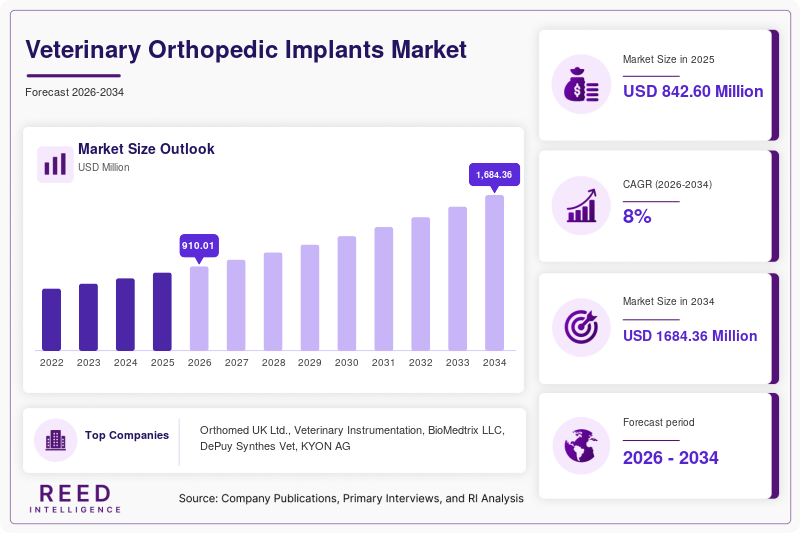
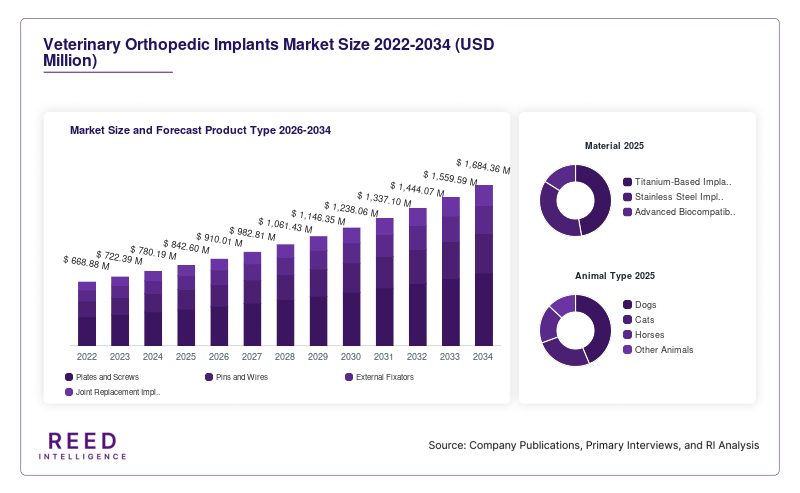
The global Veterinary Orthopedic Implants Market was valued at USD 842.6 million in 2026 and is projected to reach USD 1.56 billion by 2034, expanding at a CAGR of 8.0% during the forecast period (2026–2034). Veterinary orthopedic implants are specialized medical devices used to stabilize, repair, and reconstruct fractured bones, joint injuries, ligament damage, and musculoskeletal disorders in companion and livestock animals. These implants include plates, screws, pins, wires, external fixators, and advanced joint replacement systems designed to restore mobility and improve animal quality of life.
A major global factor supporting market growth has been the increasing humanization of companion animals. Pet owners across developed and emerging economies are spending more on advanced veterinary healthcare services, including complex orthopedic procedures. This shift has encouraged veterinary clinics and specialty hospitals to adopt advanced surgical solutions and implant technologies that were previously limited to human healthcare settings.
Key Highlights
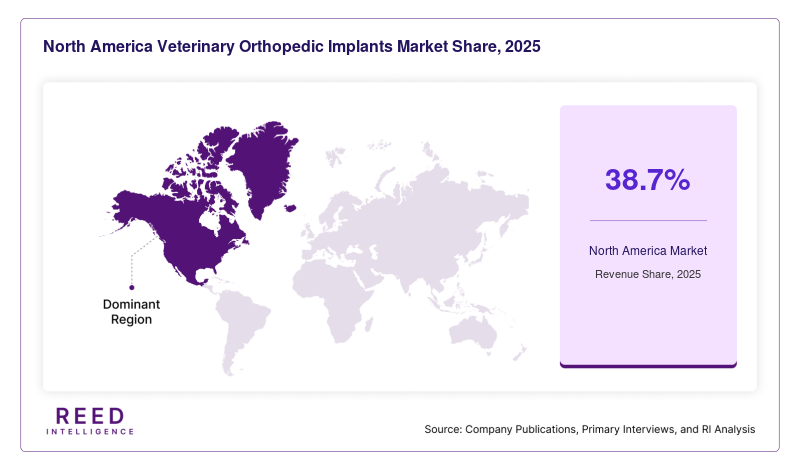
- North America accounted for the largest market share of 38.7% in 2025, while Asia Pacific is anticipated to register the fastest CAGR of 9.1% during 2026–2034.
- By Product Type, Disposable Cat Diapers held the dominant share of 62.4% in 2025, whereas Reusable Cat Diapers are projected to expand at a CAGR of 8.6%.
- By Material, Polymer-Based Absorbent Materials represented the leading share of 57.8% in 2025, while Eco-Friendly Biodegradable Materials are forecast to grow at a CAGR of 10.2%.
- By Distribution Channel, Online Retail captured the largest share of 46.3% in 2025, whereas Subscription-Based Pet Supply Services are expected to grow at a CAGR of 11.4%.
- By Application, Urinary Incontinence Management accounted for 48.6% of the market in 2025, while Post-Surgical Recovery Care is projected to record a CAGR of 9.5%.
- The United States, the dominant country market, was valued at USD 104.2 million in 2024 and increased to USD 111.8 million in 2025.
Market Trends
Growing Demand for Sustainable and Reusable Hygiene Solutions
Environmental awareness among pet owners is influencing purchasing decisions across the Cat Diapers Market. Consumers are increasingly seeking reusable diaper options manufactured using washable fabrics and eco-conscious absorbent layers. This trend is encouraging manufacturers to introduce durable products capable of multiple usage cycles while maintaining absorbency and comfort. Sustainable packaging and biodegradable materials are also gaining traction, particularly among environmentally conscious consumers in developed markets.
Integration of Advanced Comfort and Fit Technologies
Product development is increasingly focused on enhancing feline comfort through ergonomic designs, breathable materials, adjustable closures, and improved leak protection systems. Companies are introducing anatomical designs tailored specifically for cats rather than adapting products originally intended for dogs. Enhanced comfort features reduce skin irritation and improve product acceptance among pets, supporting higher consumer satisfaction and repeat purchases.
Market Drivers
Increasing Adoption of Companion Cats Worldwide
The growing population of domestic cats continues to create a larger customer base for pet hygiene products. Urban households increasingly prefer cats due to their adaptability to apartment living and relatively lower maintenance requirements. As cat ownership expands across multiple regions, demand for specialized care products, including cat diapers, is rising steadily. The expanding pet population provides a consistent foundation for market growth.
Rising Awareness of Feline Health Management
Pet owners are becoming more informed about health conditions such as urinary incontinence, mobility limitations, congenital disorders, and age-related health complications. Increased veterinary consultations and educational resources have improved awareness regarding effective management solutions. As a result, consumers are more willing to adopt cat diapers as part of routine health and hygiene care programs, supporting sustained demand across various age groups of cats.
Market Restraint
Limited Product Acceptance Among Certain Cats
Despite product improvements, some cats may resist wearing diapers due to behavioral preferences or sensitivity to unfamiliar accessories. This can discourage initial adoption among pet owners and create challenges for manufacturers attempting to expand penetration rates. Product training requirements and adaptation periods continue to represent barriers for certain consumer groups.
Market Opportunities
Expansion of Premium Customized Product Lines
Manufacturers have opportunities to introduce breed-specific, size-specific, and gender-specific cat diaper solutions. Customized products offering enhanced fit and specialized absorbency levels can attract premium consumers seeking tailored pet care solutions. Personalization strategies may support higher profit margins and stronger customer loyalty.
Growth of Emerging E-Commerce Markets
Digital retail penetration continues to increase across developing economies. Expanding internet access, mobile commerce adoption, and improved logistics networks create opportunities for manufacturers to reach previously underserved consumers. E-commerce platforms provide access to broader product selections and educational content, supporting market expansion in emerging regions.
Segmental Analysis
By Product Type
The Cat Diapers Market is segmented into Disposable Cat Diapers and Reusable Cat Diapers.
Disposable Cat Diapers accounted for the largest share of 62.4% in 2025. Their dominance was attributed to convenience, ease of disposal, high absorbency, and suitability for temporary hygiene management situations. Many consumers preferred disposable products due to reduced cleaning requirements and immediate usability.
Reusable Cat Diapers are projected to expand at a CAGR of 8.6% through 2034. Growth will be driven by increasing environmental awareness and long-term cost efficiency. Consumers seeking sustainable alternatives will increasingly adopt washable products that provide repeated usage without compromising functionality.
By Material
The market is segmented into Polymer-Based Absorbent Materials, Cotton Fabrics, and Eco-Friendly Biodegradable Materials.
Polymer-Based Absorbent Materials held the dominant share of 57.8% in 2025. Their position was supported by superior liquid retention capabilities, leakage prevention performance, and widespread use in premium absorbent product designs.
Eco-Friendly Biodegradable Materials are expected to witness a CAGR of 10.2% during the forecast period. Growth will result from increasing demand for sustainable pet care products and greater consumer preference for environmentally responsible purchasing choices.
By Application
The Cat Diapers Market is segmented into Urinary Incontinence Management, Behavioral Marking Control, Post-Surgical Recovery Care, and Travel Hygiene Management.
Urinary Incontinence Management accounted for the largest share of 48.6% in 2025. The segment maintained leadership due to the growing population of senior cats requiring long-term hygiene management solutions.
Post-Surgical Recovery Care is anticipated to register a CAGR of 9.5% through 2034. Growth will be supported by increasing utilization of hygiene products during veterinary recovery periods, helping maintain cleanliness and reduce post-treatment management challenges.
By Distribution Channel
The market is segmented into Online Retail, Pet Specialty Stores, Veterinary Clinics, and Subscription-Based Pet Supply Services.
Online Retail captured 46.3% of market revenue in 2025. Its dominance was attributed to extensive product availability, convenient purchasing experiences, competitive pricing, and access to customer reviews that assist purchase decisions.
Subscription-Based Pet Supply Services are forecast to grow at a CAGR of 11.4% during the forecast period. Growth will stem from recurring delivery models that improve customer convenience and encourage consistent purchasing behavior among pet owners.
Regional Analysis
North America
North America accounted for 38.7% of the global Cat Diapers Market share in 2025. The region will likely expand at a CAGR of 6.5% through 2034. Market growth is supported by mature pet care spending patterns and widespread adoption of specialized pet hygiene products. Consumers demonstrate strong willingness to purchase premium pet care solutions, supporting consistent demand.
The United States remained the dominant country within the region. The country's growth is influenced by the extensive availability of specialized feline care products through pet specialty retailers and integrated omnichannel distribution networks that enhance product accessibility.
Europe
Europe represented 27.4% of the global market share in 2025 and is expected to register a CAGR of 6.8% during the forecast period. The region benefits from a well-established pet care industry and increasing consumer preference for high-quality pet wellness products.
Germany emerged as the leading country market. Growth in Germany is supported by strong consumer demand for premium pet hygiene products and increasing interest in environmentally responsible pet care solutions, which encourages adoption of advanced cat diaper products.
Asia Pacific
Asia Pacific held 22.1% of the market share in 2025 and will likely record the fastest CAGR of 9.1% from 2026 to 2034. Rapid urbanization, expanding middle-class populations, and growing pet ownership rates are contributing to regional market expansion.
China remained the dominant country in the region. Market growth is driven by increasing pet ownership among younger urban consumers who actively purchase specialized pet care products through digital commerce platforms and dedicated pet retail channels.
Middle East & Africa
The Middle East & Africa accounted for 5.4% of global revenue in 2025 and is projected to grow at a CAGR of 7.0% through 2034. Growing awareness regarding companion animal welfare and increasing availability of imported pet products are supporting market development.
United Arab Emirates represented the leading country market. Expansion is supported by a growing premium pet care sector and increasing expenditure on specialized pet accessories among affluent urban consumers.
Latin America
Latin America captured 6.4% of the global market share in 2025 and is expected to expand at a CAGR of 7.4% during the forecast period. Improving retail infrastructure and increasing pet ownership trends are contributing to market growth across several countries.
Brazil remained the dominant country market. Growth is supported by expanding pet retail networks and increasing consumer spending on companion animal care products that address hygiene and wellness requirements.
Competitive Landscape
The Cat Diapers Market remains moderately fragmented, with manufacturers competing through product innovation, material advancements, distribution expansion, and brand positioning strategies. Companies are focusing on comfort enhancement, absorbency performance, sustainability initiatives, and digital retail partnerships to strengthen market presence.
Pet Parents® maintained a leading position within the market due to its broad product portfolio, established retail presence, and continued investment in reusable hygiene solutions. The company recently expanded its washable cat diaper collection with enhanced moisture-control layers designed to improve comfort and durability.
Other major participants continue to strengthen their competitive positions through new product launches, strategic partnerships, and geographic expansion initiatives. Increasing focus on sustainable materials and premium pet care solutions is expected to influence future competitive dynamics across the industry.
Key Players List
- Pet Parents®
- Paw Inspired
- Hartz
- Simple Solution
- Pet Magasin
- Wegreeco
- Teamoy
- OUT! PetCare
- Pet Soft
- Four Paws Products Ltd.
- Vet's Best
- Pet Life LLC
- Paw Legend
- CuteBone
- Langsprit
Recent Developments
- In January 2026, a leading pet hygiene manufacturer introduced reusable cat diapers incorporating multi-layer moisture-lock technology for extended wear duration.
- In March 2026, several pet product brands expanded direct-to-consumer subscription programs for recurring delivery of cat hygiene products.
- In June 2026, a major industry participant launched biodegradable cat diaper variants utilizing plant-based absorbent materials.
- In September 2026, manufacturers increased investments in ergonomic feline-specific diaper designs to improve comfort and fit performance.
- In February 2027, multiple companies expanded e-commerce partnerships across Asia Pacific to strengthen digital distribution capabilities.
- In April 2027, premium pet care brands introduced gender-specific diaper solutions designed to enhance leakage protection and usability.
- In August 2027, industry participants implemented recyclable packaging initiatives aligned with broader sustainability objectives.
- In November 2027, several manufacturers expanded veterinary clinic distribution programs to improve product visibility among pet healthcare professionals.
Veterinary Orthopedic Implants Market Segments
Product Type
- Plates and Screws
- Pins and Wires
- External Fixators
- Joint Replacement Implants
Material
- Titanium-Based Implants
- Stainless Steel Implants
- Advanced Biocompatible Composite Materials
Animal Type
- Dogs
- Cats
- Horses
- Other Animals
End User
- Veterinary Hospitals
- Veterinary Clinics
- Specialty Orthopedic Clinics
- Academic & Research Institutions
By Region
- North America
- Europe
- APAC
- Middle East and Africa
- LATAM