Veterinary Stereotactic Radiosurgery System Market Size, Share, Demand Report By System Type (Linear Accelerator-Based Systems, Robotic Radiosurgery Systems, Image-Guided Radiosurgery Systems, Hybrid Radiosurgery Platforms)By End-Use (Veterinary Specialty Hospitals, Research & Academic Institutes, Diagnostic Veterinary Clinics, Mobile Veterinary Surgical Units) By Regional Outlook and Segment Forecasts, 2026–2034
USD 3950
Market Overview
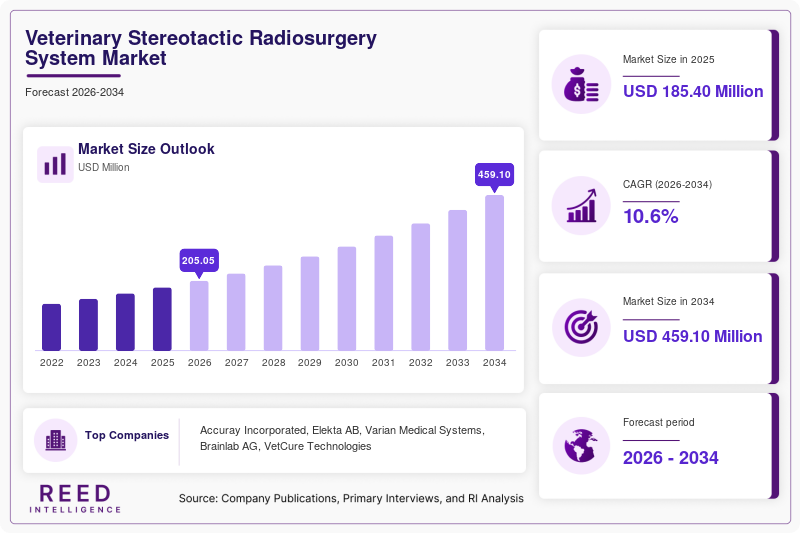
The Veterinary Stereotactic Radiosurgery System Market size valued at USD 185.4 million in 2026 and projected to reach USD 412.8 million by 2034, growing at a CAGR of 10.6% during the forecast period (2026–2034). Growth is primarily driven by the increasing adoption of advanced non-invasive cancer treatment technologies in veterinary oncology. Rising pet ownership rates, coupled with higher expenditure on companion animal healthcare, have significantly improved demand for precision-based radiation therapy systems across veterinary hospitals and specialty clinics.
One major global factor supporting market growth is the technological convergence between human and veterinary oncology systems. Equipment originally designed for human stereotactic radiosurgery is increasingly being adapted for veterinary use, improving treatment accuracy, reducing recovery time, and expanding clinical applications for tumors in dogs, cats, and equine patients. This cross-industry technology transfer has strengthened investment in veterinary oncology infrastructure, particularly in developed economies.
Key Highlights
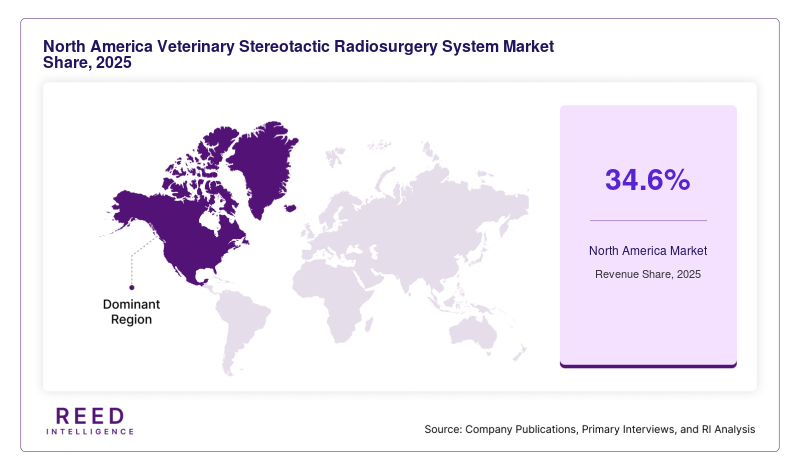
- North America dominated the market with a 34.6% share in 2025.
- Asia Pacific is expected to grow at the fastest CAGR of 11.4% during 2026–2034.
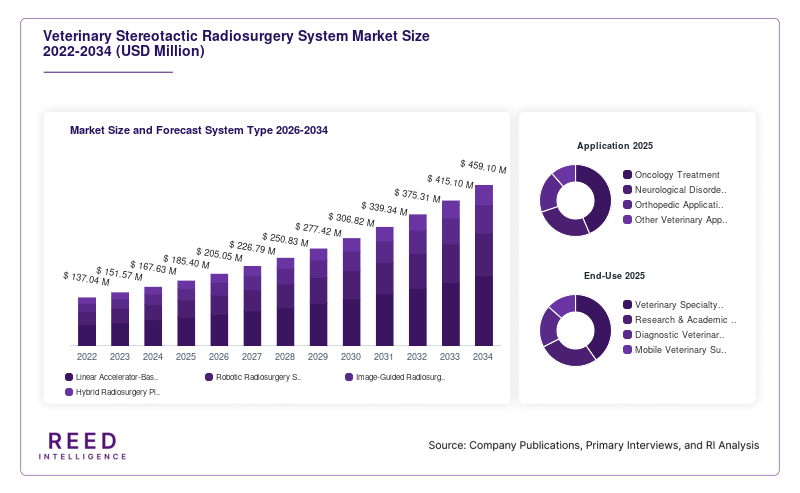
- By system type, linear accelerator-based radiosurgery systems accounted for the largest share of 42.1%.
- while robotic radiosurgery systems are projected to grow at a CAGR of 12.7%.
- By application, oncology treatment led with a 44.3% share, whereas neurological disorder treatment is expected to expand at a CAGR of 11.9%.
- The United States remained the dominant country, with market values of USD 62 million in 2024 and USD 68 million in 2025.
Market Trends
Integration of AI-Based Treatment Planning Systems
The integration of artificial intelligence in veterinary stereotactic radiosurgery systems is emerging as a key market trend. AI-enabled treatment planning tools assist veterinarians in optimizing radiation dose distribution, improving tumor targeting accuracy, and minimizing damage to surrounding healthy tissues. These systems analyze imaging data from CT and MRI scans to generate precise treatment pathways, reducing manual intervention and operational errors. As veterinary oncology becomes more sophisticated, clinics are increasingly adopting AI-supported radiosurgery platforms to enhance clinical outcomes. The use of machine learning algorithms also enables predictive modeling of tumor response, helping veterinarians personalize treatment protocols. This trend is particularly prominent in advanced veterinary hospitals in North America and Europe, where digital transformation in animal healthcare is accelerating.
Rising Adoption of Compact and Mobile Radiosurgery Systems
Another significant trend is the growing demand for compact and mobile stereotactic radiosurgery systems designed specifically for veterinary applications. Traditional systems require large infrastructure and high installation costs, limiting their accessibility. However, newer portable configurations are enabling small and mid-sized veterinary clinics to adopt advanced radiation therapy solutions. These compact systems reduce operational complexity while maintaining high precision in tumor targeting. Manufacturers are focusing on modular system designs that can be integrated into existing veterinary hospital setups without major structural modifications. This trend is expanding access to advanced oncology treatments in emerging markets, where veterinary healthcare infrastructure is still developing but demand for pet cancer treatment is rising steadily.
Market Drivers
Rising Incidence of Cancer in Companion Animals
The increasing prevalence of cancer in companion animals is a major driver of the Veterinary Stereotactic Radiosurgery System Market. Dogs and cats are increasingly being diagnosed with tumors such as mast cell tumors, brain tumors, and bone cancers, necessitating advanced treatment options. Traditional surgical procedures often involve high risk and longer recovery periods, making stereotactic radiosurgery an attractive alternative due to its non-invasive nature and precision targeting. Veterinary clinics are increasingly investing in advanced oncology systems to meet rising patient demand. Pet owners are also more willing to spend on high-cost treatments, driven by emotional attachment and improved pet insurance coverage in developed markets. This rising disease burden continues to expand the clinical application of radiosurgery systems globally.
Technological Advancements in Veterinary Imaging Systems
Rapid advancements in veterinary imaging technologies such as high-resolution CT, MRI, and PET scanning systems are significantly driving market growth. These imaging systems are essential for precise tumor localization and treatment planning in stereotactic radiosurgery procedures. Improved imaging resolution enables veterinarians to deliver highly focused radiation doses while minimizing collateral tissue damage. Integration of imaging systems with radiosurgery platforms has streamlined clinical workflows and improved treatment accuracy. Additionally, advancements in 3D imaging reconstruction and real-time tracking systems are enhancing procedural efficiency. These innovations are encouraging veterinary hospitals and specialty clinics to adopt stereotactic radiosurgery systems as part of their oncology service offerings.
Market Restraint
High Capital Investment and Operational Costs
One of the primary restraints affecting the Veterinary Stereotactic Radiosurgery System Market is the high cost associated with system acquisition, installation, and maintenance. These systems require advanced infrastructure, specialized shielding, and highly trained veterinary oncologists to operate effectively. The initial capital expenditure can exceed several million dollars, making it inaccessible for small and medium-sized veterinary clinics. Additionally, ongoing maintenance costs, software upgrades, and calibration requirements further increase the financial burden on healthcare providers. In emerging economies, limited reimbursement structures for veterinary treatments also restrict adoption. As a result, only large veterinary hospitals and academic research institutions can afford these systems, slowing overall market penetration despite growing clinical demand.
Market Opportunities
Expansion of Veterinary Oncology Infrastructure in Emerging Markets
Emerging economies present significant opportunities for the Veterinary Stereotactic Radiosurgery System Market due to the gradual development of veterinary oncology infrastructure. Countries in Asia Pacific and Latin America are witnessing increased investment in advanced veterinary hospitals and diagnostic centers. Rising disposable incomes and growing awareness of pet healthcare are encouraging pet owners to opt for specialized cancer treatments. Governments and private investors are also supporting the modernization of veterinary healthcare facilities. This expansion creates a favorable environment for the adoption of stereotactic radiosurgery systems, particularly in urban veterinary specialty centers. Manufacturers can capitalize on this opportunity by offering cost-effective and modular system designs tailored for developing markets.
Growing Demand for Pet Insurance Coverage
The increasing penetration of pet insurance is another key opportunity supporting market expansion. Pet insurance plans are gradually covering advanced oncology treatments, including stereotactic radiosurgery procedures, reducing the financial burden on pet owners. This trend is encouraging higher adoption of expensive but effective treatment technologies in veterinary clinics. Insurance-backed healthcare models are particularly gaining traction in North America and Europe, where pet healthcare expenditure is already high. As insurance coverage expands in emerging markets, demand for advanced veterinary oncology systems is expected to rise significantly, driving long-term market growth.
Segmental Analysis
By System Type
Linear accelerator-based systems dominated the market with a 2024 share of 46.3%, driven by their high precision and widespread clinical adoption in veterinary oncology. These systems are preferred for treating deep-seated tumors in companion animals due to their ability to deliver controlled radiation doses. Veterinary hospitals with advanced infrastructure primarily deploy these systems for complex cancer cases requiring high accuracy and minimal tissue damage.
Robotic radiosurgery systems are the fastest-growing subsegment, expected to expand at a CAGR of 12.7% during 2026–2034. Growth is supported by increasing demand for automation and precision in treatment delivery. These systems enhance procedural efficiency and reduce human intervention, making them suitable for high-volume veterinary oncology centers.
By Application
Oncology treatment accounted for the largest share of 48.1% in 2024, driven by rising cancer prevalence in companion animals. Veterinary clinics are increasingly adopting stereotactic radiosurgery as a primary treatment modality for tumors that are difficult to remove surgically.
Neurological disorder treatment is the fastest-growing application segment with a CAGR of 11.9%. Increasing diagnosis of brain tumors and neurological conditions in pets is driving adoption of highly precise radiosurgery techniques.
By End-Use
Veterinary specialty hospitals held the dominant share of 52.4% in 2024 due to their advanced infrastructure and availability of trained oncologists. These facilities are the primary adopters of stereotactic radiosurgery systems.
Research and academic institutes represent the fastest-growing end-use segment with a CAGR of 11.2%, driven by increasing clinical research and technological development in veterinary oncology solutions.
Regional Analysis
North America
North America accounted for 34.6% of the Veterinary Stereotactic Radiosurgery System Market in 2025 and is expected to maintain strong growth with a CAGR of 10.2% during 2026–2034. The region benefits from advanced veterinary healthcare infrastructure and high adoption of innovative oncology technologies.
The United States dominates the regional market due to strong presence of specialty veterinary hospitals and research institutions. Increasing pet cancer incidence and high spending on animal healthcare are key growth drivers supporting continued expansion of stereotactic radiosurgery system installations.
Europe
Europe held 27.8% market share in 2025 and is projected to grow at a CAGR of 9.8% during the forecast period. Strong regulatory frameworks supporting veterinary medical advancements contribute to steady adoption of radiosurgery systems.
Germany leads the European market due to advanced veterinary oncology research centers. Increasing collaboration between universities and veterinary hospitals is enhancing clinical adoption of stereotactic radiosurgery technologies across the region.
Asia Pacific
Asia Pacific accounted for 18.5% market share in 2025 and is expected to record the fastest CAGR of 11.4% during 2026–2034. Rapid urbanization and rising pet ownership are driving demand for advanced veterinary oncology services.
China dominates the region due to growing veterinary healthcare investments and expansion of specialty animal hospitals. Increasing awareness of pet cancer treatment options is further accelerating adoption of advanced radiosurgery systems.
Middle East & Africa
The Middle East & Africa region held 10.2% share in 2025 and is expected to grow at a CAGR of 9.5% during the forecast period. Veterinary infrastructure development is gradually improving across major urban centers.
South Africa leads the region due to increasing establishment of advanced veterinary clinics. Rising awareness of companion animal healthcare is supporting demand for modern oncology treatment systems.
Latin America
Latin America accounted for 8.9% share in 2025 and is projected to grow at a CAGR of 9.9% during 2026–2034. Growth is driven by improving veterinary healthcare services and increasing pet adoption rates.
Brazil dominates the regional market due to expanding veterinary hospital networks. Growing investment in animal healthcare infrastructure is enhancing access to advanced stereotactic radiosurgery systems in urban areas.
Competitive Landscape
The Veterinary Stereotactic Radiosurgery System Market is moderately consolidated, with key players focusing on technological innovation, system miniaturization, and strategic collaborations with veterinary hospitals. Major companies include Accuray Incorporated, Varian Medical Systems, Elekta AB, Brainlab AG, and VetCure Technologies. These companies are investing in advanced imaging integration, AI-based treatment planning, and improved system precision to strengthen their market positions.
Accuray Incorporated remains a leading player due to its strong presence in robotic radiosurgery solutions adapted for veterinary applications. Recently, the company expanded its veterinary oncology product line through partnerships with specialty animal hospitals in North America, enhancing clinical accessibility and system adoption.
Key Players
- Accuray Incorporated
- Elekta AB
- Varian Medical Systems
- Brainlab AG
- VetCure Technologies
- Siemens Healthineers
- GE HealthCare
- Canon Medical Systems
- ViewRay Technologies
- Medtronic Plc
- Philips Healthcare
- Hitachi Medical Systems
- Radiation Products Design Inc.
- Planmed Oy
- Oncology Systems Limited
Recent Developments
- In 2025, Accuray Incorporated introduced an upgraded veterinary adaptation of its robotic radiosurgery platform with enhanced imaging integration to improve treatment precision and workflow efficiency.
- Elekta AB expanded its collaboration with European veterinary hospitals to improve access to advanced oncology treatments and strengthen regional adoption of stereotactic radiosurgery systems.
- Brainlab AG launched AI-assisted treatment planning software specifically designed for veterinary stereotactic procedures, enabling improved precision, automated workflows, and enhanced clinical decision-making.
Veterinary Stereotactic Radiosurgery System Market Segments
System Type
- Linear Accelerator-Based Systems
- Robotic Radiosurgery Systems
- Image-Guided Radiosurgery Systems
- Hybrid Radiosurgery Platforms
Application
- Oncology Treatment
- Neurological Disorder Treatment
- Orthopedic Applications
- Other Veterinary Applications
End-Use
- Veterinary Specialty Hospitals
- Research & Academic Institutes
- Diagnostic Veterinary Clinics
- Mobile Veterinary Surgical Units
By Region
- North America
- Europe
- APAC
- Middle East and Africa
- LATAM