Vinflunine Market Size, Share Demand Report By Indication (Urothelial Carcinoma, Combination Therapy Research Applications, Other Solid Tumors), By Distribution Channel (Hospital Pharmacies, Retail Pharmacies, Specialty Oncology Pharmacies), By End-Use (Hospitals, Oncology Specialty Clinics, Cancer Research Institutes), By Region & Segment Forecasts, 2025–2034
USD 3950
Market Overview
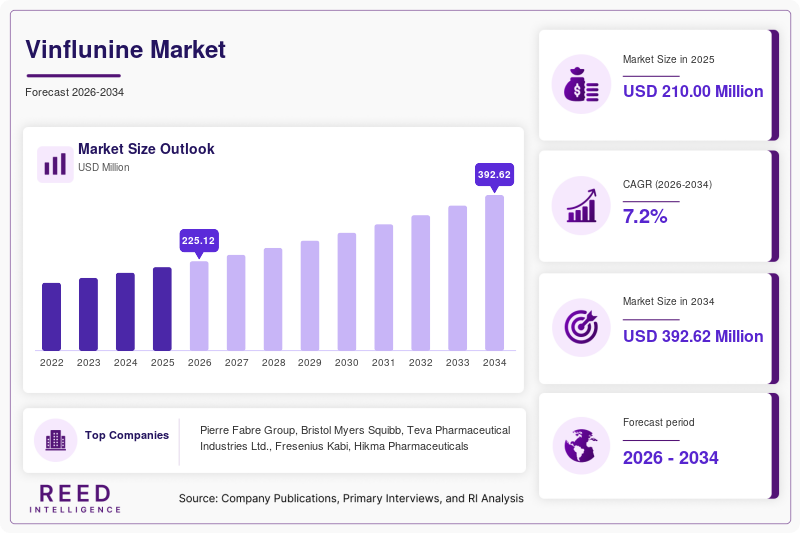
The global Vinflunine Market size was valued at USD 210 million in 2025 and is projected to reach USD 395 million by 2034, expanding at a CAGR of 7.2% during the forecast period (2025–2034). Vinflunine, a semi-synthetic vinca alkaloid chemotherapy drug primarily used for the treatment of advanced urothelial carcinoma, has gained attention due to its role in second-line cancer therapy. Increasing oncology drug development pipelines and growing demand for effective chemotherapy alternatives have contributed to the steady expansion of the Vinflunine Market.
One global factor supporting the growth of the Vinflunine Market is the expansion of oncology treatment infrastructure and increasing accessibility to specialty cancer drugs. Healthcare systems across developed and emerging economies are gradually expanding oncology treatment facilities, improving access to advanced chemotherapy agents. In addition, rising incidence rates of bladder cancer and related urothelial cancers have prompted healthcare providers to adopt more targeted chemotherapy regimens, further supporting market growth. Pharmaceutical manufacturers are also investing in oncology research programs, enhancing the availability of vinflunine-based therapies across global markets.
Key Highlights
- Europe dominated the Vinflunine Market with a 38.6% share in 2025, while Asia Pacific is projected to grow at the fastest CAGR of 8.5% during 2025–2034.
- Urothelial carcinoma treatment accounted for the leading application segment with 62.4% market share in 2025, while combination therapy applications are expected to grow at a CAGR of 8.7%.
- Hospital pharmacies represented the dominant distribution channel with 54.1% share, whereas specialty oncology clinics are anticipated to grow at a CAGR of 8.2%.
- France was the leading country market, with USD 34 million in 2025 and expected to reach USD 36 million in 2026.
Market Trends
Increasing Integration of Vinflunine in Combination Oncology Therapy
Combination chemotherapy strategies are gaining traction in oncology treatment protocols. Vinflunine is increasingly evaluated alongside immunotherapy agents and targeted therapies to improve treatment outcomes in patients with advanced bladder cancer. Researchers and oncologists are exploring the role of vinflunine in combination regimens to improve patient response rates and extend survival durations. These developments are shaping the Vinflunine Market by expanding clinical applications and enhancing therapeutic effectiveness.
Clinical research organizations and pharmaceutical companies are conducting studies to examine synergistic drug interactions between vinflunine and checkpoint inhibitors. As oncology treatment strategies continue to evolve toward combination-based approaches, vinflunine-based regimens are gaining attention as complementary therapies.
Expansion of Oncology Specialty Pharmacy Networks
The growth of oncology specialty pharmacy networks is influencing the distribution dynamics of the Vinflunine Market. Specialty pharmacies are becoming important channels for dispensing high-value oncology medications that require strict handling and clinical supervision.
These pharmacies provide services such as patient counseling, dosage monitoring, and treatment coordination with oncologists. As oncology treatment becomes increasingly personalized, healthcare providers are relying more on specialized distribution networks for chemotherapy drugs. This trend is improving treatment accessibility and supporting steady demand for vinflunine across hospital and specialty care environments.
Market Drivers
Rising Incidence of Urothelial and Bladder Cancers
The increasing global incidence of bladder cancer has created consistent demand for effective chemotherapy drugs. Vinflunine has been widely used as a second-line treatment option for patients with metastatic or advanced urothelial carcinoma following platinum-based chemotherapy failure.
Healthcare providers are focusing on therapies that offer measurable clinical benefits in late-stage cancer management. As diagnostic screening programs expand and cancer detection rates rise, the patient population requiring advanced chemotherapy treatments continues to grow. This factor supports the long-term growth of the Vinflunine Market.
Expansion of Oncology Drug Development Programs
The global pharmaceutical industry continues to invest heavily in oncology drug development. Vinflunine is part of a broader class of vinca alkaloid chemotherapy agents that remain essential in cancer treatment protocols.
Drug manufacturers are conducting research programs aimed at improving dosing schedules, treatment combinations, and patient tolerability. Increasing regulatory approvals and expanded drug availability across multiple countries are expected to strengthen market growth. Continuous innovation in oncology therapeutics is therefore contributing to the expanding scope of the Vinflunine Market.
Market Restraint
Limited Awareness and Availability in Emerging Markets
Limited awareness regarding vinflunine-based chemotherapy in certain emerging economies poses a challenge to the Vinflunine Market. Many healthcare systems in developing regions still rely on older chemotherapy drugs due to cost constraints and limited oncology infrastructure.
Additionally, regulatory approval processes and restricted drug distribution networks may delay the introduction of vinflunine therapies in some countries. Limited availability in regional hospitals and oncology clinics can reduce patient access to the drug. These factors may slow adoption rates and create uneven market growth across different geographic regions.
Market Opportunities
Expansion of Clinical Research for Additional Cancer Indications
Clinical research exploring new therapeutic applications for vinflunine presents growth opportunities for the Vinflunine Market. Researchers are investigating the effectiveness of vinflunine in treating other solid tumors beyond urothelial carcinoma.
If future clinical studies demonstrate positive outcomes, the drug could be adopted for additional cancer indications. Expansion of therapeutic use would increase patient populations eligible for vinflunine treatment, strengthening long-term market prospects.
Growth of Oncology Care Infrastructure in Emerging Economies
Emerging economies are gradually strengthening oncology treatment infrastructure through hospital expansion, government cancer programs, and investments in specialized oncology centers.
As healthcare systems develop advanced treatment facilities, demand for modern chemotherapy drugs such as vinflunine is expected to increase. Expanding hospital networks and improved oncology training programs are likely to improve drug adoption rates across developing markets, creating new revenue streams for market participants.
Segmental Analysis
By Indication
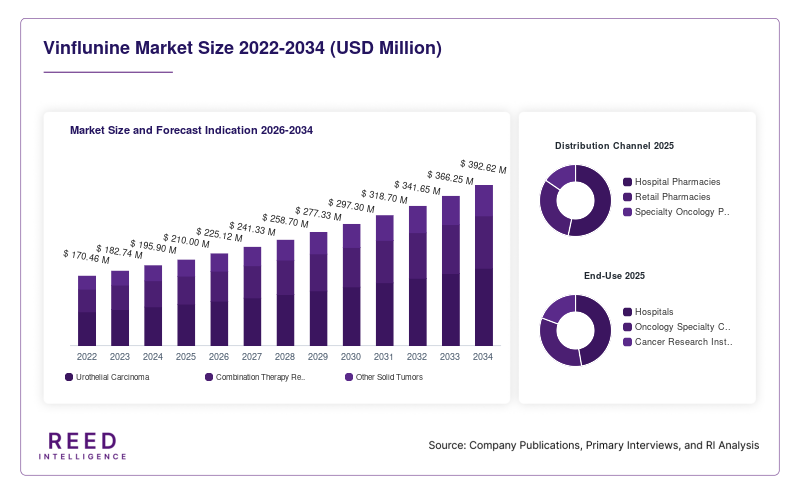
The urothelial carcinoma segment dominated the Vinflunine Market in 2025, accounting for 62.4% of total market share. Vinflunine is widely used as a second-line treatment for patients with metastatic urothelial carcinoma after platinum-based chemotherapy failure. Healthcare providers rely on vinflunine because of its ability to inhibit microtubule formation and disrupt cancer cell division. The drug has been incorporated into several treatment protocols for advanced bladder cancer, supporting its strong adoption within oncology departments.
The combination therapy segment will grow at the fastest CAGR of 8.7% during the forecast period. Combination treatment approaches involving vinflunine and other chemotherapy agents will expand as oncologists aim to improve therapeutic outcomes. Clinical research exploring the synergistic effects of vinflunine with immunotherapy drugs will further strengthen the adoption of combination regimens.
By Distribution Channel
The hospital pharmacies segment dominated the Vinflunine Market in 2025, capturing 54.1% share. Hospitals serve as the primary centers for administering chemotherapy drugs, including vinflunine, due to the need for controlled dosing and professional supervision. Oncology departments typically manage drug procurement and treatment scheduling through hospital pharmacies, ensuring patient safety and regulatory compliance.
The specialty oncology pharmacies segment will register the fastest CAGR of 8.2% during the forecast period. These pharmacies will expand as healthcare systems increasingly rely on specialized drug distribution networks for oncology medications. Specialty pharmacies provide services such as dosage monitoring, medication management, and patient education, which will support the growing adoption of vinflunine therapies.
By End-Use
The hospitals segment held the largest share of the Vinflunine Market in 2025 at 57.3%. Hospitals remain the primary settings for administering intravenous chemotherapy treatments. Oncology specialists working in hospital environments manage treatment planning, patient monitoring, and adverse effect management for vinflunine therapy. The availability of advanced oncology equipment and supportive care facilities supports the dominance of hospitals in this segment.
The oncology specialty clinics segment will grow at a CAGR of 8.4% during the forecast period. These clinics will expand as healthcare providers establish dedicated cancer treatment centers that focus exclusively on oncology services. Specialty clinics offer personalized cancer care, which will increase demand for targeted chemotherapy treatments such as vinflunine.
Regional Analysis
North America
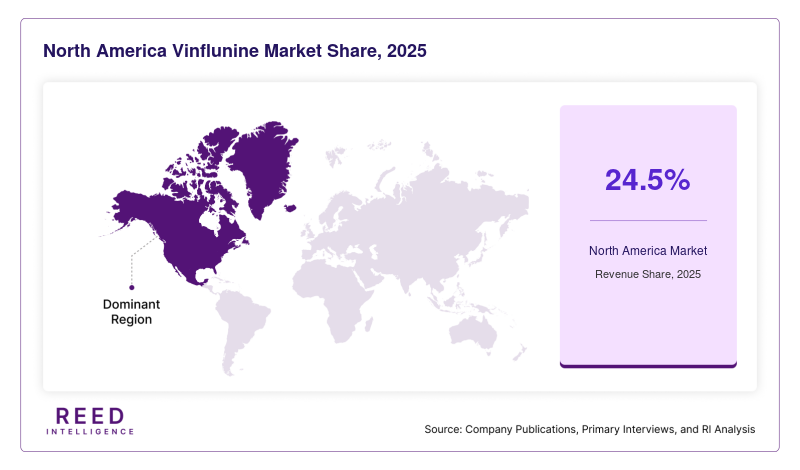
North America accounted for 24.5% of the Vinflunine Market share in 2025, reflecting strong oncology drug availability and established healthcare infrastructure. The region will expand at a CAGR of 6.8% during the forecast period. Growth prospects remain stable due to increasing adoption of chemotherapy drugs in specialized cancer treatment centers.
The United States represented the dominant country in the region. A key factor supporting market growth is the presence of advanced clinical research programs focused on oncology therapeutics. U.S. research institutions and pharmaceutical companies continue to conduct trials aimed at evaluating chemotherapy combinations involving vinflunine. Strong collaboration between academic research organizations and pharmaceutical developers is expected to sustain steady demand for vinflunine treatments.
Europe
Europe held 38.6% of the Vinflunine Market share in 2025, making it the largest regional market. The region will expand at a CAGR of 7.0% from 2025 to 2034. Europe has historically been a key market for vinflunine due to early regulatory approvals and broader clinical acceptance.
France emerged as the leading country market within Europe. One major factor supporting growth is the country’s strong oncology treatment network, which includes specialized cancer centers and advanced hospital systems. French healthcare providers have integrated vinflunine into treatment guidelines for advanced bladder cancer therapy. Continued government investment in cancer research and treatment programs is expected to sustain demand for vinflunine across hospitals and oncology clinics.
Asia Pacific
Asia Pacific represented 20.2% of the Vinflunine Market share in 2025. The region is expected to grow at the fastest CAGR of 8.5% during the forecast period due to expanding healthcare infrastructure and increasing cancer diagnosis rates.
China was the dominant country within the region. One important factor contributing to market growth is the rapid expansion of hospital oncology departments. Chinese healthcare authorities are strengthening cancer treatment facilities and improving access to advanced chemotherapy drugs. As oncology awareness increases and diagnostic capabilities improve, the number of patients receiving specialized cancer treatment continues to rise. These developments are expected to support the expansion of the Vinflunine Market in Asia Pacific.
Middle East & Africa
The Middle East & Africa accounted for 8.1% of the Vinflunine Market share in 2025. The region will grow at a CAGR of 6.5% during the forecast period as healthcare systems gradually adopt advanced cancer treatments.
Saudi Arabia represented the dominant country market in the region. The government has been investing in modern hospital infrastructure and cancer treatment programs as part of national healthcare development initiatives. The expansion of oncology departments within major hospitals is increasing the availability of chemotherapy drugs. These initiatives are expected to support moderate growth in vinflunine adoption across the region.
Latin America
Latin America held 8.6% of the Vinflunine Market share in 2025 and will expand at a CAGR of 6.7% through 2034. Growth in the region is supported by increasing access to oncology drugs and improving healthcare coverage.
Brazil emerged as the dominant country market. One key factor contributing to growth is the expansion of public cancer treatment programs that provide chemotherapy drugs through government healthcare systems. Brazilian hospitals are strengthening oncology services and increasing the availability of chemotherapy treatment options. As healthcare infrastructure continues to improve, demand for vinflunine therapies is expected to increase steadily.
Competitive Landscape
The Vinflunine Market is moderately consolidated, with several pharmaceutical companies involved in oncology drug development and commercialization. Companies focus on expanding oncology portfolios, improving drug distribution networks, and conducting clinical research programs to explore new therapeutic applications.
Pierre Fabre Group is considered a leading player in the Vinflunine Market due to its role in developing and commercializing vinflunine formulations. The company continues to invest in oncology research programs aimed at optimizing treatment protocols and expanding the drug’s clinical applications.
Other companies operating in the market focus on strategic collaborations with healthcare providers and research institutions to strengthen their presence in the oncology therapeutics sector. Expansion of manufacturing capabilities and distribution partnerships also remains a key strategy for market participants.
Key Players List
- Pierre Fabre Group
- Bristol Myers Squibb
- Teva Pharmaceutical Industries Ltd.
- Fresenius Kabi
- Hikma Pharmaceuticals
- Pfizer Inc.
- Novartis AG
- Sun Pharmaceutical Industries Ltd.
- Dr. Reddy’s Laboratories
- Cipla Ltd.
- Mylan N.V.
- Accord Healthcare
- Zydus Lifesciences
- Lupin Limited
- Intas Pharmaceuticals
Recent Developments
- Pierre Fabre expanded its oncology research programs focusing on vinflunine-based combination therapies.
- Several pharmaceutical manufacturers initiated clinical trials to evaluate vinflunine with immunotherapy agents.
- Oncology treatment centers increased adoption of vinflunine chemotherapy protocols for advanced bladder cancer patients.
- Specialty pharmacy networks expanded oncology drug distribution services to improve patient access to chemotherapy drugs.
Vinflunine Market Segments
Indication
- Urothelial Carcinoma
- Combination Therapy Research Applications
- Other Solid Tumors
Distribution Channel
- Hospital Pharmacies
- Retail Pharmacies
- Specialty Oncology Pharmacies
End-Use
- Hospitals
- Oncology Specialty Clinics
- Cancer Research Institutes
By Region
- North America
- Europe
- APAC
- Middle East and Africa
- LATAM