Vulvodynia Treatment Market Size, Share & Demand Report By Treatment Type (Medication Therapy, Physical Therapy, Counseling and Behavioral Therapy, Surgical Treatment, Alternative Therapies), By Route of Administration (Topical, Oral, Injectable), By End User (Hospitals, Specialty Clinics, Ambulatory Surgical Centers, Homecare Settings), By Region & Segment Forecasts, 2026–2034
USD 3950
Market Overview
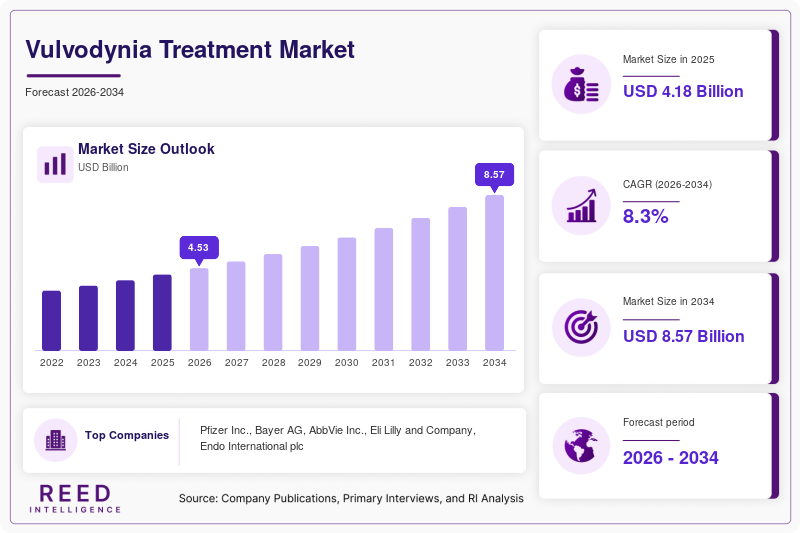
The global Vulvodynia Treatment Market size was valued at USD 4.18 billion in 2026 and is projected to reach USD 7.92 billion by 2034, expanding at a CAGR of 8.3% during the forecast period from 2026 to 2034. The market is witnessing stable growth due to rising awareness regarding chronic vulvar pain disorders, increasing diagnosis rates among women, and the growing adoption of multidisciplinary treatment approaches. Healthcare providers are increasingly emphasizing personalized pain management therapies, which has improved treatment access across developed and emerging healthcare systems. Pharmaceutical companies and specialty clinics are also investing in targeted therapies designed to reduce long-term discomfort and improve patient quality of life.
The increasing prevalence of chronic gynecological disorders globally has supported the growth trajectory of the market. Public health campaigns and educational initiatives by women’s healthcare organizations have encouraged early diagnosis and treatment adoption. In addition, digital health consultations and telemedicine platforms have improved access to gynecological specialists in remote and underserved areas. Demand for non-invasive therapies, topical medications, and psychological counseling services has also expanded due to changing patient preferences for holistic treatment approaches.
Key Highlights
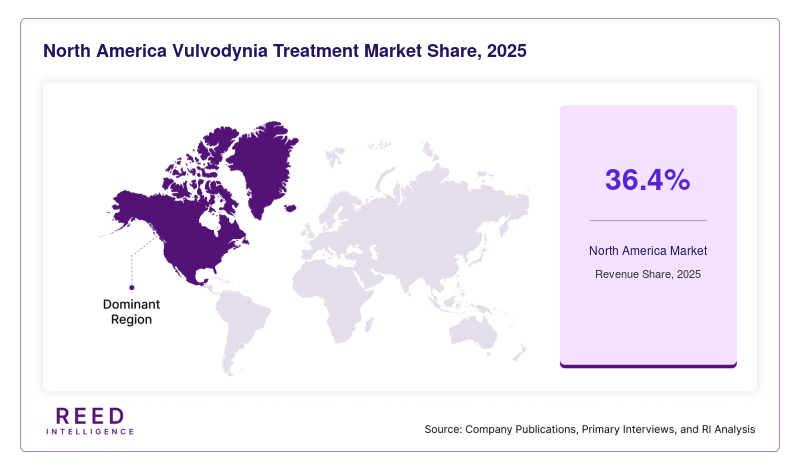
- North America dominated the market with a 36.4% share in 2025.
- Asia Pacific is expected to grow at the fastest CAGR of 10.8% during 2026–2034.
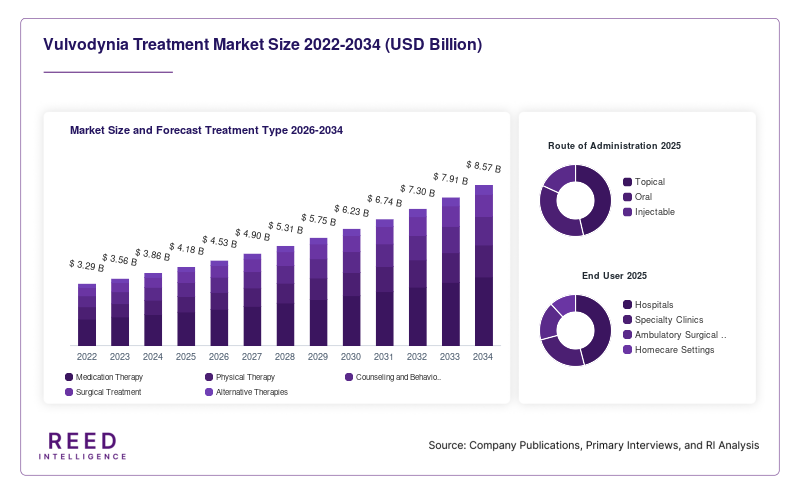
- By treatment type, medication therapy accounted for the largest share of 42.1%, while physical therapy is projected to grow at a CAGR of 11.6%.
- By route of administration, topical treatments led with a 39.8% share, whereas oral therapies are expected to expand at a CAGR of 10.9%.
- By end user, hospitals held the leading share of 45.3%, while specialty clinics are projected to grow at a CAGR of 11.4%.
- The United States remained the dominant country, with market values of USD 1.12 billion in 2024 and USD 1.21 billion in 2025.
Market Trends
Rising Preference for Multidisciplinary Pain Management Programs
The Vulvodynia Treatment Market is experiencing growing demand for multidisciplinary treatment models that combine medication, pelvic floor therapy, counseling, and lifestyle management. Healthcare providers are increasingly recognizing that vulvodynia requires a comprehensive therapeutic approach rather than relying on a single treatment method. Hospitals and specialty clinics are introducing integrated care programs where gynecologists, physiotherapists, pain specialists, and psychologists collaborate to improve treatment outcomes. This trend is particularly strong in developed healthcare systems where patient-centered care models are widely adopted. The expansion of multidisciplinary pain clinics has also improved patient retention rates and increased recurring healthcare spending related to chronic pelvic pain disorders. Growing awareness among women regarding the availability of combined therapies continues to support the adoption of integrated treatment solutions across both urban and semi-urban healthcare facilities.
Expansion of Digital Women’s Healthcare Platforms
Digital healthcare platforms focused on women’s health are reshaping the treatment landscape for vulvodynia. Telemedicine consultations, online symptom assessment tools, and virtual counseling programs are improving access to specialist care for patients who previously faced barriers related to stigma or geographical limitations. Several healthcare providers are integrating mobile health applications with pain tracking features to monitor patient progress and treatment adherence. This trend has accelerated due to increasing smartphone penetration and wider internet access in emerging economies. Pharmaceutical companies and healthcare startups are also collaborating with digital health providers to improve patient engagement and streamline treatment management. The integration of remote consultation services with pharmacy delivery systems has further increased convenience for patients seeking long-term therapy support, thereby contributing to sustained market expansion.
Market Drivers
Increasing Prevalence of Chronic Gynecological Pain Disorders
The growing incidence of chronic vulvar pain conditions and associated gynecological disorders is a major growth driver for the Vulvodynia Treatment Market. Rising awareness campaigns conducted by women’s health organizations have encouraged more women to seek medical consultation for persistent pelvic discomfort. Improved diagnostic capabilities and broader acceptance of chronic pain disorders in healthcare systems have also contributed to higher diagnosis rates. In addition, changing lifestyles, hormonal imbalances, stress-related health complications, and recurrent infections are contributing to the increasing patient population requiring long-term treatment. Healthcare professionals are increasingly recommending combination therapies that include topical medications, nerve pain treatments, and physiotherapy sessions. The growing patient pool is expected to strengthen demand for prescription therapies, specialist consultations, and advanced pain management programs across both public and private healthcare institutions.
Advancements in Personalized and Non-Invasive Therapies
Technological and clinical advancements in non-invasive pain management therapies are driving the adoption of innovative treatment solutions. Pharmaceutical companies are investing in targeted topical creams, hormonal therapies, and nerve stabilization medications designed specifically for vulvodynia-related symptoms. At the same time, healthcare providers are increasingly offering non-surgical interventions such as biofeedback therapy, pelvic floor rehabilitation, and cognitive behavioral therapy. Personalized treatment approaches supported by digital monitoring tools are improving patient satisfaction and treatment adherence. The demand for therapies with fewer side effects has also increased interest in minimally invasive procedures and alternative medicine approaches. Research institutions and healthcare companies are expanding clinical studies focused on long-term pain management effectiveness, which is expected to support product development and increase treatment accessibility during the forecast period.
Market Restraint
Limited Awareness and Delayed Diagnosis in Developing Regions
Limited public awareness regarding vulvodynia and the lack of standardized diagnostic pathways continue to restrain market growth, particularly in developing economies. Many patients remain undiagnosed for extended periods because symptoms are often misinterpreted as temporary infections or hormonal discomfort. Social stigma associated with discussing intimate health conditions further delays treatment-seeking behavior among women in several countries. In addition, healthcare systems in low-income and rural regions frequently lack trained specialists capable of accurately diagnosing chronic vulvar pain disorders. Delayed diagnosis can increase the severity of symptoms and reduce patient confidence in available treatment methods. The absence of uniform reimbursement policies for physical therapy and counseling services also restricts treatment accessibility. Smaller healthcare facilities may avoid investing in advanced diagnostic tools or multidisciplinary pain management programs due to budget limitations, which reduces the availability of comprehensive care solutions and slows overall market penetration.
Market Opportunities
Growing Investment in Women’s Healthcare Infrastructure
The expansion of women’s healthcare infrastructure in emerging economies presents substantial opportunities for companies operating in the Vulvodynia Treatment Market. Governments and private healthcare organizations are increasing investments in gynecology clinics, reproductive health programs, and specialized pain management centers. Several countries in Asia Pacific and Latin America are focusing on expanding healthcare accessibility for women through public insurance initiatives and digital consultation platforms. This broader healthcare development is expected to improve early diagnosis rates and increase treatment adoption. Market participants can benefit from partnerships with hospitals and specialty care centers to expand product availability and strengthen regional distribution networks. The growing focus on preventive healthcare and chronic disease management is also likely to increase demand for long-term vulvodynia treatment solutions over the forecast period.
Emerging Research in Neuromodulation and Regenerative Therapies
Research advancements in neuromodulation technologies and regenerative medicine are opening new opportunities for innovation in vulvodynia treatment. Clinical studies exploring nerve stimulation devices, regenerative tissue therapies, and targeted biologic treatments are gaining attention among healthcare providers and pharmaceutical developers. These emerging therapies aim to reduce chronic pain symptoms while minimizing side effects associated with long-term medication use. Research institutions are increasingly collaborating with biotechnology companies to develop novel treatment methods that address underlying nerve dysfunction and tissue sensitivity. Growing investment in women’s health research funding is expected to accelerate product approvals and clinical commercialization. As patient demand shifts toward long-term pain relief and personalized treatment outcomes, companies focusing on innovative regenerative solutions are likely to gain competitive advantages in the evolving market landscape.
Segmental Analysis
By Treatment Type
Medication therapy accounted for the largest share of the Vulvodynia Treatment Market in 2024, representing 42.1% of total revenue. This segment includes topical anesthetics, antidepressants, anticonvulsants, hormonal treatments, and pain management medications commonly prescribed for symptom relief. The dominance of medication therapy can be attributed to its widespread availability, faster symptom management, and strong physician preference for first-line treatment options. Patients often rely on medication-based solutions before transitioning to advanced or multidisciplinary therapies. Healthcare providers also prefer combining prescription drugs with supportive counseling or physiotherapy to improve long-term outcomes. Pharmaceutical companies continue to invest in research focused on reducing medication side effects and improving targeted pain relief. Increasing diagnosis rates and broader insurance coverage for prescription medications are further supporting segment expansion across both developed and emerging healthcare systems.
Physical therapy is projected to expand at the fastest CAGR of 11.6% during the forecast period due to growing awareness regarding non-invasive and long-term pain management approaches. Pelvic floor rehabilitation, biofeedback therapy, and muscle relaxation exercises are increasingly recommended for patients suffering from chronic vulvar pain conditions. Healthcare professionals are recognizing the benefits of combining physical therapy with psychological counseling and medication management to achieve better patient outcomes. The increasing availability of trained pelvic floor therapists and rehabilitation centers is also contributing to segment growth. In addition, patients are showing higher preference for therapies with fewer side effects compared to prolonged medication use. Healthcare providers in developed regions are integrating physiotherapy programs into women’s wellness clinics, which is expected to strengthen demand for this treatment segment over the coming years.
By Route of Administration
Topical treatments held the dominant share of 39.8% in the Vulvodynia Treatment Market in 2024 due to their targeted pain relief capabilities and lower systemic side effects. Topical anesthetic creams, estrogen-based therapies, and compounded medications are widely prescribed for localized symptom management. Physicians frequently recommend topical therapies as an initial treatment option because they are easy to administer and can provide immediate relief for certain patients. Growing patient preference for non-oral medications has further supported segment demand. Pharmaceutical companies are also focusing on the development of advanced topical formulations with improved absorption and prolonged therapeutic effects. The increasing number of women seeking early treatment for chronic vulvar discomfort is expected to continue supporting adoption of topical therapies in hospitals, specialty clinics, and homecare settings.
Oral therapies are anticipated to register the fastest CAGR of 10.9% between 2026 and 2034 due to increasing use of nerve pain medications and antidepressants for chronic pain management. Oral treatment options are often recommended for patients experiencing persistent symptoms that require systemic pain regulation. The convenience of oral administration and broader availability of prescription medications have contributed to rising segment adoption. Healthcare providers are increasingly prescribing combination oral therapies alongside behavioral counseling and physical rehabilitation programs. Research efforts aimed at improving medication tolerance and minimizing long-term adverse effects are also encouraging market growth. In emerging economies, expanding pharmacy networks and rising healthcare awareness are improving access to oral therapies, which is expected to strengthen future segment performance.
By End User
Hospitals accounted for the largest revenue share of 45.3% in the Vulvodynia Treatment Market in 2024 due to their ability to provide multidisciplinary treatment services and advanced diagnostic support. Hospitals often serve as primary centers for patients seeking specialist consultations for chronic pelvic pain disorders. The availability of gynecologists, pain specialists, physiotherapists, and counseling professionals within hospital networks enables integrated treatment planning and long-term patient management. In addition, hospitals are more likely to possess advanced diagnostic equipment and specialized women’s health departments capable of handling complex cases. Rising healthcare expenditure and increasing referrals from primary care providers are further contributing to hospital segment dominance. Many hospitals are also collaborating with research institutions to participate in clinical studies focused on innovative vulvodynia treatment methods.
Specialty clinics are projected to witness the fastest CAGR of 11.4% during the forecast period due to growing patient demand for personalized and focused care services. These clinics are increasingly offering customized treatment programs that combine physical therapy, psychological counseling, medication management, and minimally invasive procedures. Patients often prefer specialty clinics because they provide shorter consultation waiting times and more individualized treatment experiences. The rising number of women’s wellness centers and pelvic pain management clinics across urban regions is further strengthening segment growth. Digital appointment systems and telemedicine services offered by specialty clinics have improved accessibility for patients in remote areas. As awareness regarding vulvodynia continues to increase, specialty clinics are expected to play a larger role in delivering targeted and long-term treatment solutions.
Regional Analysis
North America
North America accounted for 36.4% of the global Vulvodynia Treatment Market share in 2025 and is expected to maintain a steady CAGR of 7.9% through 2034. The region benefits from advanced healthcare infrastructure, higher awareness regarding chronic pain disorders, and strong insurance coverage for gynecological treatments. Healthcare providers across the United States and Canada are increasingly adopting multidisciplinary treatment approaches that combine medication therapy, counseling, and physical rehabilitation. The presence of established pharmaceutical manufacturers and women’s healthcare organizations further supports innovation and market expansion.
The United States remained the dominant country within North America due to its strong network of specialty gynecology clinics and increasing patient awareness regarding pelvic pain disorders. Rising healthcare spending and widespread access to telemedicine services have improved early diagnosis rates across urban and suburban populations. Academic medical centers in the country are also conducting extensive research on chronic vulvar pain conditions, which has accelerated the development of targeted therapies and personalized treatment programs. These factors continue to strengthen the country’s leadership position in the regional market.
Europe
Europe represented a significant share of the Vulvodynia Treatment Market in 2025 and is projected to expand at a CAGR of 7.6% during the forecast period. The region benefits from well-established public healthcare systems and increasing investments in women’s reproductive health services. Countries across Western Europe are introducing broader awareness campaigns aimed at improving the diagnosis of chronic gynecological conditions. Demand for non-invasive therapies and counseling-based treatment approaches has increased steadily due to changing patient preferences and growing emphasis on holistic healthcare management.
Germany emerged as the dominant country in the European market owing to its strong healthcare infrastructure and rising adoption of advanced pain management therapies. The country has witnessed increased collaboration between hospitals, physiotherapy centers, and gynecology specialists to provide integrated treatment services for vulvodynia patients. In addition, the expansion of digital healthcare platforms and remote patient monitoring services has improved access to specialist consultations. Government-backed healthcare reimbursement programs have also supported higher treatment adoption rates among women suffering from chronic pelvic pain disorders.
Asia Pacific
Asia Pacific is anticipated to record the fastest CAGR of 10.8% in the global Vulvodynia Treatment Market between 2026 and 2034. The region is witnessing rapid improvements in healthcare accessibility, increasing awareness regarding women’s health conditions, and rising healthcare expenditure across developing economies. Growing urbanization and changing lifestyles have contributed to higher diagnosis rates of chronic gynecological disorders. Pharmaceutical companies are expanding their regional presence through partnerships with local hospitals and specialty clinics to address the increasing patient population.
China remained the leading contributor to regional revenue due to its large patient base and continuous expansion of healthcare infrastructure. Rising government investments in women’s healthcare programs and the rapid growth of telemedicine platforms have improved treatment accessibility across both urban and rural areas. The increasing number of trained gynecologists and pelvic pain specialists has also supported market growth. Additionally, growing internet penetration and health awareness campaigns conducted through digital media are encouraging more women to seek early consultation and long-term treatment support.
Middle East & Africa
The Middle East & Africa Vulvodynia Treatment Market is expected to witness moderate growth at a CAGR of 6.8% during the forecast period. Increasing healthcare modernization initiatives and expanding investments in women’s specialty care are supporting regional market development. Countries in the Gulf region are improving gynecology services and introducing advanced diagnostic technologies in hospitals and private healthcare centers. The growing presence of international healthcare providers and pharmaceutical distributors is also increasing treatment accessibility in urban healthcare markets.
Saudi Arabia dominated the regional market due to rising healthcare expenditure and expanding women’s healthcare awareness initiatives. Government-supported healthcare reforms have encouraged the establishment of specialized women’s wellness centers equipped with advanced diagnostic and therapeutic services. The country is also witnessing increasing demand for minimally invasive treatment approaches and digital health consultations. Improved insurance coverage and broader healthcare accessibility among women are expected to support long-term demand for vulvodynia treatment solutions across both public and private healthcare sectors.
Latin America
Latin America accounted for a stable share of the global Vulvodynia Treatment Market in 2025 and is projected to grow at a CAGR of 7.1% through 2034. Increasing investments in public healthcare infrastructure and the expansion of women’s health awareness campaigns are supporting regional market growth. Healthcare providers in countries such as Brazil and Mexico are gradually improving access to gynecological specialty services. The growing adoption of telehealth platforms and online pharmacy services has also contributed to improved treatment availability for chronic pain management.
Brazil remained the dominant country in Latin America due to its expanding network of women’s healthcare facilities and increasing focus on reproductive health programs. The country has experienced growing demand for physical therapy and counseling services associated with chronic pelvic pain management. Local healthcare organizations are collaborating with pharmaceutical companies to improve access to topical medications and pain relief therapies. Rising urban healthcare spending and expanding private healthcare coverage are expected to create favorable conditions for continued market expansion during the forecast period.
Competitive Landscape
The Vulvodynia Treatment Market is moderately fragmented, with pharmaceutical companies, specialty healthcare providers, and women’s health clinics competing through product innovation, treatment expansion, and strategic partnerships. Market participants are increasingly focusing on the development of personalized therapies and minimally invasive treatment options to improve patient outcomes and strengthen brand positioning. Companies are also investing in digital health integration and telemedicine support to improve long-term patient engagement.
Pfizer Inc. remains one of the leading participants in the market due to its broad pain management portfolio and strong global distribution capabilities. The company has expanded research activities focused on women’s chronic pain therapies and collaborative treatment programs. Bayer AG, Eli Lilly and Company, and AbbVie Inc. are also strengthening their market presence through partnerships with specialty clinics and healthcare providers. Meanwhile, Endo International plc has increased investment in topical pain relief therapies targeting chronic gynecological conditions.
Key Players
- Pfizer Inc.
- Bayer AG
- AbbVie Inc.
- Eli Lilly and Company
- Endo International plc
- Teva Pharmaceutical Industries Ltd.
- Viatris Inc.
- Sanofi S.A.
- Novartis AG
- GlaxoSmithKline plc
- Johnson & Johnson
- Amneal Pharmaceuticals Inc.
- Cipla Limited
- Sun Pharmaceutical Industries Ltd.
- Lupin Limited
Recent Developments
- In February 2026, Pfizer Inc. expanded its women’s pain management research program with additional clinical studies focused on chronic vulvar pain treatment therapies.
- In July 2025, Bayer AG partnered with several European specialty clinics to improve patient access to integrated pelvic pain rehabilitation services.
- In November 2025, Endo International plc introduced an enhanced topical pain relief formulation designed for long-term chronic gynecological pain management.
- In March 2026, multiple hospital networks in the United States launched digital consultation platforms dedicated to women’s chronic pelvic pain treatment and follow-up care.
- In August 2025, Teva Pharmaceutical Industries Ltd. increased investment in research related to non-opioid chronic pain management therapies for women’s healthcare applications.
Vulvodynia Treatment Market Segments
Treatment Type
- Medication Therapy
- Physical Therapy
- Counseling and Behavioral Therapy
- Surgical Treatment
- Alternative Therapies
Route of Administration
- Topical
- Oral
- Injectable
End User
- Hospitals
- Specialty Clinics
- Ambulatory Surgical Centers
- Homecare Settings
By Region
- North America
- Europe
- APAC
- Middle East and Africa
- LATAM