Walnut Based Spread Market Size, Share Demand Report By Type (Creamy Walnut Spread, Crunchy Walnut Spread), By Application (Household Consumption, Foodservice), By Distribution Channel (Online Retail, Supermarkets/Hypermarkets, Convenience Stores, Specialty Stores), By Region & Segment Forecasts, 2025–2034
USD 3950
Market Overview
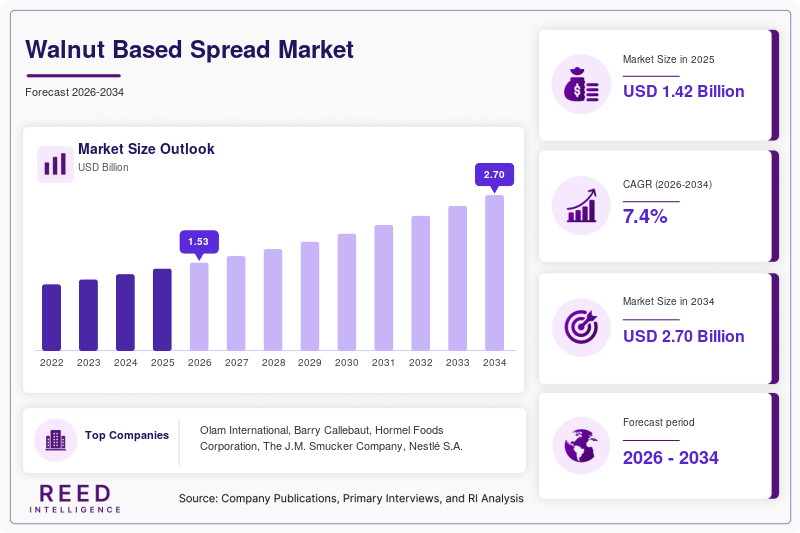
The Walnut Based Spread Market size has witnessed steady expansion in recent years, driven by shifting consumer preferences toward plant-based nutrition and premium nut-derived products. In 2025, the global walnut based spread market size is estimated at USD 1.42 billion, with a projected increase to USD 1.55 billion in 2026. The market is expected to reach approximately USD 2.95 billion by 2034, registering a compound annual growth rate (CAGR) of 7.4% during 2025–2034. The growth trajectory reflects increasing demand for healthier alternatives to traditional spreads such as peanut butter and chocolate-based spreads.
A key growth factor is the rising awareness of the nutritional benefits of walnuts, which are rich in omega-3 fatty acids, antioxidants, and plant protein. Consumers are actively seeking functional foods that support heart health and cognitive function, making walnut-based spreads an attractive option. Additionally, the expansion of vegan and flexitarian diets has created new demand for dairy-free and plant-based spreads, further strengthening market growth.
Key Highlights
- Market size projected to grow from USD 1.42 billion (2025) to USD 2.95 billion (2034)
- CAGR of 7.4% during the forecast period
- Increasing adoption of plant-based and functional foods
- Rising product innovation and premiumization trends
Market Trends
Expansion of Clean-Label and Organic Product Lines
The walnut based spread market is experiencing a notable shift toward clean-label and organic offerings. Consumers are increasingly scrutinizing ingredient lists and prefer products free from artificial additives, preservatives, and refined sugars. This trend has prompted manufacturers to introduce spreads made from minimally processed walnuts, natural sweeteners, and organic certifications. The demand is particularly strong among urban populations and health-focused demographics who associate clean-label products with higher quality and safety. Additionally, transparency in sourcing and production practices is gaining importance, with brands emphasizing sustainable farming and traceability. This trend is expected to reshape product development strategies and drive premium pricing models.
Integration into Functional and Specialty Food Applications
Walnut-based spreads are increasingly being incorporated into functional foods and specialty culinary applications. Beyond traditional use as a bread spread, they are now used in protein bars, smoothies, desserts, and gourmet recipes. Foodservice providers and artisanal bakeries are adopting walnut spreads as a premium ingredient due to their rich flavor and nutritional profile. This trend is supported by the growing interest in high-protein and nutrient-dense diets. Additionally, the rise of personalized nutrition has encouraged the development of fortified walnut spreads enriched with vitamins, minerals, and plant-based protein blends, expanding their appeal across diverse consumer segments.
Market Drivers
Rising Demand for Plant-Based Nutrition
The global shift toward plant-based diets is a primary driver of the walnut based spread market. Consumers are increasingly reducing their intake of animal-based products due to health, environmental, and ethical considerations. Walnut spreads offer a nutrient-rich alternative to dairy-based spreads, providing essential fatty acids and protein. The rise of vegan and flexitarian lifestyles has significantly increased demand for such products across developed and developing regions. Food manufacturers are capitalizing on this trend by expanding their plant-based portfolios, which includes walnut-based spreads with enhanced nutritional profiles and appealing flavors.
Increasing Awareness of Health Benefits of Walnuts
Walnuts are widely recognized for their health benefits, including support for heart health, brain function, and inflammation reduction. This growing awareness is driving consumer interest in walnut-based food products. Health professionals and dietary guidelines often highlight walnuts as a beneficial addition to daily nutrition, influencing purchasing decisions. Additionally, the aging population is seeking functional foods that promote long-term wellness, further boosting demand. Marketing campaigns that emphasize scientific evidence and health claims have strengthened consumer confidence, contributing to the sustained growth of the walnut based spread market.
Market Restraint
High Production Costs and Price Sensitivity
One of the key restraints in the walnut based spread market is the relatively high cost of production compared to other nut-based spreads. Walnuts are more expensive to cultivate and process due to factors such as seasonal yield variability, labor-intensive harvesting, and susceptibility to climatic conditions. These factors contribute to higher retail prices, which can limit adoption among price-sensitive consumers, particularly in emerging markets.
The premium pricing of walnut spreads often positions them as niche or luxury products, restricting their penetration into mass markets. For example, in regions where peanut butter or hazelnut spreads dominate due to affordability, walnut-based alternatives struggle to gain significant share. Additionally, fluctuations in raw material prices can impact profit margins for manufacturers, leading to pricing inconsistencies. This restraint highlights the need for cost optimization strategies and efficient supply chain management to ensure broader market accessibility.
Market Opportunities
Expansion into Emerging Markets
Emerging economies present significant growth opportunities for the walnut based spread market. Rising disposable incomes, urbanization, and increasing awareness of healthy eating habits are driving demand for premium food products. Markets in Asia Pacific and Latin America are witnessing a gradual shift toward Western-style breakfast options, which include nut-based spreads. Manufacturers can leverage this trend by introducing affordable product variants and localized flavors tailored to regional preferences. Strategic partnerships with local distributors and retail chains can further enhance market penetration and brand visibility.
Product Diversification and Flavor Innovation
Product diversification offers a major opportunity for market expansion. Introducing new flavors such as honey walnut, chocolate walnut, and spicy variants can attract a broader consumer base. Additionally, the development of hybrid spreads combining walnuts with other nuts or seeds can enhance taste and nutritional value. Functional innovations, such as protein-enriched or keto-friendly spreads, can cater to specific dietary trends. Companies that invest in research and development to create unique and differentiated products are likely to gain a competitive edge and capture untapped market segments.
Segmental Analysis
By Type
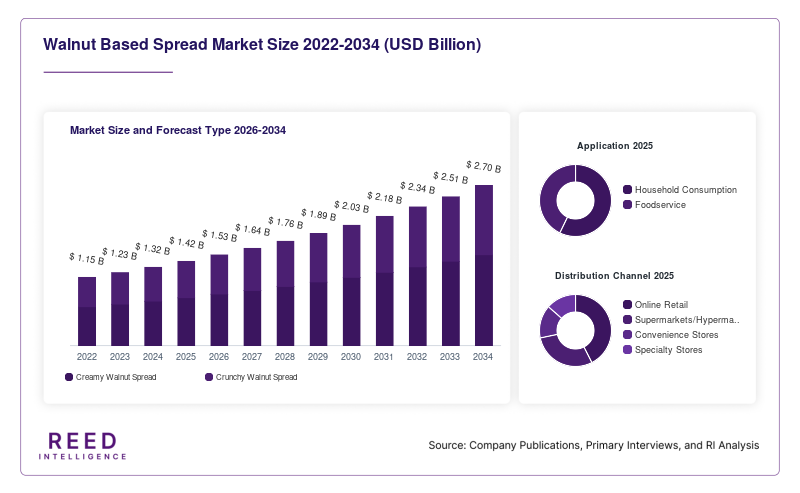
The creamy walnut spread segment dominated the market in 2024, accounting for approximately 62% share. This dominance is attributed to its smooth texture and versatility, making it suitable for a wide range of applications such as spreads, dips, and baking ingredients. Consumers prefer creamy variants due to their ease of use and compatibility with various food items. Additionally, manufacturers focus on improving the consistency and shelf life of creamy spreads, further enhancing their appeal.
The crunchy walnut spread segment is expected to be the fastest-growing, registering a CAGR of 8.2% during the forecast period. The growth is driven by increasing consumer preference for texture-rich food products that offer a unique eating experience. Crunchy variants are particularly popular among younger consumers who seek variety and novelty. The inclusion of walnut pieces enhances the sensory appeal and perceived value of the product.
By Application
The household consumption segment held the largest share of around 58% in 2024, driven by the widespread use of walnut spreads as breakfast and snack items. The convenience and nutritional benefits of these products make them a staple in many households. Marketing campaigns that highlight health benefits and versatility have further boosted consumer adoption.
The foodservice segment is projected to grow at the fastest CAGR of 7.9%. Restaurants, cafes, and bakeries are increasingly incorporating walnut-based spreads into their menus. The demand for premium and artisanal food products is driving this growth. Additionally, the use of walnut spreads in desserts and gourmet dishes is expanding their application scope.
By Distribution Channel
The offline retail segment dominated the market in 2024, accounting for approximately 65% share. Supermarkets and hypermarkets play a crucial role in product visibility and consumer access. The ability to physically examine products and benefit from promotional offers contributes to the dominance of offline channels.
The online retail segment is expected to grow at a CAGR of 9.1%, making it the fastest-growing distribution channel. The convenience of online shopping, coupled with a wide range of product options, is driving this growth. E-commerce platforms also enable smaller brands to reach a broader audience, enhancing market competition and innovation.
Regional Analysis
North America
North America accounted for approximately 34% market share in 2025, making it the largest regional market for walnut based spreads. The region is projected to grow at a CAGR of 6.8% during the forecast period, supported by high consumer awareness and established distribution networks. The presence of leading food brands and a strong inclination toward plant-based diets further strengthen market growth.
The United States dominates the regional market due to its advanced food processing industry and high consumption of nut-based products. A unique growth factor is the increasing adoption of premium and organic food products among health-conscious consumers. Retail chains and online platforms have significantly expanded their offerings of specialty spreads, enhancing accessibility and driving sales.
Europe
Europe held around 27% market share in 2025 and is expected to grow at a CAGR of 7.1% through 2034. The region’s growth is driven by stringent food quality standards and a strong preference for natural and organic products. Countries such as Germany, France, and the UK are key contributors to market expansion.
Germany leads the European market, supported by a well-established organic food sector. A unique growth factor is the rising demand for sustainable and ethically sourced food products. Consumers in the region are highly conscious of environmental impact, encouraging brands to adopt eco-friendly packaging and responsible sourcing practices.
Asia Pacific
Asia Pacific captured approximately 21% market share in 2025 and is projected to register the fastest CAGR of 8.5% during the forecast period. The region’s growth is fueled by increasing urbanization, changing dietary habits, and expanding middle-class populations.
China dominates the Asia Pacific market due to its large consumer base and growing demand for premium food products. A unique growth factor is the rising popularity of Western-style breakfasts and snacks. The expansion of e-commerce platforms has also made walnut-based spreads more accessible to consumers in urban and semi-urban areas.
Middle East & Africa
The Middle East & Africa region accounted for about 9% market share in 2025, with a projected CAGR of 6.5%. The market is gradually expanding due to increasing awareness of healthy food options and growing retail infrastructure.
The United Arab Emirates leads the regional market, supported by a high expatriate population and demand for imported premium products. A unique growth factor is the growing presence of international retail chains that offer a wide variety of specialty food items, including walnut-based spreads.
Latin America
Latin America held approximately 9% market share in 2025 and is expected to grow at a CAGR of 6.9% during the forecast period. The region’s growth is driven by increasing consumer interest in nutritious and convenient food products.
Brazil dominates the Latin American market due to its large population and expanding retail sector. A unique growth factor is the rising popularity of health and wellness trends, which has led to increased demand for functional foods, including nut-based spreads.

Competitive Landscape
The walnut based spread market is moderately fragmented, with several global and regional players competing on product quality, pricing, and innovation. Leading companies focus on expanding their product portfolios and strengthening distribution networks to maintain their market position.
One of the leading players is Olam International, which has established a strong presence through its extensive supply chain and focus on sustainable sourcing. The company recently introduced a new range of organic walnut spreads targeting health-conscious consumers. Other key players are investing in research and development to create differentiated products and enhance brand value.
Strategic initiatives such as mergers, acquisitions, and partnerships are common in the market. Companies are also leveraging digital marketing and e-commerce platforms to reach a wider audience. Innovation in packaging and product formulation remains a key competitive factor.
Key Players List
- Olam International
- Barry Callebaut
- Hormel Foods Corporation
- The J.M. Smucker Company
- Nestlé S.A.
- Kraft Heinz Company
- Justin’s LLC
- Meridian Foods Limited
- Pip & Nut
- Once Again Nut Butter Collective
- Nutty Novelties
- Rapunzel Naturkost
- Borges International Group
- Alpino Health Foods
- Big Spoon Roasters
Recent Developments
- A leading manufacturer launched a new organic walnut spread line with clean-label ingredients to cater to health-conscious consumers.
- A major food company expanded its distribution network in Asia Pacific through partnerships with regional retailers.
- An emerging brand introduced flavored walnut spreads, including chocolate and honey variants, to attract younger consumers.
Walnut Based Spread Market Segments
Type
- Creamy Walnut Spread
- Crunchy Walnut Spread
Application
- Household Consumption
- Foodservice
Distribution Channel
- Online Retail
- Supermarkets/Hypermarkets
- Convenience Stores
- Specialty Stores
By Region
- North America
- Europe
- APAC
- Middle East and Africa
- LATAM