Water Saving Shower Head Market Size, Share Demand Report By Product Type (Fixed Shower Heads, Handheld Shower Heads, Dual Shower Heads), By Technology (Aerating, Laminar Flow, Pulse Technology), By End-Use (Residential, Commercial), By Distribution Channel (Online Retail, Home Improvement Stores, Plumbing & Specialty Stores, Supermarkets & Hypermarkets), By Region & Segment Forecasts, 2026–2034
USD 3950
Market Overview
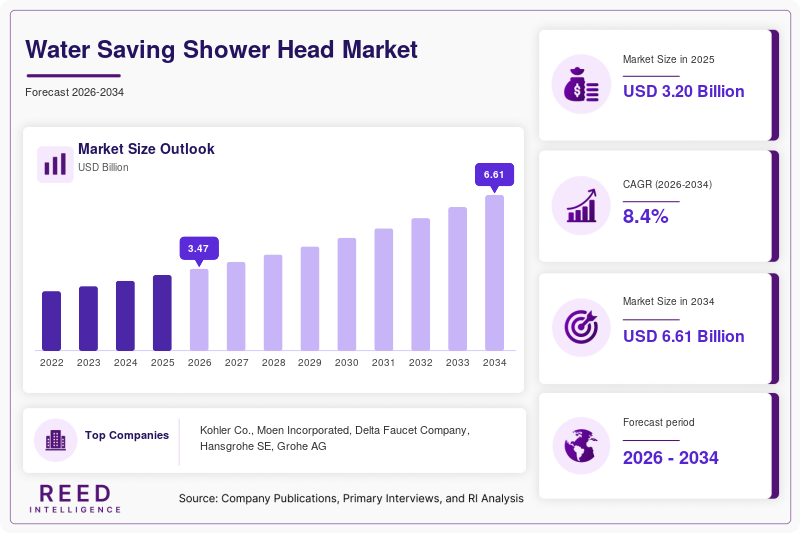
The global Water Saving Shower Head Market was valued at approximately USD 3.2 billion in 2026 and is projected to reach USD 6.1 billion by 2034, expanding at a CAGR of 8.4% during 2026–2034. The market growth is primarily driven by rising concerns over water scarcity and increasing adoption of sustainable living solutions across residential and commercial sectors. Governments worldwide are implementing stringent regulations on water consumption, encouraging the installation of water-efficient fixtures, including advanced shower head systems.
A significant global factor supporting market expansion is the growing awareness of environmental conservation and the rising cost of water utilities. Urbanization and infrastructure modernization, particularly in developing economies, are accelerating the replacement of traditional shower heads with water-saving alternatives that reduce water consumption without compromising user experience. Technological advancements such as aeration, flow restrictors, and smart shower systems further contribute to market growth by enhancing efficiency and consumer appeal.
Key Highlights
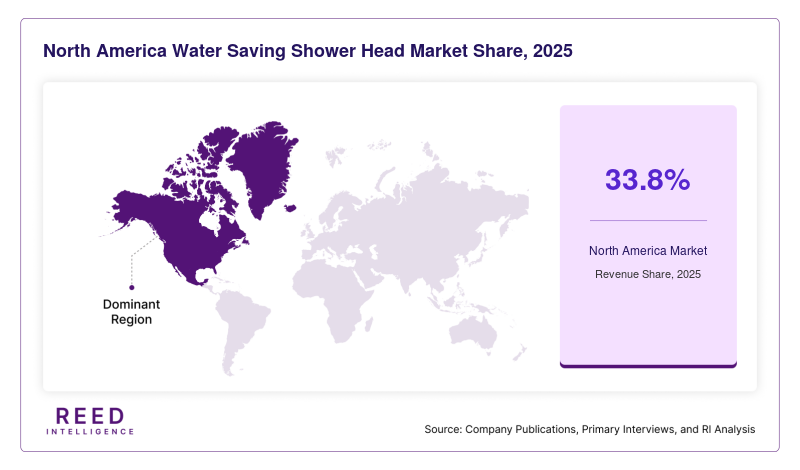
- North America dominated the market with a 33.8% share in 2025.
- Asia Pacific is expected to grow at the fastest CAGR of 10.6% during 2026–2034.
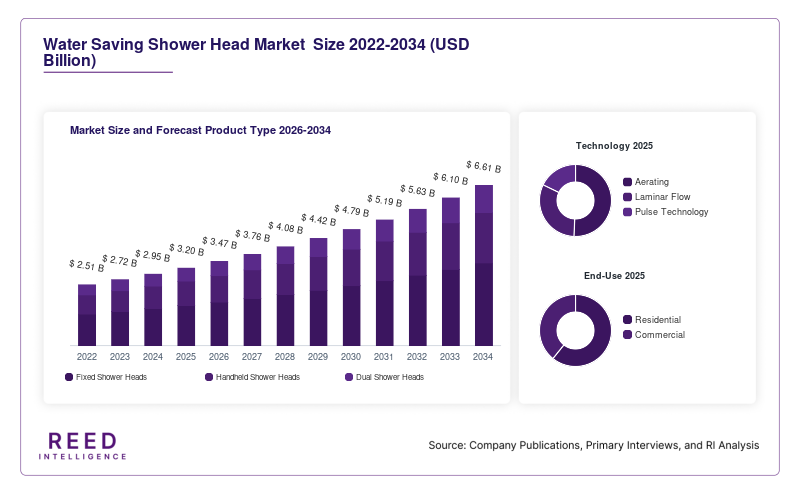
- By product type, fixed shower heads accounted for the largest share of 42.1%.
- while handheld shower heads are projected to grow at a CAGR of 9.8%.
- By end-use, residential applications led with a 58.6% share, whereas commercial applications are expected to expand at a CAGR of 9.2%.
- The United States remained the dominant country, with market values of USD 620 million in 2024 and USD 675 million in 2025.
Market Trends
Integration of Smart and IoT-Enabled Shower Systems
The increasing adoption of smart home technologies is influencing the water saving shower head market significantly. Manufacturers are introducing IoT-enabled shower heads that allow users to monitor water usage, temperature, and flow rate through mobile applications. These advanced systems provide real-time feedback and usage analytics, enabling consumers to optimize water consumption effectively. Smart shower heads also include features such as automatic shut-off timers and personalized water flow settings, enhancing convenience and efficiency. The trend is particularly prominent in developed regions where smart home penetration is high, but it is gradually expanding into emerging markets due to declining technology costs and rising consumer awareness.
Rising Demand for Eco-Friendly and Sustainable Bathroom Fixtures
Consumers are increasingly prioritizing sustainability in home improvement decisions, driving demand for eco-friendly shower head solutions. Water-saving shower heads designed with recyclable materials and low-flow technologies are gaining traction. Manufacturers are focusing on certifications such as water efficiency labels and eco-standards to enhance product credibility. Hospitality and commercial sectors are also adopting sustainable fixtures to reduce operational costs and align with environmental goals. This trend is further supported by green building initiatives and regulatory mandates that promote water conservation, making sustainable shower heads a preferred choice in both new constructions and renovation projects.
Market Drivers
Increasing Water Scarcity and Government Regulations
Water scarcity has become a pressing global issue, leading governments to implement strict regulations on water usage across residential and commercial sectors. Policies promoting water-efficient fixtures have significantly boosted the adoption of water saving shower heads. Many regions have introduced mandatory standards limiting water flow rates, encouraging consumers and businesses to replace conventional shower systems. Incentives such as rebates and subsidies further accelerate market adoption. The growing need to conserve water resources in drought-prone areas and densely populated cities continues to drive demand for efficient water management solutions.
Growth in Residential Construction and Renovation Activities
The expansion of residential construction and renovation activities is another major driver of the market. Rapid urbanization, rising disposable incomes, and increasing housing demand are leading to higher installation rates of modern bathroom fixtures. Homeowners are increasingly investing in water-efficient products to reduce utility costs and enhance sustainability. Additionally, renovation trends focused on upgrading bathrooms with modern designs and advanced features are contributing to the replacement of older shower heads. This driver is particularly strong in emerging economies, where infrastructure development and urban housing projects are expanding rapidly.
Market Restraint
High Initial Cost and Consumer Perception Challenges
Despite the long-term benefits of water saving shower heads, the relatively higher initial cost compared to traditional shower heads remains a key restraint. Advanced models equipped with smart features and premium materials can be expensive, limiting their adoption among price-sensitive consumers, especially in developing regions. Additionally, there is a common perception among some users that low-flow shower heads compromise water pressure and overall bathing experience. This misconception often discourages potential buyers, even though modern designs have significantly improved performance.
The industry also faces challenges related to lack of awareness in certain markets, where consumers are not fully informed about the cost savings and environmental benefits associated with water-efficient fixtures. Retailers and manufacturers need to invest in education and marketing efforts to address these concerns. Furthermore, inconsistent regulatory enforcement in some regions slows down the transition to water-saving technologies. These factors collectively hinder the widespread adoption of water saving shower heads, particularly in regions where affordability and awareness remain critical barriers.
Market Opportunities
Expansion in Emerging Economies
Emerging economies present significant growth opportunities for the water saving shower head market. Rapid urbanization, increasing population, and rising awareness about water conservation are driving demand for efficient water fixtures. Governments in countries across Asia, Africa, and Latin America are investing in infrastructure development and implementing policies to promote sustainable water usage. As disposable incomes increase, consumers are more willing to adopt modern bathroom solutions. Manufacturers can capitalize on this opportunity by offering cost-effective products tailored to local market needs and by expanding distribution networks in these regions.
Growth in Hospitality and Commercial Sectors
The hospitality and commercial sectors are increasingly adopting water saving shower heads to reduce operational costs and meet sustainability targets. Hotels, resorts, and commercial buildings consume large volumes of water daily, making water-efficient fixtures a practical solution for cost reduction. Many hospitality brands are integrating sustainability into their operations to attract environmentally conscious customers. This creates a strong demand for advanced shower systems that combine efficiency with user comfort. Additionally, green building certifications and corporate sustainability initiatives are encouraging businesses to invest in water-saving technologies, further expanding market opportunities.
Segmental Analysis
By Product Type
Fixed shower heads dominated the water saving shower head market, accounting for approximately 42.1% of the market share in 2024. These products are widely used in residential and commercial applications due to their affordability, ease of installation, and consistent performance. Fixed shower heads are commonly integrated with low-flow and aeration technologies that help reduce water consumption while maintaining adequate pressure. Their widespread availability and compatibility with existing plumbing systems make them a preferred choice among consumers. Additionally, manufacturers continue to innovate by incorporating advanced features such as adjustable spray patterns and improved durability, further strengthening their market position.
Handheld shower heads are the fastest-growing subsegment, expected to expand at a CAGR of 9.8% during the forecast period. The growth is driven by increasing demand for flexibility and convenience in bathroom fixtures. Handheld shower heads offer enhanced functionality, making them suitable for diverse user needs, including elderly and disabled individuals. The integration of water-saving technologies in handheld models ensures efficient water usage without compromising performance. Rising consumer preference for customizable bathing experiences and the growing trend of modern bathroom designs are key factors contributing to the rapid growth of this segment.
By Technology Type
Aerating shower heads held the largest market share of 38.7% in 2024 due to their ability to mix air with water, creating a steady flow while reducing water consumption. This technology is widely adopted because it provides a balance between efficiency and user comfort. Aerating shower heads are particularly popular in residential applications where maintaining water pressure is essential. Their cost-effectiveness and ease of maintenance further contribute to their dominance in the market.
Laminar flow shower heads are the fastest-growing subsegment, projected to grow at a CAGR of 9.5% during the forecast period. These shower heads produce individual streams of water, reducing heat loss and improving efficiency. The growth is driven by increasing demand in commercial applications such as hotels and spas, where user experience is a key consideration. Additionally, laminar flow technology minimizes splashing and enhances water distribution, making it an attractive option for modern bathroom designs.
By End-Use
The residential segment dominated the market with a share of 58.6% in 2024, driven by increasing adoption of water-saving solutions in households. Rising awareness about water conservation and the need to reduce utility bills are key factors influencing consumer behavior. Homeowners are increasingly investing in modern bathroom fixtures that offer both efficiency and aesthetic appeal. The growth of the residential construction sector and renovation activities further supports the expansion of this segment.
The commercial segment is the fastest-growing, with a projected CAGR of 9.2% during the forecast period. The growth is driven by increasing adoption of water-efficient solutions in hotels, offices, and public facilities. Businesses are focusing on sustainability and cost reduction, leading to higher demand for water-saving shower heads. Additionally, regulatory requirements and green building certifications are encouraging commercial establishments to invest in efficient water management systems, further boosting the growth of this segment.
Regional Analysis
North America
North America accounted for approximately 33.8% of the global water saving shower head market share in 2025 and is expected to grow at a CAGR of 7.6% during the forecast period. The region benefits from strong regulatory frameworks promoting water efficiency and high consumer awareness regarding sustainability. The presence of advanced infrastructure and widespread adoption of smart home technologies further supports market growth. Demand is particularly strong in urban areas where water conservation policies are strictly enforced.
The United States remains the dominant country in the region due to stringent water efficiency standards and high adoption of eco-friendly products. A key growth factor is the increasing trend of smart home integration, where consumers are adopting connected bathroom fixtures. Additionally, government incentives and rebate programs encourage homeowners to install water-saving devices, further boosting market demand.
Europe
Europe held a significant share of around 27.4% in 2025 and is projected to grow at a CAGR of 7.9% during the forecast period. The region’s strong focus on sustainability and environmental regulations drives the adoption of water-saving technologies. Countries across Europe are implementing strict water usage standards and promoting eco-friendly construction practices, contributing to steady market growth.
Germany is the leading country in the European market, driven by its advanced manufacturing sector and emphasis on sustainability. A unique growth factor is the widespread adoption of green building certifications, which require the installation of water-efficient fixtures. Consumers in the region are also highly aware of environmental issues, leading to increased demand for sustainable bathroom solutions.
Asia Pacific
Asia Pacific is expected to be the fastest-growing region, with a CAGR of 10.6% during 2026–2034, and held a market share of 24.1% in 2025. Rapid urbanization, population growth, and increasing infrastructure development are key factors driving market expansion. Governments in the region are actively promoting water conservation initiatives to address water scarcity challenges.
China dominates the Asia Pacific market due to its large population and ongoing urban development projects. A unique growth factor is the government’s focus on sustainable infrastructure and water management policies. Rising disposable incomes and increasing consumer awareness are also contributing to the adoption of water-saving shower heads in residential and commercial sectors.
Middle East & Africa
The Middle East & Africa region accounted for 7.2% of the market share in 2025 and is projected to grow at a CAGR of 8.3%. Water scarcity is a major concern in this region, driving the adoption of water-efficient technologies. Governments are investing in water conservation initiatives and infrastructure development to address the growing demand for water resources.
Saudi Arabia is a key market in the region, supported by government initiatives aimed at reducing water consumption. A unique growth factor is the implementation of large-scale infrastructure projects and smart city developments, which incorporate water-saving technologies. Increasing awareness and regulatory support are expected to drive market growth further.
Latin America
Latin America held a market share of 7.5% in 2025 and is expected to grow at a CAGR of 8.0% during the forecast period. The region is witnessing gradual adoption of water-saving technologies due to rising awareness and government initiatives. Urbanization and improving economic conditions are also contributing to market growth.
Brazil is the dominant country in the region, driven by its large population and growing construction sector. A unique growth factor is the increasing focus on sustainable urban development and water conservation policies. Government programs promoting efficient water usage are encouraging consumers and businesses to adopt water-saving shower heads.
Competitive Landscape
The water saving shower head market is moderately fragmented, with several global and regional players competing based on product innovation, pricing, and distribution networks. Leading companies are focusing on developing advanced technologies such as smart shower systems and eco-friendly designs to gain a competitive edge. Strategic partnerships, mergers, and product launches are common strategies adopted by market participants.
A leading player in the market is Kohler Co., known for its extensive range of water-efficient bathroom fixtures and strong global presence. The company continues to invest in research and development to introduce innovative products that align with sustainability goals. A recent development includes the launch of a smart shower system with integrated water usage tracking features, enhancing user control and efficiency.
Key Players List
- Kohler Co.
- Moen Incorporated
- Delta Faucet Company
- Hansgrohe SE
- Grohe AG
- Speakman Company
- Niagara Conservation Corp.
- Waterpik Inc.
- Jaquar Group
- LIXIL Corporation
- Roca Sanitario S.A.
- American Standard Brands
- Vola A/S
- Methven Limited
- High Sierra Showerheads
Recent Developments
- In 2025, Kohler Co. introduced a smart water-saving shower head with app-based monitoring features.
- In 2024, Moen Incorporated launched a new range of eco-performance shower heads designed for residential use.
- In 2025, LIXIL Corporation expanded its product portfolio with advanced low-flow shower systems targeting commercial applications
Water Saving Shower Head Market Segments
Product Type
- Fixed Shower Heads
- Handheld Shower Heads
- Dual Shower Heads
Technology
- Aerating
- Laminar Flow
- Pulse Technology
End-Use
- Residential
- Commercial
Distribution Channel
- Online Retail
- Home Improvement Stores
- Plumbing & Specialty Stores
- Supermarkets & Hypermarkets
By Region
- North America
- Europe
- APAC
- Middle East and Africa
- LATAM