Water Vending Machine Market Size, Share & Demand Report By Machine Type (Standalone, Wall-mounted), By Technology (Reverse Osmosis (RO), Ultrafiltration (UF), UV Purification), By End-Use (Public Spaces, Residential, Commercial) By Region & Segment Forecasts, 2026–2034
USD 3950
Market Overview
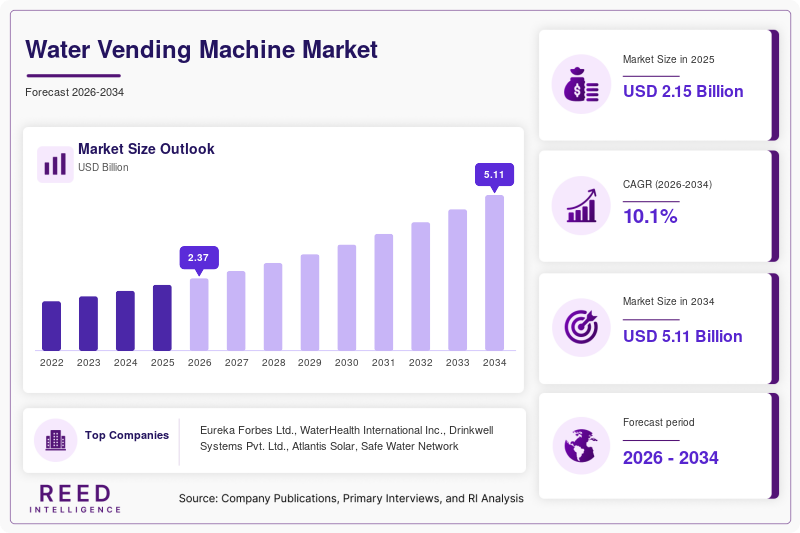
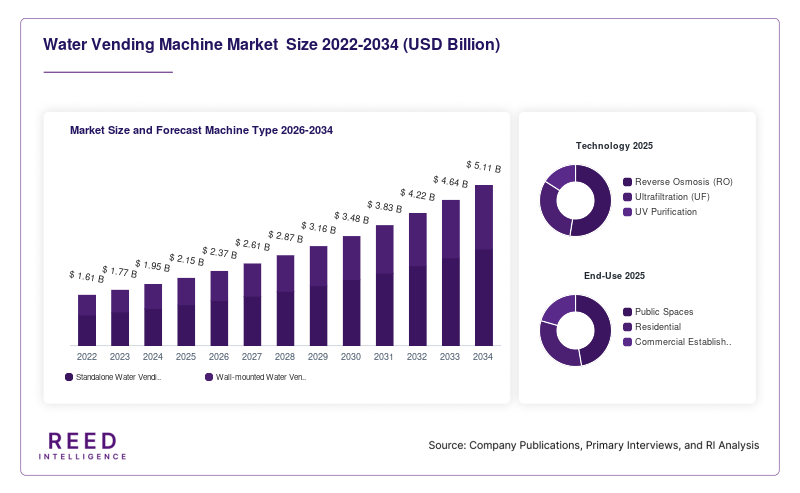
The global Water Vending Machine Market size was valued at approximately USD 2.15 billion in 2026 and is projected to reach USD 4.62 billion by 2034, expanding at a compound annual growth rate (CAGR) of 10.1% during 2026–2034. The market is experiencing steady expansion due to increasing consumer demand for affordable and accessible purified drinking water solutions, particularly in urban and semi-urban areas. Water vending machines offer a cost-effective alternative to bottled water, while also reducing plastic waste, making them increasingly relevant in sustainability-focused economies.
A major global factor supporting market growth is the rising concern over water quality and contamination. Governments and municipalities across emerging economies are investing in decentralized water purification and distribution systems, which has accelerated the adoption of automated water dispensing technologies. Additionally, advancements in filtration technologies such as reverse osmosis (RO), ultraviolet (UV), and ultrafiltration systems have improved the reliability and efficiency of water vending machines.
Key Highlights
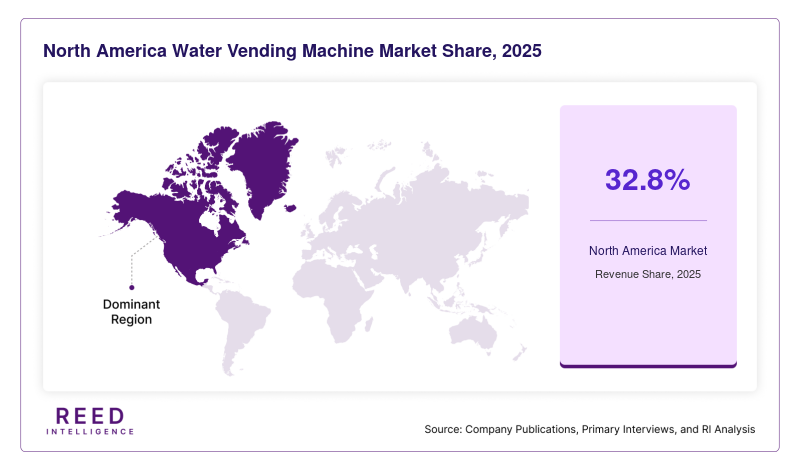
- North America dominated the market with a 32.8% share in 2025.
- Asia Pacific is expected to grow at the fastest CAGR of 11.6% during 2026–2034.
- By machine type, standalone water vending machines accounted for the largest share of 42.3%, while wall-mounted systems are projected to grow at a CAGR of 12.1%.
- By end-use, public spaces led with a 46.5% share, whereas residential applications are expected to expand at a CAGR of 11.4%.
- India remained the dominant country, with market values of USD 310 million in 2024 and USD 345 million in 2025.
Market Trends
Integration of Smart Technologies and Cashless Payment Systems
The increasing integration of smart technologies is transforming the operational landscape of the water vending machine market. Modern machines are now equipped with IoT-enabled sensors that allow real-time monitoring of water quality, machine performance, and usage patterns. This trend is improving maintenance efficiency and reducing downtime for operators. Additionally, the adoption of cashless payment systems such as mobile wallets, QR codes, and contactless cards has enhanced consumer convenience, particularly in urban areas. These advancements are aligning with the broader digital transformation trends across industries, making water vending machines more user-friendly and scalable. Operators are also leveraging data analytics to optimize pricing strategies and machine placement, thereby improving profitability and service reach.
Rising Focus on Sustainable and Eco-Friendly Water Distribution
Sustainability is becoming a central theme in the water vending machine market, driven by growing environmental awareness and regulatory pressure to reduce plastic waste. Consumers are increasingly shifting away from single-use bottled water toward refill-based solutions. Water vending machines support this transition by enabling users to refill reusable containers at a lower cost. Governments and environmental organizations are also promoting such systems through incentives and public awareness campaigns. Furthermore, manufacturers are incorporating energy-efficient components and recyclable materials into machine design. This trend is expected to gain further momentum as climate concerns intensify, positioning water vending machines as a viable solution for sustainable urban infrastructure.
Market Drivers
Increasing Demand for Affordable Drinking Water Solutions
One of the primary drivers of the water vending machine market is the growing demand for affordable and accessible drinking water. In many developing regions, bottled water remains expensive for daily consumption, creating a strong need for cost-effective alternatives. Water vending machines offer purified water at significantly lower prices, making them attractive to low- and middle-income populations. This affordability factor is particularly important in densely populated urban areas where access to clean drinking water is inconsistent. Additionally, the pay-per-use model ensures that consumers only pay for what they need, further enhancing accessibility. As urbanization continues to rise, the demand for decentralized water distribution systems is expected to increase, supporting sustained market growth.
Government Initiatives for Safe Drinking Water Infrastructure
Government initiatives aimed at improving access to safe drinking water are playing a significant role in driving market growth. Many countries are investing in public water infrastructure projects that include the installation of water vending machines in high-traffic areas such as transportation hubs, schools, and hospitals. These initiatives are often supported by public-private partnerships, which encourage private sector participation in infrastructure development. Regulatory frameworks promoting water quality standards are also encouraging the adoption of advanced purification technologies in vending machines. In regions with water scarcity or contamination issues, these machines serve as a reliable solution for delivering safe drinking water, thereby boosting their deployment and market penetration.
Market Restraint
High Initial Installation and Maintenance Costs
Despite strong growth prospects, the water vending machine market faces challenges related to high initial installation and maintenance costs. Setting up a water vending machine involves significant capital investment, including expenses for purification systems, storage tanks, dispensing units, and site preparation. Additionally, ongoing maintenance costs such as filter replacement, water quality testing, and machine servicing can be substantial. These factors may deter small-scale operators and limit market entry, particularly in price-sensitive regions. Furthermore, inconsistent power supply and water source availability in certain areas can increase operational complexity. For example, in rural or semi-urban regions, frequent maintenance issues and logistical challenges can reduce machine efficiency and profitability. As a result, while demand remains strong, cost-related barriers continue to impact the pace of market expansion.
Market Opportunities
Expansion in Rural and Semi-Urban Markets
The expansion of water vending machines into rural and semi-urban areas presents a significant growth opportunity. These regions often face limited access to safe drinking water and lack centralized purification infrastructure. Deploying water vending machines in such areas can address this gap effectively. Governments and NGOs are increasingly supporting initiatives that promote decentralized water solutions, creating a favorable environment for market expansion. Additionally, lower competition in these regions allows new entrants to establish a strong presence. With the right pricing strategies and community engagement, operators can achieve sustainable growth while improving public health outcomes.
Integration with Renewable Energy Sources
The integration of renewable energy sources such as solar power offers a promising opportunity for the water vending machine market. In regions with unreliable electricity supply, solar-powered machines can ensure continuous operation and reduce dependency on grid power. This not only lowers operational costs but also aligns with sustainability goals. Manufacturers are developing energy-efficient systems that can operate in off-grid environments, expanding the potential deployment areas. This innovation is particularly relevant in remote locations where infrastructure constraints are significant. As renewable energy adoption increases globally, this integration is expected to enhance the scalability and resilience of water vending machine networks.
Segmental Analysis
By Machine Type
Standalone water vending machines dominated the market with a 42.3% share in 2024, owing to their flexibility and ease of installation. These machines are widely used in public spaces such as transportation hubs, shopping centers, and educational institutions. Their ability to operate independently without requiring complex infrastructure makes them a preferred choice for operators. Additionally, standalone machines can accommodate larger storage capacities and advanced purification systems, enhancing their efficiency. The growing demand for decentralized water distribution solutions is further supporting the adoption of this segment.
Wall-mounted water vending machines are expected to grow at the fastest CAGR of 12.1% during the forecast period. These machines are gaining popularity due to their space-saving design and suitability for indoor installations. They are increasingly being deployed in residential complexes and small commercial establishments. The compact design allows for efficient utilization of limited space, making them ideal for urban environments. Additionally, advancements in miniaturized filtration technologies are improving their performance, driving their adoption across various end-use segments.
By Technology
Reverse osmosis (RO) technology held the largest market share of 47.8% in 2024, as it is highly effective in removing contaminants and ensuring safe drinking water. RO-based water vending machines are widely used in regions with high levels of water pollution. The technology’s ability to remove dissolved solids, bacteria, and viruses makes it a reliable choice for consumers. Additionally, continuous advancements in RO systems are improving efficiency and reducing energy consumption, further supporting market growth.
Ultrafiltration (UF) technology is projected to grow at the fastest CAGR of 11.8% during 2026–2034. UF systems are gaining traction due to their ability to retain essential minerals while removing impurities. This feature is particularly appealing to health-conscious consumers who prefer mineral-rich water. Furthermore, UF systems require lower energy compared to RO systems, making them more cost-effective. The increasing focus on sustainable and energy-efficient solutions is expected to drive the adoption of this segment.
By End-Use
Public spaces accounted for the largest share of 46.5% in 2024, driven by the high demand for accessible drinking water in crowded locations. Water vending machines are commonly installed in railway stations, airports, parks, and educational institutions. These locations experience high foot traffic, ensuring consistent usage and revenue generation. Government initiatives promoting public health and hygiene are also supporting the deployment of vending machines in these areas.
Residential applications are expected to grow at the fastest CAGR of 11.4% during the forecast period. The increasing adoption of water vending machines in housing societies and apartment complexes is driving this growth. Residents are seeking convenient and cost-effective solutions for daily water consumption. Additionally, the integration of smart payment systems and subscription models is enhancing user convenience, further supporting the expansion of this segment.
Regional Analysis
North America
North America accounted for approximately 32.8% of the global market share in 2025 and is expected to grow at a CAGR of 8.9% during 2026–2034. The region’s growth is driven by increasing awareness of water quality and the demand for sustainable alternatives to bottled water. Urban centers are witnessing rising adoption of water vending machines in public spaces such as airports, parks, and commercial complexes. Technological advancements and high consumer acceptance of automated systems further support market expansion across the region.
The United States dominates the North American market due to its advanced infrastructure and strong focus on sustainability. A key growth factor is the increasing adoption of refill stations in urban areas to reduce plastic waste. Municipal initiatives promoting eco-friendly water distribution systems are encouraging the deployment of vending machines. Additionally, partnerships between private companies and local governments are enhancing accessibility and improving operational efficiency.
Europe
Europe held a market share of around 25.4% in 2025 and is projected to grow at a CAGR of 9.2% during the forecast period. The region is characterized by strict environmental regulations and a strong emphasis on sustainability. Water vending machines are gaining traction as an alternative to single-use plastic bottles, particularly in urban areas. Increasing investments in smart city projects are also supporting the adoption of automated water dispensing solutions.
Germany leads the European market due to its advanced technological infrastructure and environmental policies. A unique growth factor is the integration of water vending machines into smart city initiatives, where they are connected to digital networks for monitoring and maintenance. This approach enhances efficiency and aligns with the region’s sustainability goals, driving further market growth.
Asia Pacific
Asia Pacific accounted for approximately 21.7% of the market share in 2025 and is expected to grow at the fastest CAGR of 11.6% during 2026–2034. Rapid urbanization, population growth, and increasing concerns over water quality are key factors driving market expansion. Governments in countries such as India and China are investing heavily in water infrastructure, creating significant opportunities for vending machine deployment.
India dominates the Asia Pacific market, supported by government initiatives aimed at improving access to clean drinking water. A key growth factor is the widespread installation of water vending machines in public spaces such as railway stations and educational institutions. The affordability of these machines makes them particularly attractive in densely populated areas, contributing to strong market growth.
Middle East & Africa
The Middle East & Africa region held a market share of 10.6% in 2025 and is projected to grow at a CAGR of 9.8% during the forecast period. Water scarcity and increasing demand for clean drinking water are major factors driving market growth. Governments are investing in alternative water distribution systems, including vending machines, to address supply challenges.
Saudi Arabia leads the regional market due to its focus on water conservation and infrastructure development. A unique growth factor is the adoption of advanced desalination technologies integrated with vending systems. This approach ensures a reliable supply of purified water, particularly in arid regions, supporting market expansion.
Latin America
Latin America accounted for around 9.5% of the market share in 2025 and is expected to grow at a CAGR of 9.4% during 2026–2034. The region is witnessing increasing adoption of water vending machines due to rising concerns over water contamination and affordability. Urban areas are leading the demand, with growing installations in commercial and residential locations.
Brazil dominates the Latin American market, driven by its large population and increasing focus on public health. A key growth factor is the expansion of water vending machine networks in urban slums and underserved areas. These initiatives are improving access to safe drinking water and supporting overall market growth.
Competitive Landscape
The water vending machine market is moderately fragmented, with several regional and global players competing to expand their market presence. Key companies are focusing on product innovation, technological advancements, and strategic partnerships to gain a competitive edge. The market leader, Eureka Forbes Ltd., has established a strong presence through its extensive product portfolio and distribution network. The company continues to invest in advanced purification technologies and digital solutions to enhance customer experience.
Recent developments include the launch of IoT-enabled vending machines that offer real-time monitoring and predictive maintenance capabilities. Companies are also exploring renewable energy integration to improve sustainability and reduce operational costs. Strategic collaborations with government bodies and private organizations are further supporting market expansion. Overall, the competitive landscape is characterized by continuous innovation and a focus on meeting evolving consumer needs.
Key Players
- Eureka Forbes Ltd.
- WaterHealth International Inc.
- Drinkwell Systems Pvt. Ltd.
- Atlantis Solar
- Safe Water Network
- Primo Water Corporation
- Blue Star Limited
- Ozone RO Systems
- Aquafresh RO Systems
- Kent RO Systems Ltd.
- Livpure Pvt. Ltd.
- Urban Aqua
- Pure Water Technology
- Waterlogic Holdings Limited
- Culligan International Company
Recent Developments
- In 2025, a leading manufacturer introduced solar-powered water vending machines designed for off-grid rural deployment.
- In 2024, a major company launched IoT-enabled systems with real-time monitoring and mobile payment integration.
- In 2025, a partnership between a private firm and a municipal authority led to the installation of over 500 vending machines in urban public spaces.
Water Vending Machine Market Segments
Machine Type
- Standalone Water Vending Machines
- Wall-mounted Water Vending Machines
Technology
- Reverse Osmosis (RO)
- Ultrafiltration (UF)
- UV Purification
End-Use
- Public Spaces
- Residential
- Commercial Establishments
Distribution Model
- Pay-per-use Systems
- Subscription-based Models
- Government/Public Installations
By Region
- North America
- Europe
- APAC
- Middle East and Africa
- LATAM