Wearable Digital Walkie Talkie Market Size, Share & Demand Report By Product Type (Clip-on Wearable Devices, Smartwatch-integrated Devices, Headset-based Devices, Body-mounted Communication Badges), By Application (Public Safety, Logistics & Warehousing, Retail Communication, Healthcare Coordination, Hospitality Services), By Distribution Channel (Direct Sales, Online Retail, Specialty Electronics Stores, Industrial Equipment Distributors, Telecom Solution Providers), By Region & Segment Forecas
USD 3950
Market Overview
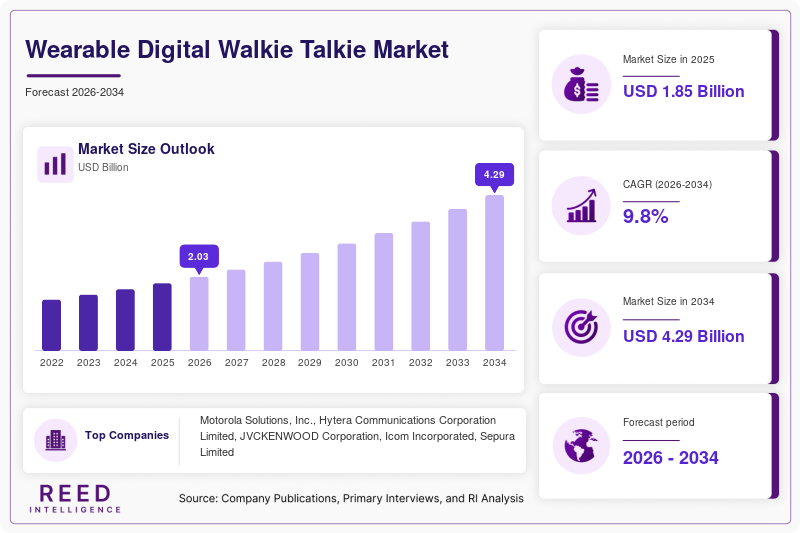
The Wearable Digital Walkie Talkie Market was valued at approximately USD 1.85 billion in 2026 and is projected to reach USD 3.92 billion by 2034, expanding at a CAGR of 9.8% during 2026–2034. The market is witnessing steady growth driven by increasing demand for real-time, hands-free communication solutions across sectors such as public safety, logistics, construction, and retail. These devices integrate digital communication capabilities into compact wearable formats, enabling efficient team coordination, particularly in high-mobility work environments.
A key global factor supporting market growth is the rapid expansion of workforce digitization across industries. Organizations are increasingly adopting connected technologies to improve productivity and safety. Wearable digital walkie talkies align with this trend by offering seamless communication, enhanced voice clarity, and integration with enterprise systems. The rising focus on worker safety regulations and the need for uninterrupted communication during emergencies further strengthen market demand.
Key Highlights
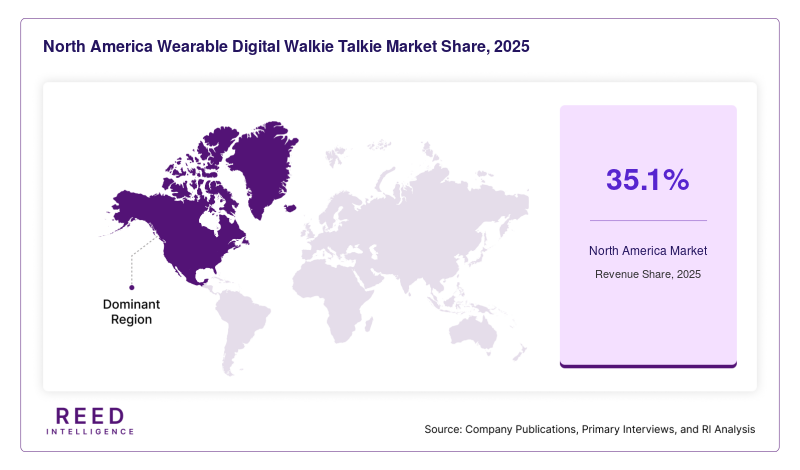
- North America dominated the market with a 35.1% share in 2025.
- Asia Pacific is expected to grow at the fastest CAGR of 10.9% during 2026–2034.
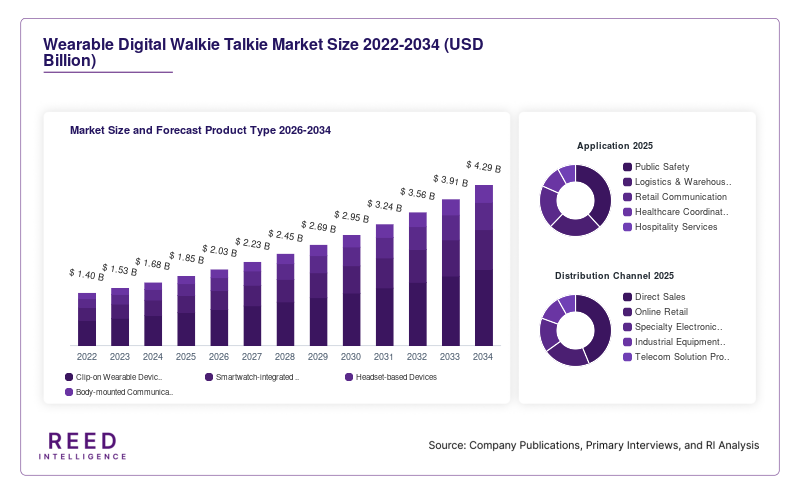
- By product type, clip-on wearable devices accounted for the largest share of 42.6%.
- while smartwatch-integrated devices are projected to grow at a CAGR of 11.7%.
- By application, public safety led with a 39.4% share, whereas logistics & warehousing is expected to expand at a CAGR of 10.8%.
- The United States remained the dominant country, with market values of USD 620 million in 2024 and USD 680 million in 2025.
Market Trends
Integration of IoT and Smart Connectivity Features
A significant trend shaping the wearable digital walkie talkie market is the integration of Internet of Things (IoT) capabilities and smart connectivity features. Modern devices are evolving beyond traditional push-to-talk communication and are being embedded with sensors, GPS tracking, and cloud connectivity. These features enable real-time location tracking, performance monitoring, and data analytics, enhancing overall workforce management. Companies in logistics, construction, and healthcare are increasingly deploying these smart devices to improve operational visibility and reduce communication delays. Additionally, integration with enterprise resource planning (ERP) systems and mobile applications is enabling centralized control and monitoring. As businesses continue to adopt connected ecosystems, the demand for IoT-enabled wearable communication devices is expected to rise steadily.
Rising Demand for Compact and Ergonomic Designs
Another prominent trend is the growing preference for compact, lightweight, and ergonomically designed wearable walkie talkies. End users are prioritizing comfort and ease of use, particularly in industries requiring long working hours and physical activity. Manufacturers are focusing on designing devices that can be seamlessly integrated into uniforms, helmets, or accessories without hindering movement. Innovations such as voice-activated controls, wireless earpieces, and wearable badges are gaining traction. Furthermore, advancements in battery technology are enabling longer usage durations, reducing the need for frequent recharging. This trend is especially relevant in sectors like retail and hospitality, where discreet communication is essential. As user expectations continue to evolve, ergonomic design will remain a key focus area for product development.
Market Drivers
Increasing Adoption in Public Safety and Emergency Services
The growing use of wearable digital walkie talkies in public safety and emergency response is a major driver for market growth. Law enforcement agencies, firefighters, and emergency medical teams rely heavily on instant communication for coordinated operations. Wearable devices provide hands-free functionality, allowing personnel to focus on critical tasks while staying connected. The ability to operate in harsh environments and maintain clear communication even in noisy conditions enhances their effectiveness. Governments across various countries are investing in advanced communication infrastructure to improve disaster response capabilities. This has led to increased procurement of wearable communication devices. Additionally, features such as GPS tracking and emergency alerts are improving situational awareness, further boosting adoption in this sector.
Expansion of Logistics and Warehouse Operations
The rapid growth of e-commerce and global supply chains has significantly increased the demand for efficient communication in logistics and warehousing. Wearable digital walkie talkies enable seamless coordination among workers, improving order fulfillment speed and reducing errors. In large warehouses, real-time communication is essential for inventory management, task allocation, and safety monitoring. These devices help streamline operations by eliminating delays associated with traditional communication methods. Companies are also leveraging wearable technology to enhance worker productivity and ensure compliance with safety protocols. As logistics operations become more complex and time-sensitive, the adoption of wearable communication solutions is expected to accelerate, driving overall market growth.
Market Restraint
High Initial Costs and Integration Challenges
One of the primary restraints affecting the wearable digital walkie talkie market is the relatively high initial investment required for deployment. Advanced devices equipped with IoT capabilities, GPS, and enterprise integration features often come at a premium price. For small and medium-sized enterprises, these costs can be a significant barrier to adoption. In addition to hardware expenses, organizations must also invest in software integration, training, and maintenance, further increasing the total cost of ownership.
Integration challenges also pose a limitation, particularly for companies with legacy communication systems. Ensuring compatibility between new wearable devices and existing infrastructure can be complex and time-consuming. This may require additional customization and technical support, leading to delays in implementation. Moreover, concerns related to data security and privacy can hinder adoption, especially in industries dealing with sensitive information. While large enterprises may overcome these challenges through substantial investments, smaller organizations may hesitate to transition to wearable communication solutions, thereby limiting market expansion.
Market Opportunities
Growing Adoption in Healthcare Settings
The healthcare sector presents a significant opportunity for the wearable digital walkie talkie market. Hospitals and healthcare facilities require efficient communication systems to ensure seamless coordination among medical staff. Wearable devices enable hands-free communication, allowing healthcare professionals to respond quickly to emergencies and improve patient care. Features such as real-time alerts, location tracking, and integration with hospital management systems enhance operational efficiency. Additionally, the increasing focus on patient safety and workflow optimization is driving the adoption of advanced communication tools. As healthcare infrastructure continues to expand globally, the demand for wearable communication devices is expected to grow, creating new revenue opportunities for market players.
Rising Demand in Smart Retail and Hospitality
The expansion of smart retail and hospitality sectors is creating new growth opportunities for wearable digital walkie talkies. In retail environments, staff require instant communication to assist customers, manage inventory, and coordinate store operations. Wearable devices enable discreet and efficient communication, improving customer service and operational efficiency. Similarly, in the hospitality industry, seamless communication among staff is essential for delivering high-quality services. Hotels, resorts, and event management companies are increasingly adopting wearable communication solutions to enhance guest experiences. As these industries continue to embrace digital transformation, the demand for wearable walkie talkies is expected to rise, supporting market growth.
Segmental Analysis
By Product Type
Clip-on wearable devices emerged as the dominant subsegment, accounting for 42.6% of the market share in 2024. These devices are widely used due to their ease of use, portability, and compatibility with various work environments. Clip-on devices can be easily attached to uniforms, making them suitable for industries such as retail, logistics, and hospitality. Their affordability compared to more advanced wearable solutions also contributes to their widespread adoption. Additionally, these devices offer reliable communication with minimal setup, making them a preferred choice for organizations seeking cost-effective solutions.
Smartwatch-integrated wearable walkie talkies are expected to be the fastest-growing subsegment, with a projected CAGR of 11.7% during the forecast period. The growth is driven by increasing demand for multifunctional devices that combine communication with other features such as fitness tracking and notifications. These devices are gaining popularity among younger workforce segments and tech-savvy users. Integration with mobile applications and cloud platforms enhances their functionality, making them suitable for modern workplaces. As wearable technology continues to evolve, smartwatch-based communication devices are expected to gain significant traction.
By Application
Public safety accounted for the largest share of 39.4% in 2024, driven by the critical need for reliable communication in emergency situations. Law enforcement agencies, firefighters, and emergency responders rely on wearable walkie talkies for instant communication and coordination. These devices enhance situational awareness and improve response times, making them essential tools in public safety operations. Government investments in advanced communication systems further support the growth of this segment.
The logistics & warehousing segment is expected to grow at the fastest CAGR of 10.8% during the forecast period. The rapid expansion of e-commerce and global supply chains is driving demand for efficient communication solutions in warehouses. Wearable walkie talkies enable real-time communication among workers, improving productivity and reducing errors. Integration with warehouse management systems further enhances operational efficiency, making these devices indispensable in modern logistics operations.
By End-Use Industry
The retail sector held the dominant share of 31.8% in 2024, driven by the need for seamless communication among staff. Retail environments require quick coordination for tasks such as inventory management, customer assistance, and store operations. Wearable walkie talkies enable discreet communication, improving customer service and operational efficiency. The increasing adoption of smart retail technologies further supports the growth of this segment.
The healthcare sector is expected to be the fastest-growing end-use industry, with a CAGR of 10.5% during the forecast period. Hospitals and healthcare facilities are increasingly adopting wearable communication devices to improve coordination among medical staff. These devices enable hands-free communication, allowing healthcare professionals to focus on patient care. Integration with hospital management systems and the growing emphasis on patient safety are key factors driving the growth of this segment.
Regional Analysis
North America
North America held a dominant share of approximately 35.1% in 2025 and is expected to maintain steady growth with a CAGR of 8.9% during the forecast period. The region benefits from advanced technological infrastructure and early adoption of wearable devices across industries. High demand from public safety, logistics, and retail sectors is driving market expansion. Additionally, the presence of major technology providers and continuous innovation contribute to sustained growth.
The United States remains the leading country in this region, driven by strong investments in public safety and emergency communication systems. A unique growth factor is the increasing adoption of wearable devices in large-scale logistics operations, particularly in e-commerce fulfillment centers. This trend is supported by the need for real-time communication and efficient workforce management, further strengthening market demand.
Europe
Europe accounted for a significant market share of 24.6% in 2025 and is projected to grow at a CAGR of 9.1% through 2034. The region is witnessing increased adoption of wearable communication devices in industries such as manufacturing, construction, and healthcare. Strict workplace safety regulations are encouraging companies to invest in advanced communication tools, supporting market growth.
Germany stands out as the dominant country in Europe, driven by its strong industrial base and focus on Industry 4.0. A key growth factor is the integration of wearable communication devices into smart factory environments. These devices enhance operational efficiency by enabling seamless communication among workers and improving coordination in automated production processes.
Asia Pacific
Asia Pacific is the fastest-growing region, with a projected CAGR of 10.9% during the forecast period and a market share of 22.8% in 2025. Rapid industrialization, expanding logistics networks, and increasing adoption of digital technologies are driving market growth. Countries in this region are investing heavily in infrastructure development, creating demand for efficient communication solutions.
China leads the Asia Pacific market, supported by its large manufacturing sector and growing e-commerce industry. A unique growth factor is the widespread adoption of wearable communication devices in large-scale warehouses and distribution centers. This trend is driven by the need to manage complex supply chains and improve operational efficiency.
Middle East & Africa
The Middle East & Africa region held a market share of 9.3% in 2025 and is expected to grow at a CAGR of 9.4% during the forecast period. The market is driven by increasing investments in infrastructure development and the growing adoption of advanced technologies in sectors such as construction and oil & gas.
The United Arab Emirates is a key contributor to regional growth, supported by its focus on smart city initiatives. A unique growth factor is the deployment of wearable communication devices in large-scale construction projects. These devices improve coordination among workers and enhance safety, driving their adoption in the region.
Latin America
Latin America accounted for 8.2% of the market share in 2025 and is projected to grow at a CAGR of 9.0% through 2034. The region is experiencing gradual adoption of wearable communication technologies across industries such as retail, logistics, and public safety. Increasing digitalization and infrastructure development are supporting market growth.
Brazil dominates the Latin American market, driven by its expanding retail and logistics sectors. A unique growth factor is the increasing use of wearable communication devices in large retail chains. These devices enable efficient communication among staff, improving customer service and operational efficiency, thereby driving market demand.
Competitive Landscape
The wearable digital walkie talkie market is characterized by the presence of several established players focusing on product innovation and strategic partnerships. Companies are investing in research and development to enhance device functionality, improve connectivity, and integrate advanced features such as IoT and AI. The competitive environment is moderately fragmented, with both global and regional players competing to expand their market share.
Motorola Solutions, Inc. is recognized as a leading player in the market, offering a wide range of wearable communication devices. The company has recently introduced advanced push-to-talk solutions with enhanced connectivity features, strengthening its product portfolio. Other companies are also focusing on expanding their presence through collaborations and acquisitions. The emphasis on developing cost-effective and user-friendly devices is expected to intensify competition in the coming years.
Key Players List
- Motorola Solutions, Inc.
- Hytera Communications Corporation Limited
- JVCKENWOOD Corporation
- Icom Incorporated
- Sepura Limited
- Tait Communications
- Unication Co., Ltd.
- Entel UK Limited
- Simoco Wireless Solutions
- L3Harris Technologies, Inc.
- Sonim Technologies, Inc.
- Kirisun Communications Co., Ltd.
- Baofeng Electronics Co., Ltd.
- Harris Corporation
- Kenwood Corporation
Recent Developments
- In 2025, Motorola Solutions launched a new wearable communication device with integrated GPS tracking and AI-based noise cancellation features.
- In 2024, Hytera Communications introduced a compact wearable walkie talkie designed for retail and hospitality sectors.
- In 2025, JVCKENWOOD expanded its product portfolio with smartwatch-integrated communication devices targeting industrial applications
Wearable Digital Walkie Talkie Market Segments
Product Type
- Clip-on Wearable Devices
- Smartwatch-integrated Devices
- Headset-based Devices
- Body-mounted Communication Badges
Application
- Public Safety
- Logistics & Warehousing
- Retail Communication
- Healthcare Coordination
- Hospitality Services
Distribution Channel
- Direct Sales
- Online Retail
- Specialty Electronics Stores
- Industrial Equipment Distributors
- Telecom Solution Providers
By Region
- North America
- Europe
- APAC
- Middle East and Africa
- LATAM