Wellbore Cleaning Tool Market Size, Share & Demand Report By Tool Type (Mechanical Cleaning Tools, Hydraulic Cleaning Tools, Magnetic Cleaning Tools, Circulation Cleaning Tools), By Application (Drilling Operations, Well Completion, Well Intervention, Production Operations), By End Use (Oil and Gas Exploration, Offshore Drilling, Onshore Drilling, Well Maintenance Services), By Region & Segment Forecasts, 2026–2034
USD 3950
Market Overview
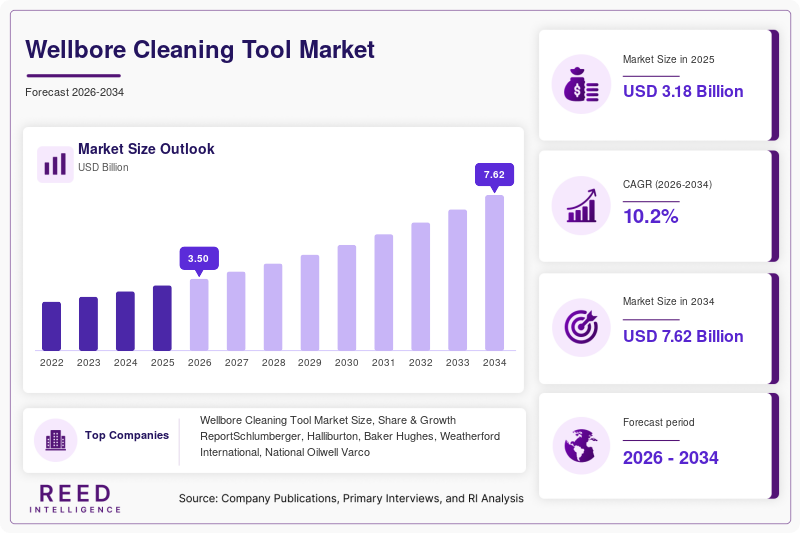
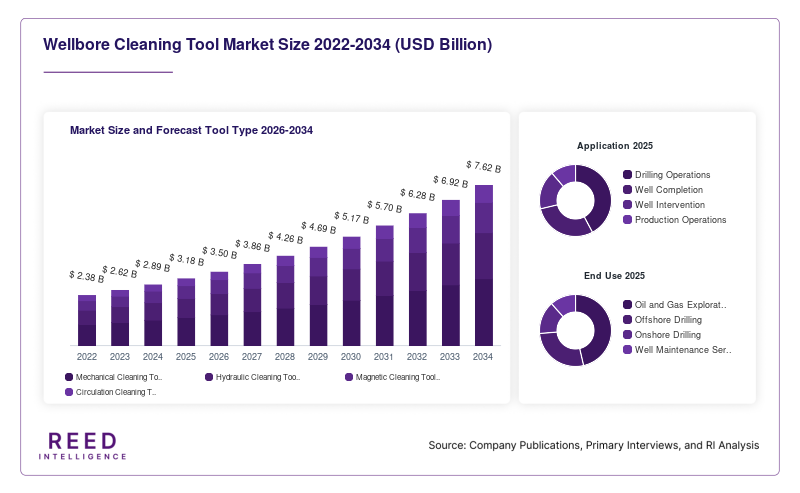
The global Wellbore Cleaning Tool Market size was valued at USD 3.18 billion in 2026 and is projected to reach USD 6.94 billion by 2034, expanding at a CAGR of 10.2% during the forecast period from 2026 to 2034. The market is experiencing stable growth due to rising drilling activities across offshore and unconventional oil and gas reserves. Increasing investments in horizontal drilling and extended reach wells have accelerated the demand for efficient wellbore cleaning solutions that improve drilling performance and reduce operational downtime. Wellbore cleaning tools are widely used to remove drilling debris, mud cake, cuttings, and solids that accumulate during drilling and completion processes. These tools support enhanced well integrity, improved production efficiency, and reduced risks associated with stuck pipe incidents.
The growing emphasis on operational efficiency in mature oilfields has also contributed to the adoption of advanced wellbore cleaning technologies. Oilfield operators are increasingly focusing on minimizing non-productive time and maximizing reservoir output, which has encouraged the use of automated and high-performance cleaning tools. In addition, the expansion of deepwater exploration projects in regions such as the Gulf of Mexico, the Middle East, and Southeast Asia has strengthened demand for specialized cleaning systems capable of operating under complex well conditions. Technological advancements, including smart sensors, rotary cleaning systems, and high-pressure circulation tools, continue to reshape industry dynamics and improve drilling economics.
Key Highlights
- North America dominated the market with a 34.2% share in 2025.
- Asia Pacific is expected to grow at the fastest CAGR of 11.4% during 2026–2034.
- By tool type, mechanical cleaning tools accounted for the largest share of 39.6%, while hydraulic cleaning tools are projected to grow at a CAGR of 11.8%.
- By application, drilling operations led with a 44.3% share, whereas well completion activities are expected to expand at a CAGR of 12.1%.
- The United States remained the dominant country, with market values of USD 760 million in 2024 and USD 825 million in 2025.
Market Trends
Integration of Digital Monitoring and Smart Cleaning Technologies
Oilfield service companies are increasingly integrating digital monitoring capabilities into wellbore cleaning operations to improve drilling efficiency and reduce operational risks. Smart wellbore cleaning tools equipped with real-time sensors are being used to monitor debris accumulation, fluid circulation rates, and downhole pressure conditions. These technologies help drilling operators identify cleaning inefficiencies before they result in stuck pipes or production interruptions. The use of automated monitoring systems has also enhanced predictive maintenance capabilities, allowing companies to reduce equipment failures and optimize drilling schedules. As drilling projects become more complex, particularly in deepwater and horizontal wells, digital integration is expected to become an essential feature in modern wellbore cleaning solutions.
Rising Adoption of High-Performance Tools for Horizontal Wells
The increasing number of horizontal and extended reach drilling projects has created strong demand for advanced wellbore cleaning tools capable of handling difficult downhole environments. Conventional cleaning systems often struggle to remove cuttings efficiently in long horizontal sections, leading operators to adopt rotary and hydraulic cleaning technologies. Companies are investing in specialized tools designed to improve fluid dynamics and enhance debris transportation during drilling operations. This trend is particularly visible in shale exploration activities across North America and Asia Pacific. The demand for customized cleaning tools compatible with high-temperature and high-pressure wells is also rising as exploration activities move toward technically challenging reservoirs with complex geological formations.
Market Drivers
Expansion of Offshore and Unconventional Drilling Activities
Growing exploration and production activities in offshore and unconventional reserves are driving demand for wellbore cleaning tools globally. Energy companies are investing heavily in deepwater and ultra-deepwater projects to meet rising energy demand and maintain long-term production targets. These drilling environments involve complex well trajectories and difficult operational conditions that require efficient wellbore cleaning systems to maintain drilling stability. Unconventional resources such as shale gas and tight oil also involve extensive horizontal drilling operations where debris management becomes critical. Wellbore cleaning tools help improve drilling speed, reduce non-productive time, and lower the risk of equipment damage, making them essential components in modern drilling operations across major oil-producing regions.
Increasing Focus on Reducing Non-Productive Time in Oilfields
Oilfield operators are increasingly prioritizing solutions that reduce non-productive time and improve operational efficiency. Poor wellbore cleaning can lead to stuck pipe incidents, reduced drilling rates, and expensive maintenance procedures that negatively affect project economics. As drilling costs continue to rise, companies are adopting advanced cleaning technologies to maintain stable drilling operations and enhance well performance. Modern wellbore cleaning tools improve cuttings removal, optimize fluid circulation, and support better hole conditioning during drilling and completion activities. The ability of these tools to minimize operational delays and improve overall well integrity has strengthened their adoption across both onshore and offshore projects worldwide.
Market Restraint
High Operational Costs and Technical Challenges in Deepwater Wells
The high cost associated with advanced wellbore cleaning operations remains a major restraint for market growth. Deepwater and ultra-deepwater drilling projects require specialized tools capable of operating under extreme pressure and temperature conditions, significantly increasing equipment and maintenance expenses. Smaller exploration companies often face financial limitations that restrict investments in high-performance cleaning systems. In addition, the deployment of sophisticated wellbore cleaning tools requires experienced technical personnel and continuous monitoring, which further adds to operational costs. Complex geological conditions can also reduce tool efficiency and increase equipment wear, leading to higher replacement expenses. For example, offshore drilling projects in harsh marine environments frequently experience elevated maintenance requirements due to corrosion and abrasive drilling debris. These challenges may slow adoption rates in cost-sensitive markets, particularly during periods of oil price volatility and reduced exploration spending.
Market Opportunities
Growing Investments in Mature Well Rehabilitation Projects
The increasing focus on mature well rehabilitation and production optimization presents significant opportunities for the Wellbore Cleaning Tool Market. Many oil-producing regions are investing in enhanced recovery operations to extend the productive life of aging wells. Wellbore cleaning plays a critical role in removing accumulated debris, scale, and solids that reduce production efficiency in mature reservoirs. Operators are adopting advanced cleaning systems to restore well productivity and improve hydrocarbon flow rates without the need for expensive new drilling projects. This trend is particularly prominent in North America, the Middle East, and parts of Europe where aging oilfields continue to contribute substantially to regional energy production. The demand for efficient rehabilitation technologies is expected to create long-term growth opportunities for cleaning tool manufacturers.
Increasing Demand for Environmentally Efficient Drilling Solutions
Environmental regulations and sustainability goals are encouraging oilfield operators to adopt cleaner and more efficient drilling technologies. Advanced wellbore cleaning tools help reduce drilling waste accumulation, optimize fluid circulation, and improve overall operational efficiency, supporting environmentally responsible drilling practices. Companies are increasingly developing tools designed to minimize chemical usage and lower energy consumption during drilling and completion activities. The growing adoption of water-based drilling fluids and low-emission offshore operations has also strengthened demand for precision cleaning technologies. Emerging markets investing in sustainable energy production practices are expected to create favorable opportunities for manufacturers offering energy-efficient and environmentally compliant wellbore cleaning systems during the forecast period.
Segmental Analysis
By Tool Type
Mechanical cleaning tools held the dominant share of 39.6% in 2024 due to their widespread use in drilling and completion operations. These tools are highly effective in removing cuttings, debris, and scale deposits from wellbores, making them essential in both onshore and offshore drilling environments. Mechanical brushes, scrapers, and magnets are commonly used because of their reliability and compatibility with different well conditions. Oilfield operators continue to prefer mechanical cleaning systems for routine maintenance activities because they improve well integrity and reduce operational downtime. The ability of these tools to function efficiently in horizontal and extended reach wells has further strengthened their market position across major energy-producing regions.
Hydraulic cleaning tools are projected to register the fastest CAGR of 11.8% during the forecast period due to rising demand for high-performance cleaning systems in deepwater and unconventional drilling operations. These tools use high-pressure fluid circulation to remove debris and optimize wellbore conditions more effectively than conventional methods. Increasing offshore drilling investments and the expansion of complex well architectures are encouraging operators to adopt hydraulic technologies that improve drilling efficiency and minimize equipment failures. The growing need for advanced cleaning solutions capable of handling high-temperature and high-pressure environments is expected to accelerate demand for hydraulic cleaning tools across global oilfield projects.
By Application
Drilling operations accounted for the largest market share of 44.3% in 2024 as wellbore cleaning plays a critical role in maintaining drilling efficiency and preventing operational complications. During drilling activities, large volumes of cuttings and debris accumulate within the wellbore, increasing the risk of stuck pipes and reduced drilling performance. Cleaning tools are extensively used to maintain proper fluid circulation and ensure stable drilling conditions. The rising number of horizontal drilling projects and deepwater exploration programs has further increased the importance of effective cleaning systems during drilling operations. Oilfield service companies continue to invest in advanced technologies that improve debris removal and enhance drilling productivity across challenging well environments.
Well completion activities are anticipated to witness the fastest CAGR of 12.1% from 2026 to 2034 due to increasing focus on optimizing well productivity and extending reservoir life. Completion operations require efficient cleaning solutions to remove residual drilling debris and prepare the well for production activities. Operators are increasingly adopting advanced cleaning technologies to improve fluid flow efficiency and reduce the risk of formation damage. The growing use of multi-stage hydraulic fracturing and intelligent completion systems has also strengthened demand for specialized cleaning tools capable of operating under complex downhole conditions. Rising investments in mature well rehabilitation projects are expected to further support growth in this application segment.
By End Use
The oil and gas exploration sector dominated the market in 2024 due to rising investments in upstream drilling activities across offshore and unconventional reserves. Exploration companies require advanced wellbore cleaning systems to improve drilling efficiency and minimize operational interruptions in technically challenging environments. The increasing development of shale resources, deepwater reserves, and extended reach wells has accelerated demand for cleaning technologies that optimize debris removal and maintain stable drilling operations. Major oilfield operators are also focusing on reducing non-productive time and enhancing well integrity, which has strengthened the adoption of high-performance cleaning tools throughout exploration projects worldwide.
Well intervention services are projected to grow at the fastest CAGR of 11.6% during the forecast period because operators are increasingly focusing on maintaining and restoring production in aging wells. Well intervention activities involve cleaning, repairing, and optimizing existing wells to improve hydrocarbon recovery rates without extensive new drilling investments. Advanced wellbore cleaning technologies are widely used during intervention procedures to remove accumulated solids and improve production flow. Growing investments in enhanced oil recovery programs and mature field redevelopment projects are expected to drive demand for efficient intervention cleaning systems. The increasing need for cost-effective production optimization strategies continues to create favorable growth prospects for this segment.
Regional Analysis
North America
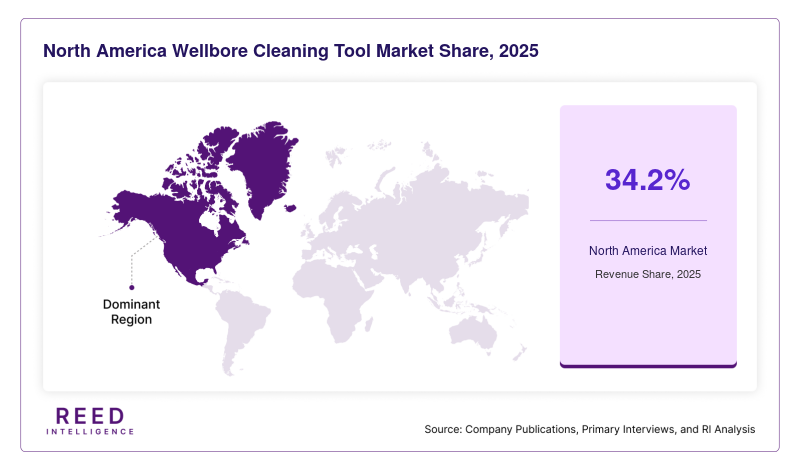
North America accounted for 34.2% of the global Wellbore Cleaning Tool Market share in 2025 and is expected to maintain a stable growth trajectory with a CAGR of 9.6% through 2034. The region benefits from extensive shale exploration activities, particularly across the United States and Canada. Horizontal drilling and hydraulic fracturing operations require efficient cleaning systems to manage drilling cuttings and maintain operational stability. Increasing investments in offshore projects in the Gulf of Mexico are also contributing to regional market expansion. The presence of established oilfield service providers further supports technology adoption and continuous product innovation.
The United States remained the dominant country within North America due to high drilling activity in shale basins such as the Permian Basin and Eagle Ford. One unique growth factor in the country is the rapid adoption of automated drilling technologies integrated with smart cleaning systems. Operators are increasingly investing in real-time monitoring tools that optimize wellbore cleaning efficiency and reduce drilling downtime. The country's strong infrastructure and ongoing investments in unconventional energy resources continue to support long-term market growth.
Europe
Europe represented a considerable share of the Wellbore Cleaning Tool Market in 2025 and is projected to grow at a CAGR of 8.8% during the forecast period. The region’s market growth is driven by offshore exploration activities in the North Sea and increasing investments in energy security initiatives. European oilfield operators are focusing on extending the operational life of mature wells through advanced drilling and well maintenance technologies. Growing demand for efficient debris management systems and improved drilling performance has increased the adoption of specialized cleaning tools across offshore projects.
Norway emerged as the dominant country in the European market due to its advanced offshore drilling industry and strong investments in deepwater exploration. A unique growth factor in Norway is the country's emphasis on sustainable offshore operations supported by digitalized drilling technologies. Oil companies operating in the Norwegian continental shelf are increasingly deploying automated cleaning systems that reduce operational waste and improve drilling precision. Government support for energy innovation also contributes to continued market expansion in the region.
Asia Pacific
Asia Pacific is expected to register the fastest CAGR of 11.4% from 2026 to 2034 due to increasing energy demand and expanding exploration activities across developing economies. Countries including China, India, Indonesia, and Australia are investing heavily in oil and gas production to strengthen domestic energy supply. The rising number of offshore drilling projects and unconventional gas developments has accelerated demand for efficient wellbore cleaning technologies. Growing industrialization and infrastructure expansion are also contributing to higher regional energy consumption, encouraging additional upstream investments.
China dominated the Asia Pacific market owing to large-scale investments in shale gas development and offshore exploration projects. One unique growth factor supporting the Chinese market is the government’s focus on reducing dependence on imported energy through domestic resource development. National oil companies are increasing spending on advanced drilling equipment capable of improving operational efficiency in technically challenging reservoirs. The expansion of high-pressure and horizontal drilling projects has further increased demand for advanced cleaning tools across the country.
Middle East & Africa
The Middle East & Africa region continues to hold a strong position in the Wellbore Cleaning Tool Market due to extensive oil reserves and ongoing investments in upstream production activities. The region is projected to expand at a CAGR of 9.1% during the forecast period. National oil companies are focusing on enhancing production efficiency in mature fields while also expanding offshore exploration programs. Increasing demand for advanced drilling technologies capable of operating under extreme environmental conditions is supporting market growth across major oil-producing nations.
Saudi Arabia emerged as the dominant country in the region due to large-scale investments in oilfield modernization and production optimization projects. A unique growth factor in the country is the integration of advanced oilfield automation technologies into drilling operations. Energy companies are deploying intelligent cleaning systems to improve drilling performance and reduce maintenance costs in complex wells. The continued expansion of enhanced oil recovery projects and offshore developments in the Arabian Gulf is expected to strengthen regional demand for wellbore cleaning tools.
Latin America
Latin America accounted for a moderate share of the global market in 2025 and is expected to grow steadily at a CAGR of 8.7% through 2034. The market is supported by rising offshore exploration activities and increasing investments in oil production infrastructure. Countries such as Brazil, Mexico, and Argentina are focusing on developing deepwater reserves and unconventional resources to improve regional energy output. Growing demand for efficient drilling solutions and improved well maintenance practices has encouraged the adoption of modern cleaning technologies across the region.
Brazil remained the leading country in Latin America due to its extensive offshore pre-salt exploration projects. A unique growth factor in Brazil is the growing deployment of high-capacity drilling rigs designed for ultra-deepwater operations. These projects require advanced wellbore cleaning systems capable of operating in high-pressure and high-temperature conditions. Continued investments by international oil companies in offshore exploration activities are expected to support long-term demand for cleaning tools throughout the Brazilian energy sector.
Competitive Landscape
The Wellbore Cleaning Tool Market is moderately consolidated, with several international and regional companies competing through product innovation, strategic partnerships, and expansion of service capabilities. Leading companies are investing in advanced cleaning technologies designed for complex drilling environments, including high-pressure offshore wells and extended reach drilling operations. Market participants are also focusing on integrating digital monitoring capabilities and automated cleaning systems to improve operational efficiency and reduce downtime.
Schlumberger remained one of the leading companies in the market due to its broad portfolio of drilling and well intervention solutions. The company recently expanded its intelligent drilling technologies portfolio by introducing advanced debris management systems for offshore operations. Halliburton, Baker Hughes, Weatherford International, and National Oilwell Varco also hold substantial market positions through strong global distribution networks and continuous investments in research and development. Competitive strategies within the industry increasingly emphasize technological reliability, operational efficiency, and compatibility with evolving drilling requirements across mature and unconventional oilfields.
Key Players
- Schlumberger
- Halliburton
- Baker Hughes
- Weatherford International
- National Oilwell Varco
- Archer Limited
- Rubicon Oilfield International
- Welltec
- Magnum Oil Tools
- Innovex Downhole Solutions
- TAM International
- Oil States International
- Bilco Tools
- Drillmec
- Schoeller-Bleckmann Oilfield Equipment
Recent Developments
- Schlumberger introduced an advanced rotary wellbore cleaning system designed for deepwater drilling projects in the Gulf of Mexico in 2025.
- Halliburton expanded its hydraulic cleaning tool portfolio with automated debris management capabilities for unconventional shale wells in 2024.
- Baker Hughes partnered with a Middle Eastern energy operator in 2025 to deploy smart cleaning technologies for offshore production optimization projects.
- Weatherford International launched a high-temperature wellbore cleaning tool for ultra-deep drilling applications in 2024.
- National Oilwell Varco invested in digital drilling technologies aimed at improving real-time wellbore cleaning efficiency during offshore operations in 2025.
Wellbore Cleaning Tool Market Segments
Tool Type
- Mechanical Cleaning Tools
- Hydraulic Cleaning Tools
- Magnetic Cleaning Tools
- Circulation Cleaning Tools
Application
- Drilling Operations
- Well Completion
- Well Intervention
- Production Operations
End Use
- Oil and Gas Exploration
- Offshore Drilling
- Onshore Drilling
- Well Maintenance Services
By Region
- North America
- Europe
- APAC
- Middle East and Africa
- LATAM