White Noise Machine Market Size, Share & Demand Report By Product Type (Portable White Noise Machines, Tabletop White Noise Machines, Smart-Connected White Noise Machines), By Application (Residential, Commercial), By End-Use (Individual Consumers, Healthcare & Institutions) By Region & Segment Forecasts, 2026–2034
USD 3950
Market Overview
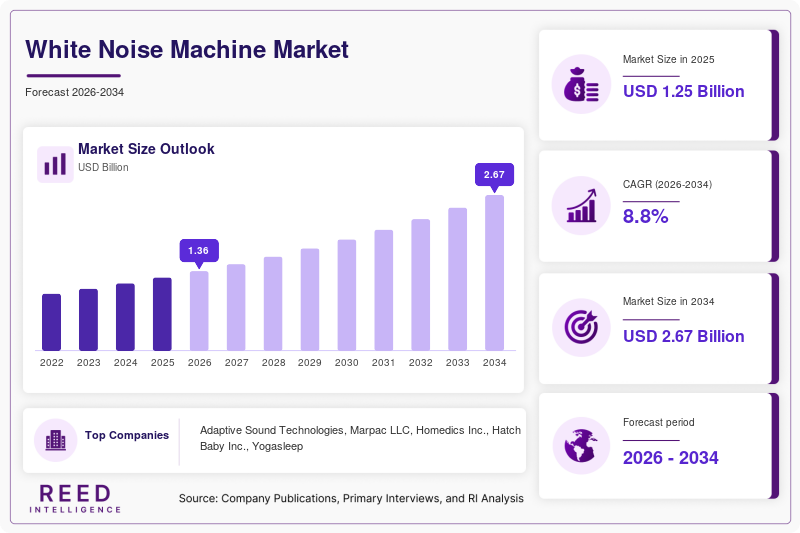
The global White Noise Machine Market size was valued at approximately USD 1.25 billion in 2026 and is projected to reach around USD 2.45 billion by 2034, expanding at a CAGR of 8.8% during the forecast period (2026–2034). The market has gained steady traction due to increasing awareness of sleep health and the growing prevalence of sleep-related disorders across urban populations. White noise machines are widely used to mask disruptive environmental sounds, thereby improving sleep quality and enhancing focus in both residential and commercial environments.
A key global factor supporting market growth is the rising incidence of stress, insomnia, and anxiety-related conditions, particularly in fast-paced urban settings. With growing digital device usage and irregular work schedules, consumers are increasingly seeking non-pharmaceutical solutions for sleep enhancement. White noise machines offer a simple, non-invasive alternative, making them an attractive option for a broad demographic, including infants, working professionals, and elderly populations. Additionally, the integration of smart technologies and app-controlled devices has improved product accessibility and functionality, further accelerating adoption.
Key Highlights
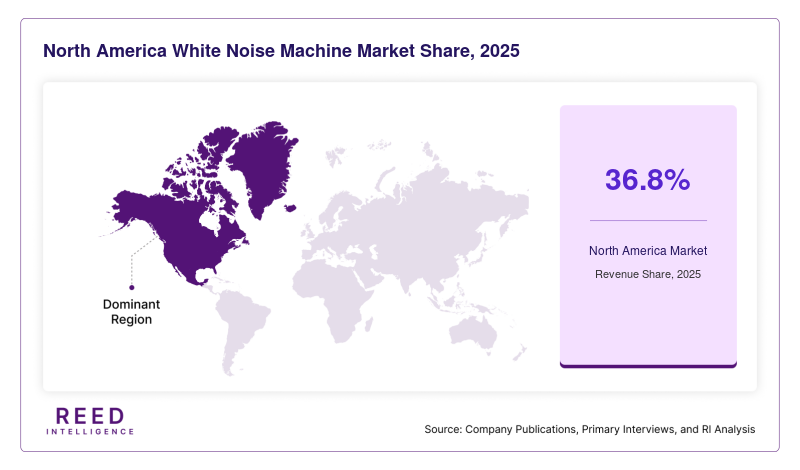
- North America dominated the market with a 36.8% share in 2025.
- Asia Pacific is expected to grow at the fastest CAGR of 10.6% during 2026–2034.
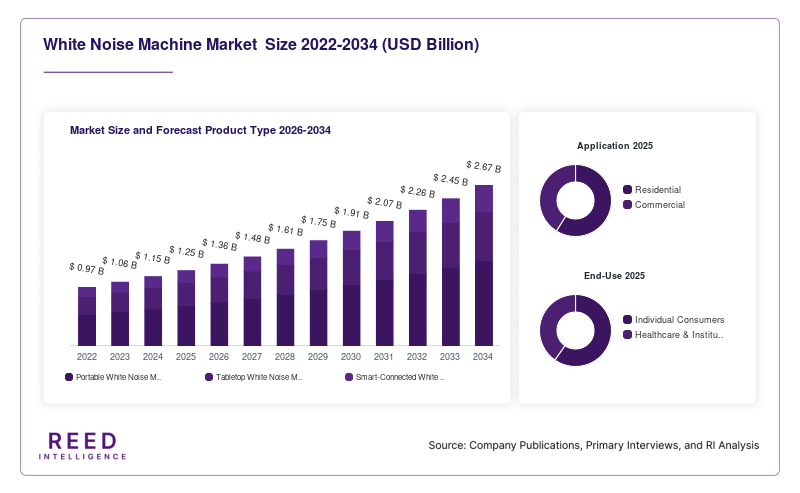
- By product type, portable white noise machines accounted for the largest share of 42.3%, while smart-connected devices are projected to grow at a CAGR of 11.5%.
- By application, residential usage led with a 47.9% share, whereas commercial applications are expected to expand at a CAGR of 9.7%.
- The United States remained the dominant country, with market values of USD 420 million in 2024 and USD 465 million in 2025.
Market Trends
Rising adoption of smart and connected sleep devices
The integration of smart technologies into white noise machines has become a prominent trend shaping the market. Modern devices now feature Bluetooth connectivity, mobile app integration, voice assistant compatibility, and customizable soundscapes. Consumers increasingly prefer devices that allow control through smartphones and synchronization with broader smart home ecosystems. This trend reflects the growing consumer inclination toward convenience and personalization in daily routines. Smart white noise machines also offer advanced features such as sleep tracking, adaptive sound modulation, and automated timers, enhancing their overall utility. As smart home adoption expands globally, manufacturers are investing in innovation to align their products with connected living environments, thereby boosting product differentiation and customer engagement.
Increasing use in workplace and wellness environments
Another notable trend is the expanding use of white noise machines in office spaces, healthcare facilities, and wellness centers. Organizations are recognizing the role of controlled acoustic environments in improving employee productivity and concentration. White noise machines help reduce distractions in open-plan offices by masking background noise, creating a more focused workspace. In healthcare settings, these devices are used to enhance patient comfort and privacy. Additionally, wellness centers and therapy clinics incorporate white noise machines as part of relaxation and stress management programs. This trend indicates a shift beyond residential applications, positioning white noise machines as multifunctional tools in professional and therapeutic environments.
Market Drivers
Growing prevalence of sleep disorders and mental health concerns
The increasing prevalence of sleep disorders, including insomnia, sleep apnea, and stress-related disturbances, is a key driver for the white noise machine market. Urban lifestyles, long working hours, and excessive screen exposure contribute to poor sleep quality, prompting individuals to seek effective solutions. White noise machines offer a non-medicated approach to improving sleep by masking disruptive sounds and creating a consistent auditory environment. This has made them particularly popular among individuals looking to avoid pharmaceutical interventions. The rising awareness of mental health and the importance of quality sleep further supports market expansion, as consumers prioritize wellness and preventive care.
Rising demand for infant sleep aids and parenting solutions
The demand for white noise machines is also driven by their widespread use as infant sleep aids. New parents increasingly rely on these devices to create a soothing environment that mimics womb-like sounds, helping infants sleep more comfortably. The effectiveness of white noise in calming babies has led to its growing adoption across households worldwide. Manufacturers are introducing specialized products tailored for infants, featuring gentle sounds, night lights, and safety-certified designs. The increasing birth rates in emerging economies and rising awareness of infant care products are contributing to this demand. As a result, the infant segment continues to play a significant role in driving market growth.
Market Restraint
Availability of alternative sleep solutions and free digital applications
One of the primary restraints affecting the white noise machine market is the widespread availability of alternative solutions, particularly free mobile applications and streaming platforms that offer white noise and ambient sound options. Consumers can easily access a wide range of soundscapes through smartphones without investing in dedicated devices. This reduces the perceived necessity of standalone white noise machines, especially among price-sensitive users. Additionally, wearable sleep devices and multifunctional gadgets are emerging as substitutes, offering integrated features beyond sound masking. The presence of these alternatives intensifies competition and may limit market penetration, particularly in regions with high smartphone adoption and cost-conscious consumers.
Market Opportunities
Expansion into emerging markets with rising urbanization
Emerging markets present a significant opportunity for the white noise machine industry, driven by rapid urbanization and increasing disposable incomes. Countries in Asia Pacific, Latin America, and parts of Africa are witnessing a growing middle-class population that is more inclined toward health and wellness products. As urban environments become noisier, the demand for solutions that improve sleep quality is expected to rise. Market players can capitalize on this opportunity by offering affordable and localized products tailored to regional preferences. Strategic distribution partnerships and targeted marketing campaigns can further enhance market penetration in these regions.
Product innovation focusing on multi-functional features
Innovation in product design and functionality offers substantial growth opportunities for manufacturers. Consumers are increasingly seeking devices that provide multiple benefits, such as sound therapy, alarm functions, night lighting, and aromatherapy integration. The development of compact, portable, and energy-efficient devices can attract a broader user base. Additionally, incorporating AI-driven personalization features, such as adaptive sound levels based on environmental noise, can enhance user experience. Companies that invest in research and development to create versatile and user-friendly products are likely to gain a competitive edge, thereby driving market expansion.
Segmental Analysis
By Product Type
Portable white noise machines dominated the market in 2024, accounting for approximately 42.3% of the overall share. Their compact design, ease of use, and affordability make them highly popular among consumers. These devices are widely used for travel and home environments, offering flexibility and convenience. The increasing demand for lightweight and battery-operated devices further strengthens this segment’s position. Consumers prefer portable solutions that can be easily integrated into their daily routines without requiring complex setup or installation.
Smart-connected white noise machines are expected to grow at the fastest CAGR of 11.5% during the forecast period. The growth of this subsegment is driven by the rising adoption of smart home technologies and the increasing demand for customizable user experiences. These devices offer features such as app control, voice command compatibility, and integration with other smart devices. The ability to personalize sound settings and automate functions enhances user convenience, making smart-connected machines an attractive option for tech-savvy consumers.
By Application
Residential applications held the largest market share of 47.9% in 2024. The widespread use of white noise machines in homes for improving sleep quality and reducing noise disturbances drives this segment. Households with infants, individuals with sleep disorders, and those living in noisy environments are key contributors to demand. The increasing awareness of sleep health and the availability of affordable devices further support the growth of this segment.
Commercial applications are projected to grow at a CAGR of 9.7% during the forecast period. This growth is fueled by the increasing use of white noise machines in offices, healthcare facilities, and hospitality settings. Businesses are recognizing the benefits of controlled acoustic environments in enhancing productivity and customer experience. The expansion of co-working spaces and wellness centers also contributes to the rising demand in this segment.
By End-Use
Individual consumers represented the dominant end-use segment in 2024, accounting for a significant share of the market. The growing focus on personal wellness and sleep quality drives demand among individual users. The availability of a wide range of products catering to different preferences and budgets supports this segment’s growth. Marketing strategies targeting lifestyle improvement and stress reduction further enhance consumer adoption.
Healthcare and institutional end-users are expected to grow at the fastest CAGR of 9.9%. The increasing use of white noise machines in hospitals, therapy centers, and elderly care facilities drives this growth. These devices are used to create a calming environment for patients and improve overall comfort. The rising emphasis on patient-centric care and non-invasive treatment methods supports the adoption of white noise machines in healthcare settings.
Regional Analysis
North America
North America accounted for approximately 36.8% of the global market share in 2025 and is expected to maintain steady growth with a CAGR of 8.1% during the forecast period. The region benefits from high consumer awareness regarding sleep health and the widespread adoption of wellness products. The presence of advanced healthcare infrastructure and strong purchasing power further supports market growth. Additionally, the popularity of smart home technologies contributes to the demand for connected white noise devices.
The United States remains the dominant country in this region, driven by high levels of stress and sleep-related disorders among the population. A unique growth factor is the increasing use of white noise machines in corporate wellness programs. Employers are investing in employee well-being initiatives, including the provision of devices that enhance focus and reduce workplace stress, thereby supporting market expansion.
Europe
Europe held a market share of around 24.5% in 2025 and is projected to grow at a CAGR of 7.9% during the forecast period. The region demonstrates strong demand for sleep-enhancing products due to rising awareness of mental health and work-life balance. Countries across Western Europe are witnessing increased adoption of non-invasive sleep solutions, including white noise machines.
Germany stands out as the dominant country in this region. A key growth factor is the increasing integration of white noise devices in healthcare and elderly care facilities. With an aging population, there is a growing need for solutions that improve sleep quality among seniors. This trend is expected to sustain market growth across the region.
Asia Pacific
Asia Pacific is anticipated to register the fastest CAGR of 10.6% from 2026 to 2034, with a market share of approximately 20.3% in 2025. Rapid urbanization, rising disposable incomes, and increasing awareness of health and wellness products are key drivers in this region. The growing middle-class population is actively seeking solutions to manage stress and improve sleep quality.
China dominates the Asia Pacific market due to its large population and expanding consumer base. A unique growth factor is the increasing adoption of white noise machines among young professionals in urban areas. Long working hours and high stress levels are prompting individuals to invest in sleep-enhancing devices, thereby driving market growth.
Middle East & Africa
The Middle East & Africa region accounted for around 9.2% of the market share in 2025 and is expected to grow at a CAGR of 7.3% during the forecast period. The market is gradually expanding due to increasing awareness of wellness products and improving economic conditions in certain countries. Urbanization and lifestyle changes are contributing to the demand for sleep solutions.
The United Arab Emirates leads the market in this region. A key growth factor is the rising demand for premium lifestyle products among affluent consumers. The increasing adoption of smart home devices and luxury wellness solutions is driving the uptake of advanced white noise machines, supporting regional growth.
Latin America
Latin America held a market share of approximately 9.2% in 2025 and is projected to grow at a CAGR of 8.0% during the forecast period. The region is experiencing growing awareness of sleep health and an increasing inclination toward affordable wellness products. Expanding retail networks and e-commerce platforms are facilitating product accessibility.
Brazil emerges as the dominant country in this region. A unique growth factor is the rising popularity of white noise machines among urban families. Increasing noise pollution in major cities has led to higher demand for sound-masking solutions, thereby contributing to market expansion.
Competitive Landscape
The white noise machine market is moderately fragmented, with several established players competing on product innovation, pricing, and distribution strategies. Leading companies are focusing on expanding their product portfolios and integrating advanced features to meet evolving consumer demands. Strategic partnerships, mergers, and acquisitions are also observed as companies aim to strengthen their market presence.
A leading player in the market is Adaptive Sound Technologies, known for its wide range of high-quality white noise machines. The company has recently introduced new smart-enabled devices with enhanced customization features, reflecting its focus on innovation. Other major companies are also investing in research and development to differentiate their offerings and capture a larger market share.
Key Players
- Adaptive Sound Technologies
- Marpac LLC
- Homedics Inc.
- Hatch Baby Inc.
- Yogasleep
- LectroFan
- Big Red Rooster
- Pure Enrichment
- AVANTEK
- Magicteam Sound Machines
- Dreamegg
- Sound+Sleep
- Easysleep
- Letsfit
- Serene Evolution
Recent Developments
- A leading manufacturer launched a new AI-enabled white noise machine with adaptive sound technology for personalized sleep experiences.
- Several companies expanded their distribution channels through e-commerce platforms to reach a wider global audience.
- A strategic partnership between a wellness brand and a tech company resulted in the development of multi-functional white noise devices with integrated sleep tracking features.
White Noise Machine Market Segments
Product Type
- Portable White Noise Machines
- Tabletop White Noise Machines
- Smart-Connected White Noise Machines
Application
- Residential
- Commercial
End-Use
- Individual Consumers
- Healthcare & Institutions
By Region
- North America
- Europe
- APAC
- Middle East and Africa
- LATAM