Whole Slide Imaging Market Size, Share & Demand Report By Component (Scanners, Software, Services), By Application (Diagnostics, Drug Discovery, Education & Training), By End-Use (Hospitals, Research Institutes, Pharmaceutical & Biotechnology Companies), By Region & Segment Forecasts, 2026–2034
USD 3950
Market Overview
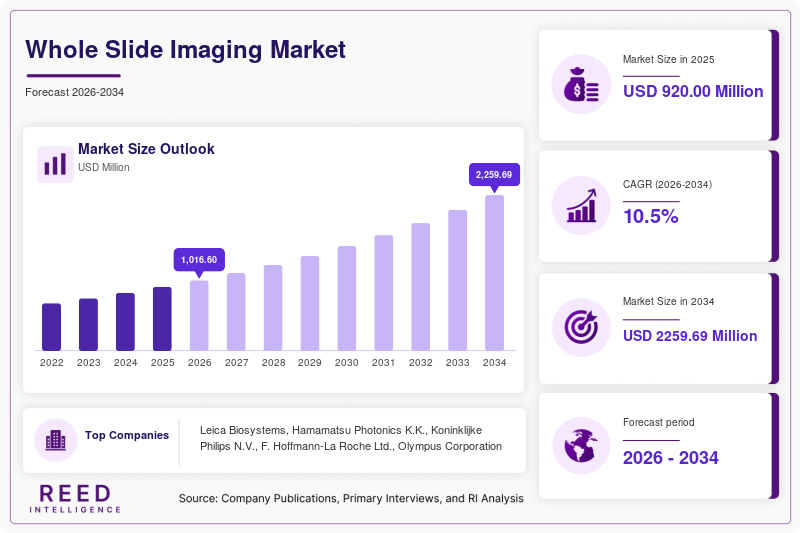
The Whole Slide Imaging Market size was valued at approximately USD 920 million in 2026 and is projected to reach USD 2.05 billion by 2034, expanding at a CAGR of 10.5% during the forecast period (2026–2034). This growth trajectory reflects the increasing adoption of digital pathology solutions across clinical diagnostics, research institutions, and pharmaceutical companies. Whole slide imaging systems enable high-resolution scanning of pathology slides, allowing pathologists to analyze digital images remotely and efficiently. The integration of advanced imaging technologies with data analytics platforms has enhanced diagnostic accuracy and workflow optimization, making these systems a critical component in modern healthcare infrastructure.
A key global factor supporting market growth is the rising prevalence of chronic diseases such as cancer, which requires accurate and timely diagnosis. The shift toward personalized medicine has further amplified the need for digital pathology tools that enable detailed tissue analysis and data sharing across healthcare networks. Additionally, increasing investments in healthcare digitization and the adoption of telepathology solutions have strengthened the market outlook.
Key Highlights
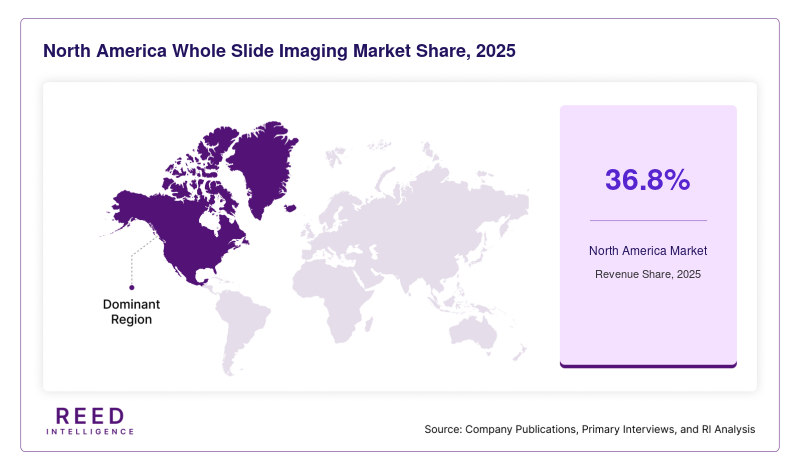
- North America dominated the market with a 36.8% share in 2025.
- Asia Pacific is expected to grow at the fastest CAGR of 11.7% during 2026–2034.
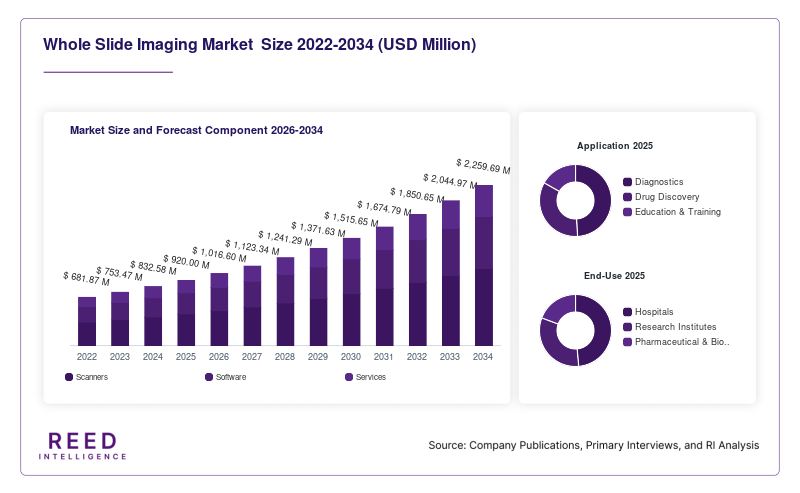
- By component, scanners accounted for the largest share of 42.6%, while software solutions are projected to grow at a CAGR of 12.8%.
- By application, diagnostics led with a 45.3% share, whereas drug discovery is expected to expand at a CAGR of 11.9%.
- The United States remained the dominant country, with market values of USD 480 million in 2024 and USD 530 million in 2025.
Market Trends
Integration of Artificial Intelligence in Digital Pathology
The integration of artificial intelligence into whole slide imaging systems is transforming the diagnostic landscape by enabling automated image analysis and pattern recognition. AI-powered algorithms can assist pathologists in identifying anomalies, classifying tissue samples, and reducing diagnostic errors. These systems also support quantitative analysis, which enhances reproducibility and consistency in pathology workflows. The growing demand for precision diagnostics and data-driven decision-making is driving the adoption of AI-integrated imaging platforms. Furthermore, advancements in deep learning models are enabling real-time processing of large image datasets, improving efficiency in clinical and research settings. As regulatory frameworks evolve to support AI-based tools, the adoption of these technologies is expected to expand significantly.
Expansion of Telepathology and Remote Diagnostics
The expansion of telepathology solutions has become a prominent trend in the whole slide imaging market, particularly with the increasing need for remote healthcare services. Whole slide imaging allows pathologists to access and analyze digital slides from any location, enabling collaboration across institutions and geographic boundaries. This capability is especially valuable in regions with limited access to specialized pathology expertise. The demand for remote diagnostics has increased following global healthcare disruptions, prompting hospitals and laboratories to invest in digital infrastructure. In addition, telepathology supports faster turnaround times and improves patient outcomes by facilitating timely diagnoses. The continued development of cloud-based platforms and secure data-sharing technologies is expected to further accelerate this trend.
Market Drivers
Rising Demand for Digital Pathology Solutions
The growing demand for digital pathology solutions is a major driver of the whole slide imaging market. Healthcare providers are increasingly transitioning from traditional microscopy to digital platforms to enhance efficiency and accuracy in diagnostics. Whole slide imaging systems enable the digitization of pathology slides, allowing for easy storage, retrieval, and sharing of data. This shift is particularly beneficial in large healthcare systems where high volumes of samples need to be processed quickly. Additionally, digital pathology supports collaborative workflows, enabling multiple experts to review cases simultaneously. The increasing adoption of electronic health records and integrated healthcare systems is further driving the demand for digital imaging solutions, contributing to market growth.
Increasing Research Activities in Life Sciences
The expansion of research activities in the life sciences sector is another significant driver of the market. Pharmaceutical and biotechnology companies are utilizing whole slide imaging systems for drug discovery and development processes. These systems enable detailed analysis of tissue samples, supporting the identification of biomarkers and the evaluation of treatment efficacy. Academic and research institutions are also investing in advanced imaging technologies to support various studies, including oncology, neurology, and infectious diseases. Government funding and private investments in research infrastructure are further boosting the adoption of whole slide imaging systems. As the focus on innovative therapies and precision medicine increases, the demand for high-resolution imaging solutions is expected to rise.
Market Restraint
High Cost of Equipment and Implementation
The high cost associated with whole slide imaging systems remains a key restraint for market growth. These systems require significant investment in hardware, software, and supporting infrastructure, which can be challenging for small and medium-sized healthcare facilities. In addition to the initial purchase cost, ongoing expenses related to maintenance, data storage, and system upgrades add to the financial burden. The need for skilled personnel to operate and manage these systems further increases operational costs. As a result, adoption rates may be limited in cost-sensitive regions, particularly in developing economies. This financial barrier can slow the widespread implementation of digital pathology solutions, despite their potential benefits.
Market Opportunities
Growth in Emerging Healthcare Markets
Emerging healthcare markets present significant opportunities for the whole slide imaging market. Countries in Asia Pacific, Latin America, and parts of the Middle East are investing in healthcare infrastructure and digital transformation initiatives. The increasing prevalence of chronic diseases and the need for improved diagnostic capabilities are driving demand for advanced imaging solutions in these regions. Governments and private organizations are focusing on modernizing healthcare systems, which includes the adoption of digital pathology technologies. Additionally, the availability of cost-effective solutions and partnerships with global companies are facilitating market entry in these regions. This trend is expected to create substantial growth opportunities over the forecast period.
Advancements in Cloud-Based Imaging Platforms
Advancements in cloud-based imaging platforms are creating new opportunities for market expansion. Cloud technology enables secure storage and sharing of large image datasets, addressing one of the key challenges associated with whole slide imaging. These platforms allow healthcare providers to access data remotely, improving collaboration and workflow efficiency. The integration of cloud solutions with AI and analytics tools further enhances the value of digital pathology systems. As concerns related to data security and compliance are addressed through advanced encryption and regulatory frameworks, the adoption of cloud-based solutions is expected to increase. This development is likely to support the scalability and accessibility of whole slide imaging technologies.
Segmental Analysis
By Component
Scanners emerged as the dominant subsegment, accounting for 42.6% of the market share in 2024. These devices are essential for converting physical pathology slides into high-resolution digital images, making them a core component of whole slide imaging systems. The increasing demand for automated and high-throughput scanning solutions is driving the adoption of advanced scanners. Healthcare facilities are investing in these systems to improve workflow efficiency and reduce manual errors. Additionally, technological advancements such as faster scanning speeds and improved image quality are enhancing the performance of these devices. The integration of scanners with digital platforms is further supporting their widespread adoption.
Software solutions are expected to be the fastest-growing subsegment, with a projected CAGR of 12.8% during the forecast period. The growth of this segment is driven by the increasing need for data management, analysis, and storage solutions. Software platforms enable pathologists to view, annotate, and share digital images, improving collaboration and diagnostic accuracy. The integration of AI and machine learning technologies is further enhancing the capabilities of these solutions. Additionally, the adoption of cloud-based software platforms is enabling remote access and scalability, supporting market growth.
By Application
Diagnostics held the largest share of 45.3% in 2024, driven by the widespread use of whole slide imaging systems in clinical settings. These systems enable accurate and efficient analysis of tissue samples, supporting disease diagnosis and treatment planning. The increasing prevalence of chronic diseases, particularly cancer, is driving the demand for advanced diagnostic tools. Healthcare providers are adopting digital pathology solutions to improve workflow efficiency and reduce turnaround times. Additionally, the integration of imaging systems with electronic health records is enhancing data accessibility and patient care.
Drug discovery is projected to be the fastest-growing application segment, with a CAGR of 11.9%. Pharmaceutical and biotechnology companies are increasingly using whole slide imaging systems to support research and development activities. These systems enable detailed analysis of tissue samples, aiding in the identification of potential drug targets and biomarkers. The growing focus on personalized medicine and innovative therapies is driving the adoption of advanced imaging technologies in drug discovery. Additionally, collaborations between research institutions and industry players are supporting the growth of this segment.
By End-Use
Hospitals accounted for the largest share of 48.7% in 2024, as they are the primary users of whole slide imaging systems for diagnostic purposes. The increasing patient volume and the need for efficient diagnostic workflows are driving the adoption of digital pathology solutions in hospitals. These systems enable faster and more accurate analysis of pathology slides, improving patient outcomes. Additionally, the integration of imaging systems with hospital information systems is enhancing data management and accessibility. The growing focus on improving healthcare quality is further supporting the adoption of these technologies.
Research institutes are expected to be the fastest-growing end-use segment, with a CAGR of 12.2%. The increasing focus on life sciences research and the development of innovative therapies are driving the demand for advanced imaging solutions in research settings. Whole slide imaging systems enable detailed analysis of tissue samples, supporting various research applications. Government funding and private investments in research infrastructure are further boosting the adoption of these systems. Additionally, collaborations between academic institutions and industry players are driving innovation and market growth.
Regional Analysis
North America
North America held a significant share of 36.8% in 2025 and is expected to grow at a CAGR of 9.8% during the forecast period. The region’s dominance is attributed to the strong presence of advanced healthcare infrastructure and high adoption of digital pathology solutions. The increasing demand for precision diagnostics and the integration of advanced technologies in healthcare systems are driving market growth. Additionally, favorable reimbursement policies and regulatory support for digital imaging technologies are contributing to the expansion of the market in this region.
The United States remains the dominant country in North America, driven by high healthcare expenditure and extensive research activities. A key growth factor is the widespread adoption of AI-based diagnostic tools in clinical settings. The presence of leading market players and ongoing technological advancements further support market growth. Additionally, collaborations between healthcare providers and technology companies are enhancing the development and deployment of innovative imaging solutions.
Europe
Europe accounted for approximately 28.5% of the market share in 2025 and is projected to grow at a CAGR of 10.1% through 2034. The region benefits from a well-established healthcare system and increasing investments in digital health technologies. The adoption of whole slide imaging systems is supported by government initiatives aimed at improving diagnostic efficiency and patient outcomes. Furthermore, the growing focus on research and development activities in the life sciences sector is contributing to market growth.
Germany is the leading country in the European market, supported by strong healthcare infrastructure and advanced research capabilities. A unique growth factor is the emphasis on collaborative research projects across academic and clinical institutions. These collaborations are driving the adoption of digital pathology solutions and fostering innovation in imaging technologies. Additionally, the increasing use of telepathology in remote areas is supporting market expansion.
Asia Pacific
Asia Pacific is expected to witness the fastest growth, with a CAGR of 11.7% during the forecast period, while holding a 22.4% share in 2025. The rapid expansion of healthcare infrastructure and increasing adoption of digital technologies are driving market growth in this region. Rising awareness about early disease diagnosis and the growing burden of chronic diseases are further contributing to the demand for whole slide imaging systems.
China dominates the Asia Pacific market due to its large population and increasing healthcare investments. A key growth factor is the government’s focus on healthcare digitization and modernization. The expansion of research activities and the establishment of advanced diagnostic laboratories are supporting market growth. Additionally, the availability of cost-effective imaging solutions is encouraging adoption across various healthcare settings.
Middle East & Africa
The Middle East & Africa region accounted for around 6.3% of the market share in 2025 and is projected to grow at a CAGR of 9.2%. The market growth is driven by increasing investments in healthcare infrastructure and the adoption of advanced diagnostic technologies. Governments in the region are focusing on improving healthcare services, which includes the implementation of digital pathology solutions. The growing prevalence of chronic diseases is also contributing to market demand.
Saudi Arabia is the dominant country in this region, supported by significant healthcare investments and modernization initiatives. A unique growth factor is the development of smart hospitals equipped with advanced imaging technologies. These initiatives are enhancing diagnostic capabilities and improving patient care. Additionally, partnerships with international companies are facilitating the adoption of innovative solutions.
Latin America
Latin America held a market share of 6.0% in 2025 and is expected to grow at a CAGR of 9.5% during the forecast period. The region is experiencing steady growth due to increasing healthcare expenditure and the adoption of digital technologies. The need for efficient diagnostic solutions and the growing focus on improving healthcare access are driving the market. Additionally, government initiatives aimed at modernizing healthcare systems are supporting the adoption of whole slide imaging systems.
Brazil is the leading country in Latin America, driven by its large healthcare sector and increasing investments in medical technology. A key growth factor is the expansion of private healthcare facilities that are adopting advanced diagnostic tools. The growing awareness about digital pathology and its benefits is also contributing to market growth. Furthermore, collaborations with international organizations are enhancing the availability of imaging solutions.
Competitive Landscape
The whole slide imaging market is characterized by the presence of several established players focusing on technological advancements and strategic collaborations. Companies are investing in research and development to enhance product capabilities and expand their market presence. The competitive landscape is moderately consolidated, with key players competing on factors such as product innovation, pricing, and distribution networks.
A leading company in the market is Leica Biosystems, which has consistently introduced advanced imaging solutions. A recent development includes the launch of an upgraded digital pathology platform with enhanced AI capabilities, aimed at improving diagnostic accuracy and workflow efficiency. Other major players are also focusing on expanding their product portfolios and entering new markets through partnerships and acquisitions. The increasing demand for digital pathology solutions is encouraging companies to invest in innovative technologies, intensifying competition in the market.
Key Players
- Leica Biosystems
- Hamamatsu Photonics
- Philips Healthcare
- Roche Diagnostics
- Olympus Corporation
- 3DHISTECH Ltd.
- PerkinElmer Inc.
- Zeiss Group
- Indica Labs
- Huron Digital Pathology
- Mikroscan Technologies
- OptraSCAN
- Visiopharm
- Epredia
- Inspirata Inc.
Recent Developments
- A major player launched an AI-powered whole slide imaging platform to enhance automated diagnostics and improve workflow efficiency.
- A strategic partnership between a technology firm and a healthcare provider enabled the deployment of cloud-based digital pathology solutions across multiple facilities.
- A leading company expanded its product portfolio with a high-speed scanner designed for large-scale research applications, improving throughput and image quality.
Whole Slide Imaging Market Segments
Component
- Scanners
- Software
- Services
Application
- Diagnostics
- Drug Discovery
- Education & Training
End-Use
- Hospitals
- Research Institutes
- Pharmaceutical & Biotechnology Companies
By Region
- North America
- Europe
- APAC
- Middle East and Africa
- LATAM