Wind Energy Rescue System Market Size, Share & Demand Report By Type (Controlled Descent Devices, Evacuation Kits, Rescue Harnesses, Others), By Application (Onshore Wind, Offshore Wind), By End-Use (Wind Farm Operators, Maintenance Service Providers, OEMs) & Segment Forecasts, 2025–2034
USD 3950
Market Overview
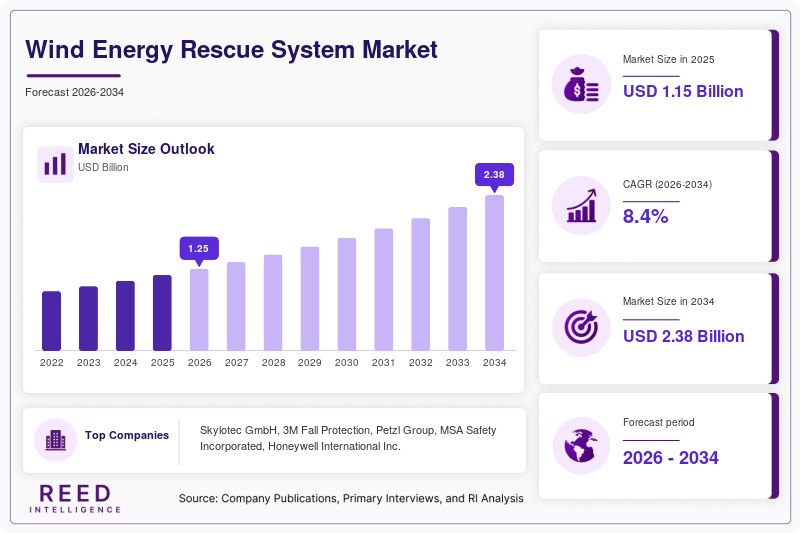
The Wind Energy Rescue System Market size is estimated at USD 1.15 billion, with a projected increase to USD 1.28 billion in 2026. The market is expected to reach approximately USD 2.65 billion by 2034, growing at a compound annual growth rate (CAGR) of 8.4% from 2025 to 2034. This growth reflects increasing investments in renewable energy infrastructure and a growing focus on occupational safety standards within wind turbine operations.
One of the primary growth factors driving the market is the rapid deployment of onshore and offshore wind farms, particularly in regions such as Asia Pacific and Europe. As turbine heights increase, the need for reliable and efficient rescue systems becomes critical. Additionally, regulatory mandates requiring safety compliance for technicians working at elevated heights are further boosting demand for advanced rescue systems.
Key Highlights
- The Wind Energy Rescue System Market is projected to reach approximately USD 2.65 billion by 2034, reflecting steady expansion driven by increasing safety investments across wind energy projects. This growth highlights the rising importance of reliable rescue solutions in both onshore and offshore installations.
- The market is expected to grow at a CAGR of 8.4% from 2025 to 2034, supported by consistent demand for safety equipment and regulatory compliance. This growth rate indicates stable adoption of advanced rescue systems across global wind energy operations.
- Increasing wind farm installations worldwide are significantly contributing to market expansion, as more turbines require safety systems for maintenance and emergency response. The rapid deployment of renewable energy infrastructure is directly boosting demand for rescue solutions.
- There is a growing emphasis on worker safety and compliance standards, with organizations prioritizing certified rescue equipment to meet regulatory requirements. This shift is encouraging companies to invest in comprehensive safety systems and training programs.
Market Trends
Integration of Smart Safety Technologies in Rescue Systems
The Wind Energy Rescue System Market is experiencing a shift toward smart and connected safety solutions. Manufacturers are incorporating features such as real-time monitoring, automated descent control, and remote diagnostics into rescue equipment. These systems allow operators to monitor worker safety conditions and respond quickly during emergencies. The integration of IoT-enabled devices ensures better coordination between ground teams and technicians working at height. This trend is particularly relevant in offshore wind installations where rescue operations are more complex and require precision. As digital transformation accelerates across the energy sector, the adoption of intelligent rescue systems is expected to increase steadily.
Rising Demand for Offshore Wind Rescue Solutions
Offshore wind energy projects are expanding rapidly, leading to increased demand for specialized rescue systems designed for marine environments. These systems are engineered to withstand harsh weather conditions, saltwater exposure, and high wind speeds. Offshore rescue solutions often include advanced evacuation kits, flotation devices, and helicopter-compatible systems. The complexity of offshore operations requires highly reliable and efficient rescue mechanisms, which is driving innovation in this segment. As governments continue to invest in offshore wind capacity, particularly in Europe and Asia Pacific, the demand for tailored rescue systems is expected to grow significantly.
Market Drivers
Expansion of Global Wind Energy Infrastructure
The rapid expansion of wind energy infrastructure is a major driver for the Wind Energy Rescue System Market. Governments worldwide are investing heavily in renewable energy projects to reduce carbon emissions and achieve sustainability goals. This has led to an increase in the number of wind turbines installed annually. As turbine installations grow, so does the need for safety systems that can protect workers during installation, maintenance, and repair activities. Wind turbines are often located in remote and elevated areas, making rescue operations challenging. Therefore, the demand for efficient rescue systems is increasing as part of standard safety protocols.
Stringent Safety Regulations and Compliance Requirements
Regulatory frameworks governing workplace safety are becoming more stringent, particularly in developed regions. Authorities are mandating the use of certified rescue systems for workers operating at heights. Compliance with these regulations is essential for wind farm operators to avoid penalties and ensure worker safety. Organizations are increasingly adopting standardized rescue equipment and training programs to meet these requirements. This regulatory pressure is driving the adoption of advanced rescue systems across the industry. Additionally, insurance companies are encouraging the use of safety systems, further reinforcing market growth.
Market Restraint
High Initial Cost of Advanced Rescue Systems
One of the key challenges in the Wind Energy Rescue System Market is the high initial cost associated with advanced rescue equipment. Modern systems equipped with automated features, durable materials, and integrated communication technologies can be expensive, especially for small and medium-sized wind farm operators. These costs include not only the purchase of equipment but also training, maintenance, and certification expenses.
The high cost can limit adoption in developing regions where budget constraints are significant. For example, smaller wind energy projects may opt for basic safety equipment instead of investing in comprehensive rescue systems. This can impact overall market penetration. Additionally, the need for regular inspection and maintenance adds to operational costs, making it challenging for companies to justify the investment. Despite these challenges, long-term benefits such as improved safety and reduced accident risks may offset the initial costs.
Market Opportunities
Growth in Emerging Wind Energy Markets
Emerging economies in Asia Pacific, Latin America, and Africa present significant growth opportunities for the Wind Energy Rescue System Market. These regions are investing in renewable energy to meet rising electricity demand and reduce dependence on fossil fuels. As wind energy projects expand, the need for safety systems becomes essential. Governments in these regions are gradually implementing safety standards, creating opportunities for manufacturers to introduce cost-effective and scalable rescue solutions. Companies that offer affordable and adaptable systems are likely to gain a competitive advantage in these markets.
Development of Training and Service-Based Offerings
Another promising opportunity lies in the development of training and service-based solutions related to rescue systems. Companies are increasingly offering training programs for technicians to ensure proper use of rescue equipment. These programs enhance safety awareness and improve emergency response capabilities. Additionally, service-based models such as equipment leasing, maintenance contracts, and inspection services are gaining traction. This approach allows operators to access advanced systems without significant upfront investment. As the industry moves toward integrated safety solutions, service-based offerings are expected to become a key growth area.
Segmental Analysis
By Type
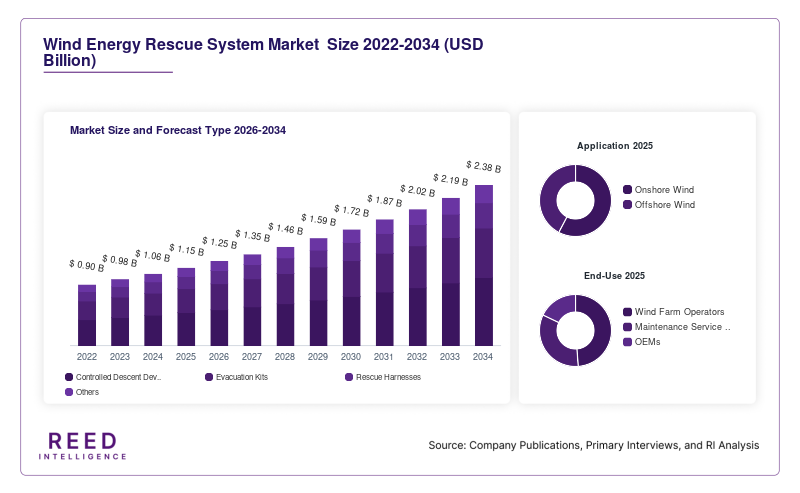
The controlled descent devices segment dominated the market in 2024, accounting for approximately 42% of the total share. These devices are widely used for emergency evacuation from wind turbines due to their reliability and ease of use. They allow technicians to descend safely in case of emergencies, making them an essential component of rescue systems. The increasing height of wind turbines has further increased the importance of controlled descent devices, as traditional safety methods are no longer sufficient.
The evacuation kits segment is expected to be the fastest-growing, with a CAGR of 9.1% during the forecast period. These kits include multiple components such as harnesses, ropes, and communication devices, providing a comprehensive safety solution. The growing demand for integrated safety systems is driving the adoption of evacuation kits, particularly in offshore wind projects.
By Application
The onshore wind segment dominated the market in 2024, holding a share of 60%. Onshore wind farms are more prevalent globally, leading to higher demand for rescue systems. Maintenance activities and frequent inspections in onshore installations require reliable safety equipment, contributing to the dominance of this segment.
The offshore wind segment is expected to grow at the highest CAGR of 9.5%. Offshore installations present unique challenges, including harsh weather conditions and complex rescue operations. This has led to increased demand for specialized rescue systems designed for marine environments.
By End-Use
The wind farm operators segment dominated the market in 2024, accounting for 55% of the share. These operators are responsible for ensuring the safety of their workforce and complying with regulatory requirements. As a result, they invest heavily in rescue systems and safety equipment.
The maintenance service providers segment is expected to grow at a CAGR of 9.0%. These providers are increasingly offering integrated safety solutions, including rescue systems and training services. The growing outsourcing of maintenance activities is driving the demand for rescue systems in this segment.
Regional Analysis
North America
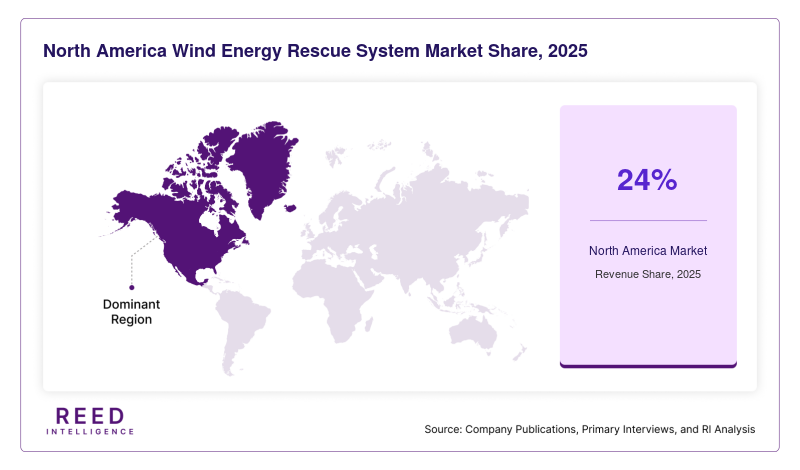
North America accounted for approximately 24% of the Wind Energy Rescue System Market share in 2025 and is expected to grow at a CAGR of 7.9% during the forecast period. The region benefits from a well-established wind energy sector and strong regulatory frameworks focused on worker safety. The United States leads in wind energy installations, contributing significantly to the demand for rescue systems. Increasing investments in offshore wind projects are further supporting market growth.
The United States remains the dominant country in this region, driven by extensive wind farm installations and strict safety regulations. A unique growth factor is the increasing adoption of digital safety monitoring systems integrated with rescue equipment. These systems enable real-time tracking of worker conditions, enhancing overall safety and operational efficiency.
Europe
Europe holds a significant share of around 30% in 2025 and is projected to grow at a CAGR of 8.1%. The region is a leader in offshore wind energy, which requires specialized rescue systems. Countries such as Germany, the United Kingdom, and Denmark are investing heavily in wind energy infrastructure, driving demand for advanced safety solutions.
Germany stands out as the dominant country, supported by strong government policies promoting renewable energy. A unique growth factor is the widespread adoption of offshore wind projects, which require highly specialized rescue systems designed for marine environments.
Asia Pacific
Asia Pacific is the fastest-growing region, with a market share of 28% in 2025 and a CAGR of 9.3%. Rapid industrialization and increasing energy demand are driving investments in wind energy projects. Countries such as China and India are leading the expansion of wind power capacity.
China dominates the region due to its large-scale wind energy installations. A unique growth factor is government-backed renewable energy initiatives, which are encouraging the adoption of safety systems in wind farms across the country.
Middle East & Africa
The Middle East & Africa region accounted for 8% of the market share in 2025 and is expected to grow at a CAGR of 8.7%. The region is gradually adopting wind energy as part of its diversification strategies. Increasing awareness about worker safety is supporting market growth.
South Africa is a key contributor in this region. A unique growth factor is the growing number of renewable energy projects supported by international investments, which are driving the adoption of safety systems.
Latin America
Latin America held a market share of 10% in 2025 and is projected to grow at a CAGR of 8.5%. Countries such as Brazil and Mexico are investing in wind energy projects to meet rising energy demand.
Brazil is the dominant country in this region. A unique growth factor is favorable government policies and incentives for renewable energy development, which are encouraging the adoption of safety systems in wind farms.
Competitive Landscape
The Wind Energy Rescue System Market is moderately fragmented, with several global and regional players competing based on product innovation, safety standards, and pricing strategies. Leading companies are focusing on developing advanced rescue systems with improved efficiency and reliability. Strategic partnerships, product launches, and expansions are common strategies adopted by market players.
One of the leading companies in the market is Skylotec GmbH, known for its advanced safety solutions and strong presence in the wind energy sector. The company recently introduced a new range of automated descent devices designed for offshore applications, enhancing its product portfolio. Other key players are also investing in research and development to introduce innovative solutions and expand their market presence.
Key Players
- Skylotec GmbH
- 3M Fall Protection
- Petzl Group
- MSA Safety Incorporated
- Honeywell International Inc.
- Guardian Fall Protection
- Tractel Group
- Capital Safety (DBI-SALA)
- FallTech
- RidgeGear
- IKAR GmbH
- Heightec Ltd
- SpanSet Group
- Cresto Group
- Elk River Inc.
Recent Developments
- A major safety equipment manufacturer launched an advanced offshore rescue system with enhanced durability and corrosion resistance.
- A leading company introduced IoT-enabled rescue devices for real-time monitoring and improved safety management.
- Strategic collaboration between wind farm operators and safety solution providers to develop customized rescue systems for large-scale projects.
Wind Energy Rescue System Market Segments
Type
- Controlled Descent Devices
- Evacuation Kits
- Rescue Harnesses
- Others
Application
- Onshore Wind
- Offshore Wind
End-Use
- Wind Farm Operators
- Maintenance Service Providers
- OEMs
By Region
- North America
- Europe
- APAC
- Middle East and Africa
- LATAM