Wine Bottling Machine Market Size, Share & Demand Report By Machine Type (Automatic, Semi-Automatic, Manual), By Application (Wineries, Contract Bottling, Others), By End-Use (Large-Scale Wineries, Small & Medium Wineries), By Region & Segment Forecasts, 2026–2034
USD 3950
Market Overview
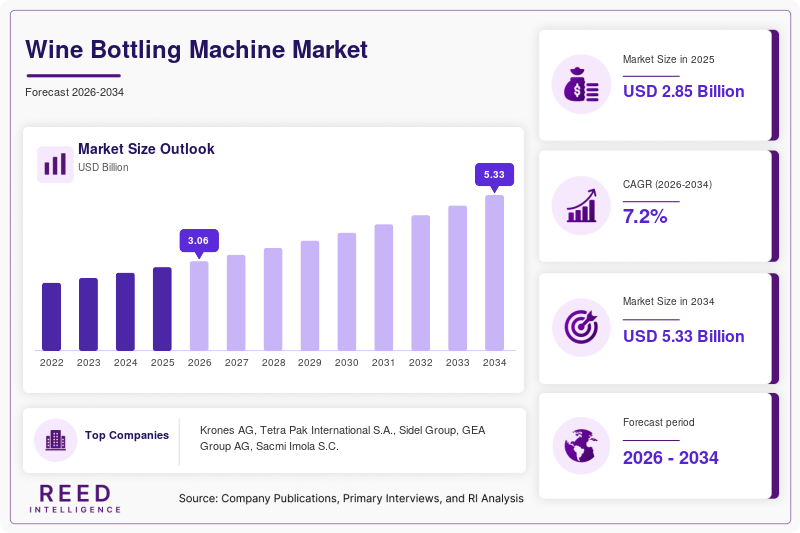
The global Wine Bottling Machine Market was valued at approximately USD 2.85 billion in 2026 and is projected to reach USD 4.96 billion by 2034, expanding at a CAGR of 7.2% during the forecast period (2026–2034). The market continues to grow steadily due to the increasing demand for automated packaging solutions across wineries and beverage manufacturers. Automation in bottling operations has become a critical requirement as producers seek improved efficiency, reduced labor costs, and consistent product quality. These machines streamline processes such as filling, corking, labeling, and sealing, ensuring scalability and operational precision.
A key global factor supporting market growth is the rising consumption of wine across emerging and developed economies. Changing consumer lifestyles, growing disposable incomes, and the expansion of wine tourism have significantly increased wine production volumes. As a result, wineries are investing in advanced bottling technologies to meet production demands while maintaining hygiene and quality standards. Additionally, technological advancements such as IoT-enabled monitoring systems and energy-efficient machines are further strengthening adoption across mid-sized and large wineries.
Key Highlights
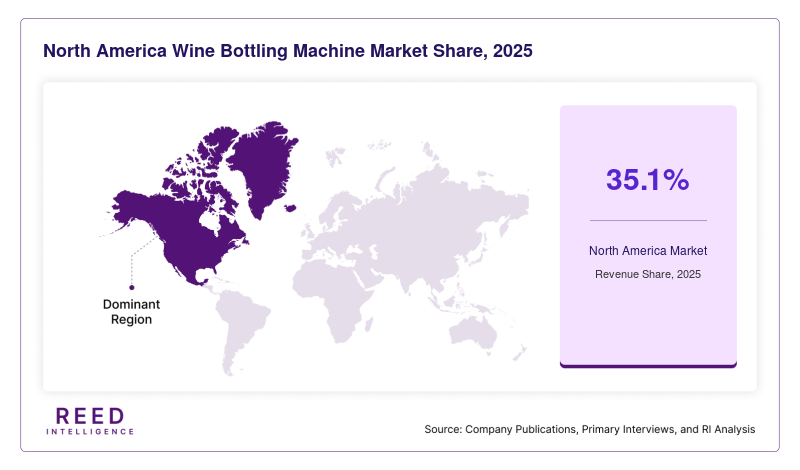
- North America dominated the market with a 35.1% share in 2025.
- Asia Pacific is expected to grow at the fastest CAGR of 9.3% during 2026–2034.
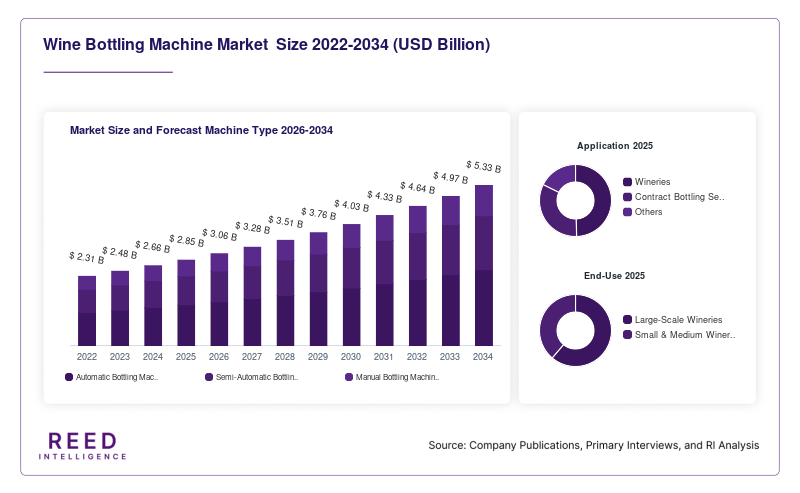
- By machine type, automatic bottling machines accounted for the largest share of 42.7%.
- while semi-automatic machines are projected to grow at a CAGR of 8.6%.
- By application, wineries led with a 58.4% share, whereas contract bottling services are expected to expand at a CAGR of 9.1%.
- Italy remained the dominant country, with market values of USD 420 million in 2024 and USD 455 million in 2025.
Market Trends
Increasing Adoption of Fully Automated and Smart Bottling Systems
The market is witnessing a shift toward fully automated and smart bottling machines, driven by the need for operational efficiency and precision. Modern systems integrate robotics, sensors, and real-time monitoring tools to streamline the entire bottling process. These machines can handle high-speed production while minimizing human intervention, reducing contamination risks and operational errors. Wineries are increasingly adopting these technologies to ensure consistent filling levels, proper sealing, and accurate labeling. Additionally, smart bottling systems equipped with data analytics capabilities allow operators to monitor performance, detect faults, and optimize production schedules. This trend is particularly strong among large-scale wine producers that require high throughput and consistent quality standards.
Growing Focus on Sustainable and Energy-Efficient Equipment
Sustainability has become a significant trend influencing purchasing decisions in the Wine Bottling Machine Market. Manufacturers are designing machines that consume less energy, reduce material waste, and support eco-friendly packaging solutions. Energy-efficient motors, recyclable components, and reduced water usage systems are gaining traction across wineries. Furthermore, there is an increasing emphasis on lightweight bottle handling and reduced glass breakage, which contributes to cost savings and environmental benefits. Many wineries are aligning their operations with sustainability goals, prompting them to invest in greener bottling technologies. This trend is expected to strengthen as environmental regulations become stricter and consumers show a preference for sustainably produced wine products.
Market Drivers
Rising Global Wine Consumption and Production Expansion
The steady rise in global wine consumption is a primary driver of the Wine Bottling Machine Market. Increasing urbanization, evolving consumer preferences, and the popularity of premium alcoholic beverages have contributed to higher wine demand. Regions such as Asia Pacific and Latin America are witnessing growing wine consumption, leading to the expansion of production facilities. As wineries scale up operations to meet this demand, there is a strong need for efficient bottling systems that can handle larger volumes without compromising quality. Bottling machines enable producers to maintain consistency in packaging while improving output efficiency. This rising demand for wine production directly translates into increased investments in advanced bottling machinery.
Growing Demand for Automation in Beverage Manufacturing
Automation is becoming essential in beverage manufacturing, including wine production, due to its ability to enhance productivity and reduce labor dependency. Bottling machines equipped with automated features such as filling, corking, and labeling significantly improve operational efficiency. Labor shortages and rising labor costs in several regions are encouraging wineries to adopt automated systems. Additionally, automation ensures compliance with stringent hygiene and safety standards, which is crucial in food and beverage production. The integration of advanced technologies such as programmable logic controllers (PLCs) and human-machine interfaces (HMIs) further enhances operational control. These benefits are driving widespread adoption of automated wine bottling machines across both large and medium-sized wineries.
Market Restraint
High Initial Investment and Maintenance Costs
One of the primary restraints affecting the Wine Bottling Machine Market is the high initial investment required for advanced bottling equipment. Fully automated machines with integrated technologies such as robotics and IoT systems involve substantial capital expenditure, making them less accessible for small and medium-sized wineries. In addition to the upfront costs, maintenance and operational expenses can also be significant, particularly for complex systems that require specialized technical expertise. Regular servicing, replacement of components, and system upgrades add to the overall cost burden.
This financial barrier can limit market growth, especially in developing regions where smaller wineries dominate the industry. For example, boutique wineries may prefer manual or semi-automatic solutions due to budget constraints, which slows the adoption of high-end machinery. Furthermore, the need for skilled operators to manage advanced systems adds another layer of cost, as training and hiring qualified personnel can be expensive. These factors collectively restrain the widespread adoption of advanced wine bottling machines, particularly among cost-sensitive businesses.
Market Opportunities
Expansion of Wine Industry in Emerging Economies
Emerging economies present significant growth opportunities for the Wine Bottling Machine Market. Countries in Asia Pacific and Latin America are experiencing increasing wine consumption due to changing lifestyles and rising disposable incomes. This shift is encouraging local wine production and the establishment of new wineries. As these regions develop their wine industries, there is a growing demand for efficient bottling solutions. Manufacturers of bottling machines can tap into these markets by offering cost-effective and scalable equipment tailored to small and medium-sized wineries. This expansion is expected to create substantial opportunities for market players over the forecast period.
Technological Advancements in Modular and Flexible Systems
The development of modular and flexible bottling systems offers a promising opportunity for market growth. These systems allow wineries to customize their bottling lines based on production requirements, enabling greater adaptability. Modular machines can be easily upgraded or expanded, making them suitable for growing businesses. Additionally, flexible systems can handle different bottle sizes and shapes, catering to diverse packaging needs. This adaptability is particularly valuable for wineries producing multiple product variants. As demand for customized and premium packaging increases, the adoption of modular bottling machines is expected to rise, providing new growth avenues for manufacturers.
Segmental Analysis
By Machine Type
Automatic bottling machines dominated the market in 2024, accounting for approximately 42.7% of the total share. These machines are widely used in large-scale wineries due to their ability to handle high production volumes with minimal human intervention. Automatic systems integrate multiple processes, including filling, corking, and labeling, into a single streamlined operation. This integration improves efficiency, reduces labor costs, and ensures consistent product quality. Additionally, automatic machines are equipped with advanced features such as programmable controls and real-time monitoring, which enhance operational precision. The growing demand for high-speed production and consistent packaging standards is driving the adoption of automatic bottling machines across the industry.
Semi-automatic bottling machines are expected to grow at the fastest CAGR of 8.6% during the forecast period. These machines offer a balance between cost and functionality, making them suitable for small and medium-sized wineries. The lower initial investment and ease of operation are key factors driving their adoption. Semi-automatic machines allow operators to control certain aspects of the bottling process while benefiting from automation in critical functions. This flexibility makes them an attractive option for wineries looking to upgrade from manual systems. The increasing number of small wineries and the need for cost-effective solutions are expected to drive the growth of this segment.
By Application
Wineries represented the largest application segment in 2024, accounting for a share of 58.4%. This dominance is attributed to the direct use of bottling machines in wine production facilities. Wineries require efficient bottling systems to handle large volumes and ensure consistent product quality. The adoption of advanced bottling machines enables wineries to streamline operations, reduce wastage, and improve productivity. Additionally, the increasing demand for premium wines is driving the need for high-quality packaging solutions, further supporting the growth of this segment. The expansion of winery operations globally continues to drive demand for bottling machinery.
Contract bottling services are projected to grow at the fastest CAGR of 9.1% during the forecast period. These services provide bottling solutions to wineries that do not have in-house bottling facilities. The growing number of small and boutique wineries is driving demand for contract bottling services, as they offer a cost-effective alternative to investing in expensive equipment. Contract bottlers use advanced machinery to provide high-quality bottling services, ensuring compliance with industry standards. The increasing trend of outsourcing bottling operations is expected to support the growth of this segment.
By End-Use
Large-scale wineries dominated the end-use segment in 2024, holding a significant share of the market. These wineries have high production capacities and require advanced bottling machines to manage large volumes efficiently. The adoption of automated systems enables large wineries to maintain consistent quality and meet market demand. Additionally, these wineries have the financial resources to invest in high-end equipment, which further supports their dominance in the market. The focus on efficiency, quality, and scalability drives the adoption of advanced bottling machines in this segment.
Small and medium-sized wineries are expected to grow at the fastest CAGR of 8.9% during the forecast period. These wineries are increasingly adopting semi-automatic and modular bottling systems to improve efficiency while managing costs. The growing popularity of boutique and artisanal wines is driving the expansion of small wineries. As these businesses scale up operations, the need for efficient bottling solutions becomes more critical. The availability of cost-effective and flexible machinery is enabling small wineries to enhance productivity and compete with larger players in the market.
Regional Analysis
North America
North America held a significant share of 35.1% in the Wine Bottling Machine Market in 2025 and is expected to grow at a CAGR of 6.8% during the forecast period. The region’s growth is supported by the presence of well-established wineries and advanced manufacturing infrastructure. The adoption of automation technologies is high, with wineries focusing on improving efficiency and maintaining product quality. Additionally, strict regulatory standards related to food safety and hygiene are encouraging the use of advanced bottling systems across the region.
The United States dominates the North American market due to its large wine production capacity and strong consumer demand. A key growth factor is the increasing adoption of premium wines, which require high-quality packaging solutions. Wineries are investing in advanced bottling machines to ensure consistent product quality and enhance brand value. The expansion of wine tourism also contributes to market growth, as wineries upgrade their facilities to meet rising demand.
Europe
Europe accounted for a substantial share of the market in 2025 and is projected to grow at a CAGR of 6.5% through 2034. The region is home to some of the world’s largest wine-producing countries, which drives demand for bottling machinery. Established wine industries and technological advancements in manufacturing processes contribute to market growth. Additionally, the presence of leading equipment manufacturers supports innovation and adoption of advanced bottling solutions.
Italy is the dominant country in the European market, driven by its extensive wine production and export activities. A unique growth factor is the region’s focus on maintaining traditional wine quality while integrating modern technologies. Italian wineries are investing in advanced bottling machines that preserve product authenticity while improving efficiency. This combination of tradition and innovation supports steady market growth.
Asia Pacific
Asia Pacific is expected to grow at the fastest CAGR of 9.3% during the forecast period. The region’s growth is driven by increasing wine consumption and the expansion of local wine production. Rising disposable incomes and changing consumer preferences are contributing to the growing popularity of wine. As a result, wineries are investing in modern bottling equipment to meet production demands and improve product quality.
China leads the Asia Pacific market due to its rapidly growing wine industry. A key growth factor is government support for domestic wine production, which encourages investments in advanced manufacturing technologies. Additionally, the increasing presence of international wine brands in the region is driving the adoption of high-quality bottling solutions. These factors collectively contribute to the strong growth of the market in Asia Pacific.
Middle East & Africa
The Middle East & Africa region is experiencing moderate growth in the Wine Bottling Machine Market, with a projected CAGR of 5.9% during the forecast period. The market is driven by the gradual expansion of wine production in select countries and the growing hospitality industry. Although wine consumption is limited in some parts of the region, tourism and international trade contribute to market demand.
South Africa is the dominant country in this region, supported by its well-established wine industry. A unique growth factor is the country’s focus on export-oriented production, which requires efficient bottling solutions to meet international standards. Wineries in South Africa are increasingly adopting automated bottling machines to enhance productivity and ensure compliance with global quality requirements.
Latin America
Latin America is projected to grow at a CAGR of 7.5% during the forecast period, driven by the expansion of wine production and increasing domestic consumption. The region’s favorable climate conditions support grape cultivation, leading to the growth of the wine industry. As production volumes increase, wineries are investing in advanced bottling technologies to improve efficiency and reduce operational costs.
Argentina is the leading country in the Latin American market. A key growth factor is the country’s strong export market, which drives demand for high-quality packaging solutions. Argentine wineries are adopting modern bottling machines to enhance product quality and meet international standards. This focus on export competitiveness supports the growth of the Wine Bottling Machine Market in the region.
Competitive Landscape
The Wine Bottling Machine Market is moderately fragmented, with several global and regional players competing based on product innovation, pricing, and technological capabilities. Leading companies focus on developing advanced bottling systems that offer efficiency, reliability, and flexibility. The market is characterized by continuous innovation, with manufacturers integrating smart technologies and automation features into their products.
A leading player in the market is Krones AG, known for its comprehensive range of bottling and packaging solutions. The company focuses on innovation and sustainability, offering energy-efficient machines tailored to the needs of wineries. Recent developments include the introduction of modular bottling systems that provide greater flexibility and scalability. Other key players are also investing in research and development to enhance their product offerings and expand their market presence.
Key Players List
- Krones AG
- Tetra Pak International S.A.
- Sidel Group
- GEA Group AG
- Sacmi Imola S.C.
- KHS GmbH
- Coesia S.p.A.
- IC Filling Systems
- Arol S.p.A.
- Bertolaso S.p.A.
- Cavagnino & Gatti S.p.A.
- Accutek Packaging Equipment
- Federal Mfg. Co.
- Filamatic
- E-PAK Machinery
Recent Developments
- In 2025, Krones AG introduced a new modular wine bottling system designed for energy efficiency and flexible production.
- In 2024, Sidel Group launched an advanced automated bottling line with integrated quality control features.
- In 2025, GEA Group AG expanded its product portfolio with a new range of compact bottling machines for small wineries.
Wine Bottling Machine Market Segments
Machine Type
- Automatic Bottling Machines
- Semi-Automatic Bottling Machines
- Manual Bottling Machines
Application
- Wineries
- Contract Bottling Services
- Others
End-Use
- Large-Scale Wineries
- Small & Medium Wineries
By Region
- North America
- Europe
- APAC
- Middle East and Africa
- LATAM