Wingboard Market Size, Share Demand Report By Product Type (Hard Wingboards, Inflatable Wingboards, Hybrid Wingboards, Performance Foil Wingboards), By Application (Recreational Use, Rental & Tourism Use, Professional/Competitive Use, Training & Learning Use), By Distribution Channel (Online Direct Sales, Offline Specialty Retail, Multi-brand Sporting Goods Stores, Watersports Dealers, Rental Fleet Procurement), By Region & Segment Forecasts, 2026–2034
USD 3950
Market Overview
The global Wingboard Market size was valued at USD 612 million in 2026 and is projected to reach USD 1460 million by 2034, expanding at a CAGR of 11.5% during 2026–2034. Wingboards, designed for wing foiling and hybrid wind-water sports, are gaining traction as consumers seek equipment that combines mobility, performance, and low-emission recreation. Demand has widened beyond professional riders and now includes adventure travelers, rental operators, marine clubs, and lifestyle consumers looking for compact watersports solutions. Product innovation in lightweight composites, inflatable designs, modular fins, and improved stability systems has supported higher replacement cycles and premium pricing across major coastal markets.
A key global factor supporting market growth is the rapid rise of outdoor recreation spending. Consumers in developed and emerging economies are allocating larger budgets toward wellness-led leisure activities, especially those connected to fitness, travel, and sustainable experiences. Wingboarding benefits from this shift because it requires less infrastructure than many marine sports and can be practiced in lakes, bays, and coastal areas with moderate wind conditions.
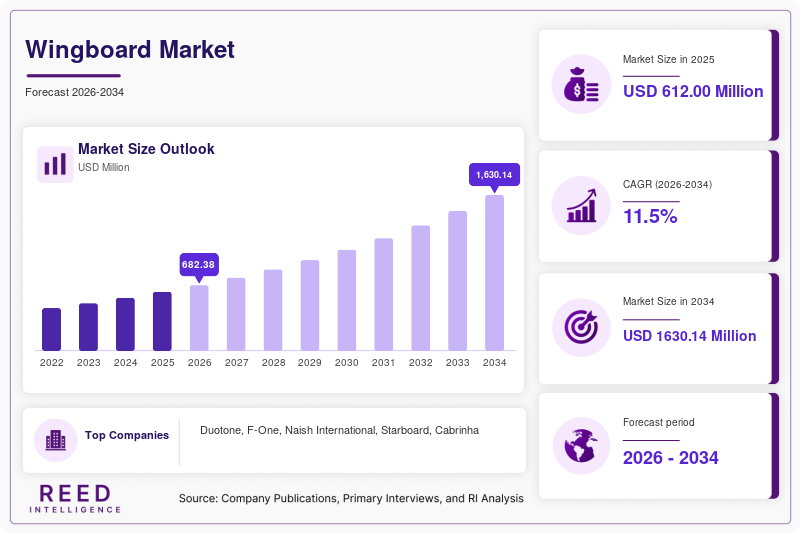
Key Highlights
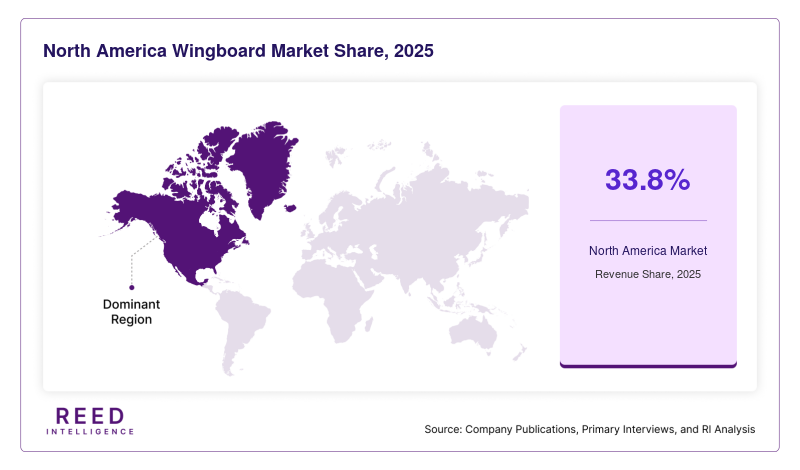
- North America dominated the market with a 33.8% share in 2025.
- while Asia Pacific is expected to grow at the fastest CAGR of 12.8% during 2026–2034.
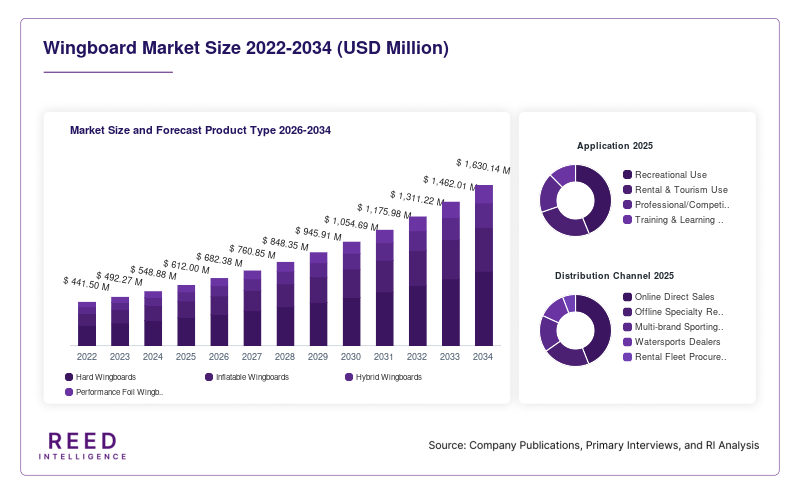
- By product type, hard wingboards held the largest share of 57.4%, while inflatable wingboards are projected to grow at a 13.6% CAGR.
- By application, recreational use led with a 62.1% share, whereas rental and tourism use is expected to expand at a 12.9% CAGR.
- By distribution channel, offline specialty retail remained dominant, while online direct sales are forecast to rise fastest at 14.2% CAGR.
- The United States remained the dominant country, with market values of USD 176 million in 2024 and USD 201 million in 2025.
Market Trends
Premium Material Innovation
The Wingboard Market is witnessing a clear shift toward premium construction materials such as carbon fiber skins, reinforced EPS cores, bamboo laminates, and hybrid composite rails. Buyers increasingly compare weight, glide efficiency, durability, and transport convenience before purchase. This has encouraged brands to release tiered portfolios aimed at beginners, intermediate users, and performance riders. Lightweight boards improve lift response and maneuverability, making them attractive to experienced users willing to pay higher prices. Premium launches also support higher margins for manufacturers and help retailers upsell accessories such as hydrofoils, pumps, bags, and replacement fins.
Growth of Experience-Based Purchasing
Consumers are increasingly entering the market through lessons, rental subscriptions, destination resorts, and demo events rather than direct first-time ownership. This experience-based purchasing pattern has changed marketing strategies across the industry. Brands now collaborate with coastal schools, marinas, and tourism operators to place products in front of new users. Once riders gain confidence, many convert to ownership and later upgrade to advanced boards. This trend supports recurring demand across both institutional and retail channels. It also expands the customer base among travelers and younger consumers who prefer trial access before making premium equipment purchases.
Market Drivers
Rising Participation in Water Adventure Sports
The strongest growth driver for the Wingboard Market is the rising popularity of accessible water adventure sports. Wingboarding appeals to consumers who may find traditional surfing, kitesurfing, or windsurfing technically demanding or equipment-heavy. The learning curve is moderate, equipment packs smaller than several competing formats, and sessions can take place in varied water conditions. Sports communities, coaching academies, and user-generated video content have normalized the category. As participation increases, demand expands not only for boards but also wings, safety gear, repair kits, and training packages, strengthening the overall market ecosystem.
Expansion of Coastal Tourism Infrastructure
Investments in beach tourism, marine recreation zones, and resort-based sports programs are supporting commercial purchases of wingboards worldwide. Hotels and destination operators are adding guided wing foil experiences to diversify revenue beyond seasonal swimming and boating activities. Fleet purchases typically involve multiple board sizes to suit beginners and advanced riders, creating higher order values than individual retail sales. Governments promoting coastal tourism in Asia Pacific, the Middle East, and Latin America are indirectly stimulating the market through marina upgrades, beach safety programs, and recreation licensing frameworks that make watersport operations easier to scale.
Market Restraint
High Ownership Cost and Seasonal Usage Limits
A major restraint affecting the Wingboard Market is the relatively high upfront ownership cost when boards are purchased alongside wings, foil systems, wetsuits, pumps, and transport accessories. Entry-level packages can be expensive for casual consumers, particularly in price-sensitive regions. Seasonal weather patterns further limit utilization in colder markets, reducing purchase urgency for some households. Retailers may also face inventory pressure when demand is concentrated in summer months. For example, inland consumers interested in wingboarding may postpone purchases if nearby training locations or wind conditions are inconsistent, leading to slower conversion from interest to ownership.
Market Opportunities
Expansion into Inland Water Locations
A major opportunity lies in promoting wingboarding beyond ocean coastlines into lakes, reservoirs, and managed inland recreation parks. Many consumers live far from beaches yet have access to windy freshwater locations suitable for beginner sessions. Manufacturers can support this segment through stable boards, training bundles, and partnerships with clubs near urban centers. Inland expansion reduces dependence on coastal tourism cycles and opens recurring local demand. Countries with large lake networks and growing middle-class leisure spending could become important future contributors to overall market size and long-term industry growth.
Subscription, Rental, and Upgrade Models
Another strong opportunity is the development of subscription ownership and trade-in models. Many new users hesitate to buy premium gear immediately because skill levels evolve quickly. Brands and retailers can solve this through seasonal rentals, monthly subscriptions, or upgrade credits toward advanced boards. These models create predictable revenue streams while improving customer retention. They also help manufacturers collect user data on preferred sizes and riding styles. In mature markets, upgrade ecosystems can shorten replacement cycles, while emerging markets benefit from lower barriers to entry and broader trial participation.
Segmental Analysis
By Product Type
Hard wingboards held the dominant share of 57.4% in 2024. These boards are preferred by experienced riders and frequent users because they offer stronger rigidity, better glide response, and more precise control during foiling. Premium hard boards also support higher speeds and sharper turns, making them popular in competitive and advanced recreational segments. Manufacturers continue launching lightweight carbon and composite versions to improve maneuverability. Retailers favor this category because average selling prices are higher and customers often purchase complementary accessories such as travel covers and upgraded fins, increasing basket value across specialty stores.
Inflatable wingboards are the fastest-growing subsegment and are projected to expand at a 13.6% CAGR through 2034. Growth is driven by portability, easier storage, and lower transport costs, especially among apartment dwellers and travelers. New drop-stitch construction methods have improved stiffness and stability, reducing performance gaps versus hard boards. Rental operators also prefer inflatable units for beginner lessons because they are easier to manage and less prone to cosmetic damage. As technology improves, inflatable boards are expected to capture larger share from first-time buyers.
By Application
Recreational use accounted for the leading 62.1% share in 2024. Most consumers purchase wingboards for leisure riding, fitness, and social outdoor activity rather than competition. The segment benefits from growing interest in wellness-based recreation and weekend travel experiences. Beginners typically seek stable, versatile boards suitable for mixed water conditions, encouraging sales of mid-size all-around models. Family purchases are also increasing, with multiple users sharing equipment across seasons. This broad consumer base makes recreational demand less concentrated than professional segments and provides steady replacement opportunities as skills improve.
Rental and tourism use is forecast to grow at a 12.9% CAGR over the study period. Resorts, beach clubs, and watersport schools are expanding fleets to attract travelers seeking new experiences. Commercial buyers often purchase several board sizes to serve beginners and intermediate users, resulting in meaningful bulk orders. The segment also benefits from guided lesson packages that convert first-time participants into future retail buyers. As tourism rebounds and destinations diversify marine activity menus, institutional purchases are expected to rise across Asia Pacific, the Middle East, and Southern Europe.
By Distribution Channel
Offline specialty retail remained dominant with a 64.8% share in 2024. Customers frequently prefer physical stores because wingboards are technical purchases involving board volume, rider weight, foil compatibility, and handling feel. In-store consultation improves confidence and reduces return rates. Many specialty shops also provide demos, repairs, storage advice, and local wind-condition guidance. These value-added services strengthen loyalty and help brands showcase premium models. Physical retail continues to matter most for first-time buyers who need expert support before committing to higher-value purchases.
Online direct sales are the fastest-growing channel, projected at a 14.2% CAGR through 2034. Brands are investing in digital configurators, educational content, and bundled shipping offers to increase conversion. Consumers now compare sizes, watch tutorials, and order accessories remotely with greater confidence. Online channels are especially effective in regions where specialty stores are limited. Subscription upgrades, financing options, and seasonal promotions further enhance digital demand. As logistics networks improve, e-commerce will capture a larger portion of replacement purchases and entry-level customer acquisition.
Regional Analysis
North America
North America accounted for 33.8% of the Wingboard Market in 2025 and is expected to grow at a 10.7% CAGR through 2034. Strong disposable income, developed retail networks, and high participation in outdoor recreation support regional leadership. The United States and Canada continue to generate demand for premium hard boards, foil packages, and branded accessories. Seasonal launches and organized events sustain visibility across coastal and inland markets.
The United States remains the dominant country in the region. A unique growth factor is the expansion of lake-based watersport communities in states far from ocean coasts. Retailers are increasingly targeting inland consumers with demo days and mobile training clinics. This widens the addressable customer base beyond traditional beach states and improves year-round market reach.
Europe
Europe represented 27.4% market share in 2025 and is forecast to expand at a 10.9% CAGR during the study period. The region benefits from established sailing culture, strong environmental awareness, and dense coastal tourism networks. Demand is balanced between recreational users and advanced riders seeking performance equipment. Western Europe leads current revenues, while Southern Europe adds seasonal rental demand.
France is the leading country market due to its active watersport ecosystem and manufacturing presence. A unique growth factor is the popularity of organized community clubs that provide lessons, storage, and shared equipment access. These clubs lower adoption barriers for new riders and create steady replacement demand for boards used in training programs.
Asia Pacific
Asia Pacific held 21.6% share in 2025 and is projected to register the fastest 12.8% CAGR through 2034. Rising middle-class incomes, tourism investment, and growing interest in lifestyle sports are driving rapid expansion. Markets such as Australia, Japan, China, Thailand, and Indonesia are seeing stronger online sales and destination-based adoption. Regional production capabilities also improve supply efficiency.
Australia is the dominant country market in Asia Pacific. A unique growth factor is its large base of multi-sport ocean users who already participate in surfing, paddleboarding, and sailing. This crossover audience adopts wingboarding faster than first-time watersport users, supporting quicker premium product sales and accessories demand.
Middle East & Africa
Middle East & Africa captured 9.1% of global share in 2025 and is expected to grow at an 11.1% CAGR. The market remains smaller but is gaining momentum through luxury resorts, marine tourism, and coastal real-estate developments. Demand is concentrated in premium hospitality fleets and expatriate recreational communities. Brand presence is increasing through distributor partnerships.
The United Arab Emirates leads regional demand. A unique growth factor is government-backed tourism diversification that encourages new beach experiences and adventure packages. High-spending visitors often prefer guided premium activities, which supports commercial purchases of durable wingboards, safety equipment, and branded training programs.
Latin America
Latin America accounted for 8.1% share in 2025 and is projected to rise at a 10.4% CAGR by 2034. Growing beach tourism, youth sports participation, and expanding e-commerce access support demand. While price sensitivity remains relevant, interest in entry-level and mid-range boards is improving. Regional distributors are broadening product availability through coastal retail outlets.
Brazil is the dominant country in Latin America. A unique growth factor is its long coastline combined with an established surf culture that creates natural cross-selling opportunities. Riders familiar with boardsports are more willing to experiment with wingboarding, helping schools and retailers accelerate adoption in major beach cities.
Competitive Landscape
The Wingboard Market is moderately fragmented, with global sporting goods brands competing alongside specialist watersport manufacturers. Product differentiation is centered on weight reduction, board stability, durability, and compatibility with foil systems. Leading companies also invest in athlete sponsorships, demo tours, and direct digital sales to build brand communities.
Duotone is viewed as a market leader due to its broad product portfolio and strong dealer network. A recent development includes the launch of updated modular beginner board packages with lighter materials and improved deck traction. F-One continues expanding performance-oriented ranges for advanced riders. Naish International focuses on crossover customers from kiteboarding and windsurfing. Starboard leverages sustainability messaging and eco-material initiatives. Cabrinha has strengthened presence through bundled board-and-wing offerings targeted at schools and rental operators.Competition is expected to intensify as newer entrants introduce value-priced inflatable models and regional assemblers improve supply responsiveness.
Key Players List
- Duotone
- F-One
- Naish International
- Starboard
- Cabrinha
- Slingshot Sports
- Fanatic
- JP Australia
- RRD Roberto Ricci Designs
- Gong Galaxy
- Takuma
- NeilPryde
- North Actionsports Group
- ENSIS
- SIC Maui
Recent Developments
- Duotone introduced a lighter all-round wingboard series with updated carbon reinforcement for 2026 retail channels.
- Starboard expanded eco-focused production using lower-impact materials across selected board lines.
- Cabrinha partnered with coastal training centers to supply bundled beginner fleets in Europe and Asia Pacific.
Wingboard Market Segments
Product Type
- Hard Wingboards
- Inflatable Wingboards
- Hybrid Wingboards
- Performance Foil Wingboards
Application
- Recreational Use
- Rental & Tourism Use
- Professional/Competitive Use
- Training & Learning Use
Distribution Channel
- Online Direct Sales
- Offline Specialty Retail
- Multi-brand Sporting Goods Stores
- Watersports Dealers
- Rental Fleet Procurement
By Region
- North America
- Europe
- APAC
- Middle East and Africa
- LATAM