Wood Fiber Insulation Market Size, Share & Demand Report By Product Type (Rigid Wood Fiber Boards, Flexible Insulation Mats), By Application (Residential Construction, Commercial Construction, Retrofitting), By End-Use (Construction, Industrial, Others), By Region & Segment Forecasts, 2026–2034
USD 3950
Wood Fiber Insulation Market Overview
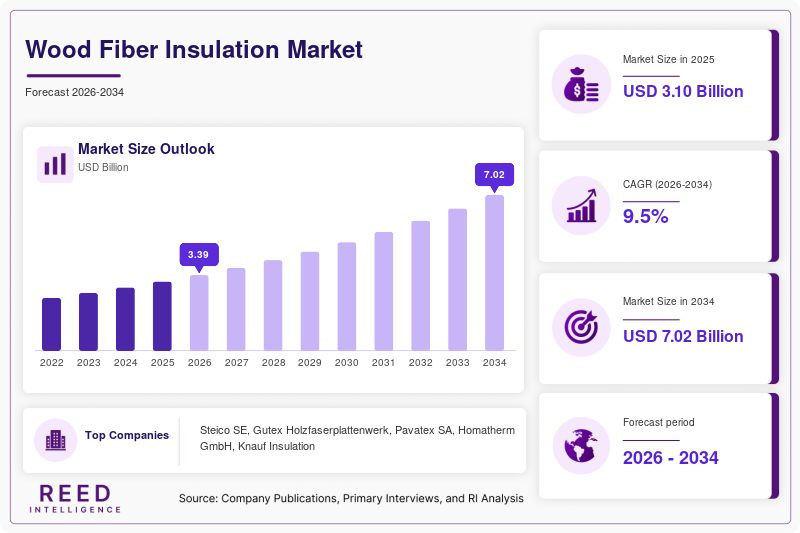
The global Wood Fiber Insulation Market was valued at approximately USD 3.1 billion in 2026 and is projected to reach USD 6.4 billion by 2034, expanding at a CAGR of 9.5% during the forecast period (2026–2034). The market is gaining traction due to the increasing adoption of sustainable construction materials and the shift toward energy-efficient building solutions. Wood fiber insulation, derived from renewable raw materials, offers favorable thermal performance, moisture regulation, and acoustic benefits, making it a viable alternative to synthetic insulation products.
A major global factor supporting market growth is the rising emphasis on reducing carbon emissions in the construction sector. Governments and regulatory bodies across developed and emerging economies are implementing stringent building codes that encourage the use of eco-friendly insulation materials. This trend is particularly visible in green building certifications and net-zero energy construction initiatives, which are driving demand for bio-based insulation solutions such as wood fiber.
Key Highlights
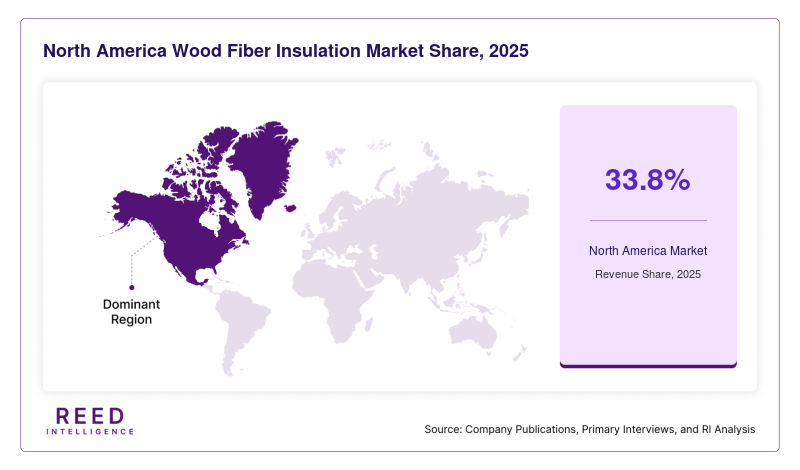
- North America dominated the market with a 33.8% share in 2025.
- Asia Pacific is expected to grow at the fastest CAGR of 10.8% during 2026–2034.
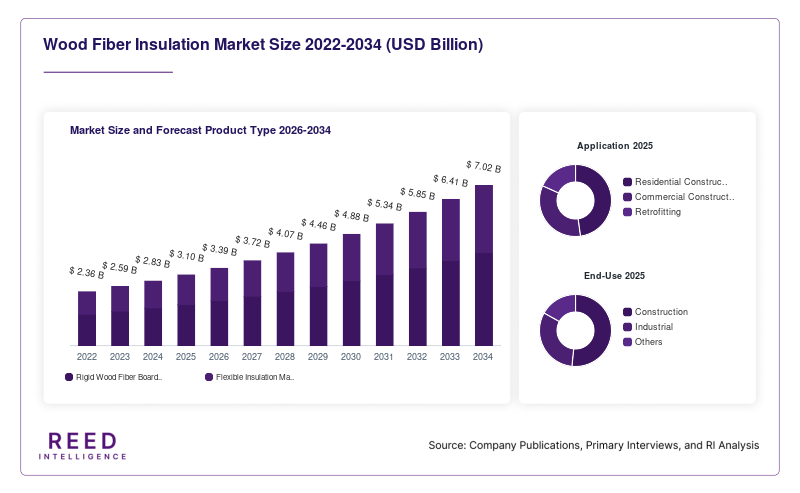
- By product type, rigid wood fiber boards accounted for the largest share of 42.6%.
- while flexible insulation mats are projected to grow at a CAGR of 11.3%.
- By application, residential construction led with a 46.9% share, whereas commercial retrofitting is expected to expand at a CAGR of 10.7%.
- Germany remained the dominant country, with market values of USD 420 million in 2024 and USD 455 million in 2025.
Market Trends
Increasing integration of bio-based materials in construction ecosystems
The construction industry is undergoing a structural transition toward environmentally responsible materials, and wood fiber insulation is gaining prominence within this shift. Architects and developers are increasingly incorporating natural insulation solutions into both residential and commercial projects to meet sustainability benchmarks. The material’s ability to regulate humidity and improve indoor air quality aligns well with modern building standards. Additionally, the growing popularity of passive house designs and energy-efficient structures has created a favorable environment for wood fiber insulation adoption. Manufacturers are responding by enhancing product formulations and improving durability, which is helping to broaden application areas and increase market penetration.
Technological advancements in insulation manufacturing processes
Continuous innovation in manufacturing technologies is reshaping the wood fiber insulation market. Companies are investing in advanced processing methods to improve product consistency, thermal resistance, and fire performance. The use of automated production systems and improved binding techniques has enhanced scalability while maintaining environmental compliance. Furthermore, research and development efforts are focusing on hybrid insulation materials that combine wood fibers with other natural additives to optimize performance. These advancements are reducing production costs over time and enabling manufacturers to compete more effectively with conventional insulation materials, thereby supporting long-term market expansion.
Market Drivers
Rising demand for sustainable and energy-efficient building materials
The increasing awareness of environmental sustainability is a major factor driving the wood fiber insulation market. Governments and construction stakeholders are prioritizing materials that reduce carbon footprints and improve energy efficiency. Wood fiber insulation, being renewable and recyclable, meets these requirements effectively. It also offers excellent thermal insulation, reducing energy consumption for heating and cooling. As building codes become stricter regarding energy performance, the demand for such materials is expected to rise steadily. This shift is particularly evident in Europe and North America, where green building certifications are influencing purchasing decisions across the construction value chain.
Growth in residential construction and renovation activities
The expansion of residential construction, particularly in emerging economies, is significantly contributing to market growth. Urbanization and population growth are increasing the demand for housing, which in turn drives the need for insulation materials. Additionally, renovation and retrofitting projects in developed regions are boosting the adoption of wood fiber insulation. Homeowners are increasingly seeking eco-friendly solutions to upgrade existing structures, improve energy efficiency, and reduce utility costs. This trend is supported by government incentives and subsidies aimed at promoting sustainable housing, further accelerating market growth.
Market Restraint
High initial costs and limited awareness in developing regions
One of the primary challenges facing the wood fiber insulation market is its relatively high initial cost compared to conventional insulation materials such as fiberglass and foam. The production process, which involves natural raw materials and specialized manufacturing techniques, contributes to higher pricing. This cost factor can limit adoption, particularly in price-sensitive markets. Additionally, awareness regarding the benefits of wood fiber insulation remains limited in several developing regions. Many builders and contractors continue to rely on traditional materials due to familiarity and cost considerations. This lack of awareness, combined with limited distribution networks, can slow market growth despite the material’s long-term advantages in energy savings and sustainability.
Market Opportunities
Expansion of green building initiatives worldwide
The global push toward sustainable development presents significant opportunities for the wood fiber insulation market. Governments and organizations are increasingly promoting green building practices through policies, incentives, and certification programs. These initiatives encourage the use of renewable materials, creating a favorable environment for wood fiber insulation. The rising number of eco-friendly construction projects is expected to drive demand across both residential and commercial sectors. Manufacturers can capitalize on this trend by aligning their products with sustainability standards and expanding their presence in emerging markets where green building adoption is accelerating.
Increasing demand for retrofitting and energy renovation projects
Energy renovation of existing buildings is emerging as a key opportunity for market growth. Many older structures lack adequate insulation, leading to high energy consumption and increased emissions. Governments in regions such as Europe and North America are introducing programs to improve building efficiency, which includes upgrading insulation systems. Wood fiber insulation is well-suited for retrofitting applications due to its flexibility and compatibility with existing structures. As energy efficiency becomes a priority, the demand for sustainable insulation solutions in renovation projects is expected to grow significantly.
Segmental Analysis
By Product Type
Rigid wood fiber boards dominated the market in 2024, accounting for approximately 42.6% of the total share. These boards are widely used in construction due to their structural strength and high thermal insulation properties. They are particularly suitable for wall and roof applications, where durability and performance are critical. The demand for rigid boards is driven by their ability to provide consistent insulation and enhance energy efficiency in buildings. Additionally, their compatibility with various construction systems makes them a preferred choice among builders and contractors.
Flexible insulation mats are gaining traction as a versatile alternative, particularly in applications requiring adaptability and ease of installation. These mats are commonly used in irregular spaces and retrofitting projects, where rigid boards may not be suitable. Their lightweight nature and ease of handling contribute to their growing popularity. Manufacturers are focusing on improving the performance of flexible mats by enhancing their thermal resistance and durability, which is expected to drive their adoption in the coming years.
By Application
Residential construction accounted for the largest share of 46.9% in 2024, driven by the increasing demand for energy-efficient housing. Wood fiber insulation is widely used in residential buildings due to its ability to improve thermal comfort and reduce energy consumption. The growing awareness of sustainable living and the adoption of green building practices are further supporting the demand for wood fiber insulation in this segment.
Commercial retrofitting is expected to be the fastest-growing application segment, with a CAGR of 10.7% during the forecast period. The need to upgrade existing buildings to meet modern energy efficiency standards is driving this growth. Wood fiber insulation is particularly suitable for retrofitting projects due to its flexibility and compatibility with existing structures. The increasing focus on reducing operational costs and improving building performance is expected to boost demand in this segment.
By End-Use
The construction sector dominated the market in 2024, accounting for a significant share due to the widespread use of wood fiber insulation in building applications. The material’s ability to provide thermal insulation, moisture regulation, and acoustic benefits makes it suitable for various construction projects. The growing emphasis on sustainable building practices is further driving its adoption in this sector.
Industrial applications are expected to witness the fastest growth, with a CAGR of 9.9% during the forecast period. The increasing use of wood fiber insulation in industrial facilities for temperature control and energy efficiency is driving this growth. Additionally, the rising focus on reducing energy consumption in industrial operations is expected to support the adoption of wood fiber insulation in this segment.
Regional Analysis
North America
North America accounted for approximately 33.8% of the global market share in 2025 and is projected to grow at a CAGR of 8.7% during the forecast period. The region’s growth is driven by increasing awareness of sustainable construction practices and stringent energy efficiency regulations. The adoption of wood fiber insulation is supported by a strong focus on reducing carbon emissions and improving building performance across residential and commercial sectors.
The United States dominates the North American market due to its well-established construction industry and growing demand for eco-friendly materials. A key growth factor is the increasing adoption of green building certifications, which encourage the use of renewable insulation materials. This trend is further supported by government incentives aimed at promoting energy-efficient housing.
Europe
Europe held a significant market share of 29.6% in 2025 and is expected to grow at a CAGR of 9.2% through 2034. The region’s strong emphasis on sustainability and environmental regulations has positioned it as a leading market for wood fiber insulation. Countries across Europe are implementing strict building codes that favor natural and renewable materials.
Germany leads the European market, driven by its advanced construction sector and strong commitment to sustainability. A unique growth factor is the widespread adoption of passive house standards, which require high-performance insulation solutions. This has significantly increased the demand for wood fiber insulation in both new construction and renovation projects.
Asia Pacific
Asia Pacific is projected to grow at the fastest CAGR of 10.8% during the forecast period, with a market share of 21.4% in 2025. Rapid urbanization and infrastructure development are key drivers in this region. The increasing focus on energy efficiency and environmental sustainability is also contributing to market growth.
China dominates the Asia Pacific market due to its large-scale construction activities and government initiatives promoting green buildings. A unique growth factor is the rising investment in sustainable infrastructure projects, which is driving the adoption of eco-friendly insulation materials such as wood fiber.
Middle East & Africa
The Middle East & Africa region accounted for 8.3% of the market share in 2025 and is expected to grow at a CAGR of 8.1%. The market is gradually expanding as awareness of sustainable construction practices increases. Government initiatives aimed at improving energy efficiency are supporting market growth.
The United Arab Emirates leads the regional market, driven by its focus on sustainable urban development. A key growth factor is the implementation of green building standards in major construction projects, which is encouraging the use of environmentally friendly insulation materials.
Latin America
Latin America held a market share of 6.9% in 2025 and is projected to grow at a CAGR of 8.5% during the forecast period. The region’s growth is supported by increasing construction activities and a growing emphasis on energy efficiency. However, market penetration remains relatively low compared to other regions.
Brazil dominates the Latin American market due to its expanding construction sector. A unique growth factor is the increasing adoption of sustainable building practices, supported by government policies and initiatives aimed at reducing environmental impact.
Competitive Landscape
The wood fiber insulation market is moderately fragmented, with several regional and global players competing based on product quality, innovation, and distribution networks. Companies are focusing on expanding their product portfolios and improving manufacturing processes to meet the growing demand for sustainable insulation solutions. Strategic partnerships and acquisitions are also common, as companies aim to strengthen their market presence and expand into new regions.
One of the leading players in the market is Steico SE, which has established a strong presence in Europe and is known for its comprehensive range of wood fiber insulation products. The company has recently invested in expanding its production capacity to meet increasing demand. Other key players are focusing on research and development to enhance product performance and sustainability, which is expected to intensify competition in the market.
Key Players List
- Steico SE
- Gutex Holzfaserplattenwerk
- Pavatex SA
- Homatherm GmbH
- Knauf Insulation
- Saint-Gobain
- Soprema Group
- Hunton Fiber AS
- Woodfiber Insulation UK
- Thermo-Hanf GmbH
- Isoroy
- Unilin Insulation
- Diffutherm GmbH
- Kronoply GmbH
- Metsä Wood
Recent Developments
- Steico SE expanded its production facility in Europe to increase output capacity and meet rising demand for sustainable insulation materials.
- Soprema Group introduced a new range of wood fiber insulation products with improved thermal performance and moisture resistance.
- Gutex Holzfaserplattenwerk invested in research and development to enhance product durability and expand its application range in modern construction projects.
Wood Fiber Insulation Market Segments
Product Type
- Rigid Wood Fiber Boards
- Flexible Insulation Mats
Application
- Residential Construction
- Commercial Construction
- Retrofitting
End-Use
- Construction
- Industrial
- Others
By Region
- North America
- Europe
- APAC
- Middle East and Africa
- LATAM