X-Linked Adrenal Hypoplasia Congenita Market Size, Share & Demand Report By Treatment Type (Hormone Replacement Therapy, Gene Therapy, Supportive Care), By Diagnosis Method (Genetic Testing, Biochemical Testing, Imaging), By End-Use (Hospitals, Specialty Clinics, Research Institutes), By Patient Age Group (Pediatric, Adult), By Region & Segment Forecasts, 2025–2034
USD 3950
Market Overview
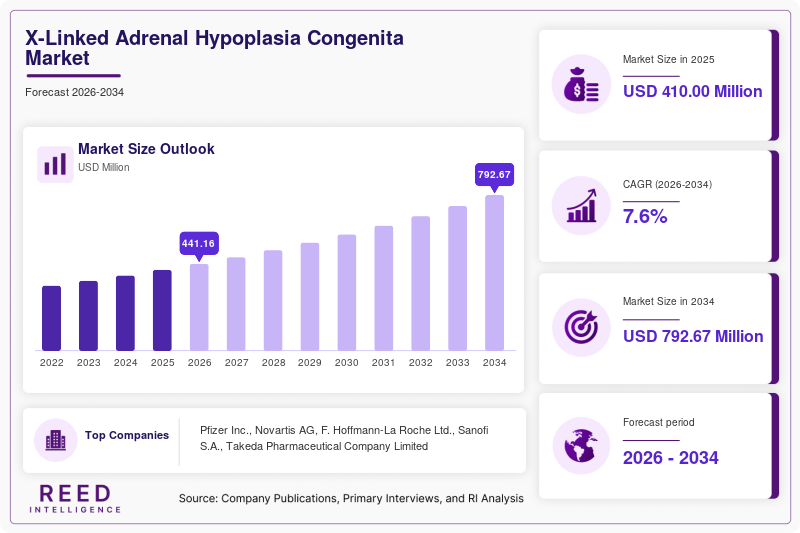
The X-Linked Adrenal Hypoplasia Congenita Market size was valued at approximately USD 410 million in 2025 and is projected to reach USD 790 million by 2034, expanding at a CAGR of 7.6% during 2025–2034. The market growth is being shaped by advancements in rare disease diagnostics, increasing awareness of genetic endocrine disorders, and improvements in hormone replacement therapies.
A key global factor supporting the expansion of the X-Linked Adrenal Hypoplasia Congenita Market is the growing adoption of genetic testing technologies. Early and accurate identification of mutations in the DAX1 (NR0B1) gene has improved diagnostic timelines and patient outcomes. This has driven earlier intervention, especially in neonatal and pediatric populations, leading to higher demand for long-term therapeutic management.
Key Highlights
- North America dominated the market with a 38.5% share in 2025, while Asia Pacific is expected to register the fastest growth at a CAGR of 9.2%.
- Hormone Replacement Therapy (HRT) emerged as the leading treatment segment with a 61% share, while gene therapy is projected to be the fastest-growing subsegment with a CAGR of 11.8%.
- Hospitals represented the largest end-use segment at 54% share, while specialty clinics are expected to grow at a CAGR of 8.9%.
- The United States led the market, with values of USD 145 million in 2025 and USD 155 million in 2026.
Market Trends
Integration of Genetic Screening in Neonatal Care
The integration of genetic screening into neonatal healthcare systems is reshaping the X-Linked Adrenal Hypoplasia Congenita Market. Many healthcare providers are incorporating early-stage genomic testing into routine newborn screening programs. This shift enables the detection of adrenal insufficiency conditions before symptom onset, reducing morbidity risks. The trend is particularly visible in developed regions where healthcare infrastructure supports large-scale genetic testing.
Advancements in Targeted Therapeutics
The development of targeted therapies is another important trend influencing the market. Researchers are exploring gene-based interventions and precision medicine approaches that address the root genetic causes of adrenal hypoplasia congenita. Pharmaceutical companies are investing in therapies that improve hormone regulation while minimizing long-term side effects. This trend is driving innovation pipelines and expanding treatment options beyond conventional corticosteroid therapies.
Market Drivers
Rising Awareness of Rare Genetic Disorders
Awareness campaigns and patient advocacy initiatives are increasing recognition of rare endocrine disorders, including X-linked adrenal hypoplasia congenita. Governments and healthcare organizations are promoting early diagnosis through public health programs, which has led to higher screening rates. This growing awareness has resulted in earlier treatment initiation, improving patient outcomes and driving market demand.
Expansion of Rare Disease Funding and Research
The expansion of funding for rare disease research has significantly contributed to the growth of the X-Linked Adrenal Hypoplasia Congenita Market. Public and private investments are supporting clinical trials, drug development, and innovative treatment approaches. Regulatory incentives such as orphan drug designations are encouraging pharmaceutical companies to enter this niche market, increasing the availability of advanced therapies.
Market Restraint
Limited Patient Population and High Treatment Costs
One of the primary restraints in the X-Linked Adrenal Hypoplasia Congenita Market is the limited patient population due to the rare nature of the disease. The low prevalence reduces the commercial viability of large-scale drug development and restricts widespread clinical research. Additionally, treatment costs remain high, particularly for advanced therapies and long-term hormone replacement regimens. These financial barriers can limit access in low- and middle-income countries, where healthcare systems may lack reimbursement frameworks. The combination of small patient pools and high therapy costs continues to pose challenges for market expansion.
Market Opportunities
Development of Gene Therapy Solutions
Gene therapy presents a promising opportunity in the X-Linked Adrenal Hypoplasia Congenita Market. Advances in gene editing technologies are enabling researchers to target the underlying genetic mutations responsible for the disorder. If successfully commercialized, these therapies could provide long-term or permanent treatment solutions, reducing dependency on lifelong hormone therapy. This opportunity is attracting investment from biotechnology firms and research institutions.
Expansion in Emerging Healthcare Markets
Emerging markets in Asia Pacific, Latin America, and the Middle East & Africa offer growth opportunities due to improving healthcare infrastructure. Governments in these regions are investing in diagnostic capabilities and rare disease management programs. Increased healthcare spending and rising awareness are expected to boost demand for diagnostic tools and treatment options, creating new revenue streams for market participants.
Segmental Analysis
By Treatment Type
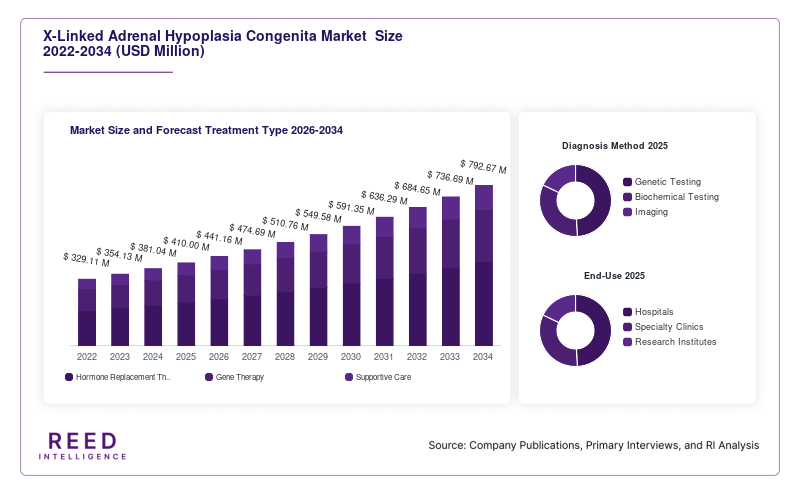
Hormone Replacement Therapy (HRT) dominated the X-Linked Adrenal Hypoplasia Congenita Market in 2025, accounting for 61% of the total share. This dominance was attributed to its established role as the primary treatment for managing adrenal insufficiency. HRT provides essential corticosteroids that compensate for hormone deficiencies, making it a standard care approach across healthcare settings.
Gene therapy is expected to be the fastest-growing segment, with a projected CAGR of 11.8%. The growth will be driven by ongoing research into genetic correction techniques and increasing investment in precision medicine. These therapies aim to address the root cause of the disorder, offering long-term benefits and reducing reliance on daily medication.
By Diagnosis Method
Genetic testing held the largest share of 48% in 2025, driven by its accuracy in identifying DAX1 mutations. Early diagnosis through genetic testing has improved patient management and treatment outcomes.
Biochemical testing is expected to grow at a CAGR of 8.5%, supported by advancements in hormone level detection technologies. These tests will play a crucial role in monitoring treatment effectiveness and disease progression.
By End-Use
Hospitals accounted for the largest share at 54% in 2025, owing to their access to advanced diagnostic equipment and specialized healthcare professionals. Hospitals serve as primary centers for diagnosis and treatment initiation.
Specialty clinics are projected to grow at a CAGR of 8.9%, driven by the increasing demand for focused endocrine care. These clinics offer personalized treatment plans and long-term patient management, enhancing their role in the market.
By Patient Age Group
Pediatric patients dominated the market with a 63% share in 2025, as the condition is typically diagnosed in infancy or early childhood. Early intervention is critical for preventing complications, which drives demand in this segment.
The adult segment is expected to grow at a CAGR of 7.8%, supported by improved survival rates and ongoing management of the condition into adulthood. Long-term care requirements are contributing to steady growth in this segment.
Regional Analysis
North America
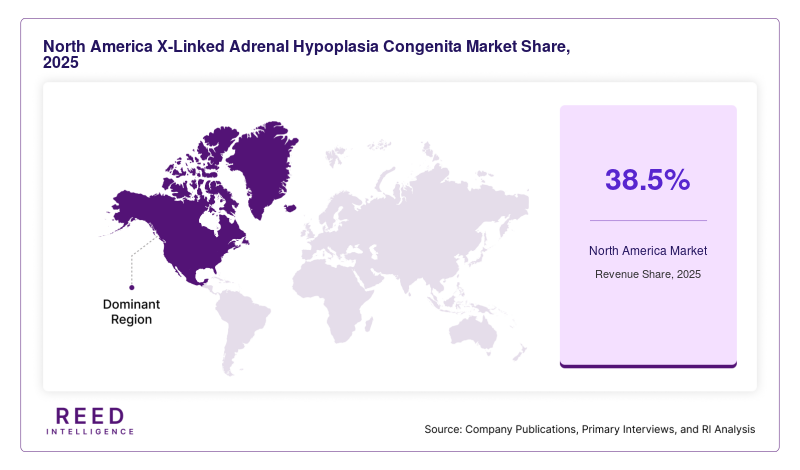
North America accounted for a 38.5% share of the X-Linked Adrenal Hypoplasia Congenita Market in 2025 and will continue to expand at a CAGR of 7.1% through 2034. The region has a well-established healthcare infrastructure and strong adoption of advanced diagnostic technologies.
The United States dominated the regional market due to its robust rare disease research ecosystem. The presence of specialized endocrine centers and favorable reimbursement policies has facilitated access to treatment. Increased collaboration between research institutions and pharmaceutical companies is also supporting the development of innovative therapies.
Europe
Europe held approximately 27.3% market share in 2025 and is projected to grow at a CAGR of 6.9% during the forecast period. The region benefits from comprehensive healthcare systems and strong regulatory frameworks supporting orphan drugs.
Germany emerged as the leading country, driven by its advanced healthcare infrastructure and emphasis on early diagnosis. National screening programs and research initiatives focused on rare diseases have contributed to steady market growth. The country also supports patient registries that improve disease tracking and treatment outcomes.
Asia Pacific
Asia Pacific captured around 18.6% share in 2025 and will register the fastest growth at a CAGR of 9.2% through 2034. The region is witnessing rapid improvements in healthcare access and diagnostic capabilities.
China led the regional market due to its expanding healthcare infrastructure and increasing government investments in rare disease management. The growing population and rising awareness are driving demand for diagnostic and treatment services. Efforts to integrate genetic testing into healthcare systems are further accelerating market growth.
Middle East & Africa
The Middle East & Africa region accounted for 8.1% of the market in 2025 and is expected to grow at a CAGR of 6.4%. Growth in this region is supported by gradual improvements in healthcare systems and increased focus on specialized care.
Saudi Arabia dominated the market due to government initiatives aimed at improving rare disease diagnosis and treatment. Investments in healthcare infrastructure and partnerships with international organizations are enhancing access to advanced medical services.
Latin America
Latin America held a 7.5% share in 2025 and is anticipated to grow at a CAGR of 6.7% during the forecast period. The region is experiencing gradual improvements in healthcare accessibility and awareness of genetic disorders.
Brazil emerged as the leading country, driven by its expanding healthcare network and increasing focus on rare disease management. Public health initiatives and collaborations with global organizations are improving diagnostic capabilities and patient care.
Competitive Landscape
The X-Linked Adrenal Hypoplasia Congenita Market is moderately consolidated, with key players focusing on rare disease therapeutics and endocrine treatments. Companies are investing in research and development to expand their product portfolios and improve treatment outcomes.
A leading player in the market is Pfizer Inc., which has strengthened its position through advancements in hormone therapies and ongoing clinical research. The company recently expanded its rare disease pipeline by investing in gene therapy research aimed at addressing genetic endocrine disorders.
Other companies are also focusing on strategic collaborations, product launches, and geographic expansion to enhance their market presence. The competitive landscape is expected to evolve with the entry of biotechnology firms specializing in gene-based therapies.
Key Players
- Pfizer Inc.
- Novartis AG
- F. Hoffmann-La Roche Ltd.
- Sanofi S.A.
- Takeda Pharmaceutical Company Limited
- Eli Lilly and Company
- Bayer AG
- Bristol-Myers Squibb Company
- AstraZeneca plc
- AbbVie Inc.
- Amgen Inc.
- Ipsen S.A.
- Recordati Rare Diseases
- Novo Nordisk A/S
- Teva Pharmaceutical Industries Ltd.
Recent Developments
- In 2024, Pfizer Inc. initiated a clinical trial focused on gene therapy for adrenal insufficiency disorders.
- Novartis AG expanded its rare disease portfolio through a strategic acquisition of a biotech startup.
- Sanofi S.A. launched an improved corticosteroid formulation for pediatric patients.
- Takeda Pharmaceutical Company increased investment in genetic research collaborations.
- Recordati Rare Diseases enhanced its distribution network in emerging markets to improve access to therapies.
X-Linked Adrenal Hypoplasia Congenita Market Segments
Treatment Type
- Hormone Replacement Therapy
- Gene Therapy
- Supportive Care
Diagnosis Method
- Genetic Testing
- Biochemical Testing
- Imaging
End-Use
- Hospitals
- Specialty Clinics
- Research Institutes
Patient Age Group
- Pediatric
- Adult
By Region
- North America
- Europe
- APAC
- Middle East and Africa
- LATAM