X Linked Hypophosphatemia XLH Treatment Market Size, Share & Demand Report By Drug Type (Monoclonal Antibodies, Phosphate Supplements, Vitamin D Analogs, Gene-Based Therapies), By Treatment Type (Targeted Therapy, Supportive Therapy), By End-Use (Hospitals, Specialty Clinics, Research Institutes) and Segment Forecasts, 2026–2034
USD 3950
Market Overview
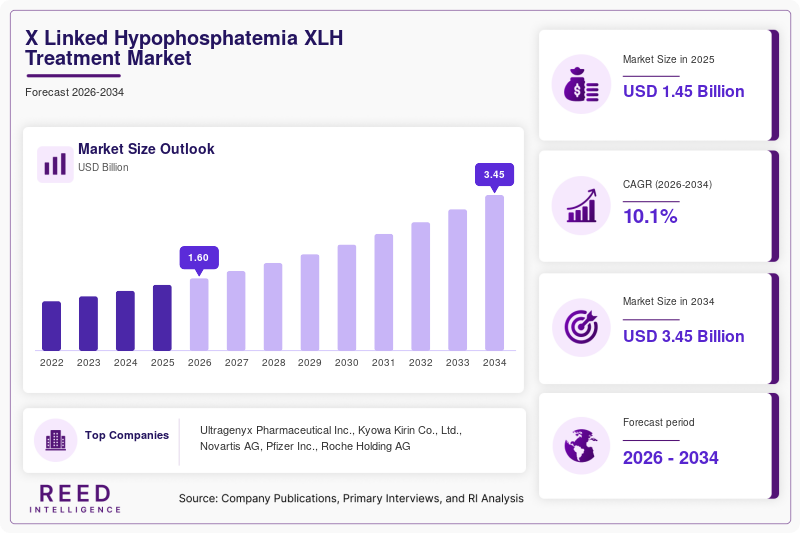
The global X Linked Hypophosphatemia XLH Treatment Market was valued at approximately USD 1.45 billion in 2026 and is projected to reach USD 3.12 billion by 2034, expanding at a CAGR of 10.1% during the forecast period (2026–2034). The market is witnessing steady growth due to the rising diagnosis rates of rare genetic disorders and the increasing availability of targeted therapies. XLH, a rare inherited phosphate-wasting disorder, requires long-term management, which drives consistent demand for advanced therapeutics and monitoring solutions.
A key global factor supporting market growth is the growing emphasis on rare disease awareness and early diagnosis initiatives. Governments and healthcare organizations are actively investing in screening programs and genetic testing infrastructure, leading to improved identification of XLH cases across both developed and emerging economies. This increased awareness has translated into higher treatment adoption rates, particularly for novel biologics that offer improved clinical outcomes compared to conventional therapies.
Key Highlights
- North America dominated the market with a 35.4% share in 2025.
- Asia Pacific is expected to grow at the fastest CAGR of 11.6% during 2026–2034.
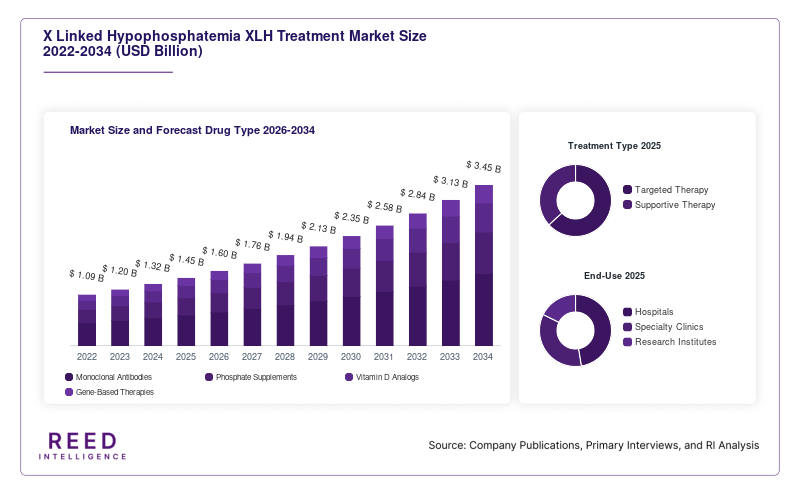
- By drug type, monoclonal antibody therapies accounted for the largest share of 42.8%.
- while gene-based therapies are projected to grow at a CAGR of 13.2%.
- By treatment type, targeted therapy led with a 46.3% share, whereas supportive therapy is expected to expand at a CAGR of 9.8%.
- The United States remained the dominant country, with market values of USD 510 million in 2024 and USD 565 million in 2025.
Market Trends
Rising Adoption of Targeted Biologic Therapies
The market is witnessing a gradual shift from conventional phosphate and vitamin D supplementation toward targeted biologic therapies. These advanced treatments, including monoclonal antibodies that inhibit fibroblast growth factor 23 (FGF23), address the root cause of XLH rather than just managing symptoms. This transition is supported by improved clinical efficacy, reduced complications, and better patient compliance. Healthcare providers increasingly recommend biologics for both pediatric and adult patients, contributing to growing market penetration. Additionally, favorable reimbursement policies in developed regions are encouraging the adoption of these therapies. Pharmaceutical companies are also expanding their pipelines with next-generation biologics, further strengthening this trend and enhancing treatment outcomes across patient populations.
Integration of Genetic Testing and Personalized Medicine
Another notable trend in the XLH treatment market is the integration of genetic testing and personalized treatment approaches. Advances in genomic technologies have enabled early and accurate diagnosis of XLH, allowing clinicians to tailor treatment plans based on individual patient profiles. Personalized medicine is becoming a critical component in managing rare diseases, including XLH, as it improves therapeutic effectiveness and minimizes adverse effects. Diagnostic companies are collaborating with pharmaceutical firms to create integrated care models, combining genetic screening with targeted therapy selection. This approach not only enhances clinical outcomes but also optimizes healthcare costs in the long term, making it an increasingly attractive option for healthcare systems worldwide.
Market Drivers
Increasing Prevalence and Improved Diagnosis of Rare Genetic Disorders
The increasing recognition and diagnosis of rare genetic disorders such as XLH are significant drivers of market growth. Enhanced awareness campaigns, improved healthcare infrastructure, and advancements in diagnostic technologies have led to earlier detection of the condition. Genetic testing has become more accessible and affordable, enabling healthcare providers to identify XLH cases with greater accuracy. Early diagnosis is critical for initiating timely treatment and preventing long-term complications such as bone deformities and impaired growth. As a result, the demand for effective treatment options continues to rise. Additionally, patient advocacy groups and global health organizations are playing a vital role in promoting awareness and facilitating access to treatment, further supporting market expansion.
Advancements in Drug Development and Regulatory Support
Continuous advancements in drug development are driving innovation in the XLH treatment market. Pharmaceutical companies are investing heavily in research and development to create more effective and safer therapies. Regulatory agencies are also providing incentives such as orphan drug designation, fast-track approvals, and extended market exclusivity to encourage the development of treatments for rare diseases. These supportive policies reduce the financial risks associated with drug development and accelerate the introduction of new therapies into the market. As a result, several promising drugs are currently in clinical trials, which is expected to expand the treatment landscape and improve patient outcomes over the forecast period.
Market Restraint
High Cost of Treatment and Limited Accessibility
One of the primary restraints affecting the XLH treatment market is the high cost associated with advanced therapies, particularly biologics and emerging gene-based treatments. These therapies often require long-term administration, leading to substantial cumulative costs for patients and healthcare systems. In many developing regions, limited insurance coverage and inadequate reimbursement policies further restrict patient access to these treatments. As a result, a significant portion of the affected population remains untreated or relies on less effective conventional therapies.
The high cost also poses challenges for healthcare providers and policymakers who must balance budget constraints with the need to provide advanced care. For instance, in low- and middle-income countries, the lack of specialized healthcare infrastructure and trained professionals further exacerbates the accessibility issue. This disparity creates an uneven market landscape where treatment availability varies significantly across regions. Addressing these cost and accessibility challenges will be crucial for ensuring equitable access to effective XLH therapies and sustaining long-term market growth.
Market Opportunities
Expansion of Gene Therapy and Novel Treatment Modalities
The development of gene therapy presents a significant opportunity in the XLH treatment market. Unlike conventional and biologic therapies, gene therapy aims to correct the underlying genetic defect responsible for the disorder, offering the potential for long-term or even permanent solutions. Advances in gene-editing technologies and increasing investment in precision medicine are accelerating the development of these therapies. Several clinical trials are currently exploring innovative approaches to restore phosphate regulation in XLH patients. If successful, these therapies could revolutionize the treatment landscape and create new revenue streams for pharmaceutical companies. The growing interest in curative treatments is expected to drive substantial market growth over the coming years.
Growth in Emerging Markets and Healthcare Infrastructure Development
Emerging economies offer considerable growth opportunities for the XLH treatment market. Rapid improvements in healthcare infrastructure, increasing healthcare expenditure, and expanding access to diagnostic services are enabling better management of rare diseases. Governments in these regions are also implementing policies to support rare disease treatment, including funding programs and public-private partnerships. As awareness of XLH increases, more patients are likely to seek diagnosis and treatment, creating new demand for therapies. Pharmaceutical companies are actively exploring these markets to expand their global footprint, making them a key focus area for future growth and investment.
Segmental Analysis
By Drug Type
Monoclonal antibody therapies dominated the XLH treatment market, accounting for approximately 42.8% of the market share in 2024. These therapies have gained widespread acceptance due to their ability to target the underlying mechanisms of the disease, particularly by inhibiting FGF23 activity. Compared to traditional treatments such as phosphate supplements, monoclonal antibodies offer improved efficacy and reduced side effects. Healthcare providers increasingly prefer these therapies for both pediatric and adult patients, contributing to their dominant position. Additionally, the growing availability of these drugs in developed markets and favorable reimbursement policies have further supported their widespread adoption.
Gene-based therapies are expected to be the fastest-growing subsegment, with a projected CAGR of 13.2% during the forecast period. The growth of this segment is driven by ongoing research and development efforts aimed at providing long-term or curative solutions for XLH. Advances in gene-editing technologies and increasing investment in precision medicine are accelerating the development of these therapies. As clinical trials progress and regulatory approvals are obtained, gene-based therapies are expected to gain significant traction, transforming the treatment landscape and offering new opportunities for market growth.
By Treatment Type
Targeted therapy held the largest share of the market in 2024, accounting for approximately 46.3%. This dominance is attributed to the increasing adoption of advanced treatments that address the root cause of XLH rather than just managing symptoms. Targeted therapies, particularly biologics, have demonstrated superior clinical outcomes, leading to their widespread use. Healthcare providers are increasingly recommending these therapies as first-line treatments, especially in developed regions where access to advanced healthcare is readily available. The growing awareness of the benefits of targeted therapy is further supporting its dominance in the market.
Supportive therapy is expected to be the fastest-growing subsegment, with a CAGR of 9.8% during the forecast period. This segment includes treatments such as phosphate supplements and vitamin D analogs, which remain essential components of XLH management. Despite the rise of advanced therapies, supportive treatments continue to play a crucial role, particularly in regions with limited access to biologics. The growth of this segment is driven by the increasing number of diagnosed cases and the need for comprehensive treatment approaches that combine multiple therapies to achieve optimal outcomes.
By End-Use
Hospitals dominated the XLH treatment market in 2024, accounting for approximately 51.7% of the market share. This dominance is due to the availability of specialized healthcare professionals and advanced diagnostic and treatment facilities in hospital settings. Patients with XLH often require multidisciplinary care, including endocrinology, orthopedics, and genetics, which is readily available in hospitals. Additionally, hospitals are more likely to adopt advanced therapies and participate in clinical trials, further contributing to their leading position in the market.
Specialty clinics are expected to be the fastest-growing subsegment, with a projected CAGR of 10.7% during the forecast period. The growth of this segment is driven by the increasing demand for specialized care and personalized treatment approaches. Specialty clinics focus on specific conditions, allowing them to provide more targeted and efficient care for XLH patients. The expansion of these clinics, particularly in urban areas, is improving access to specialized treatment and contributing to overall market growth.
Regional Analysis
North America
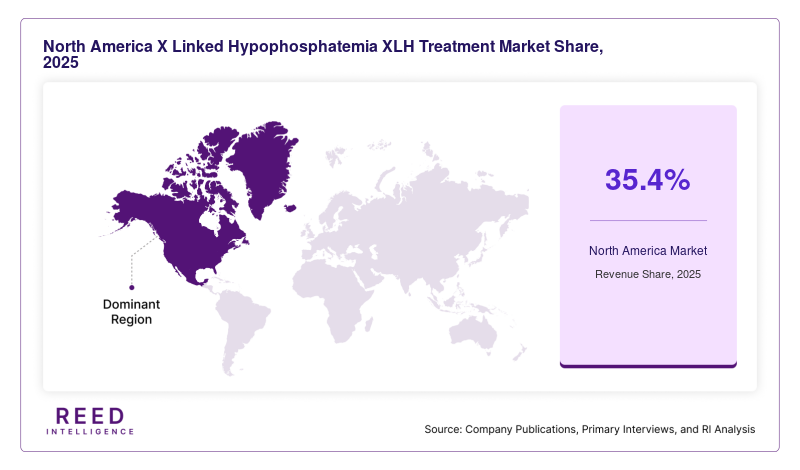
North America accounted for the largest share of the XLH treatment market, contributing approximately 35.4% in 2025, and is expected to maintain its dominance with a steady CAGR of 9.8% during the forecast period. The region benefits from advanced healthcare infrastructure, high awareness of rare diseases, and strong adoption of innovative therapies. The presence of leading pharmaceutical companies and robust research and development activities further support market growth.
The United States dominates the regional market due to its well-established healthcare system and favorable reimbursement policies. A key growth factor is the strong presence of patient advocacy organizations that promote early diagnosis and access to treatment. These initiatives have significantly increased the number of diagnosed cases, thereby driving demand for advanced therapies and contributing to market expansion.
Europe
Europe held a significant market share of around 27.6% in 2025 and is projected to grow at a CAGR of 9.5% during the forecast period. The region's growth is supported by increasing government initiatives to address rare diseases and the availability of advanced treatment options. Countries in Western Europe, in particular, have well-developed healthcare systems that facilitate access to specialized care.
Germany leads the European market due to its strong healthcare infrastructure and high investment in medical research. A unique growth factor is the region’s emphasis on collaborative research programs between academic institutions and pharmaceutical companies. These collaborations are accelerating the development and adoption of innovative therapies, contributing to sustained market growth.
Asia Pacific
Asia Pacific is expected to witness the fastest growth, with a CAGR of 11.6% from 2026 to 2034, while accounting for approximately 18.9% of the market in 2025. The region is experiencing rapid improvements in healthcare infrastructure and increasing awareness of rare diseases. Growing investments in diagnostic technologies are also contributing to market expansion.
China is the dominant country in the region, driven by its large population base and increasing healthcare expenditure. A key growth factor is the government's focus on expanding access to healthcare services, particularly in rural areas. This has led to improved diagnosis rates and increased demand for treatment options, supporting overall market growth.
Middle East & Africa
The Middle East & Africa region accounted for around 9.3% of the market in 2025 and is projected to grow at a CAGR of 8.7% during the forecast period. Growth in this region is driven by increasing healthcare investments and rising awareness of rare genetic disorders. However, limited access to advanced treatments remains a challenge.
Saudi Arabia is the leading country in this region, supported by its ongoing healthcare reforms and investments in medical infrastructure. A unique growth factor is the government’s focus on establishing specialized treatment centers for rare diseases. These initiatives are expected to improve patient access to diagnosis and treatment, contributing to market growth.
Latin America
Latin America held a market share of approximately 8.8% in 2025 and is expected to grow at a CAGR of 9.1% during the forecast period. The region is gradually improving its healthcare infrastructure and increasing access to diagnostic services, which is driving market growth. Government initiatives to support rare disease treatment are also contributing to expansion.
Brazil dominates the Latin American market due to its large healthcare system and increasing focus on rare diseases. A key growth factor is the rising number of public healthcare programs aimed at improving access to treatment. These programs are helping to bridge the gap between diagnosis and treatment, supporting overall market development.
Competitive Landscape
The XLH treatment market is moderately consolidated, with a few key players dominating the global landscape. Leading companies are focusing on research and development to introduce innovative therapies and strengthen their market position. Strategic collaborations, mergers, and acquisitions are common strategies adopted by market participants to expand their product portfolios and geographic presence.
One of the leading players in the market is Ultragenyx Pharmaceutical Inc., which has established a strong presence through its targeted biologic therapy offerings. The company continues to invest in clinical research and pipeline expansion to maintain its competitive edge. Other major players are also focusing on developing next-generation therapies, including gene-based treatments, to address unmet medical needs. Recent developments in the market include the launch of new clinical trials and the expansion of treatment indications, which are expected to intensify competition and drive innovation in the coming years.
Key Players List
- Ultragenyx Pharmaceutical Inc.
- Kyowa Kirin Co., Ltd.
- Novartis AG
- Pfizer Inc.
- Roche Holding AG
- Sanofi S.A.
- Takeda Pharmaceutical Company Limited
- Amgen Inc.
- Regeneron Pharmaceuticals, Inc.
- Eli Lilly and Company
- AstraZeneca plc
- GlaxoSmithKline plc
- Biogen Inc.
- Ipsen S.A.
- BioMarin Pharmaceutical Inc.
Recent Developments
- In 2025, a leading pharmaceutical company initiated a Phase III clinical trial for a novel gene therapy targeting XLH, aiming to provide long-term disease correction.
- In 2024, a major market player expanded the indication of its monoclonal antibody therapy to include adult patients, increasing its addressable market.
- In 2025, a strategic collaboration was announced between a biotech firm and a research institute to develop next-generation treatments for rare phosphate metabolism disorders.
X Linked Hypophosphatemia XLH Treatment Market Segments
Drug Type
- Monoclonal Antibodies
- Phosphate Supplements
- Vitamin D Analogs
- Gene-Based Therapies
Treatment Type
- Targeted Therapy
- Supportive Therapy
End-Use
- Hospitals
- Specialty Clinics
- Research Institutes
By Region
- North America
- Europe
- APAC
- Middle East and Africa
- LATAM