Xerostomia Therapeutics Market Size, Share & Demand Report By Drug Type (Salivary Stimulants, Saliva Substitutes, Others), By Distribution Channel (Hospital Pharmacies, Retail Pharmacies, Online Pharmacies), By End-Use (Hospitals, Dental Clinics, Home Care Settings) By Region & Segment Forecasts, 2025–2034
USD 3950
Market Overview
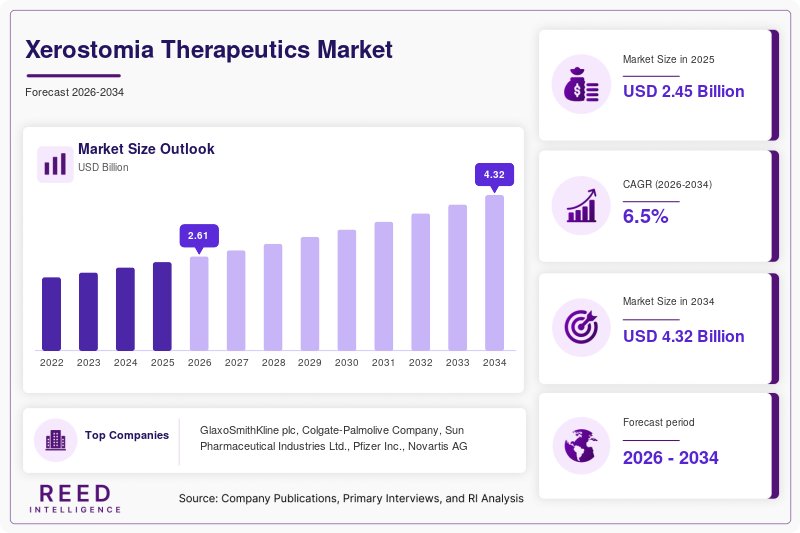
The xerostomia therapeutics market size is experiencing steady expansion, driven by the rising prevalence of dry mouth conditions associated with aging populations, chronic diseases, and medication side effects. In 2025, the global xerostomia therapeutics market size is estimated at USD 2.45 billion and is projected to reach approximately USD 2.62 billion in 2026. The market is forecast to grow to USD 4.35 billion by 2034, registering a compound annual growth rate (CAGR) of 6.5% during the forecast period (2025–2034). This growth trajectory reflects increasing awareness of oral health, advancements in therapeutic formulations, and expanding healthcare access across emerging economies.
One of the primary growth factors is the increasing geriatric population worldwide. Older individuals are more prone to xerostomia due to reduced salivary gland function and higher consumption of medications such as antihypertensives and antidepressants. Secondly, the rising prevalence of chronic conditions such as diabetes, Sjögren’s syndrome, and cancer significantly contributes to market expansion. Patients undergoing radiation therapy for head and neck cancers frequently experience xerostomia, thereby increasing demand for effective treatments. Thirdly, the growing adoption of over-the-counter (OTC) products, including saliva substitutes and oral moisturizers, is enhancing accessibility and driving consumer demand.
Key Highlights
- Market size valued at USD 2.45 billion in 2025
- Expected to reach USD 4.35 billion by 2034
- CAGR of 6.5% from 2025 to 2034
- Rising geriatric population driving demand
- Increasing prevalence of chronic diseases boosting market growth
Market Trends
Growing Adoption of Saliva Substitutes and OTC Products
The xerostomia therapeutics market is witnessing a notable shift toward over-the-counter saliva substitutes and oral care products. Consumers are increasingly opting for easy-to-use solutions such as sprays, gels, and lozenges that provide immediate relief from dry mouth symptoms. This trend is supported by the growing availability of products in retail pharmacies and online platforms, which enhances accessibility. Additionally, manufacturers are focusing on improving product formulations with natural ingredients and longer-lasting effects, which appeals to health-conscious consumers. The convenience of OTC products reduces dependency on prescription medications, particularly for mild to moderate cases. As awareness of oral health continues to rise, this segment is expected to maintain strong growth momentum.
Advancements in Targeted Pharmacological Therapies
Another key trend in the xerostomia therapeutics market is the development of targeted pharmacological therapies aimed at stimulating salivary gland function. Pharmaceutical companies are investing in research to develop drugs with improved efficacy and fewer side effects. Innovations include selective muscarinic receptor agonists and biologic therapies designed to address underlying causes such as autoimmune disorders. These advancements are particularly beneficial for patients with severe or chronic xerostomia conditions. Furthermore, the integration of personalized medicine approaches is enabling tailored treatment plans based on patient profiles. This trend is expected to enhance treatment outcomes and drive adoption of advanced therapeutics in both developed and emerging markets.
Market Drivers
Increasing Prevalence of Chronic Diseases and Medication-Induced Xerostomia
The rising incidence of chronic diseases such as diabetes, cardiovascular disorders, and autoimmune conditions is a major driver of the xerostomia therapeutics market. Many of these conditions require long-term medication use, which often leads to dry mouth as a side effect. For instance, antihistamines, antidepressants, and antihypertensive drugs are commonly associated with reduced saliva production. As the global burden of chronic diseases continues to increase, the number of patients experiencing xerostomia is also growing. This has led to a higher demand for effective therapeutic solutions, including both prescription drugs and OTC products. Healthcare providers are increasingly recognizing xerostomia as a condition that requires dedicated treatment, further supporting market growth.
Growing Geriatric Population and Oral Health Awareness
The expanding elderly population is another significant driver of the xerostomia therapeutics market. Aging is associated with decreased salivary gland function and increased susceptibility to oral health issues. Older adults are also more likely to take multiple medications, further increasing the risk of xerostomia. In addition, there is a growing emphasis on maintaining oral health as part of overall well-being, particularly among aging populations. Public health initiatives and awareness campaigns are encouraging early diagnosis and treatment of xerostomia. This has led to increased adoption of therapeutic products, ranging from saliva stimulants to oral moisturizers. As the global population continues to age, this driver is expected to sustain long-term market growth.
Market Restraint
Limited Awareness and Underdiagnosis in Emerging Markets
One of the primary restraints in the xerostomia therapeutics market is the limited awareness and underdiagnosis of the condition, particularly in emerging economies. Many patients do not recognize xerostomia as a medical condition requiring treatment and often consider it a minor inconvenience. This leads to delayed diagnosis and low adoption of therapeutic solutions. Additionally, healthcare infrastructure in certain regions lacks specialized dental and oral care services, which further contributes to underdiagnosis. The absence of standardized diagnostic protocols also creates inconsistencies in identifying and managing the condition. For example, in rural areas, patients undergoing treatments such as chemotherapy may not receive adequate guidance on managing xerostomia symptoms. This results in reduced demand for therapeutics despite a significant patient population. Addressing this restraint requires increased awareness campaigns, improved healthcare access, and better training for healthcare professionals.
Market Opportunities
Expansion in Emerging Markets with Improving Healthcare Infrastructure
Emerging markets present significant growth opportunities for the xerostomia therapeutics market due to improving healthcare infrastructure and rising healthcare expenditure. Countries in Asia Pacific, Latin America, and parts of Africa are investing in expanding access to healthcare services, including dental care. This creates a favorable environment for the adoption of xerostomia treatments. Additionally, increasing urbanization and rising disposable incomes are enabling consumers to spend more on healthcare products. Pharmaceutical companies are focusing on these regions to expand their market presence through strategic partnerships and distribution networks. The introduction of cost-effective products tailored to local needs further enhances market penetration.
Development of Innovative Drug Delivery Systems
The development of advanced drug delivery systems offers another major opportunity in the xerostomia therapeutics market. Innovations such as sustained-release formulations, transdermal patches, and bioadhesive gels are improving the efficacy and convenience of treatments. These technologies enable prolonged therapeutic effects and reduce the need for frequent dosing, which enhances patient compliance. Additionally, research into regenerative therapies and salivary gland tissue engineering is opening new avenues for long-term treatment solutions. Companies investing in innovation and clinical research are likely to gain a competitive advantage. As patient demand for more effective and convenient treatments increases, this opportunity is expected to drive significant market growth.
Segmental Analysis
By Drug Type
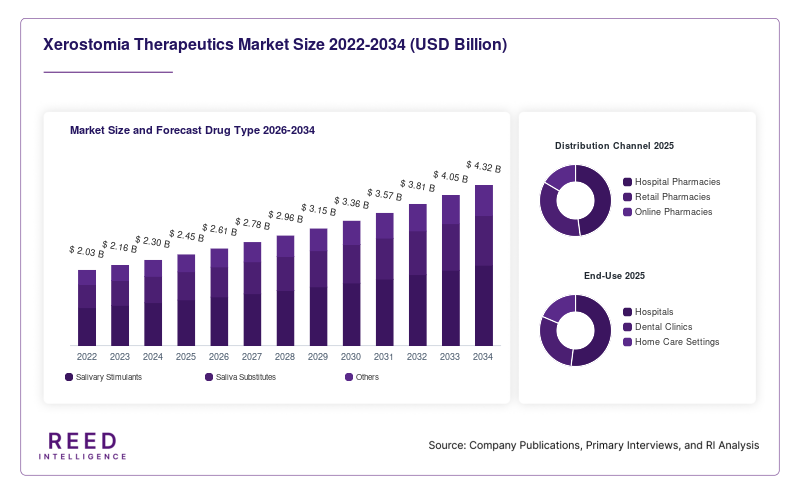
The drug type segment is dominated by salivary stimulants, which accounted for approximately 48% of the market share in 2024. These drugs are widely prescribed for moderate to severe xerostomia, particularly in patients with chronic conditions such as Sjögren’s syndrome. Their effectiveness in stimulating natural saliva production makes them a preferred choice among healthcare providers. Additionally, ongoing research and development efforts are improving the efficacy and safety profiles of these medications. The availability of both branded and generic options further supports their widespread adoption across different healthcare settings.
The fastest-growing subsegment within drug type is saliva substitutes, which are expected to grow at a CAGR of 7.5% during the forecast period. These products provide immediate relief and are widely available as OTC solutions. Their convenience, affordability, and ease of use make them highly popular among patients with mild to moderate symptoms. Increasing consumer preference for non-prescription products and the introduction of innovative formulations are key growth factors driving this subsegment.
By Distribution Channel
The distribution channel segment is led by hospital pharmacies, which held a dominant share of around 42% in 2024. These pharmacies play a critical role in dispensing prescription medications and providing specialized care for patients with severe xerostomia. The presence of trained healthcare professionals ensures proper diagnosis and treatment, which supports the dominance of this subsegment. Additionally, hospital pharmacies often serve as primary distribution points for newly launched therapeutics, further strengthening their market position.
Online pharmacies represent the fastest-growing subsegment, with a projected CAGR of 8.1%. The increasing adoption of digital platforms and e-commerce is transforming the distribution landscape. Patients prefer online channels due to convenience, competitive pricing, and a wide range of product options. The expansion of telemedicine services and digital health platforms is also supporting the growth of online pharmacies, making them a key driver of future market expansion.
By End-Use
Hospitals are the dominant end-use segment, accounting for approximately 45% of the market share in 2024. Hospitals provide comprehensive care for patients with severe xerostomia, particularly those undergoing cancer treatments or suffering from autoimmune disorders. The availability of advanced diagnostic tools and specialized healthcare professionals supports the dominance of this segment. Additionally, hospitals are often involved in clinical trials and research activities, which contribute to the development of new therapeutics.
Home care settings are the fastest-growing subsegment, with a CAGR of 7.8%. The increasing preference for self-care and home-based treatment options is driving growth in this segment. Patients with mild to moderate xerostomia are increasingly using OTC products at home for symptom management. The availability of user-friendly products and growing awareness of oral health are key factors supporting this trend. Additionally, the rise of digital health tools and remote monitoring solutions is enhancing patient engagement and improving treatment outcomes in home care settings.
Regional Analysis
North America
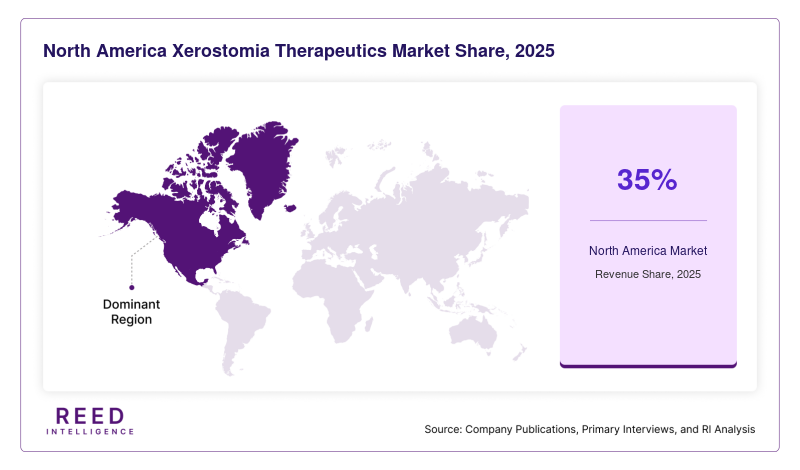
North America accounted for a significant share of the xerostomia therapeutics market in 2025, contributing approximately 35% of the global revenue. The region is expected to grow at a CAGR of 6.2% during the forecast period. The high prevalence of chronic diseases and a well-established healthcare infrastructure support market growth. Additionally, strong awareness of oral health and access to advanced treatment options contribute to the region’s dominance.
The United States dominates the North American market, driven by high healthcare spending and advanced research capabilities. A unique growth factor is the widespread adoption of innovative pharmacological therapies and OTC products. The presence of major pharmaceutical companies and ongoing clinical trials further strengthens the market outlook in the region.
Europe
Europe held around 27% of the xerostomia therapeutics market share in 2025 and is projected to grow at a CAGR of 6.0%. The region benefits from strong healthcare systems and increasing awareness of oral health conditions. Government initiatives supporting preventive healthcare also contribute to market expansion.
Germany is a key market within Europe, driven by a large aging population and high prevalence of chronic diseases. A unique growth factor is the increasing focus on personalized medicine and targeted therapies. The country’s strong pharmaceutical industry supports innovation and adoption of advanced treatments.
Asia Pacific
Asia Pacific accounted for approximately 22% of the xerostomia therapeutics market in 2025 and is expected to grow at the fastest CAGR of 7.2%. Rapid urbanization, increasing healthcare investments, and rising awareness are driving market growth in the region.
China leads the Asia Pacific market due to its large population and expanding healthcare infrastructure. A unique growth factor is the increasing availability of affordable OTC products and traditional medicine integration. Government initiatives to improve healthcare access further support market expansion.
Middle East & Africa
The Middle East & Africa region held about 9% of the xerostomia therapeutics market share in 2025 and is projected to grow at a CAGR of 5.8%. Growth is supported by improving healthcare infrastructure and increasing awareness of oral health issues.
Saudi Arabia is a dominant market in the region, driven by rising healthcare investments and government initiatives. A unique growth factor is the expansion of specialized dental care services, which is improving diagnosis and treatment rates for xerostomia.
Latin America
Latin America accounted for approximately 7% of the xerostomia therapeutics market in 2025 and is expected to grow at a CAGR of 6.3%. Increasing healthcare access and rising awareness are key factors supporting market growth.
Brazil dominates the Latin American market due to its large population and improving healthcare system. A unique growth factor is the growing adoption of OTC oral care products, supported by expanding retail and online distribution channels.
Competitive Landscape
The xerostomia therapeutics market is moderately fragmented, with several global and regional players competing to expand their market share. Companies are focusing on product innovation, strategic partnerships, and geographic expansion to strengthen their positions. The competitive landscape is characterized by a mix of pharmaceutical firms and oral care product manufacturers.
A leading player in the market is GlaxoSmithKline plc, which has a strong portfolio of oral health products and a significant global presence. The company continues to invest in research and development to enhance its product offerings. Other key players are focusing on expanding their OTC product lines and improving distribution networks.
Recent developments in the market include the launch of advanced saliva substitutes with longer-lasting effects and the development of targeted pharmacological therapies. Companies are also investing in clinical trials to evaluate new treatment options and improve existing formulations. These strategies are expected to intensify competition and drive innovation in the market.
Key Players List
- GlaxoSmithKline plc
- Colgate-Palmolive Company
- Sun Pharmaceutical Industries Ltd.
- Pfizer Inc.
- Novartis AG
- Johnson & Johnson
- Biotène (brand)
- Church & Dwight Co., Inc.
- Cipla Limited
- Hikma Pharmaceuticals
- Takeda Pharmaceutical Company Limited
- Teva Pharmaceutical Industries Ltd.
- 3M Company
- Procter & Gamble Co.
- Lupin Limited
Recent Developments
- A leading pharmaceutical company launched a new saliva substitute gel with extended hydration properties to improve patient comfort.
- A major player initiated a clinical trial for a novel muscarinic receptor agonist aimed at treating severe xerostomia.
- An oral care company expanded its product portfolio by introducing natural ingredient-based dry mouth relief sprays targeting health-conscious consumers.
Xerostomia Therapeutics Market Segments
Drug Type
- Salivary Stimulants
- Saliva Substitutes
- Others
Distribution Channel
- Hospital Pharmacies
- Retail Pharmacies
- Online Pharmacies
End-Use
- Hospitals
- Dental Clinics
- Home Care Settings
By Region
- North America
- Europe
- APAC
- Middle East and Africa
- LATAM