Xylitol In Personal Care Cosmetic Market Size, Share & Demand Report By Type (Powder, Liquid), By Application (Skincare, Oral Care, Hair Care), By End-Use (Personal Care Products, Professional & Dermatological Use) By Region & Segment Forecasts, 2025–2034
USD 3950
Market Overview
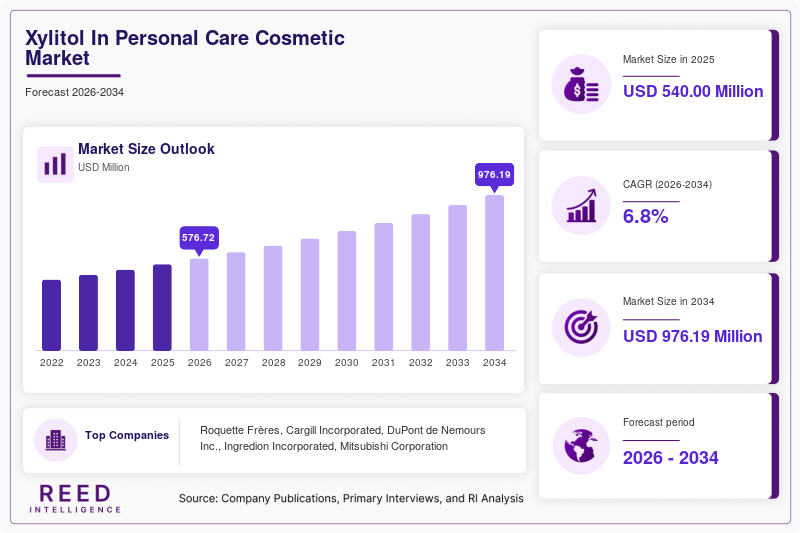
The Xylitol In Personal Care Cosmetic Market size for xylitol in personal care cosmetics is estimated to reach USD 540 million, with growth to approximately USD 585 million in 2026. The market is projected to expand further, reaching USD 1.05 billion by 2034, registering a compound annual growth rate (CAGR) of 6.8% from 2025 to 2034.
This growth trajectory is driven by increasing consumer awareness regarding skin health, along with a growing shift toward clean-label and plant-based cosmetic products. Xylitol’s ability to improve skin hydration and strengthen the skin barrier has led to its widespread adoption in moisturizers, serums, and oral care products such as toothpaste and mouthwash. Additionally, regulatory encouragement for safe and non-toxic ingredients has accelerated the demand for xylitol-based formulations.
Key Highlights
- The market is valued at USD 540 million in 2025, reflecting steady adoption of xylitol across personal care and cosmetic formulations. Increasing use in skincare and oral care products continues to support baseline demand.
- The market is projected to reach USD 1.05 billion by 2034, indicating consistent long-term expansion. This growth is supported by rising consumer preference for natural and safe ingredients in cosmetics.
- The industry is expected to register a CAGR of 6.8% from 2025 to 2034, driven by innovation and expanding applications. Manufacturers are focusing on product development to sustain this growth rate.
- There is a growing demand for natural and multifunctional ingredients, as consumers prioritize clean-label and sustainable products. Xylitol’s moisturizing and antibacterial properties make it a suitable choice.
Market Trends
Rising Adoption of Natural and Clean-Label Ingredients
The growing consumer inclination toward natural and clean-label cosmetic products is shaping the xylitol in personal care cosmetic market. Consumers are becoming more conscious about ingredient transparency and are actively avoiding synthetic chemicals such as parabens, sulfates, and artificial fragrances. Xylitol, being plant-derived and recognized for its safety profile, fits well within this demand. Cosmetic manufacturers are reformulating their products to include natural humectants like xylitol, which offer hydration benefits without compromising safety. This shift is particularly prominent in skincare and oral care segments, where ingredient integrity is highly valued. Additionally, certifications such as organic and vegan labels are influencing purchasing decisions, encouraging brands to incorporate xylitol as a sustainable alternative.
Integration of Functional Ingredients in Multifunctional Products
Another notable trend is the integration of xylitol into multifunctional personal care products that combine hydration, antimicrobial properties, and skin barrier protection. Consumers prefer products that deliver multiple benefits in a single application, reducing the need for complex routines. Xylitol is increasingly used in formulations such as moisturizing creams, anti-aging serums, and oral hygiene products due to its ability to inhibit bacterial growth and enhance moisture retention. This trend is also supported by advancements in formulation technologies, enabling better stability and performance of xylitol in cosmetic products. As a result, brands are launching innovative products that leverage xylitol’s multifunctional properties to differentiate themselves in a competitive market.
Market Drivers
Increasing Demand for Skin Hydration and Barrier Protection
The rising focus on skin hydration and barrier repair is a major driver for the xylitol in personal care cosmetic market. Modern consumers are increasingly aware of the importance of maintaining a healthy skin barrier to prevent dryness, irritation, and environmental damage. Xylitol acts as an effective humectant, attracting and retaining moisture in the skin, thereby improving overall skin health. This has led to its widespread use in moisturizers, lotions, and serums. Additionally, dermatological studies highlighting the benefits of xylitol in enhancing skin barrier function have further boosted its adoption. As skincare routines become more sophisticated, demand for ingredients that provide long-lasting hydration continues to grow.
Growth of Oral Care and Hygiene Awareness
Another significant driver is the increasing awareness of oral hygiene and the demand for effective oral care products. Xylitol is well-known for its ability to reduce the growth of harmful bacteria in the mouth, making it a key ingredient in toothpaste, mouthwash, and chewing gums. The rise in dental health awareness campaigns and preventive care practices has significantly increased the consumption of xylitol-based oral care products. Furthermore, the shift toward sugar-free and health-conscious lifestyles has contributed to the popularity of xylitol as a safe alternative. This growing demand in oral care applications is directly influencing the expansion of the overall market.
Market Restraint
High Production Costs and Limited Raw Material Availability
One of the key restraints affecting the xylitol in personal care cosmetic market is the relatively high production cost associated with xylitol extraction and purification. The manufacturing process involves multiple steps, including hydrolysis, fermentation, and crystallization, which can be energy-intensive and costly. Additionally, the availability of raw materials such as birch wood and agricultural residues may fluctuate due to environmental factors and supply chain disruptions. These challenges can lead to higher product prices, limiting adoption in price-sensitive markets. For instance, small and mid-sized cosmetic brands may find it difficult to incorporate xylitol into their formulations due to cost constraints. This restraint can impact market growth, particularly in developing regions where affordability remains a key concern.
Market Opportunities
Expansion in Emerging Markets
Emerging markets present significant growth opportunities for the xylitol in personal care cosmetic market. Countries in Asia Pacific, Latin America, and Africa are experiencing rising disposable incomes and increased awareness of personal grooming and hygiene. Consumers in these regions are gradually shifting toward premium and natural cosmetic products, creating a favorable environment for xylitol-based formulations. Additionally, the rapid growth of urbanization and e-commerce platforms is enabling better access to international brands and innovative products. Companies that invest in localized marketing strategies and affordable product lines can capitalize on this growing demand, thereby expanding their market presence.
Innovation in Sustainable and Bio-Based Formulations
Sustainability is becoming a key focus area in the cosmetics industry, creating opportunities for the adoption of bio-based ingredients like xylitol. Manufacturers are investing in eco-friendly production methods and sourcing raw materials from renewable resources. Innovations in biotechnology and fermentation processes are also improving the efficiency and sustainability of xylitol production. These advancements enable companies to develop environmentally friendly products that align with consumer preferences. Furthermore, regulatory support for sustainable practices is encouraging the use of natural ingredients, opening new avenues for market growth. Brands that emphasize sustainability in their product offerings are likely to gain a competitive edge.
Segmental Analysis
By Type
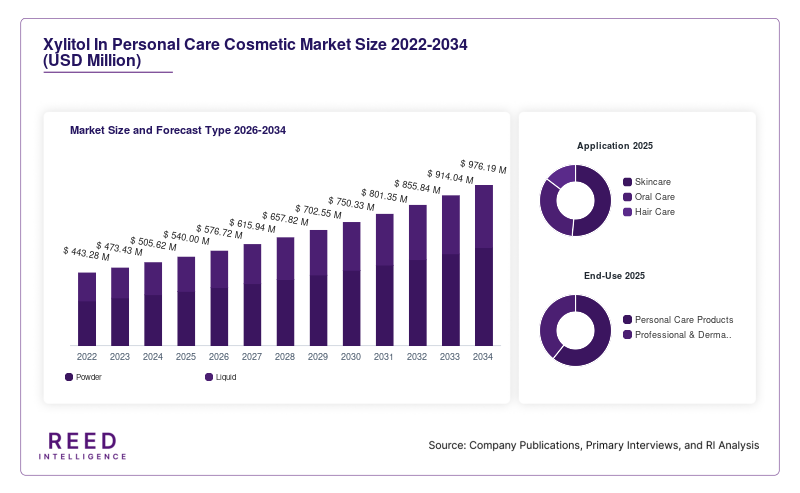
The powder form of xylitol dominated the market in 2024, accounting for approximately 62% of the total share. This dominance can be attributed to its ease of incorporation into various cosmetic formulations, including creams, lotions, and toothpaste. Powdered xylitol offers better stability and longer shelf life compared to liquid forms, making it a preferred choice for manufacturers. Additionally, it allows for precise dosage control, ensuring consistent product quality. The widespread availability of powdered xylitol and its compatibility with other ingredients further contribute to its leading position in the market.
Liquid xylitol is the fastest-growing subsegment, with a projected CAGR of 7.4% during the forecast period. This growth is driven by its increasing use in advanced skincare and oral care formulations. Liquid xylitol offers enhanced solubility and ease of blending, making it suitable for high-performance products. Its ability to provide immediate hydration and improve product texture has made it popular among premium cosmetic brands. Additionally, innovations in formulation technologies are enabling better integration of liquid xylitol into a wide range of products, further supporting its growth.
By Application
Skincare applications dominated the market in 2024, holding a share of approximately 48%. The growing demand for moisturizing and anti-aging products has significantly increased the use of xylitol in skincare formulations. Its ability to improve skin hydration and enhance barrier function makes it a valuable ingredient in creams, serums, and masks. Additionally, the rising popularity of clean beauty products has encouraged the use of natural ingredients like xylitol. The increasing focus on skincare routines and the influence of social media trends have further boosted this segment’s growth.
Oral care is the fastest-growing application segment, with a CAGR of 7.1%. The rising awareness of dental health and the increasing demand for sugar-free products are key factors driving this growth. Xylitol’s antibacterial properties make it an essential ingredient in toothpaste, mouthwash, and chewing gums. Additionally, the growing prevalence of dental issues such as cavities and gum diseases has increased the demand for preventive oral care products. This trend is further supported by government initiatives promoting oral hygiene.
By End-Use
The personal care products segment dominated the market in 2024, accounting for around 55% of the total share. This segment includes a wide range of products such as lotions, creams, and hair care items that incorporate xylitol for its moisturizing and conditioning properties. The increasing consumer preference for multifunctional and natural products has significantly boosted the demand in this segment. Additionally, the expansion of premium product lines and the growing influence of beauty influencers have contributed to the segment’s dominance.
The professional and dermatological segment is the fastest-growing, with a CAGR of 7.0%. This growth is driven by the increasing demand for clinically tested and dermatologist-recommended products. Xylitol’s proven benefits in improving skin hydration and reducing bacterial growth make it a preferred ingredient in professional formulations. Additionally, the rising number of dermatology clinics and aesthetic centers is supporting the adoption of advanced skincare products. This segment is expected to witness significant growth as consumers seek effective and safe solutions for their skincare needs.
Regional Analysis
North America
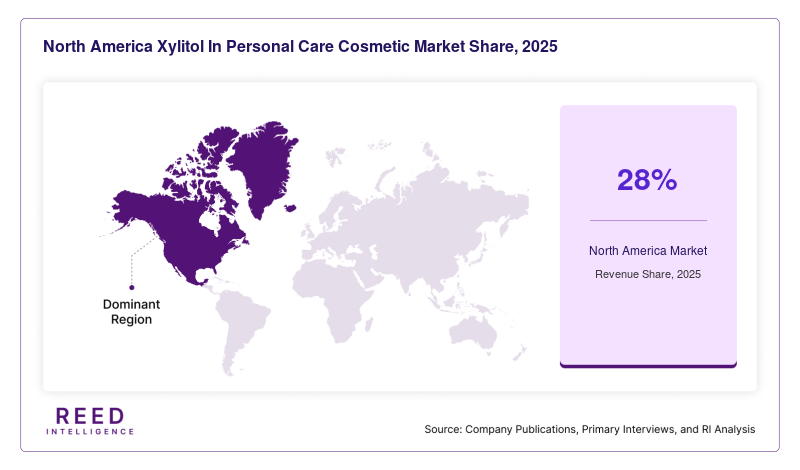
North America accounted for a significant share of the xylitol in personal care cosmetic market in 2025, contributing approximately 28% of the global market. The region is expected to maintain steady growth with a CAGR of around 6.2% during the forecast period. The strong presence of established cosmetic brands and increasing demand for natural ingredients are key factors supporting market expansion. Additionally, consumer awareness regarding skincare and oral hygiene continues to drive product adoption.
The United States dominates the regional market due to high consumer spending on premium personal care products. A unique growth factor in this region is the increasing demand for dermatologist-recommended formulations that incorporate safe and effective ingredients like xylitol. This trend is further supported by the growing popularity of clean beauty products and regulatory emphasis on ingredient safety.
Europe
Europe holds a notable share of the market, accounting for around 24% in 2025, with a projected CAGR of 6.5%. The region’s strong focus on sustainability and eco-friendly products has significantly influenced the adoption of xylitol in cosmetic formulations. Strict regulatory frameworks also encourage the use of safe and natural ingredients, supporting market growth.
Germany leads the European market due to its advanced cosmetic industry and strong emphasis on innovation. A unique growth factor in this region is the increasing demand for organic and vegan-certified products. Consumers are highly conscious about environmental impact, prompting manufacturers to incorporate sustainably sourced xylitol in their products.
Asia Pacific
Asia Pacific is the fastest-growing region, with a market share of approximately 30% in 2025 and a projected CAGR of 7.5%. Rapid urbanization, rising disposable incomes, and increasing awareness of personal care are driving market growth. The region also benefits from a large consumer base and expanding cosmetic industry.
China dominates the Asia Pacific market, supported by its strong manufacturing capabilities and growing middle-class population. A unique growth factor is the rising popularity of K-beauty and J-beauty trends, which emphasize hydration and skin health. These trends have increased the demand for xylitol-based skincare products.
Middle East & Africa
The Middle East & Africa region accounted for around 10% of the market in 2025 and is expected to grow at a CAGR of 6.0%. The increasing adoption of personal care products and improving economic conditions are key drivers of growth. Additionally, the rising influence of global beauty trends is boosting market demand.
The United Arab Emirates leads the region due to its strong retail sector and high consumer spending. A unique growth factor is the increasing demand for luxury and premium cosmetic products, which often incorporate high-quality ingredients like xylitol. This trend is supported by a growing expatriate population and tourism industry.
Latin America
Latin America held approximately 8% of the market share in 2025, with a projected CAGR of 6.3%. The region is witnessing steady growth due to increasing awareness of personal care and hygiene. The expansion of distribution channels and rising disposable incomes are also contributing to market development.
Brazil dominates the Latin American market, driven by its large consumer base and strong beauty culture. A unique growth factor is the increasing demand for affordable natural cosmetic products. Local manufacturers are focusing on incorporating xylitol into cost-effective formulations to cater to a wider audience.
Competitive Landscape
The xylitol in personal care cosmetic market is moderately fragmented, with several global and regional players competing to strengthen their market position. Key companies are focusing on product innovation, sustainable sourcing, and strategic partnerships to gain a competitive advantage. The market leader, Roquette Frères, has established a strong presence through its extensive product portfolio and investment in research and development.
Other major players include Cargill, DuPont, Ingredion, and Mitsubishi Corporation. These companies are actively investing in advanced production technologies and expanding their distribution networks to cater to growing demand. A recent development in the market includes the launch of bio-based xylitol formulations by leading manufacturers, aimed at addressing sustainability concerns. Additionally, collaborations with cosmetic brands to develop customized solutions are becoming increasingly common.
Key Players
- Roquette Frères
- Cargill Incorporated
- DuPont de Nemours Inc.
- Ingredion Incorporated
- Mitsubishi Corporation
- Futaste Co. Ltd.
- Zhejiang Huakang Pharmaceutical Co. Ltd.
- Shandong Futaste Pharmaceutical Co. Ltd.
- NovaGreen Inc.
- SPI Pharma Inc.
- Danisco A/S
- Herboveda India Pvt. Ltd.
- Qingdao Oriental Tongxiang International Trading Co. Ltd.
- XyloSweet Co.
- Sukhjit Starch & Chemicals Ltd.
Recent Developments
- In 2024, a leading manufacturer introduced a sustainably sourced xylitol product derived from agricultural waste materials.
- In 2025, a major cosmetic brand launched a new skincare line featuring xylitol-based hydration technology.
- In 2025, companies expanded production capacity to meet rising demand for natural cosmetic ingredients.
Xylitol In Personal Care Cosmetic Market Segments
Type
- Powder
- Liquid
Application
- Skincare
- Oral Care
- Hair Care
End-Use
- Personal Care Products
- Professional & Dermatological Use
By Region
- North America
- Europe
- APAC
- Middle East and Africa
- LATAM