Yeast Derived Collagen Market Size, Share & Demand Report By Product Type (Hydrolyzed Collagen, Recombinant Collagen, Native Collagen), By Application (Cosmetics, Nutraceuticals, Pharmaceuticals, Food & Beverages), By End-Use Industry (Personal Care, Healthcare, Food Industry, Biotechnology), By Region & Segment Forecasts, 2026–2034
USD 3950
Market Overview
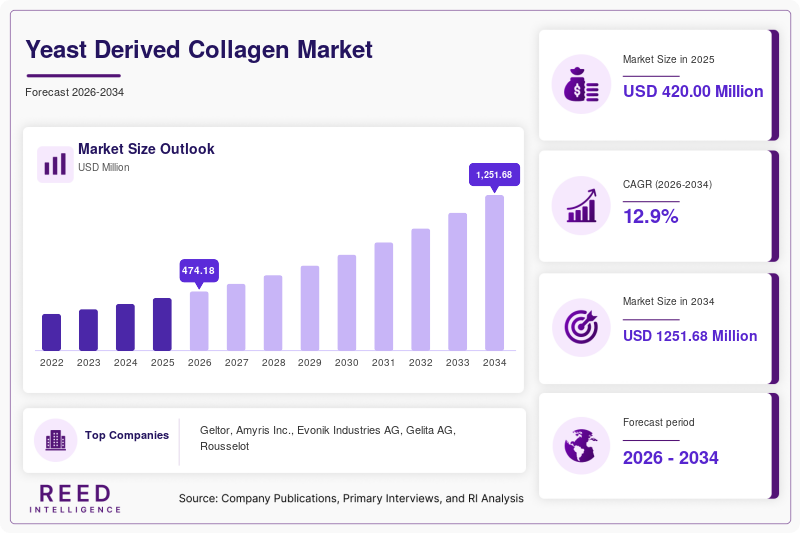
The Yeast Derived Collagen Market was valued at approximately USD 420 million in 2026 and is projected to reach USD 1.12 billion by 2034, expanding at a CAGR of 12.9% during 2026–2034. The increasing preference for sustainable, animal-free, and bioengineered collagen alternatives is a key factor supporting market expansion globally. Yeast-derived collagen, produced through precision fermentation technologies, offers a scalable and ethically acceptable alternative to traditional bovine and marine collagen sources, which has accelerated adoption across cosmetics, nutraceuticals, and biomedical applications.
A major global factor driving growth is the rising demand for vegan and cruelty-free ingredients across personal care and healthcare industries. Consumers are increasingly aware of ethical sourcing and environmental impact, which has led manufacturers to invest in microbial fermentation-based protein production. Additionally, advancements in synthetic biology and recombinant DNA technology have improved yield efficiency and cost-effectiveness, further strengthening the commercial viability of yeast-derived collagen.
Key Highlights
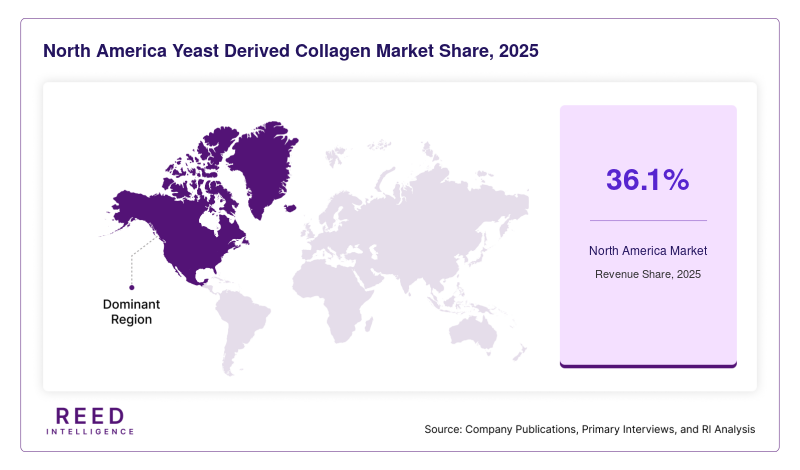
- North America dominated the market with a 36.1% share in 2025.
- Asia Pacific is expected to grow at the fastest CAGR of 13.8% during 2026–2034.
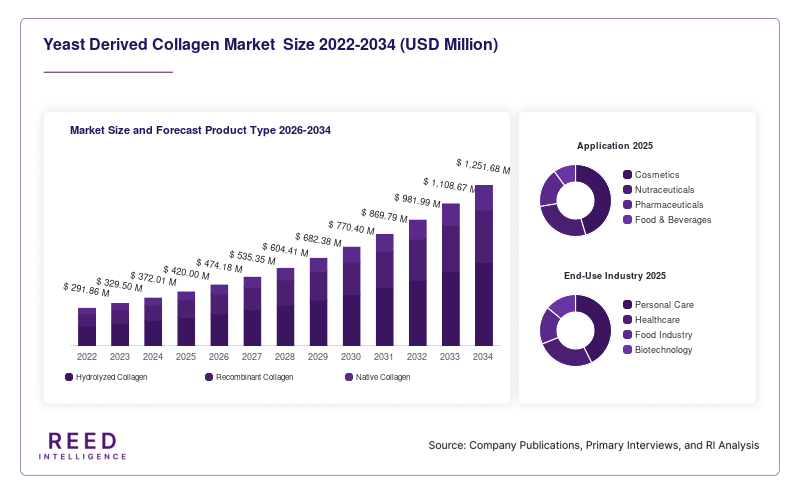
- By type, recombinant collagen accounted for the largest share of 42.6%, while hydrolyzed yeast collagen is projected to grow at a CAGR of 14.2%.
- By application, cosmetics led with a 45.3% share, whereas biomedical applications are expected to expand at a CAGR of 13.5%.
- The United States remained the dominant country, with market values of USD 180 million in 2024 and USD 205 million in 2025.
Market Trends
Rising Adoption of Bioengineered Collagen in Cosmetic Formulations
The increasing use of yeast-derived collagen in cosmetic and personal care products is emerging as a key trend in the market. Manufacturers are incorporating recombinant collagen into anti-aging creams, serums, and dermal fillers due to its high purity, consistent quality, and reduced risk of contamination compared to animal-derived collagen. Consumers are also shifting toward clean-label and vegan beauty products, prompting brands to reformulate their product lines using bioengineered alternatives. Furthermore, advancements in fermentation technologies have improved the scalability of production, making yeast-derived collagen more accessible for large-scale cosmetic applications. This trend is particularly evident in premium skincare segments, where innovation and sustainability are major differentiators.
Expansion of Precision Fermentation Technologies
Another notable trend is the rapid advancement and adoption of precision fermentation techniques for collagen production. Companies are leveraging genetically modified yeast strains to produce human-identical collagen with improved functional properties. This technological shift is enabling the production of tailored collagen variants for specific applications, such as wound healing or tissue regeneration. Additionally, decreasing production costs and improved yield efficiencies are making these technologies more commercially viable. The integration of automation and AI-driven bioprocess optimization is further enhancing production consistency, positioning yeast-derived collagen as a competitive alternative to traditional sources.
Market Drivers
Increasing Demand for Vegan and Sustainable Ingredients
The growing consumer demand for vegan, cruelty-free, and environmentally sustainable products is a major driver for the yeast-derived collagen market. Traditional collagen sources, primarily derived from animal tissues, face ethical concerns and supply chain limitations. Yeast-derived collagen offers a sustainable solution by eliminating the need for animal extraction, reducing environmental impact, and ensuring consistent supply. This shift is particularly prominent in the cosmetics and nutraceutical sectors, where consumers are increasingly prioritizing ethical sourcing. Additionally, regulatory bodies in various regions are encouraging the use of sustainable bio-based ingredients, further accelerating market growth.
Advancements in Biotechnology and Synthetic Biology
Technological advancements in biotechnology and synthetic biology are significantly contributing to market expansion. Innovations in genetic engineering have enabled the development of yeast strains capable of producing high-quality collagen proteins that closely mimic human collagen. These advancements have improved production efficiency, reduced costs, and enhanced scalability. Furthermore, the integration of bioreactor optimization and fermentation control systems has enabled manufacturers to achieve higher yields with minimal resource utilization. The growing investment in biotech startups and research initiatives is also driving innovation, leading to the development of new applications in healthcare and regenerative medicine.
Market Restraint
High Production Costs and Technological Complexity
Despite its promising potential, the yeast-derived collagen market faces challenges related to high production costs and technological complexity. The process of producing collagen through yeast fermentation involves advanced genetic engineering, controlled fermentation environments, and downstream purification processes, all of which contribute to increased operational expenses. These costs are significantly higher compared to traditional collagen extraction methods, limiting adoption among price-sensitive manufacturers.
Additionally, the need for specialized infrastructure and skilled personnel poses a barrier for small and medium-sized enterprises. The complexity of maintaining optimal fermentation conditions and ensuring consistent product quality further adds to the challenges. For example, variations in fermentation parameters can impact protein structure and functionality, affecting end-product performance. This limitation is particularly critical in biomedical applications, where strict quality standards must be met.
Moreover, limited awareness in emerging markets and regulatory uncertainties in certain regions can hinder market growth. While developed markets are more receptive to bioengineered products, slower adoption rates in developing economies may restrict overall market expansion. Addressing these challenges will require continued investment in research and process optimization to reduce costs and improve scalability.
Market Opportunities
Growing Applications in Biomedical and Regenerative Medicine
The expanding use of yeast-derived collagen in biomedical and regenerative medicine presents a significant growth opportunity. Collagen is widely used in wound healing, tissue engineering, and drug delivery systems due to its biocompatibility and structural properties. Yeast-derived collagen, which can be engineered to mimic human collagen, offers enhanced safety and functionality compared to animal-derived alternatives. This makes it suitable for advanced medical applications, including 3D bioprinting and regenerative therapies. Increasing investments in healthcare innovation and the rising prevalence of chronic diseases are expected to drive demand in this segment.
Expansion into Emerging Markets and Functional Foods
Another key opportunity lies in the expansion of yeast-derived collagen into emerging markets and the functional food industry. As awareness of health and wellness increases, consumers are seeking protein-rich and bioactive ingredients in their diets. Yeast-derived collagen can be incorporated into functional foods and beverages, providing nutritional and health benefits. Emerging economies in Asia Pacific and Latin America offer untapped growth potential due to rising disposable incomes and increasing consumer awareness. Companies that focus on product innovation and strategic partnerships can capitalize on these opportunities to expand their market presence.
Segmental Analysis
By Type
Recombinant collagen emerged as the dominant subsegment, accounting for 42.6% of the market share in 2024. This dominance is attributed to its high purity, consistency, and ability to closely mimic human collagen. Recombinant collagen is widely used in cosmetics, pharmaceuticals, and biomedical applications due to its superior functional properties. Manufacturers prefer this type because it eliminates the variability associated with animal-derived collagen, ensuring consistent quality. Additionally, advancements in genetic engineering have enabled the production of customized collagen variants, further enhancing its applicability across various industries.
Hydrolyzed yeast collagen is expected to be the fastest-growing subsegment, with a projected CAGR of 14.2% during the forecast period. This growth is driven by its increasing use in nutraceuticals and functional foods due to its high bioavailability and ease of absorption. The rising demand for dietary supplements and protein-rich foods is supporting the expansion of this segment. Additionally, ongoing research into the health benefits of hydrolyzed collagen, such as improved skin elasticity and joint health, is further driving its adoption.
By Application
Cosmetics dominated the application segment, holding a 45.3% share in 2024. The widespread use of yeast-derived collagen in skincare and anti-aging products is a major factor contributing to this dominance. Consumers are increasingly seeking products with natural and sustainable ingredients, which has led to the incorporation of bioengineered collagen in cosmetic formulations. Additionally, the ability of yeast-derived collagen to improve skin hydration and elasticity makes it a preferred ingredient in premium skincare products.
Biomedical applications are expected to be the fastest-growing subsegment, with a CAGR of 13.5% during the forecast period. The increasing use of collagen in wound healing, tissue engineering, and regenerative medicine is driving this growth. Yeast-derived collagen offers enhanced safety and compatibility, making it suitable for advanced medical applications. Furthermore, ongoing research and development in the field of regenerative medicine are expected to create new opportunities for this segment.
By End-Use
The personal care and cosmetics industry dominated the end-use segment, accounting for a significant share in 2024. The increasing demand for anti-aging and skincare products is driving the adoption of yeast-derived collagen in this sector. Manufacturers are focusing on developing innovative formulations to meet consumer preferences for sustainable and cruelty-free products. Additionally, the growing popularity of premium beauty products is further supporting market growth.
The healthcare and pharmaceutical sector is projected to be the fastest-growing end-use segment, with a strong CAGR during the forecast period. The increasing use of collagen in medical applications, such as wound care and drug delivery, is driving demand in this segment. Yeast-derived collagen’s ability to mimic human collagen and its reduced risk of contamination make it an attractive option for healthcare applications. Continuous advancements in biotechnology are expected to further enhance its adoption.
Regional Analysis
North America
North America held a dominant market share of 36.1% in 2025 and is expected to maintain steady growth at a CAGR of 11.8% during the forecast period. The region’s leadership is driven by strong biotechnology infrastructure, high consumer awareness, and widespread adoption of sustainable products. The presence of leading cosmetic and pharmaceutical companies further supports market expansion. Additionally, favorable regulatory frameworks and significant investments in research and development contribute to the growth of yeast-derived collagen applications across multiple industries.
The United States dominates the regional market, supported by its advanced biotech ecosystem and strong consumer demand for vegan products. A unique growth factor in the country is the increasing adoption of precision fermentation technologies by startups and established players. The availability of venture capital funding and collaborations between research institutions and industry players further accelerate innovation and commercialization.
Europe
Europe accounted for a significant share of the market in 2025 and is projected to grow at a CAGR of 12.1% during 2026–2034. The region’s growth is supported by stringent regulations promoting sustainable and cruelty-free products. Increasing consumer preference for clean-label ingredients and eco-friendly cosmetics is driving demand for yeast-derived collagen. Additionally, the region’s strong pharmaceutical industry is contributing to the adoption of bioengineered collagen in medical applications.
Germany leads the European market, driven by its robust manufacturing base and focus on innovation. A unique growth factor is the country’s emphasis on sustainability and circular economy practices, which encourages the use of bio-based materials. Government support for biotech research and development further strengthens market growth in the region.
Asia Pacific
Asia Pacific is expected to witness the fastest growth, with a CAGR of 13.8% during the forecast period. The region’s rapid expansion is driven by increasing consumer awareness, rising disposable incomes, and growing demand for premium personal care products. Additionally, the expanding biotechnology sector in countries such as China, Japan, and South Korea is supporting the development and commercialization of yeast-derived collagen.
China dominates the Asia Pacific market due to its large consumer base and growing investments in biotechnology. A unique growth factor is the increasing demand for anti-aging products among the aging population. The country’s focus on technological innovation and government support for biotech industries further accelerates market growth.
Middle East & Africa
The Middle East & Africa region is experiencing moderate growth, with a projected CAGR of 10.5% during 2026–2034. The market is driven by increasing awareness of sustainable products and the gradual adoption of advanced healthcare solutions. The growing cosmetics industry in the region is also contributing to demand for yeast-derived collagen.
The United Arab Emirates leads the regional market, supported by its expanding luxury cosmetics sector. A unique growth factor is the increasing demand for premium and imported skincare products. The country’s focus on diversifying its economy and investing in innovative industries further supports market growth.
Latin America
Latin America is expected to grow at a CAGR of 11.3% during the forecast period. The region’s growth is driven by rising consumer awareness of health and wellness, along with increasing demand for natural and sustainable products. The expanding nutraceutical and cosmetics industries are key contributors to market growth.
Brazil dominates the Latin American market, driven by its large population and strong beauty and personal care industry. A unique growth factor is the increasing adoption of plant-based and bioengineered ingredients in consumer products. Government initiatives to support biotechnology research further enhance market potential.
Competitive Landscape
The yeast-derived collagen market is characterized by a mix of established biotechnology companies and emerging startups focusing on innovation and sustainability. Leading players are investing heavily in research and development to improve production efficiency and expand application areas. Strategic collaborations, mergers, and acquisitions are common strategies adopted by companies to strengthen their market position.
A key leader in the market is Geltor, which has pioneered the development of bioengineered collagen through precision fermentation. The company has recently expanded its product portfolio to include customized collagen solutions for cosmetics and biomedical applications. Other major players are focusing on scaling production capabilities and entering new markets to gain a competitive edge. The increasing competition is expected to drive innovation and reduce production costs, benefiting the overall market.
Key Players
- Geltor
- Evonik Industries AG
- Koninklijke DSM N.V.
- Modern Meadow
- Amyris, Inc.
- CollPlant Biotechnologies
- GELITA AG
- Rousselot
- Jellagen Ltd
- Symatese
- Lonza Group
- BASF SE
- Advanced BioMatrix
- EpiBone Inc.
- Bolt Threads
Recent Developments
- In 2025, Geltor launched a new line of yeast-derived collagen peptides targeting premium skincare applications.
- In 2024, Evonik Industries expanded its biotechnology division to enhance production capabilities for bioengineered proteins.
- In 2025, CollPlant Biotechnologies entered a strategic partnership to develop collagen-based solutions for regenerative medicine.
Yeast Derived Collagen Market Segments
Product Type
- Hydrolyzed Collagen
- Recombinant Collagen
- Native Collagen
Application
- Cosmetics
- Nutraceuticals
- Pharmaceuticals
- Food & Beverages
End-Use Industry
- Personal Care
- Healthcare
- Food Industry
- Biotechnology
By Region
- North America
- Europe
- APAC
- Middle East and Africa
- LATAM