Zellweger Spectrum Disorder Market Size, Share & Demand Report By Diagnosis Type (Genetic Testing, Newborn Screening, Imaging Techniques), By Treatment Type (Supportive Care, Dietary Management, Gene Therapy), By End-User (Hospitals, Specialty Clinics, Research Institutes), By Distribution Channel (Hospital Pharmacies, Retail Pharmacies, Online Pharmacies), By Region & Segment Forecasts, 2026–2034
USD 3950
Market Overview
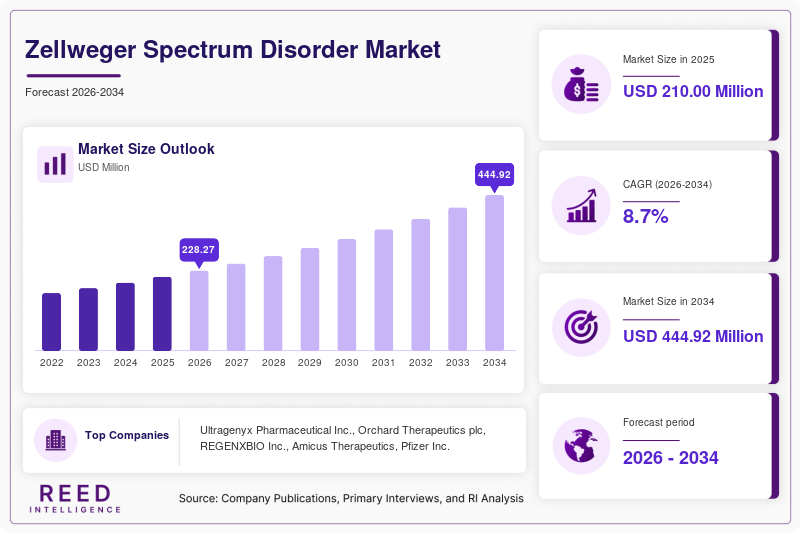
The Zellweger Spectrum Disorder Market size was valued at approximately USD 210 million in 2026 and is projected to reach around USD 410 million by 2034, growing at a CAGR of 8.7% during the forecast period (2026–2034). This growth reflects increasing clinical awareness, improved diagnostic technologies, and the gradual expansion of therapeutic research targeting rare genetic disorders.
A key global factor supporting market expansion is the growing adoption of advanced genetic screening and newborn testing programs. Governments and healthcare organizations are investing in early diagnosis initiatives, which has led to a rise in identified cases of Zellweger spectrum disorders (ZSD). This has, in turn, boosted demand for diagnostic tools, supportive therapies, and investigational drugs.
Key Highlights:
- North America dominated the market with 41% share in 2025, while Asia Pacific is projected to be the fastest-growing region at a CAGR of 10.4%.
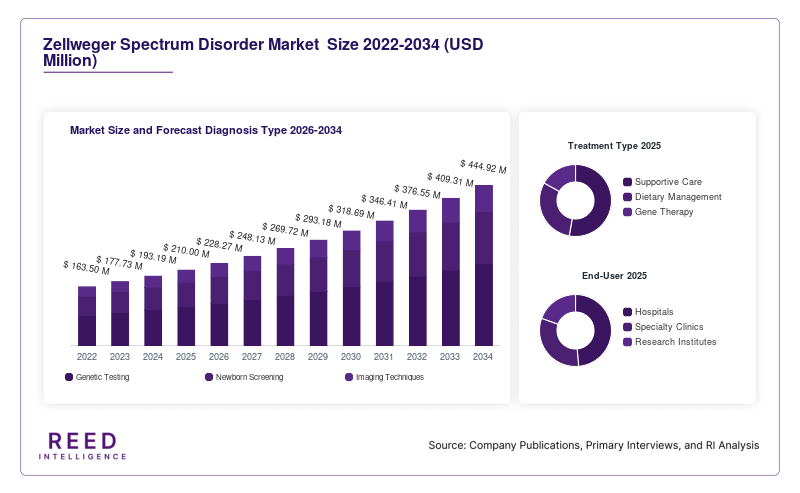
- Among segments, diagnostics led with 46% share, while gene therapy is expected to grow fastest at a CAGR of 11.2%.
- The United States remained the dominant country, with market values of USD 78 million in 2024 and USD 84 million in 2025.
Market Trends
Increasing Focus on Gene-Based Therapies
A significant trend shaping the Zellweger Spectrum Disorder Market is the increasing focus on gene-based and molecular therapies. As ZSD is caused by mutations in PEX genes affecting peroxisome function, research has shifted toward correcting genetic defects at the molecular level. Advances in gene-editing technologies, including viral vector-based delivery systems, are enabling early-stage clinical trials. Pharmaceutical and biotechnology companies are investing in precision medicine approaches that target disease pathology rather than just managing symptoms. This shift is expected to redefine long-term treatment outcomes and create new revenue streams within the market.
Expansion of Rare Disease Registries and Data Platforms
Another notable trend is the expansion of rare disease registries and patient data platforms. Organizations and research institutions are collaborating globally to collect real-world data on disease progression, treatment outcomes, and patient demographics. These registries help in understanding disease prevalence and facilitate clinical trial recruitment. Enhanced data availability supports better regulatory approvals and encourages investment in orphan drug development. Additionally, digital health platforms are improving patient monitoring and enabling personalized care strategies, contributing to the overall growth and sophistication of the Zellweger Spectrum Disorder Market.
Market Drivers
Rising Awareness and Early Diagnosis Initiatives
Growing awareness among healthcare professionals and caregivers about rare genetic disorders has significantly contributed to the expansion of the Zellweger Spectrum Disorder Market. Educational campaigns, improved physician training, and access to genetic counseling services have enhanced early detection rates. Early diagnosis allows for timely intervention, which can improve patient outcomes and increase the demand for supportive therapies and monitoring solutions.
Favorable Regulatory Environment for Orphan Drugs
The supportive regulatory landscape for orphan drugs is another major driver of market growth. Regulatory agencies across major economies offer incentives such as accelerated approval pathways, fee waivers, and extended market exclusivity. These policies encourage pharmaceutical companies to invest in the development of therapies for rare conditions like ZSD. As a result, the pipeline of investigational drugs is expanding, creating opportunities for commercialization and driving long-term growth in the Zellweger Spectrum Disorder Market.
Market Restraint
Limited Patient Population and High Treatment Costs
One of the primary restraints affecting the Zellweger Spectrum Disorder Market is the limited patient population coupled with high treatment costs. ZSD is an ultra-rare genetic disorder, which restricts the overall market size and makes large-scale clinical trials challenging. Pharmaceutical companies often face difficulties in recruiting sufficient participants for studies, leading to extended development timelines and increased costs.
Additionally, therapies for rare diseases are typically expensive due to high research and development investments and limited economies of scale. This creates affordability challenges for patients and healthcare systems, particularly in low- and middle-income countries. Limited reimbursement coverage further restricts access to advanced treatments.
The combination of a small patient pool and high costs also reduces the commercial attractiveness of the market for some stakeholders, potentially slowing innovation and delaying the introduction of new therapies.
Market Opportunities
Expansion of Newborn Screening Programs
The expansion of newborn screening programs presents a significant opportunity for the Zellweger Spectrum Disorder Market. Governments and healthcare providers are increasingly incorporating rare genetic disorders into routine screening panels. Early identification of ZSD cases enables timely intervention and improves survival rates. This trend is expected to drive demand for diagnostic kits and follow-up care services, creating growth opportunities for market players.
Advancements in Personalized Medicine
Advancements in personalized medicine are opening new avenues for targeted treatment approaches. Innovations in genomics and biomarker identification are enabling the development of customized therapies tailored to individual patients. Personalized treatment strategies can improve efficacy and reduce adverse effects, making them highly attractive in rare disease management. As research in this field progresses, it is expected to unlock new revenue streams and enhance the overall outlook of the Zellweger Spectrum Disorder Market.
Segmental Analysis
By Diagnosis Type
The genetic testing segment dominated the Zellweger Spectrum Disorder Market in 2025, accounting for approximately 46% share. This dominance is attributed to the increasing reliance on molecular diagnostics for accurate disease identification. Genetic testing provides precise insights into PEX gene mutations, making it the preferred diagnostic approach among healthcare professionals.
The newborn screening segment is expected to grow at the fastest CAGR of 10.8% during the forecast period. The expansion of national screening programs and advancements in screening technologies will drive this growth. Early detection capabilities are expected to significantly improve patient outcomes and increase demand for screening solutions.
By Treatment Type
The supportive care segment held the largest market share of around 52% in 2025, as there is currently no definitive cure for ZSD. Supportive treatments, including nutritional management and symptom control, remain essential for patient care.
The gene therapy segment is projected to grow at the fastest CAGR of 11.2%. Ongoing research in gene-editing technologies and increasing investment in precision medicine will drive this segment. The potential to address the root cause of the disorder is expected to attract significant attention from stakeholders.
By End-User
The hospitals segment dominated the market with a 49% share in 2025, driven by the availability of advanced diagnostic equipment and specialized healthcare professionals. Hospitals serve as primary centers for diagnosis and treatment of rare genetic disorders.
The specialty clinics segment is anticipated to grow at a CAGR of 9.6%, supported by the increasing establishment of dedicated rare disease centers. These clinics provide targeted care and personalized treatment approaches.
By Distribution Channel
The hospital pharmacies segment accounted for approximately 44% of the market share in 2025. This dominance is due to the direct availability of prescribed therapies within hospital settings.
The online pharmacies segment is expected to witness the fastest growth at a CAGR of 10.1%, driven by the increasing adoption of digital healthcare platforms and improved access to medications.
Regional Analysis
North America
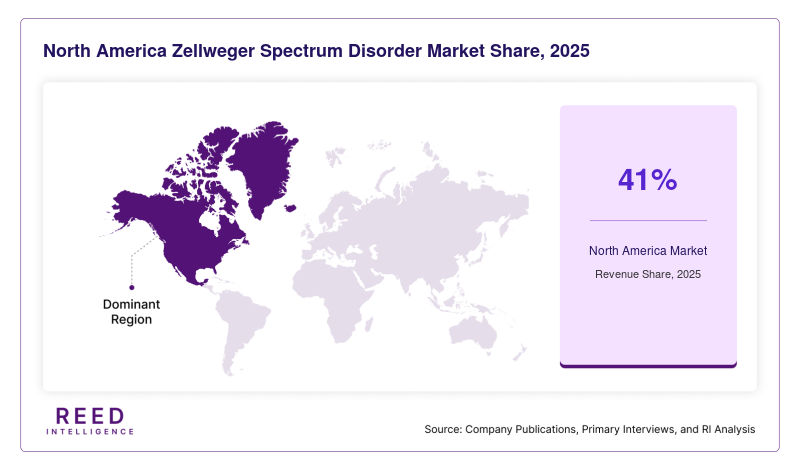
North America accounted for approximately 41% of the Zellweger Spectrum Disorder Market share in 2025 and will continue to maintain its leadership, growing at a projected CAGR of 8.5% during 2026–2034. The region benefits from advanced healthcare infrastructure, high awareness levels, and strong investment in rare disease research. The presence of leading pharmaceutical companies and robust regulatory support further contributes to market expansion.
The United States dominated the regional market due to its well-established healthcare system and significant funding for genetic research. The country’s strong focus on orphan drug development and access to advanced diagnostic technologies has supported consistent market growth.
Europe
Europe held around 27% market share in 2025 and is expected to grow at a CAGR of 8.2% over the forecast period. The region’s growth is supported by government initiatives aimed at improving rare disease diagnosis and treatment access. Collaborative research programs and funding from public health organizations have enhanced innovation in this market.
Germany emerged as the dominant country due to its strong healthcare infrastructure and emphasis on clinical research. The country’s investment in biotechnology and genetic studies has contributed to increased adoption of advanced diagnostic tools.
Asia Pacific
Asia Pacific represented nearly 18% of the market share in 2025 and is anticipated to expand at the fastest CAGR of 10.4% during the forecast period. Rapid improvements in healthcare infrastructure, increasing awareness, and rising healthcare expenditure are driving growth in this region.
China led the regional market due to its large population base and expanding genetic testing capabilities. Government initiatives to strengthen healthcare systems and improve diagnostic access have significantly contributed to market growth.
Middle East & Africa
The Middle East & Africa accounted for approximately 7% of the market share in 2025 and is expected to grow at a CAGR of 7.9%. Limited awareness and healthcare infrastructure challenges have historically restricted growth, but increasing investments are gradually improving the market outlook.
Saudi Arabia dominated the region due to its focus on healthcare modernization and investments in specialized medical facilities. The country’s initiatives to enhance genetic screening programs have supported market development.
Latin America
Latin America held around 7% of the market share in 2025 and is projected to grow at a CAGR of 8.1%. The region is witnessing gradual improvements in healthcare access and awareness of rare diseases.
Brazil led the regional market due to its expanding healthcare system and increasing adoption of diagnostic technologies. Government efforts to improve healthcare coverage have positively influenced market growth.
Competitive Landscape
The Zellweger Spectrum Disorder Market is characterized by a mix of established pharmaceutical companies and emerging biotechnology firms focusing on rare disease therapies. The competitive landscape is shaped by ongoing research collaborations, strategic partnerships, and product development initiatives.
Among key players, Ultragenyx Pharmaceutical Inc. is considered a market leader due to its strong focus on rare genetic disorders and active pipeline of investigational therapies. The company recently advanced a gene therapy candidate into early-stage clinical trials, highlighting its commitment to innovation.
Other companies are also investing in research and development to expand their product portfolios and strengthen their market presence. The competitive environment remains dynamic, with increasing emphasis on precision medicine and targeted therapies.
Key Players List
- Ultragenyx Pharmaceutical Inc.
- Orchard Therapeutics plc
- REGENXBIO Inc.
- Amicus Therapeutics
- Pfizer Inc.
- Novartis AG
- Sanofi S.A.
- Takeda Pharmaceutical Company Limited
- BioMarin Pharmaceutical Inc.
- Sarepta Therapeutics
- Moderna, Inc.
- Vertex Pharmaceuticals Incorporated
- Abeona Therapeutics Inc.
- bluebird bio, Inc.
- Passage Bio, Inc.
Recent Developments
- In 2025, several biotechnology firms initiated early-stage clinical trials for gene therapy candidates targeting peroxisomal disorders.
- Collaborative agreements between pharmaceutical companies and research institutions increased to accelerate drug development.
- Advances in genetic sequencing technologies improved diagnostic accuracy and reduced testing time.
- Governments in multiple regions expanded newborn screening programs, enhancing early detection rates.
- Digital health platforms were introduced to improve patient monitoring and data collection in rare disease management.
Zellweger Spectrum Disorder Market Segments
Diagnosis Type
- Genetic Testing
- Newborn Screening
- Imaging Techniques
Treatment Type
- Supportive Care
- Dietary Management
- Gene Therapy
End-User
- Hospitals
- Specialty Clinics
- Research Institutes
Distribution Channel
- Hospital Pharmacies
- Retail Pharmacies
- Online Pharmacies
By Region
- North America
- Europe
- APAC
- Middle East and Africa
- LATAM