Zinc Glycinate Market Size, Share & Demand Report By Form (Powder, Liquid), By Application (Dietary Supplements, Functional Foods & Beverages, Pharmaceuticals), By End-Use (Adults, Pediatrics, Geriatrics), By Distribution Channel (Online, Offline) & Segment Forecasts, 2025–2034
USD 3950
Market Overview
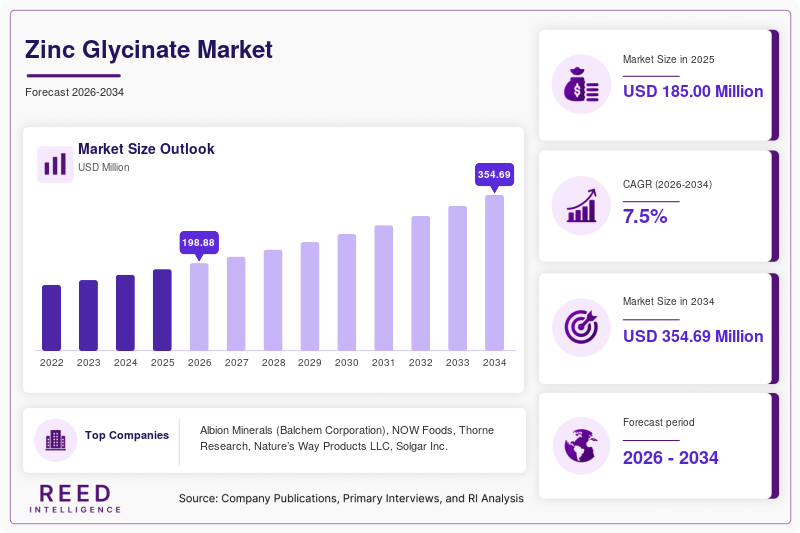
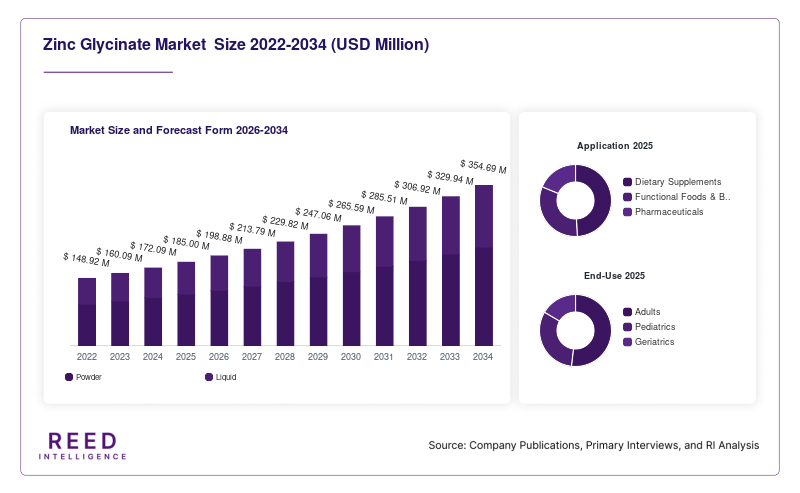
The global Zinc Glycinate Market size was valued at approximately USD 185 million in 2025 and is projected to reach USD 355 million by 2034, expanding at a CAGR of 7.5% during the forecast period (2025–2034). Zinc glycinate, a highly bioavailable chelated form of zinc, has gained prominence across dietary supplements, pharmaceuticals, and functional food applications due to its superior absorption and reduced gastrointestinal side effects compared to conventional zinc salts.
A major global factor supporting market growth is the increasing awareness of micronutrient deficiencies and preventive healthcare practices. Rising consumer focus on immunity, skin health, and metabolic functions has significantly driven demand for high-quality zinc supplements, particularly in developed and emerging economies. The shift toward premium nutraceutical ingredients has further enhanced the adoption of zinc glycinate in formulations targeting wellness-conscious consumers.
Key Highlights
- North America dominated the Zinc Glycinate Market with a 38% share in 2025, while Asia Pacific is expected to register the fastest growth at a CAGR of 9.2%.
- Dietary supplements emerged as the leading application segment with a 52% market share, while functional foods are projected to grow at a CAGR of 8.6%.
- Powder form led the product type segment with a 61% share, whereas liquid formulations are anticipated to grow at a CAGR of 8.9%.
- The United States remained the dominant country, with a market value of USD 68 million in 2025, projected to reach USD 72 million in 2026.
Market Trends
Rising Demand for High-Bioavailability Nutraceuticals
The Zinc Glycinate Market is witnessing a steady shift toward highly bioavailable mineral supplements. Consumers increasingly prefer chelated minerals due to their enhanced absorption and lower risk of digestive discomfort. Zinc glycinate is emerging as a preferred choice in premium supplement formulations, especially in products targeting immune health, cognitive function, and sports nutrition. Manufacturers are focusing on clean-label and clinically backed formulations, aligning with consumer expectations for efficacy and transparency.
Expansion of Functional Food and Beverage Applications
The integration of zinc glycinate into functional foods and beverages is gaining traction. Food manufacturers are incorporating zinc glycinate into fortified products such as energy drinks, protein bars, and dairy alternatives. This trend is driven by growing demand for convenient nutrition solutions that support daily wellness. Additionally, the stability and neutral taste profile of zinc glycinate make it suitable for diverse food applications, further supporting its adoption in the food and beverage sector.
Market Drivers
Increasing Focus on Preventive Healthcare
The growing emphasis on preventive healthcare is a key driver of the Zinc Glycinate Market. Consumers are becoming more proactive in managing their health, leading to increased consumption of dietary supplements. Zinc plays a vital role in immune function, wound healing, and cellular metabolism, making zinc glycinate a preferred option for daily supplementation. The aging population and rising incidence of lifestyle-related conditions are further accelerating demand for zinc-based nutraceuticals.
Growth in Sports and Fitness Nutrition
The expansion of the sports nutrition industry is significantly contributing to market growth. Athletes and fitness enthusiasts require essential micronutrients to support muscle recovery, endurance, and overall performance. Zinc glycinate is widely used in sports supplements due to its high absorption rate and effectiveness in maintaining optimal zinc levels. The increasing popularity of fitness regimes and gym culture globally is expected to continue driving demand for zinc glycinate-based products.
Market Restraint
High Cost Compared to Conventional Zinc Sources
One of the major challenges in the Zinc Glycinate Market is the relatively higher cost of zinc glycinate compared to traditional zinc salts such as zinc sulfate and zinc oxide. The chelation process involved in manufacturing zinc glycinate increases production costs, which can limit its adoption in cost-sensitive markets. Small and medium-scale manufacturers may find it challenging to incorporate zinc glycinate into their product portfolios due to pricing constraints.
Additionally, in developing regions where affordability is a key purchasing factor, consumers often opt for lower-cost alternatives, even if they offer lower bioavailability. This price sensitivity can hinder market penetration, particularly in mass-market segments. While premium product positioning helps offset this challenge in developed markets, the overall growth of the Zinc Glycinate Market may face limitations due to cost-related barriers.
Market Opportunities
Expansion in Emerging Markets
Emerging economies present significant growth opportunities for the Zinc Glycinate Market. Increasing disposable incomes, urbanization, and rising health awareness are driving demand for advanced nutritional supplements. Governments and health organizations are also promoting micronutrient supplementation programs, creating a favorable environment for zinc glycinate adoption. Market players can leverage these trends by introducing affordable product variants tailored to local needs.
Innovation in Personalized Nutrition
The growing trend of personalized nutrition offers new avenues for market expansion. Consumers are increasingly seeking customized supplement solutions based on their specific health requirements. Zinc glycinate, with its superior absorption and compatibility with other nutrients, is well-suited for inclusion in personalized formulations. Advances in digital health technologies and diagnostic tools are enabling companies to develop targeted products, enhancing the value proposition of zinc glycinate in the nutraceutical industry.
Segmental Analysis
By Form
The powder form segment dominated the Zinc Glycinate Market, accounting for 61% of the share in 2025. Powdered zinc glycinate is widely used in dietary supplements due to its ease of formulation, stability, and cost-effectiveness. Manufacturers prefer powder form for capsules and tablets, making it a standard choice across the nutraceutical industry.
The liquid form segment is projected to grow at a CAGR of 8.9% during the forecast period. Liquid formulations are gaining popularity due to their higher absorption rates and convenience, particularly among children and elderly consumers. The increasing demand for ready-to-consume supplements and functional beverages is expected to drive the growth of liquid zinc glycinate.
By Application
Dietary supplements held the largest share of 52% in 2025 within the Zinc Glycinate Market. The widespread use of zinc glycinate in multivitamins, immune boosters, and wellness products has contributed to its dominance. Consumers increasingly rely on supplements to meet their daily nutritional requirements.
The functional food segment is anticipated to grow at a CAGR of 8.6%. The incorporation of zinc glycinate into fortified foods and beverages is expanding rapidly. Food manufacturers are leveraging its bioavailability and stability to enhance product nutritional value, supporting the growth of this segment.
By End-Use
The adult segment dominated the market with a 65% share in 2025. Adults are the primary consumers of dietary supplements, driven by increasing health awareness and the need to maintain overall wellness. The demand for immune support and stress management products has further boosted this segment.
The pediatric segment is expected to grow at a CAGR of 8.3%. The rising focus on child nutrition and increasing awareness of micronutrient deficiencies are driving demand for zinc glycinate-based pediatric supplements. Manufacturers are developing flavored and easy-to-consume formulations to cater to this segment.
By Distribution Channel
Offline channels accounted for 58% of the market share in 2025, driven by the strong presence of pharmacies, health stores, and supermarkets. Consumers often prefer offline channels for purchasing supplements due to trust and product availability.
Online channels are projected to grow at a CAGR of 9.5%. The increasing penetration of e-commerce platforms and growing consumer preference for convenient shopping are driving this segment. Online platforms also offer a wide range of products and competitive pricing, enhancing their appeal.
Regional Analysis
North America
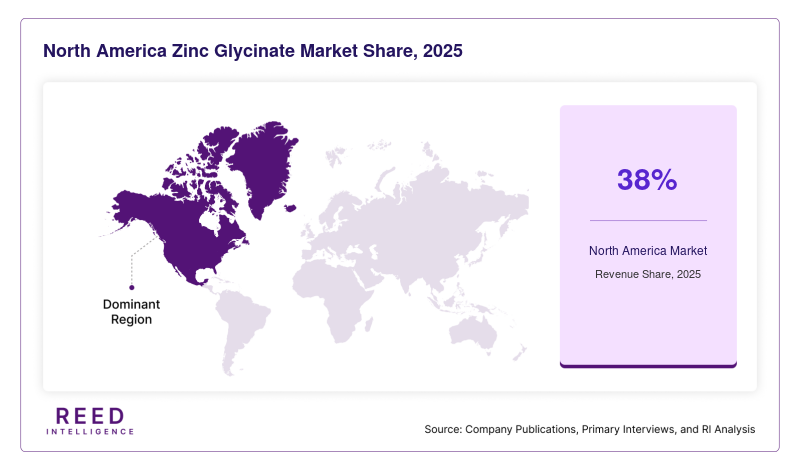
North America accounted for 38% of the Zinc Glycinate Market share in 2025 and is expected to grow at a CAGR of 6.8% during the forecast period. The region has a well-established dietary supplement industry and high consumer awareness regarding micronutrient intake. The presence of advanced healthcare infrastructure and strong regulatory frameworks has supported the adoption of high-quality ingredients such as zinc glycinate.
The United States dominated the regional market due to its large consumer base and strong demand for premium nutraceutical products. The increasing prevalence of health-conscious lifestyles and widespread use of dietary supplements have contributed to sustained market growth. Additionally, the presence of leading supplement manufacturers and ongoing product innovations have reinforced the country’s leadership in the Zinc Glycinate Market.
Europe
Europe held a 27% market share in 2025 and is projected to expand at a CAGR of 7.1%. The region has witnessed growing demand for clean-label and organic supplements, driving the adoption of zinc glycinate. Regulatory support for high-quality nutraceutical ingredients has further strengthened market growth.
Germany emerged as the dominant country in Europe, supported by its strong pharmaceutical and nutraceutical industries. The country’s focus on preventive healthcare and increasing consumer preference for natural and bioavailable ingredients have contributed to the growth of zinc glycinate-based products. The expansion of functional food applications is also supporting market development.
Asia Pacific
Asia Pacific accounted for 22% of the Zinc Glycinate Market in 2025 and is anticipated to grow at the fastest CAGR of 9.2%. Rapid urbanization, increasing disposable incomes, and rising awareness of nutritional deficiencies are key factors driving market growth in the region.
China led the regional market due to its large population and increasing demand for dietary supplements. The growing middle class and expanding e-commerce sector have facilitated access to nutraceutical products. Government initiatives promoting health and nutrition have also played a significant role in boosting the adoption of zinc glycinate.
Middle East & Africa
The Middle East & Africa region held a 7% share in 2025 and is expected to grow at a CAGR of 6.5%. The market is gradually expanding due to improving healthcare infrastructure and rising awareness of nutritional health.
The United Arab Emirates dominated the region, driven by increasing consumer spending on health and wellness products. The country’s growing expatriate population and demand for premium supplements have supported market growth. Additionally, the expansion of retail and online distribution channels has improved product accessibility.
Latin America
Latin America captured 6% of the Zinc Glycinate Market share in 2025 and is projected to grow at a CAGR of 6.9%. The region is experiencing steady growth due to increasing health awareness and expanding dietary supplement markets.
Brazil emerged as the leading country, supported by its large population and growing demand for nutraceutical products. The rising prevalence of micronutrient deficiencies and increasing adoption of preventive healthcare practices have contributed to market expansion. Local manufacturers are also focusing on product innovation to cater to evolving consumer preferences.
Competitive Landscape
The Zinc Glycinate Market is moderately fragmented, with several global and regional players competing on product quality, innovation, and pricing. Leading companies focus on expanding their product portfolios and strengthening distribution networks to gain a competitive edge.
Albion Minerals (Balchem Corporation) is recognized as a market leader, known for its patented chelated mineral technologies. The company recently introduced advanced zinc glycinate formulations targeting enhanced bioavailability and improved consumer outcomes. Other key players are investing in research and development to differentiate their offerings and cater to evolving consumer preferences.
Strategic collaborations, product launches, and expansion into emerging markets remain key strategies adopted by market participants to strengthen their position in the global Zinc Glycinate Market.
Key Players
- Albion Minerals (Balchem Corporation)
- NOW Foods
- Thorne Research
- Nature’s Way Products LLC
- Solgar Inc.
- Pure Encapsulations
- Doctor’s Best Inc.
- NutraBio Labs
- Swanson Health Products
- Life Extension
- Jarrow Formulas
- Douglas Laboratories
- Bluebonnet Nutrition
- Garden of Life
- Source Naturals
Recent Developments
- 2024: Key manufacturers expanded production capacities to meet rising global demand for chelated minerals.
- 2024: New product launches focused on combining zinc glycinate with complementary nutrients such as magnesium and vitamin C.
- 2025: Companies increased investments in personalized nutrition platforms incorporating zinc glycinate formulations.
- 2025: Strategic partnerships between supplement brands and e-commerce platforms enhanced product accessibility.
- 2025: Innovations in liquid zinc glycinate formulations improved taste and consumer acceptance.
Zinc Glycinate Market Segments
Form
- Powder
- Liquid
Application
- Dietary Supplements
- Functional Foods & Beverages
- Pharmaceuticals
End-Use
- Adults
- Pediatrics
- Geriatrics
Distribution Channel
- Online Retail
- Pharmacies & Drug Stores
- Supermarkets & Hypermarkets
- Health & Specialty Stores
By Region
- North America
- Europe
- APAC
- Middle East and Africa
- LATAM