Health Drink Market Size, Share & Demand Report By Product Type (Functional Drinks, Protein Drinks, Vitamin and Mineral Drinks), By Distribution Channel (Convenience Stores, Specialty Stores, Online Retail, Pharmacies and Drug Stores), By Consumer Group (Children, Adults, Senior Consumers, Athletes and Fitness Enthusiasts), By Region & Segment Forecasts, 2026–2034
USD 3950
Market Overview
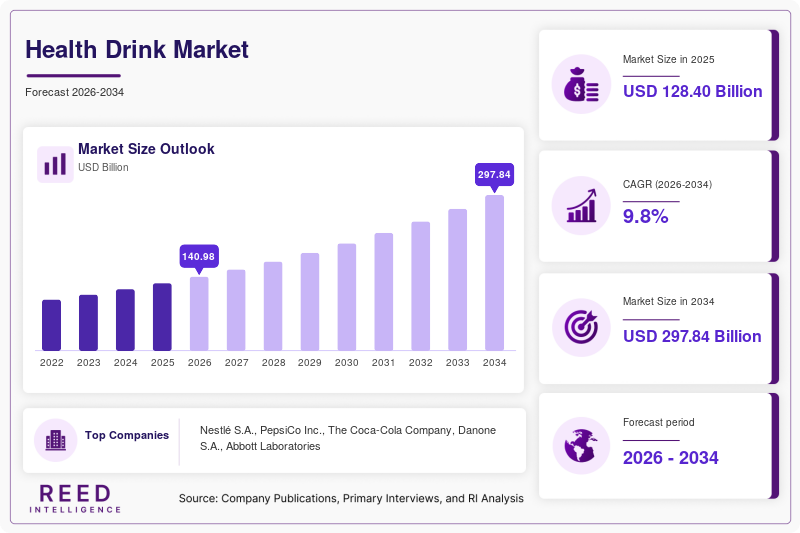
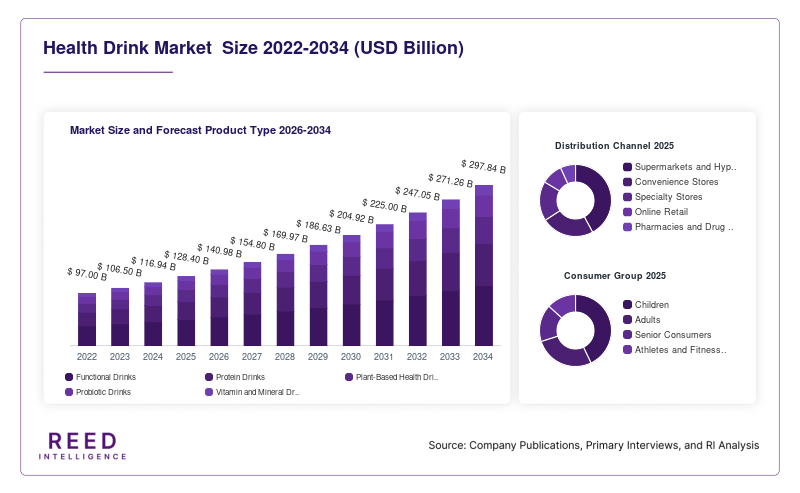
The global Health Drink Market size was valued at USD 128.4 billion in 2026 and is projected to reach USD 271.6 billion by 2034, expanding at a CAGR of 9.8% during 2026–2034. The market continues to evolve as consumers increasingly prioritize preventive healthcare, nutritional supplementation, and functional wellness products. Health drinks have become an important component of daily dietary routines, driven by growing awareness regarding immunity enhancement, digestive health, energy management, and overall well-being.
The industry has experienced notable expansion due to changing consumer lifestyles and rising demand for convenient nutrition solutions. Urban populations across developed and emerging economies are increasingly seeking beverages that offer health benefits beyond basic hydration. Manufacturers are responding through product innovation, including low-sugar formulations, plant-based ingredients, probiotics, vitamins, minerals, and protein-enriched beverages. The integration of clean-label ingredients and natural formulations has further strengthened consumer confidence and encouraged market adoption.
Key Highlights
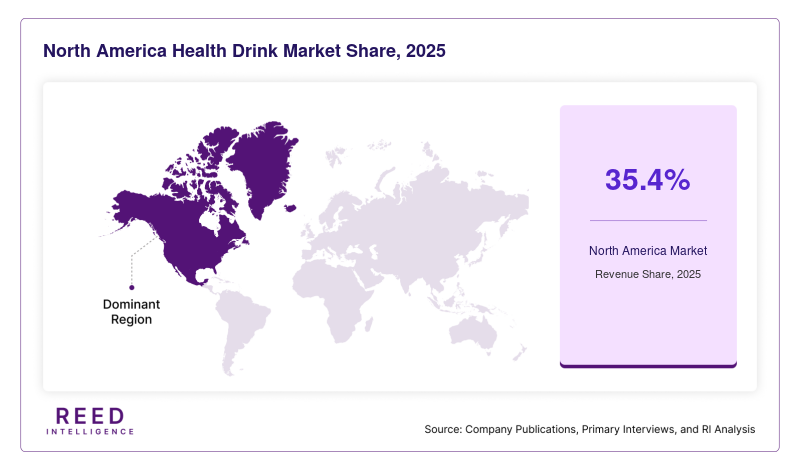
- North America dominated the market with a 35.4% share in 2025.
- while Asia Pacific is expected to grow at the fastest CAGR of 11.4% during 2026–2034.
- By product type, functional drinks accounted for the largest share of 39.2%.
- while plant-based health drinks are projected to grow at a CAGR of 12.6%.
- By distribution channel, supermarkets and hypermarkets led with a 42.8% share.
- whereas online retail channels are expected to expand at a CAGR of 13.2%.
- By consumer group, adults held the largest share of 48.5%.
- while senior consumers are projected to grow at a CAGR of 11.8%.
- The United States remained the dominant country, with market values of USD 34.8 billion in 2024 and USD 37.6 billion in 2025.
Market Trends
Growing Preference for Plant-Based Functional Beverages
Consumer interest in plant-derived nutrition continues to reshape the Health Drink Market. Plant-based beverages formulated with oat, almond, soy, pea, and coconut ingredients are gaining strong traction among health-conscious consumers. These products appeal to individuals seeking dairy alternatives, clean-label formulations, and sustainable nutrition options. Beverage manufacturers are introducing innovative combinations enriched with proteins, vitamins, probiotics, and antioxidants to enhance nutritional value. The trend is particularly visible among younger consumers who prioritize environmental responsibility and wellness simultaneously. Retail shelf space dedicated to plant-based health drinks continues to expand, reflecting increasing consumer acceptance and strengthening market penetration across both developed and developing economies.
Rising Demand for Personalized Nutrition Solutions
Personalized nutrition is emerging as an important trend influencing product development strategies across the health beverage industry. Consumers increasingly seek drinks tailored to specific wellness goals such as immunity support, weight management, digestive health, hydration, mental focus, and sports recovery. Manufacturers are utilizing digital health technologies, consumer health assessments, and data-driven product innovation to address individualized nutritional requirements. Functional ingredients including probiotics, adaptogens, collagen, and botanical extracts are becoming common in specialized beverage formulations. This trend supports premium product positioning and encourages brand differentiation, enabling companies to capture consumers willing to invest in targeted health and wellness solutions.
Market Drivers
Increasing Consumer Awareness of Preventive Healthcare
Growing awareness regarding preventive healthcare remains a primary driver of the Health Drink Market. Consumers are increasingly recognizing the role of nutrition in reducing health risks and maintaining long-term wellness. As concerns surrounding obesity, diabetes, cardiovascular conditions, and weakened immunity continue to rise, demand for nutrient-rich beverages has expanded significantly. Health drinks containing vitamins, minerals, proteins, probiotics, and herbal ingredients are increasingly perceived as practical dietary supplements. Educational campaigns, healthcare recommendations, and digital wellness platforms have enhanced public understanding of nutritional benefits. This evolving consumer mindset continues to support consistent market growth across various demographic groups and geographic regions.
Expansion of Modern Retail and E-Commerce Networks
The rapid expansion of retail infrastructure and online distribution channels is accelerating market accessibility. Supermarkets, hypermarkets, convenience stores, specialty health outlets, and digital marketplaces provide consumers with extensive product choices and convenient purchasing options. E-commerce platforms have become particularly influential due to their ability to offer personalized recommendations, subscription services, product comparisons, and home delivery convenience. Manufacturers benefit from broader geographic reach and direct consumer engagement opportunities. The growth of digital commerce also enables smaller brands to enter competitive markets more effectively, fostering innovation and increasing product visibility within the global health beverage industry.
Market Restraints
High Product Pricing and Consumer Affordability Challenges
Premium pricing remains a notable challenge for the Health Drink Market, particularly in price-sensitive regions. Many health beverages contain specialized ingredients such as probiotics, plant proteins, botanical extracts, collagen peptides, and functional nutrients that increase manufacturing costs. These expenses are often transferred to consumers through higher retail prices. As a result, some consumers may limit purchases or switch to conventional beverage alternatives. The challenge is particularly evident in emerging economies where disposable income levels vary significantly across consumer segments. Additionally, frequent product innovation and premium packaging contribute to elevated costs. While affluent consumers continue to support premium health drink categories, broader market penetration may be constrained unless manufacturers achieve greater cost efficiencies, optimize supply chains, and develop affordable product alternatives that maintain nutritional value and quality standards.
Market Opportunities
Expansion of Health Drinks for Aging Populations
The growing global elderly population presents substantial opportunities for market participants. Older consumers increasingly seek nutritional beverages designed to support bone health, muscle maintenance, immunity, cognitive function, and overall vitality. Manufacturers are developing specialized formulations containing calcium, vitamin D, protein blends, omega fatty acids, and functional nutrients tailored to senior health requirements. Rising healthcare awareness among aging populations is encouraging proactive nutrition management. Furthermore, healthcare providers and wellness organizations increasingly promote nutritional supplementation as part of healthy aging strategies. These developments create favorable conditions for introducing targeted health drink products that address age-related wellness concerns while supporting long-term market growth.
Increasing Penetration in Emerging Economies
Emerging markets offer significant growth potential due to rising disposable incomes, urbanization, and expanding middle-class populations. Consumers in countries across Asia Pacific, Latin America, and parts of Africa are becoming more aware of nutrition and wellness benefits associated with functional beverages. Modern retail expansion and digital commerce platforms are improving product availability across previously underserved regions. Manufacturers are adapting formulations, packaging sizes, and pricing strategies to suit local consumer preferences and purchasing power. Additionally, government initiatives promoting nutritional awareness contribute to stronger demand for health-oriented beverages. These factors collectively create favorable opportunities for companies seeking geographic expansion and long-term revenue growth.
Segmental Analysis
By Product Type
Functional drinks represented the dominant product category, accounting for 39.2% of market revenue in 2024. This segment benefits from strong consumer demand for beverages offering specific health benefits beyond hydration. Functional drinks often contain vitamins, minerals, probiotics, antioxidants, and botanical ingredients that support immunity, digestion, energy levels, and overall wellness. Their widespread availability across retail channels and growing acceptance among consumers of different age groups contribute significantly to market leadership. Continuous innovation in flavors, formulations, and ingredient combinations further enhances consumer engagement and supports sustained segment growth.
Plant-based health drinks are expected to register the fastest CAGR of 12.6% during the forecast period. Rising adoption of vegan, vegetarian, and flexitarian dietary patterns is driving demand for dairy-free nutritional beverages. Consumers increasingly seek products perceived as sustainable, natural, and environmentally responsible. Manufacturers continue investing in advanced plant protein technologies and nutritional enhancements to improve taste, texture, and functionality. Expanding awareness of lactose intolerance and dietary sensitivities further supports segment growth. These factors collectively position plant-based beverages as a key growth category within the global market.
By Distribution Channel
Supermarkets and hypermarkets accounted for the largest share of 42.8% in 2024, maintaining dominance due to extensive product assortments and strong consumer accessibility. These retail formats provide consumers with opportunities to compare brands, evaluate product claims, and purchase multiple health beverage categories in a single shopping trip. Promotional campaigns, in-store displays, and strategic shelf placements enhance product visibility and encourage impulse purchases. Strong retail partnerships between beverage manufacturers and major retail chains further support segment leadership across developed and emerging markets.
Online retail channels are anticipated to grow at the fastest CAGR of 13.2% through 2034. Increasing internet penetration and changing shopping behaviors have transformed consumer purchasing patterns. Digital platforms offer convenience, subscription models, personalized recommendations, and access to a wider range of products than traditional stores. Social media marketing and influencer-driven promotions also contribute to stronger online sales performance. Additionally, direct-to-consumer business models enable manufacturers to strengthen customer relationships and gather valuable consumer insights, further accelerating channel growth.
By Consumer Group
Adults held the dominant market position with a 48.5% share in 2024. This consumer group actively seeks nutritional beverages that support energy, productivity, fitness, immunity, and overall wellness. Busy lifestyles and increasing health awareness have encouraged regular consumption of functional beverages among working professionals and health-conscious individuals. Product offerings targeting adults include protein drinks, meal replacement beverages, immunity boosters, and hydration solutions. The broad applicability of health drinks across diverse adult lifestyles supports sustained segment leadership.
Senior consumers are projected to expand at the fastest CAGR of 11.8% during 2026–2034. Growing life expectancy and increasing awareness of healthy aging are driving demand for specialized nutritional beverages. Products formulated to support bone strength, muscle health, immunity, and cognitive wellness are attracting significant attention from older consumers. Healthcare professionals increasingly recommend nutritional supplementation as part of preventive wellness strategies. Manufacturers are responding with age-specific formulations and easy-to-consume beverage formats, creating favorable conditions for rapid segment expansion throughout the forecast period.
Regional Analysis
North America
North America accounted for 35.4% of the global Health Drink Market in 2025 and is expected to expand at a CAGR of 8.7% through 2034. The region maintains a strong position due to widespread consumer awareness regarding nutrition, fitness, and preventive healthcare. High spending on wellness products and strong demand for functional beverages continue to support market development. Product innovation involving protein drinks, immunity beverages, and probiotic formulations remains a key contributor to regional revenue growth.
The United States dominates the regional market and benefits from advanced retail infrastructure and high consumer purchasing power. A unique growth factor is the widespread adoption of fitness-focused lifestyles supported by health clubs, wellness programs, and digital fitness platforms. These factors encourage consistent consumption of nutritional beverages among diverse consumer groups, supporting sustained market expansion.
Europe
Europe represented 28.6% of global market revenue in 2025 and is projected to register a CAGR of 8.5% during the forecast period. The region demonstrates strong demand for functional and natural beverages due to increasing health consciousness among consumers. Regulatory emphasis on product quality and ingredient transparency has encouraged manufacturers to develop clean-label health drinks that align with evolving consumer preferences.
Germany remains the leading country within the European market. A distinctive growth factor is the strong consumer preference for organic and sustainably sourced products. Growing interest in natural ingredients, environmentally responsible packaging, and premium nutritional formulations continues to support demand. The country's mature retail environment further facilitates widespread product availability and consumer adoption.
Asia Pacific
Asia Pacific held 22.8% of the Health Drink Market in 2025 and is anticipated to achieve the fastest CAGR of 11.4% through 2034. Rapid urbanization, increasing disposable incomes, and growing awareness of wellness products are creating favorable market conditions. Demand for fortified beverages, energy drinks, and nutritional supplements continues to rise across both metropolitan and secondary urban centers throughout the region.
China leads the Asia Pacific market due to its large consumer base and expanding middle-class population. A unique growth factor is the increasing integration of traditional wellness concepts with modern nutritional beverages. Consumers actively seek products combining functional ingredients with established health traditions, encouraging innovation and accelerating market penetration across multiple beverage categories.
Middle East & Africa
The Middle East & Africa accounted for 6.1% of global market revenue in 2025 and is expected to grow at a CAGR of 9.3% during 2026–2034. Rising health awareness, expanding urban populations, and increasing availability of international beverage brands contribute to regional market development. Consumers are gradually shifting toward functional beverages that support hydration, energy management, and nutritional supplementation.
The United Arab Emirates remains a dominant country within the region. A unique growth factor is the increasing focus on wellness tourism and premium lifestyle consumption. Consumers frequently seek innovative health-oriented products aligned with active lifestyles. Strong retail investments and growing interest in fitness and preventive healthcare continue to stimulate market demand.
Latin America
Latin America captured 7.1% of the global Health Drink Market in 2025 and is projected to expand at a CAGR of 9.0% through 2034. Rising awareness of nutrition and increasing availability of fortified beverages are supporting regional growth. Manufacturers continue introducing affordable health drink options tailored to local consumer preferences, contributing to broader market penetration and demand expansion.
Brazil dominates the Latin American market due to its large population and expanding wellness sector. A unique growth factor is the growing popularity of sports nutrition and active lifestyle products. Increased participation in recreational fitness activities and sports-related wellness programs has strengthened demand for protein beverages, energy drinks, and recovery-focused nutritional products.
Competitive Landscape
The Health Drink Market remains moderately consolidated, with global beverage manufacturers competing through product innovation, brand positioning, strategic partnerships, and geographic expansion initiatives. Companies are increasingly investing in functional ingredients, clean-label formulations, and sustainable packaging solutions to strengthen market presence. Research and development activities focus on enhancing nutritional value while addressing evolving consumer preferences related to taste, convenience, and wellness benefits.
Nestlé S.A. continues to maintain a leading position due to its extensive portfolio of nutritional beverages and global distribution capabilities. Recent developments across the industry include investments in plant-based beverage production, expansion of functional drink portfolios, and acquisitions designed to strengthen health and wellness offerings. Other prominent participants actively pursue collaborations with nutrition experts and ingredient suppliers to accelerate product innovation and market penetration. Competitive dynamics are expected to intensify as consumer demand for specialized health beverages continues to grow.
Key Players
- Nestlé S.A.
- PepsiCo Inc.
- The Coca-Cola Company
- Danone S.A.
- Abbott Laboratories
- Glanbia plc
- Yakult Honsha Co., Ltd.
- Otsuka Holdings Co., Ltd.
- Monster Beverage Corporation
- Herbalife Ltd.
- Amway Corporation
- Keurig Dr Pepper Inc.
- FrieslandCampina N.V.
- Arla Foods Group
- Meiji Holdings Co., Ltd.
Recent Developments
- Nestlé expanded its functional nutrition beverage portfolio with new immunity-support drink formulations targeting adult consumers.
- PepsiCo introduced a plant-based health drink range featuring protein-enriched ingredients and reduced sugar content.
- Danone increased production capacity for probiotic beverages to meet growing demand across Asia Pacific markets.
- Abbott Laboratories launched advanced nutritional drinks designed to support healthy aging and senior wellness requirements.
- The Coca-Cola Company expanded its wellness beverage portfolio through new vitamin-enhanced and hydration-focused product offerings.
Health Drink Market Segments
Product Type
- Functional Drinks
- Protein Drinks
- Plant-Based Health Drinks
- Probiotic Drinks
- Vitamin and Mineral Drinks
Distribution Channel
- Supermarkets and Hypermarkets
- Convenience Stores
- Specialty Stores
- Online Retail
- Pharmacies and Drug Stores
Consumer Group
- Children
- Adults
- Senior Consumers
- Athletes and Fitness Enthusiasts
By Region
- North America
- Europe
- APAC
- Middle East and Africa
- LATAM