Prescription Dog Food Market Size, Share & Demand Report By Product Type (Weight Management Dog Food, Urinary Care Dog Food, Allergy & Skin Care Dog Food, Joint Care Dog Food, Diabetes Management Dog Food), By Distribution Channel (Online Retail, Supermarkets & Hypermarkets, Others), By Health Condition (Obesity Management, Kidney Disorders, Urinary Tract Disorders, Diabetes, Food Allergies, Joint Disorders), By Region & Segment Forecasts, 2026–2034
USD 3950
Market Overview
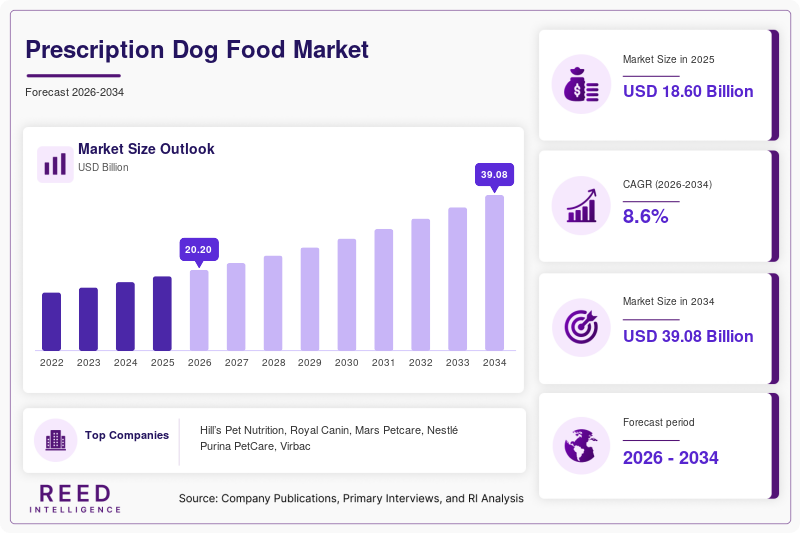
The global Prescription Dog Food Market size was valued at USD 18.6 billion in 2026 and is projected to reach USD 35.9 billion by 2034, expanding at a CAGR of 8.6% during 2026–2034. The market continues to witness steady growth due to the increasing prevalence of chronic health conditions among companion animals and the growing willingness of pet owners to invest in specialized nutritional solutions. Prescription dog food products are formulated to support the management of medical conditions such as obesity, diabetes, kidney disease, gastrointestinal disorders, urinary tract issues, food sensitivities, and joint health concerns.
One of the major global factors supporting market expansion is the humanization of pets. Dog owners increasingly view pets as family members and are adopting preventive healthcare approaches similar to those used for humans. This shift has significantly increased spending on veterinary services, therapeutic nutrition products, and disease-specific dietary solutions. Veterinary recommendations continue to influence purchasing decisions, while advancements in animal nutrition science have encouraged manufacturers to introduce more targeted and clinically tested formulations.
Key Highlights
- North America dominated the market with a 34.8% share in 2025.
- while Asia Pacific is expected to grow at the fastest CAGR of 10.8% during 2026–2034.
- By product type, Digestive Care Dog Food accounted for the largest share of 31.6%.
- while Weight Management Dog Food is projected to grow at a CAGR of 10.9%.
- By distribution channel, Veterinary Clinics & Hospitals led with a 44.3% share.
- whereas Online Retail is expected to expand at a CAGR of 12.1%.
- By health condition, Gastrointestinal Disorders represented the largest share of 28.4%.
- while Obesity Management is anticipated to grow at a CAGR of 11.5%.
- The United States remained the dominant country, with market values of USD 4.72 billion in 2024 and USD 5.09 billion in 2025.
Market Trends
Expansion of Personalized Therapeutic Nutrition
The prescription dog food market is experiencing a notable shift toward personalized therapeutic nutrition. Pet owners increasingly seek dietary products tailored to the specific medical conditions, age groups, breed characteristics, and lifestyle requirements of their dogs. Veterinary professionals are recommending customized feeding plans that combine prescription diets with broader treatment strategies. Manufacturers are responding by developing targeted formulations containing specialized protein sources, functional fibers, probiotics, omega fatty acids, and condition-specific nutrient profiles. The growing availability of diagnostic tools and pet health monitoring technologies is further supporting personalized nutrition trends. As consumers become more educated about disease prevention and long-term health management, demand for highly specialized prescription diets continues to rise across both developed and emerging markets.
Growth of Digital Veterinary and E-Commerce Ecosystems
Digital transformation across the pet healthcare industry has become a significant trend shaping market development. Online veterinary consultations, telehealth platforms, subscription-based pet nutrition services, and e-commerce channels are simplifying access to prescription dog food products. Consumers can now receive veterinary recommendations remotely and purchase prescribed diets through integrated digital platforms. This trend has improved convenience, particularly in urban areas where busy lifestyles influence purchasing behavior. Manufacturers are also utilizing digital marketing strategies and direct-to-consumer models to strengthen customer engagement. As internet penetration and digital healthcare adoption continue to increase globally, online distribution channels are expected to play a larger role in prescription dog food sales throughout the forecast period.
Market Drivers
Rising Prevalence of Chronic Health Conditions in Dogs
The increasing incidence of chronic diseases among companion dogs is a major factor driving market growth. Conditions such as obesity, diabetes, kidney disorders, digestive diseases, allergies, and urinary tract complications are becoming more common due to changing lifestyles, aging pet populations, and dietary habits. Veterinary professionals increasingly recommend prescription nutrition as part of disease management programs. Specialized diets can help improve treatment outcomes, reduce symptoms, and support long-term health maintenance. As awareness of these benefits grows among pet owners, spending on therapeutic nutrition products continues to increase. The demand for condition-specific formulations is expected to remain strong as pet healthcare standards continue to improve globally.
Increasing Pet Humanization and Healthcare Spending
Pet humanization has significantly transformed consumer behavior within the pet care industry. Owners increasingly prioritize preventive healthcare measures and seek premium products that contribute to the well-being of their pets. This shift has resulted in higher expenditures on veterinary consultations, diagnostic procedures, prescription medications, and therapeutic nutrition products. Consumers are more willing to invest in clinically formulated diets that address specific health concerns. Premiumization trends have also encouraged manufacturers to enhance product quality and transparency regarding ingredient sourcing. As disposable incomes rise and pet ownership expands across multiple regions, spending on prescription dog food products is expected to maintain a positive growth trajectory over the forecast period.
Market Restraint
High Product Costs and Limited Accessibility in Price-Sensitive Markets
Despite favorable growth prospects, the prescription dog food market faces challenges related to premium pricing and limited affordability. Prescription diets often contain specialized ingredients, undergo extensive nutritional testing, and require veterinary oversight, resulting in higher retail prices compared to standard dog food products. In developing economies, many pet owners remain price-sensitive and may choose conventional alternatives despite veterinary recommendations. Limited awareness regarding therapeutic nutrition also affects adoption rates in certain regions. Small veterinary networks and restricted distribution channels can further reduce product accessibility. For example, dog owners managing long-term conditions such as kidney disease may require continuous use of prescription diets, creating substantial recurring expenses. These cost-related barriers may slow market penetration in emerging economies and rural areas, limiting growth opportunities for manufacturers targeting broader consumer segments.
Market Opportunities
Expansion Across Emerging Pet Care Markets
Emerging economies present significant opportunities for prescription dog food manufacturers. Countries across Asia Pacific, Latin America, and parts of the Middle East are witnessing rapid increases in pet ownership, urbanization, and disposable incomes. Veterinary infrastructure is expanding, while awareness regarding pet nutrition and preventive healthcare continues to improve. As more consumers seek premium healthcare solutions for companion animals, demand for therapeutic diets is expected to increase. International brands are actively strengthening regional distribution networks and launching localized product offerings to capture untapped demand. The growing middle-class population and evolving pet care culture provide favorable conditions for long-term market expansion in these developing regions.
Development of Functional and Natural Prescription Diets
Consumer interest in natural, clean-label, and functional pet nutrition products is creating new growth opportunities. Pet owners increasingly prefer formulations containing natural ingredients, limited allergens, high-quality proteins, probiotics, antioxidants, and sustainable sources of nutrition. Manufacturers are investing in innovative therapeutic diets that combine clinical effectiveness with premium ingredient profiles. Products addressing multiple health conditions simultaneously are gaining attention among veterinarians and consumers. The incorporation of advanced nutritional science, digestive health support, immune system enhancement, and joint care benefits is expected to expand product portfolios. This trend creates opportunities for differentiation and supports premium pricing strategies across the global prescription dog food market.
Segmental Analysis
By Product Type
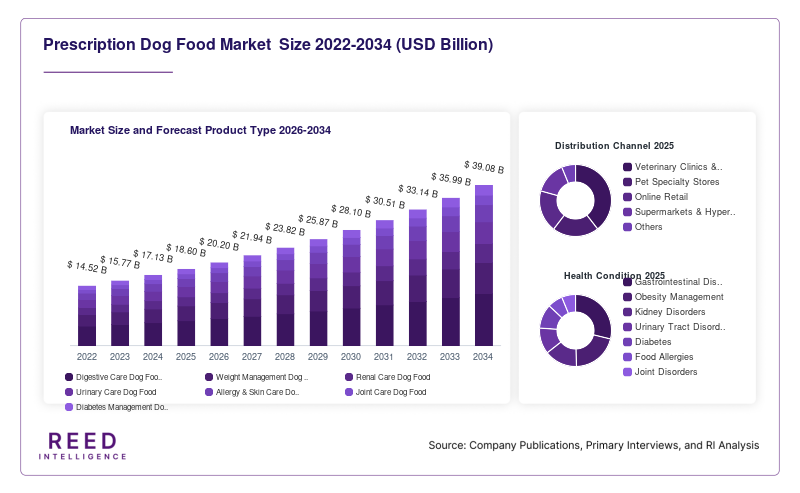
Digestive Care Dog Food emerged as the dominant subsegment, accounting for approximately 31.6% of global revenue in 2024. Gastrointestinal disorders remain among the most commonly diagnosed health conditions in dogs, creating substantial demand for specialized dietary solutions. These formulations typically contain highly digestible ingredients, prebiotic fibers, probiotics, and balanced nutrient profiles designed to support digestive health. Veterinary professionals frequently recommend digestive care diets for managing chronic digestive conditions and post-treatment recovery. Growing awareness regarding gut health and the connection between nutrition and overall wellness has further strengthened demand. Manufacturers continue introducing advanced formulations that improve nutrient absorption and digestive comfort, reinforcing the segment’s leadership position.
Weight Management Dog Food is projected to register the fastest CAGR of 10.9% during the forecast period. Rising obesity rates among companion animals have increased demand for calorie-controlled therapeutic nutrition products. Veterinary professionals increasingly emphasize weight management as a critical component of preventive healthcare strategies. Modern formulations incorporate high-quality proteins, satiety-enhancing fibers, and balanced energy content to support healthy weight reduction without compromising nutritional requirements. Growing consumer awareness regarding obesity-related health complications, including diabetes and joint disorders, is accelerating adoption. Manufacturers are also introducing improved flavor profiles and functional ingredients to enhance compliance and long-term feeding success.
By Distribution Channel
Veterinary Clinics & Hospitals represented the largest distribution channel, accounting for approximately 44.3% of market revenue in 2024. These facilities remain the primary source of prescription dog food recommendations and sales due to direct veterinary involvement in diagnosis and treatment planning. Pet owners often trust professional guidance when selecting therapeutic diets for chronic conditions. Veterinary clinics provide personalized nutrition recommendations and ongoing monitoring, which supports consistent product usage. Manufacturers frequently collaborate with veterinary networks to promote evidence-based nutrition solutions. The strong relationship between healthcare providers and pet owners continues to reinforce the dominance of this distribution channel.
Online Retail is expected to record the fastest CAGR of 12.1% through 2034. Digital platforms offer convenience, wider product availability, subscription services, and home delivery options that appeal to modern consumers. The integration of veterinary prescription verification systems has further facilitated online purchasing. Pet owners increasingly utilize e-commerce channels to access therapeutic nutrition products while comparing formulations and prices. Manufacturers are investing heavily in digital marketing and direct-to-consumer strategies to strengthen online engagement. As internet penetration and digital payment adoption expand globally, online retail is expected to become a major growth engine for the prescription dog food market.
By Health Condition
Gastrointestinal Disorders held the leading position within the health condition segment, accounting for approximately 28.4% of global market revenue in 2024. Digestive issues are among the most frequently diagnosed canine health concerns, leading veterinarians to recommend specialized nutritional interventions. Prescription diets formulated for gastrointestinal management often include easily digestible proteins, controlled fat levels, prebiotic ingredients, and enhanced nutrient absorption capabilities. Growing awareness among pet owners regarding the role of diet in digestive health management has contributed to strong segment demand. Manufacturers continue to develop scientifically formulated solutions targeting specific gastrointestinal conditions, supporting continued market leadership.
Obesity Management is anticipated to expand at the fastest CAGR of 11.5% during the forecast period. Rising obesity prevalence among dogs has become a significant concern for veterinary professionals and pet owners. Excess weight contributes to various health complications, including cardiovascular issues, diabetes, and mobility limitations. Prescription diets designed for obesity management provide controlled caloric intake while maintaining balanced nutrition. Increasing awareness campaigns, veterinary recommendations, and preventive healthcare initiatives are encouraging adoption. Technological advancements in pet health monitoring and growing emphasis on long-term wellness management further support rapid segment growth across multiple geographic markets.
Regional Analysis
North America
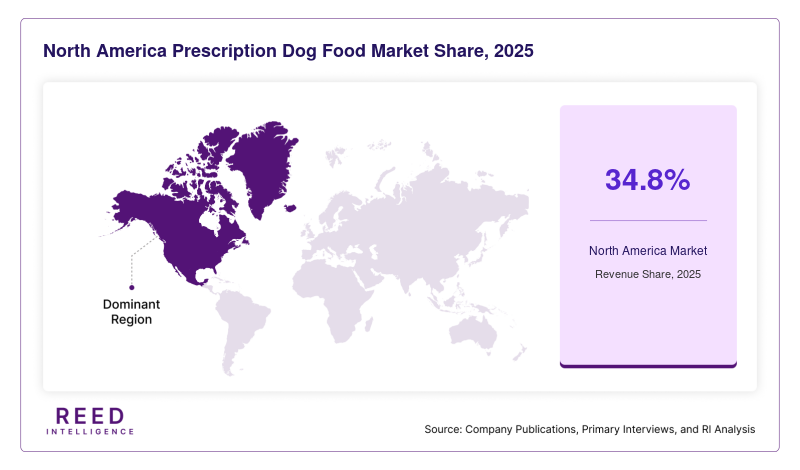
North America accounted for approximately 34.8% of the global prescription dog food market in 2025. The region benefits from high pet ownership rates, advanced veterinary healthcare systems, and strong awareness regarding therapeutic nutrition. Demand for disease-specific diets continues to increase due to rising incidences of obesity, digestive disorders, and age-related health conditions among dogs. The market is expected to register a CAGR of 8.1% through 2034 as veterinary recommendations remain a key purchasing influence.
The United States represents the dominant country within the region. A major growth factor is the widespread adoption of preventive pet healthcare practices. Consumers increasingly seek nutritional solutions that reduce long-term medical complications and improve quality of life for companion animals. Strong distribution networks, premium pet care spending, and continuous product innovation further strengthen regional market development.
Europe
Europe captured approximately 27.6% of global market revenue in 2025 and remains an important region for prescription dog food manufacturers. Growing awareness regarding pet wellness and increasing demand for veterinary-approved nutrition products support market growth. Regulatory standards related to pet food safety and ingredient quality also encourage consumer confidence. The regional market is projected to expand at a CAGR of 7.8% during the forecast period.
Germany remains the dominant country in the European market. A key growth factor is the strong focus on scientifically formulated pet nutrition and animal welfare standards. Consumers actively seek specialized dietary solutions for chronic health conditions, while veterinary professionals continue to recommend therapeutic diets. The presence of established pet food manufacturers further supports regional growth.
Asia Pacific
Asia Pacific held approximately 22.1% of global market revenue in 2025 and is expected to register the fastest CAGR of 10.8% during 2026–2034. Rising urbanization, increasing disposable incomes, and growing pet adoption rates are supporting market expansion. Consumers across major economies are becoming more aware of preventive pet healthcare practices and specialized nutrition products.
China dominates the regional market owing to its large pet population and expanding pet care industry. A unique growth factor is the rapid digitalization of pet product retail channels. Online platforms provide consumers with easier access to veterinary consultations and prescription nutrition products. This evolving ecosystem is accelerating market penetration across both major cities and secondary urban centers.
Middle East & Africa
The Middle East & Africa represented approximately 7.1% of global market revenue in 2025. Although relatively smaller than developed markets, the region is demonstrating steady growth supported by increasing pet ownership and expanding veterinary services. Demand for premium pet nutrition products is gradually rising among urban consumers. The market is anticipated to grow at a CAGR of 8.4% during the forecast period.
The United Arab Emirates serves as the dominant country within the region. A significant growth factor is the increasing number of premium pet care facilities and specialty veterinary clinics. Rising consumer spending on companion animal healthcare and nutrition is encouraging broader adoption of prescription dog food products across major metropolitan areas.
Latin America
Latin America accounted for approximately 8.4% of the global prescription dog food market in 2025. Improving economic conditions, rising awareness of pet healthcare, and increasing access to veterinary services support market development. Pet ownership rates continue to rise across urban centers, creating demand for specialized nutrition products. The market is forecast to expand at a CAGR of 8.7% through 2034.
Brazil remains the leading country in the region. A unique growth factor is the strong cultural acceptance of companion animals and the growing willingness of owners to invest in premium healthcare products. Expanding retail distribution channels and increasing veterinary recommendations are contributing to sustained market growth across the country.
Competitive Landscape
The prescription dog food market is characterized by strong competition among multinational pet nutrition companies and specialized veterinary nutrition providers. Companies focus on product innovation, clinical research, strategic partnerships, and geographic expansion to strengthen their market positions. Therapeutic nutrition remains a key area of investment as manufacturers seek to address a broader range of canine health conditions.
Hill’s Pet Nutrition remains a leading participant due to its extensive veterinary nutrition portfolio and strong relationships with animal healthcare professionals. The company recently expanded its therapeutic nutrition range with advanced digestive and metabolic health formulations. Other significant market participants include Mars Petcare, Nestlé Purina PetCare, Virbac, and Royal Canin. These companies continue investing in research and development to improve product efficacy and address evolving consumer preferences. Competitive differentiation increasingly depends on scientific validation, ingredient quality, digital engagement strategies, and veterinary endorsements.
Key Players
- Hill’s Pet Nutrition
- Royal Canin
- Mars Petcare
- Nestlé Purina PetCare
- Virbac
- Blue Buffalo
- Wellness Pet Company
- Diamond Pet Foods
- Farmina Pet Foods
- Dechra Veterinary Products
- JustFoodForDogs
- Natural Balance Pet Foods
- Merrick Pet Care
- VetIQ Petcare
- Iams
Recent Developments
- Hill’s Pet Nutrition introduced a new therapeutic digestive health formula featuring enhanced probiotic blends and clinically tested fiber technology.
- Royal Canin expanded its veterinary nutrition portfolio with specialized diets targeting obesity management and metabolic health support in adult dogs.
- Nestlé Purina PetCare strengthened its digital veterinary platform integration, enabling improved prescription verification and online product access for pet owners.
- Mars Petcare increased investment in veterinary nutrition research focused on chronic disease management and personalized therapeutic feeding solutions.
- Virbac launched updated renal support formulations designed to improve palatability while maintaining clinical nutritional effectiveness.
Prescription Dog Food Market Segments
Product Type
- Digestive Care Dog Food
- Weight Management Dog Food
- Renal Care Dog Food
- Urinary Care Dog Food
- Allergy & Skin Care Dog Food
- Joint Care Dog Food
- Diabetes Management Dog Food
Distribution Channel
- Veterinary Clinics & Hospitals
- Pet Specialty Stores
- Online Retail
- Supermarkets & Hypermarkets
- Others
Health Condition
- Gastrointestinal Disorders
- Obesity Management
- Kidney Disorders
- Urinary Tract Disorders
- Diabetes
- Food Allergies
- Joint Disorders
By Region
- North America
- Europe
- APAC
- Middle East and Africa
- LATAM