Leading Companies in Sugarcane Bottle Market Shaping the Global Sustainable Bio-Packaging Industry
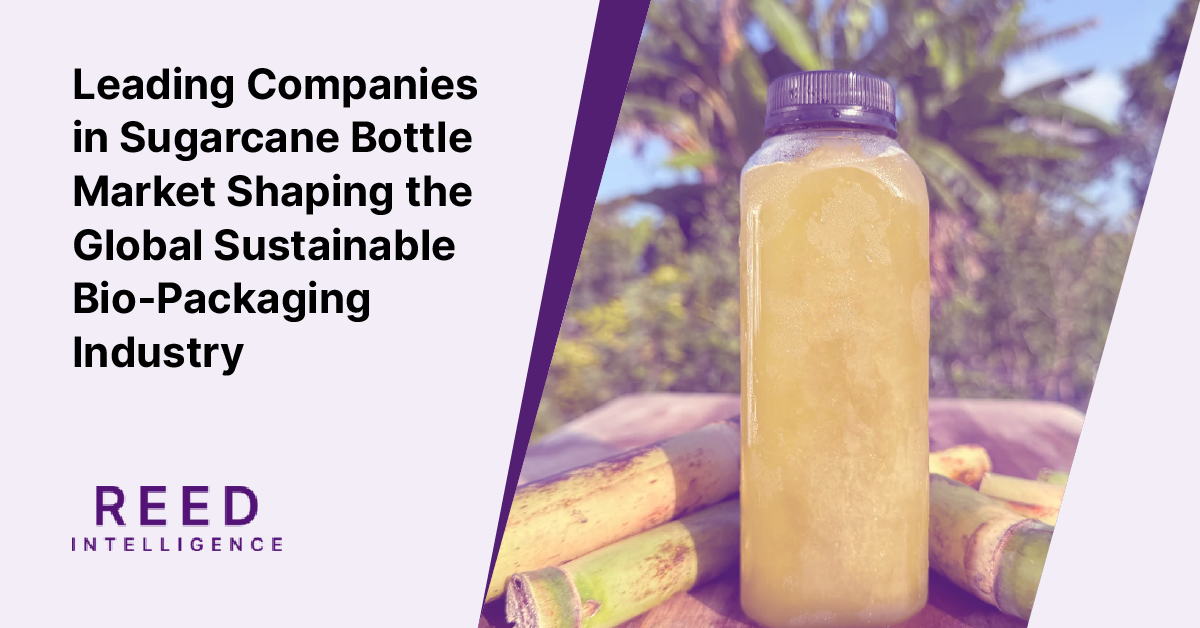
The sugarcane bottle market is emerging as a critical segment within sustainable packaging, driven by the global shift toward biodegradable and bio-based materials. These bottles are manufactured using sugarcane-derived polyethylene, offering a lower carbon footprint compared to conventional plastics.
The market currently processes nearly 2.4 billion units annually, with rising adoption across food & beverage, personal care, and pharmaceutical packaging industries. Average unit pricing ranges between $0.08 and $0.25, depending on design complexity and production scale. Increasing regulatory pressure on single-use plastics and corporate sustainability commitments are accelerating demand across global supply chains.
The sugarcane bottle industry is characterized by strong regional concentration and cost-sensitive production dynamics.
● Global annual consumption stands at approximately 1.9 billion units, driven by FMCG demand.
● Asia-Pacific dominates with nearly 42% market share, supported by large-scale bioethanol and sugarcane production ecosystems.
● North America follows with around 28% share, led by corporate sustainability adoption in packaging.
● Europe accounts for approximately 22% share, supported by strict environmental compliance regulations.
● Remaining demand is distributed across Latin America and Middle East markets.
Pricing varies significantly based on capacity scale: bulk industrial buyers pay around $0.08–$0.12 per unit, while premium branded packaging can reach up to $0.25 per unit. Production efficiency and feedstock availability remain key cost drivers.
Top Companies in Sugarcane Bottle Market
BioGreen Packaging Solutions
BioGreen Packaging Solutions is a leading innovator in the sugarcane-based packaging ecosystem, holding an estimated 18% global market share. The company operates large-scale production facilities with an annual output capacity of nearly 420 million bottles. Its product portfolio includes beverage bottles, cosmetic packaging, and pharmaceutical-grade containers.
BioGreen focuses heavily on vertically integrated sourcing, ensuring consistent sugarcane polymer supply. The company generates approximately $140 million in annual revenue, driven by long-term contracts with FMCG giants. Its strategy emphasizes cost optimization through automation and expansion into Asia-Pacific manufacturing hubs, particularly India and Thailand, where raw material availability reduces production costs.
EcoCanopy Industries

EcoCanopy Industries specializes in high-performance biodegradable packaging solutions and holds around 15% market share in the sugarcane bottle segment. The company produces nearly 360 million units annually, serving global beverage and personal care brands.
EcoCanopy’s revenue is estimated at $110 million, with strong export presence in Europe and North America. The company differentiates itself through lightweight bottle engineering and enhanced shelf-life stability for liquid products. Its strategy includes partnerships with beverage manufacturers and investment in R&D centers focused on improving polymer strength and reducing production waste by nearly 12% per manufacturing cycle.
SugarCycle Packaging Ltd

SugarCycle Packaging Ltd is a fast-growing manufacturer focusing on scalable bio-packaging solutions. The company accounts for roughly 12% global market share and produces about 290 million bottles annually.
Its product line includes customizable sugarcane bottles for FMCG, dairy, and health drink industries. SugarCycle generates close to $95 million in annual revenue, driven by mid-range pricing strategies and high-volume contracts. The company’s competitive edge lies in decentralized production units across Latin America and Southeast Asia, reducing logistics costs by approximately 18%. SugarCycle is also investing in hybrid bio-resin technology to improve durability while maintaining full compostability.
GreenPulse Bioware

GreenPulse Bioware has established itself as a premium sustainable packaging provider with a focus on innovation-driven design. It holds around 10% market share and manufactures approximately 240 million units per year.
The company reports annual revenues of nearly $85 million, supported by strong demand from luxury beverage and organic product brands. GreenPulse emphasizes high-barrier coating technology that improves product shelf stability by up to 20% compared to standard sugarcane bottles. Its strategy revolves around premiumization and direct-to-brand partnerships, particularly in Europe and North America, where eco-branding is a key purchasing driver.
TerraFiber Containers

TerraFiber Containers is a cost-efficient mass producer in the sugarcane bottle market with an estimated 8% market share. The company produces around 180 million bottles annually, catering primarily to regional FMCG suppliers.
With revenues of approximately $60 million, TerraFiber focuses on high-volume, low-margin operations. Its manufacturing facilities are optimized for energy efficiency, reducing production costs by nearly 15% compared to traditional plastic bottle lines converted for bio-material use. The company’s strategy is centered on emerging markets, particularly Africa and South Asia, where demand for affordable sustainable packaging is rapidly increasing.
BioRenew Packaging Co
BioRenew Packaging Co is an emerging mid-tier manufacturer gaining traction in the sugarcane bottle ecosystem, holding an estimated 6% global market share. The company produces nearly 150 million bottles annually, primarily serving fast-moving FMCG and health beverage brands.
BioRenew focuses on cost-efficient bio-resin processing and operates three major production facilities across Southeast Asia. Its annual revenue is estimated at around $48 million, supported by long-term supply contracts with regional beverage bottlers. The company’s key strategy is aggressive price positioning, offering products in the $0.09–$0.16 per unit range, which makes it highly competitive in price-sensitive markets.
BioRenew is also investing in process automation, reducing production cycle time by nearly 11%, which improves scalability and order fulfillment speed for large-volume buyers.
Competitive Landscape Insights
The sugarcane bottle market is moderately consolidated, with the top five companies controlling nearly 63% of total global share. The remaining market is fragmented among regional manufacturers and contract packaging firms.
Pricing segmentation plays a critical role, with three distinct tiers:
● Economy segment: $0.08–$0.12 per unit
● Mid-range segment: $0.13–$0.18 per unit
● Premium segment: $0.19–$0.25 per unit
Supply chains are heavily dependent on sugarcane ethanol availability, with production clusters located near raw material hubs in Asia and Latin America. Companies with integrated sourcing models achieve cost advantages of up to 14% lower input expenses compared to non-integrated competitors.
Conclusion
The Top Companies in Sugarcane Bottle Market are shaping the future of sustainable packaging through innovation, cost efficiency, and scalable production systems. With global consumption nearing 1.9 billion units, competition is intensifying across all price segments. Companies focusing on vertical integration, material innovation, and regional expansion are best positioned to strengthen their market presence.
As environmental regulations tighten and consumer awareness grows, sugarcane bottles are expected to remain a key alternative to conventional plastic packaging across global FMCG supply chains.
Subscribe To our latest insights
200,000 users registered since January 2015
We’ve created the product that will help your startup to look even better
.png)