Top 5 Companies in DEXA Equipment Market | Leading Manufacturers & Industry Insights
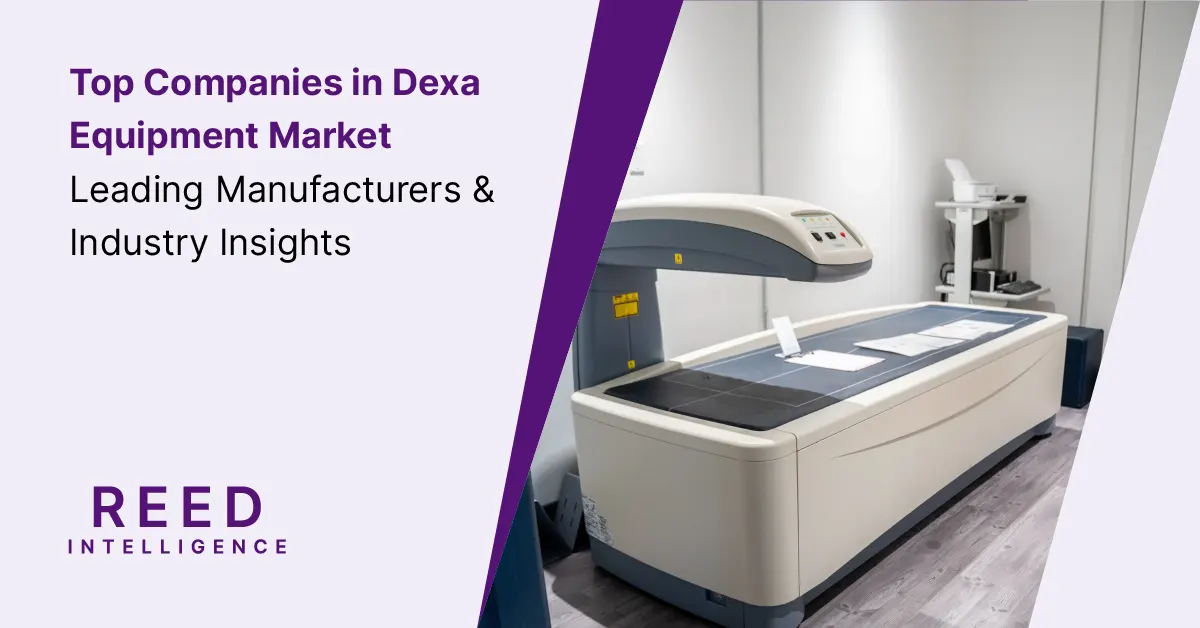
The Dexa Equipment Market is a critical segment within medical imaging, driven by the rising need for bone density assessment and early diagnosis of osteoporosis. Dexa (Dual-Energy X-ray Absorptiometry) systems are widely used in hospitals, diagnostic centers, and specialty clinics for precise measurement of bone mineral density.
Globally, more than 2.5 million DEXA scans are performed annually, reflecting strong clinical demand across aging populations. The market is supported by an installed base of nearly 120,000 active Dexa systems worldwide, with continuous replacement and technology upgrades fueling procurement cycles. Average system pricing ranges between USD 35,000 and USD 120,000, depending on configuration, imaging capability, and software integration.
Growing awareness of bone health and increasing geriatric populations are further strengthening demand for advanced DEXA equipment across both developed and emerging healthcare systems. The Dexa Equipment Market demonstrates a moderately consolidated structure with strong presence from global imaging leaders. Annual global production is estimated at approximately 8,000–10,000 new Dexa units, including both hospital-grade and compact systems.
Key Market Data Points:
- North America accounts for 38% of global DEXA equipment demand
- Europe contributes around 27% market share
- Asia-Pacific holds approximately 25% share, driven by expanding diagnostic infrastructure
- Rest of the world represents nearly 10% demand share
- Average equipment utilization rate in hospitals exceeds 65–70% annually
- Replacement cycle for Dexa systems typically ranges between 7–10 years
Pricing varies significantly based on features:
- Entry-level systems: USD 35,000–50,000
- Mid-range hospital systems: USD 60,000–85,000
- Advanced imaging systems: USD 90,000–120,000
The demand is strongly influenced by preventive healthcare adoption and increasing screening programs for osteoporosis, especially in populations above 50 years of age.
Top 5 Companies in Dexa Equipment Market
GE HealthCare
GE HealthCare is one of the dominant players in the DEXA Equipment Market, leveraging its strong imaging ecosystem and global distribution network. The company maintains an estimated market share of 22%, making it a leading supplier of bone densitometry systems worldwide. Its Dexa portfolio integrates advanced imaging software, offering high-resolution scans and reduced radiation exposure.
GE HealthCare’s Dexa systems are widely deployed in large hospital chains and diagnostic centers, with an estimated installed base of over 25,000 units globally. The company focuses heavily on AI-enabled imaging analytics, improving diagnostic accuracy and workflow efficiency.
Strategically, GE invests nearly 8–10% of its medical imaging revenue in R&D, ensuring continuous product innovation. Its Dexa systems are positioned in the USD 70,000–110,000 price range, catering primarily to premium healthcare facilities in North America and Europe.
Hologic Inc.
Hologic is a specialized leader in women’s health diagnostics and holds a strong position in the DEXA Equipment Market with an estimated 18% global share. The company is known for its Horizon Dexa systems, widely used for osteoporosis screening and fracture risk assessment.
Hologic systems are deployed in more than 80 countries, with an installed base exceeding 20,000 units. The company focuses on precision imaging and low-dose radiation technology, making its equipment highly preferred in outpatient diagnostic centers.
Hologic’s Dexa systems are typically priced between USD 65,000 and USD 115,000, depending on configuration. The company derives nearly 35–40% of its imaging segment revenue from bone health and DEXA-related diagnostics. Its strategy emphasizes outpatient expansion and integration with digital health platforms.
Siemens Healthineers

Siemens Healthineers is a key global competitor with approximately 16% market share in DEXA imaging systems. Known for its high-end medical imaging portfolio, Siemens offers Dexa solutions integrated with broader radiology ecosystems.
The company has an installed base of around 18,000 Dexa units worldwide, with strong penetration in hospital networks across Europe and Asia-Pacific. Siemens systems are recognized for high throughput capacity, enabling up to 40–50 scans per day per machine in high-demand facilities.
Pricing for Siemens Dexa systems ranges from USD 75,000 to USD 120,000, positioning them in the premium segment. The company allocates nearly 12% of its imaging division revenue toward technological advancement, focusing on AI-assisted bone density interpretation and workflow automation.
Fujifilm Healthcare
Fujifilm Healthcare holds an estimated 12% share in the Dexa Equipment Market, with a strong presence in Asia-Pacific and growing expansion in North America. The company leverages its expertise in imaging and digital radiography to offer compact and efficient DEXA solutions.
Fujifilm’s Dexa systems are widely used in mid-sized diagnostic centers, with an installed base of approximately 12,000–14,000 units globally. The company emphasizes compact design and affordability, making its systems suitable for cost-sensitive markets.
Its pricing structure typically falls between USD 55,000 and USD 95,000, making it competitive in the mid-tier segment. Fujifilm focuses on integrating Dexa imaging with cloud-based patient data systems, supporting seamless diagnostic reporting across healthcare networks.
OsteoSys Co., Ltd.
OsteoSys is a specialized manufacturer focused exclusively on bone densitometry solutions, holding a niche yet significant position in the global market. The company accounts for nearly 6–8% market share, with strong penetration in emerging economies.
OsteoSys has deployed approximately 10,000+ DEXA units worldwide, particularly in Asia, the Middle East, and Latin America. The company is known for cost-effective systems, with pricing typically ranging from USD 35,000 to USD 70,000, making it one of the most affordable providers in the segment.
Its strategy focuses on portability, compact design, and high diagnostic reliability. OsteoSys also prioritizes high-volume production, manufacturing an estimated 1,200–1,500 units annually, targeting hospitals and diagnostic chains with budget constraints.
Competitive Landscape Insights
The Dexa Equipment Market is moderately consolidated, with the top five companies controlling nearly 74% of the global market share. GE HealthCare and Hologic together dominate more than 40% of the market, driven by strong hospital partnerships and advanced imaging technologies.
Key Competitive Factors:
- Pricing segmentation: Entry-level ($35,000–$50,000), Mid-tier ($60,000–$85,000), Premium ($90,000–$120,000)
- Technology differentiation: AI integration, low-dose imaging, and automated reporting
- Distribution strength: Direct hospital contracts account for nearly 60% of total sales
- Service contracts: Annual maintenance agreements contribute 15–20% additional revenue per system
Supply chains are highly globalized, with manufacturing hubs concentrated in the United States, Germany, Japan, and South Korea. Replacement demand remains a major revenue driver, accounting for nearly 30–35% of total equipment sales annually.
Conclusion
The Top Companies in the Dexa Equipment Market are shaping the future of bone health diagnostics through technological innovation, global expansion, and precision imaging solutions. With rising osteoporosis cases and increasing preventive screening programs, demand for DEXA systems continues to remain strong across hospitals and diagnostic centers.
Leading players such as GE HealthCare, Hologic, Siemens Healthineers, Fujifilm Healthcare, and OsteoSys collectively dominate the market with advanced product portfolios and strong global distribution networks. As healthcare infrastructure expands, especially in emerging regions, competition will intensify around affordability, AI integration, and imaging accuracy—making this market highly strategic for long-term investment and procurement decisions.
Subscribe To our latest insights
200,000 users registered since January 2015
We’ve created the product that will help your startup to look even better
.png)